
Tech • AI • Robotics • Game
Getting readyOpens here as soon as it is readyPodcast quiz
Arcade breakFury Blox: stack the blocks, beat your bestMorning edition
 Anthropic’s record flotation produced conflicting headline totals: one account put proceeds at $93.5 billion after underwriters exercised the greenshoe, while another cited $107.3 billion. Shares then fell 5% after hours, and broader AI-linked equities had erased roughly $4 trillion, turning the debut into a stress test for exuberant valuations. For investors, the discrepancy itself reinforces the need to separate deal mechanics from market capitalization and actual cash raised. Wall Street has entered hard mode without a save point 😉Anthropic reached $17 billion in revenue but used discounts to defend an approximately $1.5 trillion valuation, illustrating the tension between rapid adoption and the economics required to support mega-cap pricing. With the company newly public, enterprise contract quality, gross margins and retention now matter more than private-market narratives. That shift could reset how investors value frontier-model laboratories, especially when enormous training bills meet customers increasingly willing to compare prices. The valuation spreadsheet has discovered its final boss 😉
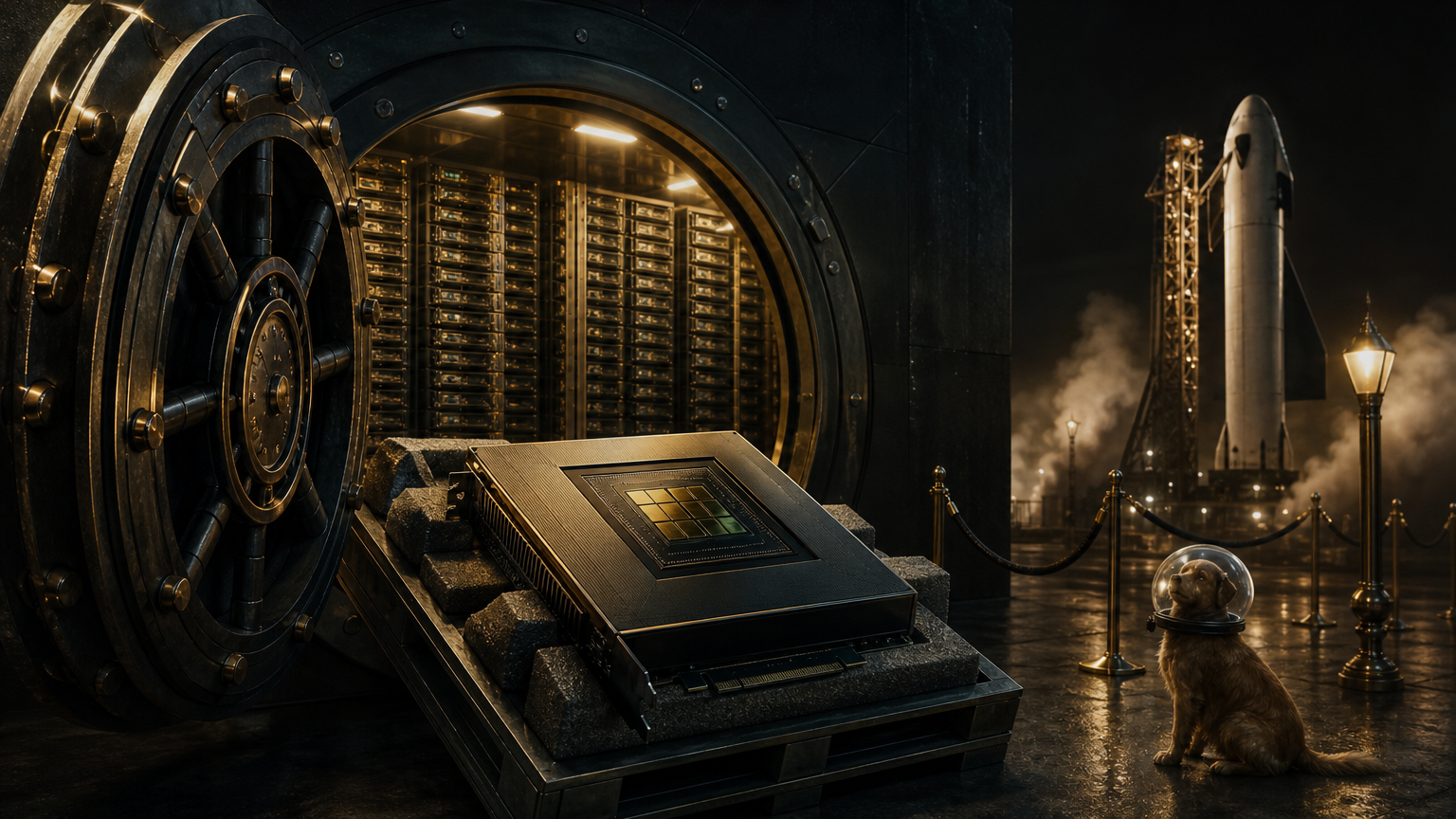 Apollo and Goldman Sachs priced a $44 billion financing package for SpaceX’s Nvidia Vera Rubin GPU infrastructure; separate deal accounts said $32 billion of debt sold at an 8.26% yield, with lenders requiring the chips to remain on Earth. The scale shows AI compute becoming an asset-finance category comparable to major industrial projects, but the above-8% borrowing cost exposes investors to hardware depreciation, utilization and refinancing risk. Apparently even orbital ambition must obey the gravity of bond covenants 😉
 Anthropic mathematician Levent Alpöge said Claude helped him produce a proof of the Riemann hypothesis, unsolved since 1859 and carrying a $1 million Millennium Prize. The claim remains subject to expert verification, especially notable because a human rival also posted a draft proof. If accepted, it would elevate generative AI from mathematical assistant to collaborator on foundational research, while making peer review—not benchmark scores—the decisive test. Even Deep Thought knows the answer needs more than 42 citations 😉
 Amazon said malicious AI agents found and exploited a zero-day in just 11 minutes, compromising university systems before any patched release was available. The flaw involved MONAI Label, a medical-imaging annotation tool, linking autonomous offensive capability to software used in sensitive research workflows. The episode compresses vulnerability discovery, weaponization and intrusion into minutes, challenging patch cycles and human-led incident response; defenders will need agent-speed detection, containment and disclosure. The blue team has learned that Skynet does not wait for Patch Tuesday 😉