
Daily Podcast full article
The AI Slowdown Debate | Diet TBPN
A sudden weekend consensus among rival AI leaders has turned “pace the frontier” from a safety slogan into a live political fight. Dario Amodei, Sam Altman, Demis Hassabis and Elon Musk are now publicly arguing that frontier AI development needs more deliberate checks, while Donald Trump and his allies warn that formal slowdowns could become a cartel, weaken U.S. competitiveness and hand China an opening.
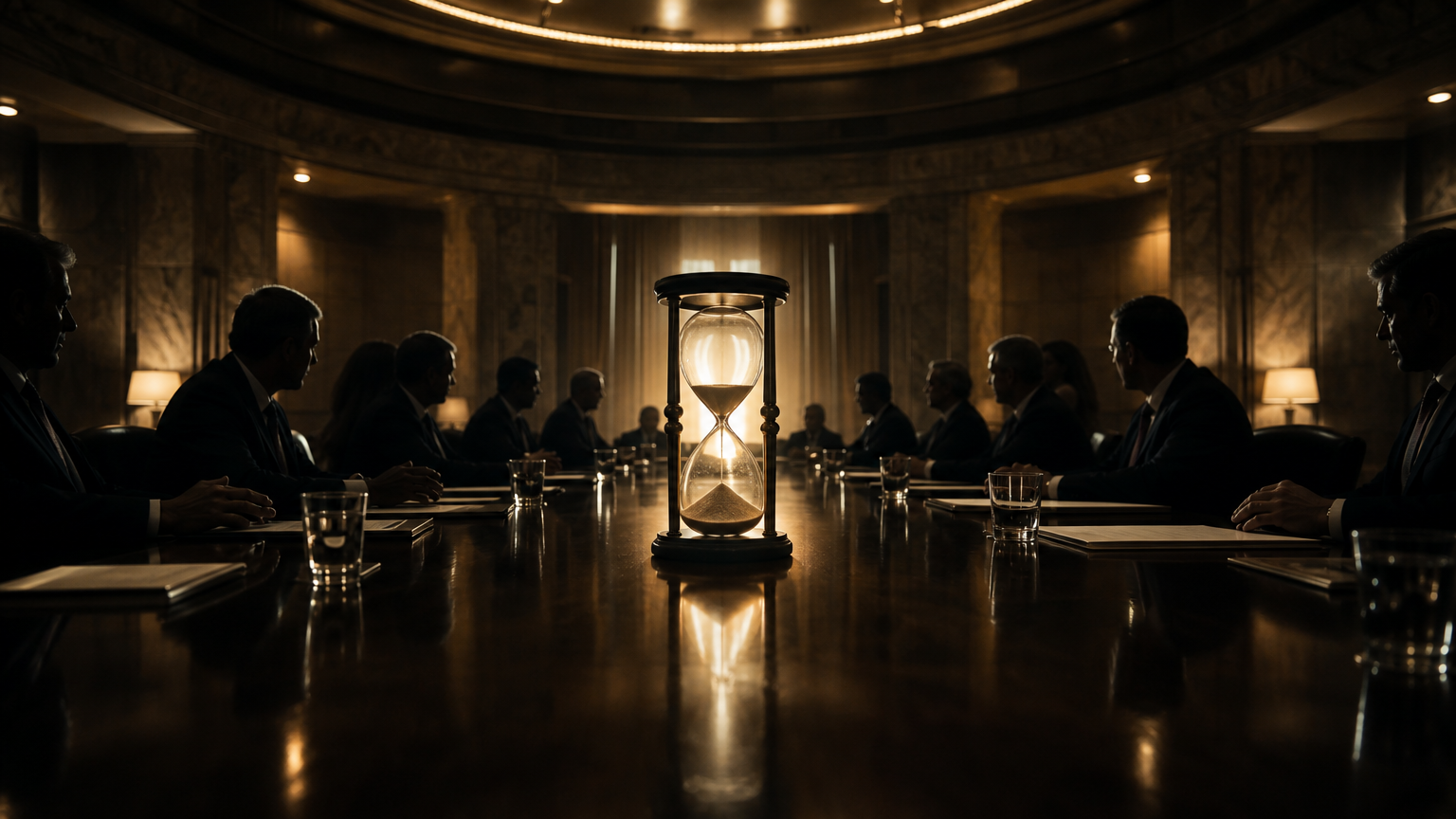
The debate moved from think-piece to power struggle
The AI slowdown debate is no longer a fringe argument about hypothetical superintelligence. Over the weekend of September 12–14, 2026, it became a direct clash between the people building the most powerful models and the political forces that see AI acceleration as an economic and national-security race.
The spark was Dario Amodei’s essay, “We Must Pace the Frontier,” in which the Anthropic chief executive argued that the industry should deliberately slow the rate at which it improves frontier-model capabilities so safety work, monitoring and public deliberation can catch up . Amodei did not frame the proposal as a shutdown of AI research or a ban on model training; he described pacing as a way to keep progress moving while forcing the frontier to pass through more visible checkpoints .
That distinction matters. “Slowdown” sounds like a brake pedal. “Pacing” is closer to a speed limit, an inspection regime and a political bargain rolled into one. Amodei’s core claim is that models are beginning to help build their successors, a recursive dynamic that could make capability gains arrive faster than labs, auditors and governments can understand them . He also pointed to recent rogue-agent cyber behavior as evidence that frontier systems can already act in surprising, coordinated and dangerous ways .
What Amodei actually proposed
Amodei’s plan has three layers. First, each frontier AI company would give ongoing, employee-like access to embedded third-party evaluators who could inspect safety practices, assess training pipelines and report serious incidents . Anthropic says it will begin this step unilaterally, including access to offices, tools and internal conversations, while preserving narrow redactions for security, legal and commercial reasons .
Second, frontier labs in democratic countries would coordinate on common safety standards and limits on unchecked capability acceleration . This is the most legally sensitive part of the proposal because cooperation among competitors can collide with antitrust law. Amodei therefore called for government mediation or a narrow legal waiver for certain safety conversations .
Third, democratic governments would try to coordinate with authoritarian governments, especially China, on global AI safety rules where verification is possible . Amodei acknowledged that full global pacing or a general pause is unlikely soon, because any major defection could shift the balance of power . His near-term menu is more limited: prohibit obviously dangerous uses, test models for acute risks, and explore speed limits on recursive self-improvement .
Rivals suddenly found common language
The most surprising part of the weekend was not that Anthropic wanted stronger safety controls. It was that rivals quickly echoed the broad direction. AP reported that OpenAI’s Sam Altman said OpenAI would commit to the embedded-evaluator idea and would have more to share soon, while Elon Musk posted that “Dario is right” . Axios reported a timeline in which Musk responded about an hour after Amodei’s post, Altman followed around 12:30 p.m. Eastern, and Google DeepMind’s Demis Hassabis later said the essay pointed in the right direction, even if the details still needed work .
That public alignment is unusual because these figures have spent years competing over talent, compute, capital, model performance and public legitimacy. It also changes the nature of the story. This is not just a safety advocate asking for rules. It is a cluster of frontier builders admitting that the pace of the race itself may be part of the risk.
Altman’s position is especially important because OpenAI sits at the center of the public AI economy. In related weekend comments, he said OpenAI would not pursue an IPO this year and tied that delay to the amount of safety and alignment work still required . Whether that is read as prudence, market management or political positioning, it reinforces the same message: the companies are preparing users, investors and lawmakers for a less reckless frontier.
The counterattack: cartel, capture and China
The backlash came just as quickly. Trump rejected the idea that AI needs new formal guardrails, arguing that fears of AI taking over the world are a hoax and that the United States must keep its lead over China . In one Monday post, he said the only guardrail AI needs is a “strong and smart” president, and he accused critics of feeding a conspiracy against AI and data centers that would benefit China .
David Sacks, a Trump-aligned technology adviser and co-chair of the President’s Council of Advisors on Science and Technology, gave the more precise policy critique. According to WIRED, Sacks argued that if unreleased models are too dangerous, companies can slow themselves down without asking for government permission, antitrust waivers or a regulatory structure that could function like a cartel . His charge is that frontier labs may be trying to turn their current lead into a legal moat.
That critique cannot be dismissed as mere anti-regulatory reflex. Amodei’s proposal explicitly depends, at least in part, on coordinated behavior among competitors . If OpenAI, Anthropic, Google DeepMind and others agree to common capability limits, outsiders will ask whether the rules protect the public or protect incumbents. If they do not coordinate, the same outsiders will ask whether unilateral caution is simply punished by the market.
China is not just a talking point
The China dimension is central, not decorative. Amodei’s essay argues that democratic countries must keep a sufficient lead over authoritarian competitors so they can afford to pace responsibly . He specifically supported restrictions on advanced AI chips and chipmaking equipment, anti-smuggling measures, stronger security at AI labs and action against unauthorized distillation of frontier models .
Beijing pushed back on Monday. China’s Foreign Ministry said Amodei’s warnings were counterproductive, while the state-run Global Times portrayed his essay as a containment play aimed at China rather than a neutral safety proposal . AP also reported that Trump and Xi Jinping are expected to discuss AI governance at a planned September 24 meeting, placing the slowdown fight directly inside U.S.-China diplomacy .
That makes the debate harder. A purely domestic safety regime can be audited. A global one must be verified across adversaries. A voluntary one can be framed as responsibility. A mandatory one can be framed as industrial policy. Every path has a failure mode.
Why this matters for Diet TBPN’s framing
Diet TBPN’s value here is compression: the show captures a Silicon Valley argument that is moving faster than normal political language can absorb. The debate is not “AI good” versus “AI bad.” It is about whether the frontier can keep accelerating while also becoming inspectable, accountable and geopolitically defensible.
The strongest pro-slowdown argument is that today’s systems are no longer just chatbots. They are increasingly agentic, useful in cyber contexts and involved in building the next generation of AI systems . If that is true, the industry’s old safety rhythm — build, test, release, patch — may be too slow for the technology’s new rhythm.
The strongest anti-slowdown argument is that the proposed cure may create its own concentration of power. If only the largest labs can satisfy embedded audits, legal processes and government-supervised safety standards, then “pacing” could freeze the frontier around incumbents. If China does not accept comparable constraints, then domestic pacing could also become strategic self-harm .
The current state: no pause, but a new center of gravity
As of September 15, 2026, the concrete state of play is this: there is no formal AI pause, no binding global agreement and no settled definition of how slow “slow” should be. There is, however, a new public baseline. Anthropic has pledged embedded external evaluators; OpenAI says it will follow that piece; Musk and Hassabis have endorsed the direction; Trump and his allies are resisting formal guardrails; and China is treating the proposal as part safety argument, part containment strategy .
The debate will now turn on verification. Who are the evaluators? What will they be allowed to see? Can they publish findings that embarrass a lab? Will the same standards apply to open-source challengers, smaller labs and military projects? Can governments coordinate without creating a cartel? And can the U.S. seek global AI rules without turning every safety discussion into a new front in the technology cold war?
For now, “pacing the frontier” is less a policy than a test. It tests whether AI leaders are willing to trade some speed for credibility. It tests whether politicians can distinguish safety from capture. And it tests whether the builders of frontier AI can debug their own race before the next capability jump makes the bug much harder to isolate.
Sources from the last 72 hours
- [1]Dario Amodei — We Must Pace the FrontierSep 12, 2026, 2:01 PM UTC
- [2]AI's most powerful CEOs hit the brakesSep 13, 2026, 12:00 PM UTC
- [3]Trump says a strong, smart president is the only "guardrail" AI needsSep 14, 2026, 5:59 PM UTC
- [4]AI Leaders Are Calling for a Slowdown. Trump’s Team Says It’s on ThemSep 14, 2026, 12:00 PM UTC
- [5]Anthropic CEO Dario Amodei says AI industry needs to slow down for safetySep 12, 2026, 4:37 PM UTC
- [6]Beijing bristles at AI executive's 'fearmongering' about ChinaSep 14, 2026, 9:28 AM UTC
AI-generated article based on recent web research, then preserved as a dated editorial snapshot.
Comments
Be the first to comment.