
Daily Podcast full article
OpenAI buys Glass Imaging for $300M as AI cameras become the next hardware battleground
OpenAI’s reported acquisition of Glass Imaging for more than $300 million is not just a camera deal. It is a signal that the ChatGPT maker wants deeper control over the visual layer of future AI devices, from the sensor to the model.
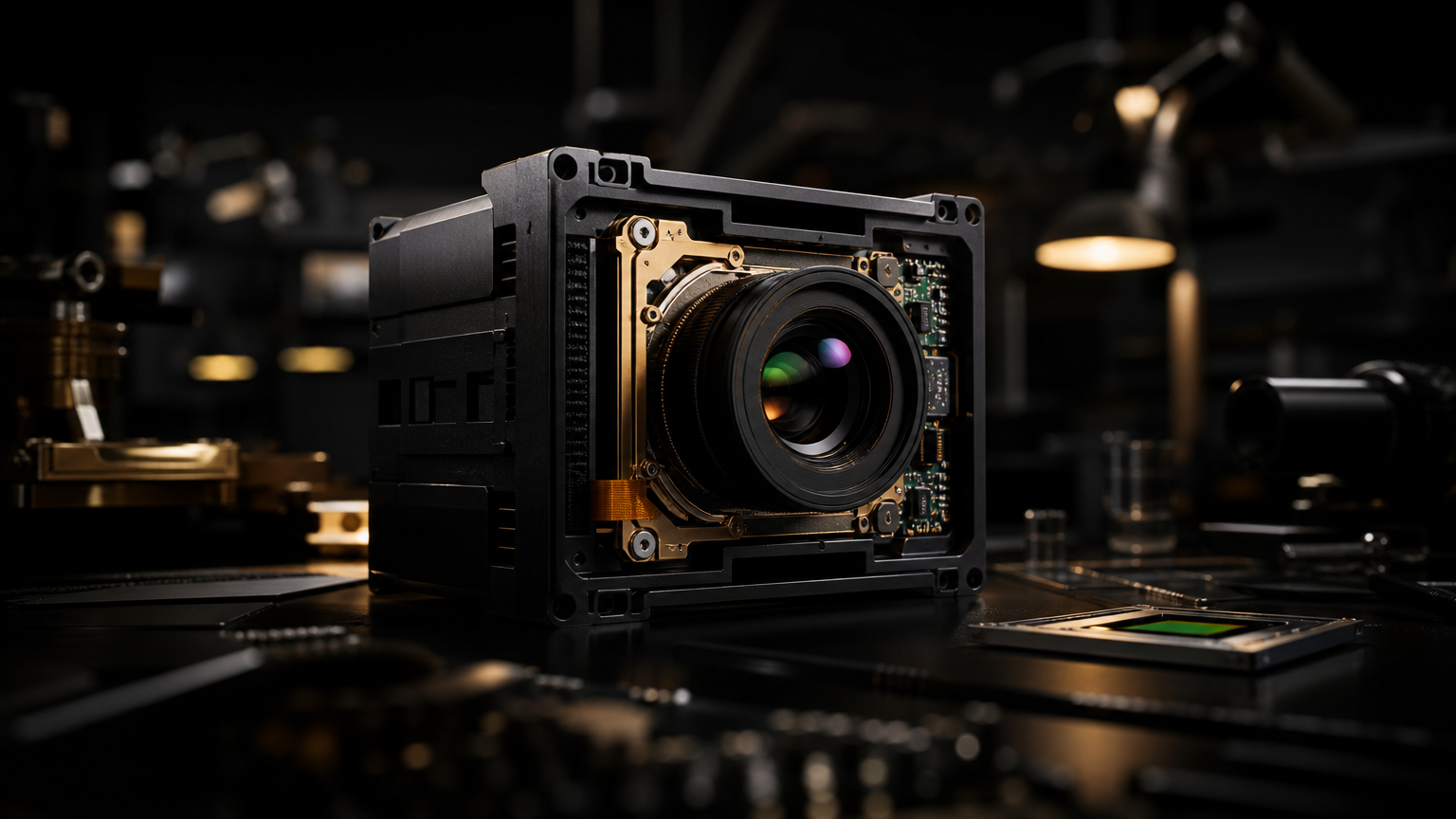
OpenAI buys Glass Imaging for $300M
The deal: a small camera startup at a strategic price
OpenAI has bought Glass Imaging, a startup developing AI-powered smartphone camera technology, in a deal worth more than $300 million, according to reporting that traces the transaction to The Wall Street Journal . TechCrunch reported on September 14, 2026, that the company was founded in 2019, is based in Los Altos, California, and had previously raised about $30 million from investors . Stocktwits, also citing the Journal, reported that Glass Imaging had been valued at roughly $100 million in a 2025 funding round before the OpenAI deal lifted the reported transaction value above $300 million .
That price matters because this does not look like a conventional consumer-app acquisition. Glass Imaging is not a household brand, and the reporting so far does not describe a large installed base or a broad consumer product. The asset OpenAI appears to be buying is more specific: computational photography expertise, neural image-processing software and a team with a track record in making small cameras behave like better cameras.
The transaction has not been fully explained by the companies. TechCrunch said OpenAI did not immediately respond to a request for comment . PYMNTS reported that neither OpenAI nor Glass Imaging immediately replied to its request for comment, and it added that OpenAI’s plans for Glass Imaging remain unclear . That silence leaves the most important question open: is OpenAI buying Glass Imaging to improve machine vision inside existing products, or to help build a consumer hardware platform of its own?
What Glass Imaging actually brings
Glass Imaging’s technical pitch is simple to describe but difficult to execute: use AI at the moment an image is captured, not merely after the photo has already been taken. TechCrunch reported that Glass Imaging uses neural networks to learn the characteristics of individual camera systems, including the cameras on different smartphone models, so the image can be improved when the shutter fires . In other words, the model is not just a beautification filter. It is part of the imaging pipeline.
SiliconANGLE described GlassAI as a neural image signal processor that runs raw sensor output through networks trained for a specific camera module . The same report said conventional camera pipelines typically separate tasks such as color reconstruction, noise reduction, sharpening and frame fusion, while GlassAI aims to handle them in a single pass and model the optical behavior of the individual lens . If that approach works reliably at scale, it could make compact cameras more useful in phones, wearables, drones and other devices where physical optics are constrained.
The founders’ résumés explain why OpenAI would pay attention. Glass Imaging was founded by Ziv Attar and Tom Bishop, former Apple engineers who worked on camera technology and are linked in multiple reports to the iPhone’s Portrait Mode work . That background is important because Portrait Mode became one of the best-known consumer examples of computational photography: software compensating for the physical limits of a small mobile camera to create an effect users immediately understood.
Glass Imaging has also moved beyond lab theory. Stocktwits reported that the startup’s zoom-imaging technology has already appeared in Honor phones . SiliconANGLE similarly reported that Honor used the company’s software for zoom on its 600 series, which carries a 200-megapixel main camera . For OpenAI, that matters because device hardware punishes demos that cannot ship. A camera team that has worked with commercial handsets brings a different kind of credibility than a pure research group.
Why OpenAI wants better pixels
The obvious interpretation is that OpenAI wants better cameras for future devices. The more strategic interpretation is that OpenAI wants better visual inputs for models that are expected to understand the physical world. A chatbot can tolerate a bad microphone or a poor camera if the user is typing. An ambient AI device cannot. If the product is supposed to see a room, identify an object, read a label, recognize a gesture or understand context from a live scene, the camera is not an accessory. It is the front door to the model.
That makes the Glass Imaging acquisition logical even if OpenAI never sells a conventional smartphone. TechCrunch noted that the company is rumored to be working on hardware including smartphones, earbuds and AI companion devices . PYMNTS reported that OpenAI has been developing a device with former Apple executive Jony Ive, while also noting that the specific use of Glass Imaging’s technology is not yet clear . The common thread is not a particular form factor. It is the need for a sensor stack that can feed models cleaner, richer and more consistent visual data.
This is where computational photography and multimodal AI meet. Smartphone camera makers spent the past decade using software to make tiny lenses produce pleasing photos. AI device makers may spend the next decade using similar techniques to make tiny cameras produce useful machine perception. A sharper picture is good for a user. A more faithful, lower-noise, context-rich image may be even more valuable to a model.
The Jony Ive hardware context
The Glass Imaging deal lands inside a broader OpenAI hardware push. TechCrunch reported that in 2025, OpenAI CEO Sam Altman and designer Jony Ive revealed work on a device startup called io, which OpenAI bought for $6.5 billion . SiliconANGLE also placed the Glass Imaging purchase in the context of OpenAI’s consumer-hardware ambitions, saying the company paid $6.5 billion in stock for io Products in May 2025 and later hired dozens of Apple employees .
That context changes how the camera acquisition reads. If OpenAI were only improving ChatGPT’s ability to interpret uploaded images, it could partner with existing camera makers or rely on smartphones already in users’ pockets. Buying a specialized imaging company suggests a desire to own more of the stack. The stack could include industrial design, sensors, on-device processing, cloud models and the user interface that ties them together.
Still, there is a difference between assembling parts and shipping a beloved product. Apple, Google and Samsung already have massive advantages in camera tuning, operating systems, supply chains and user trust. OpenAI can buy talent and technology, but it cannot buy years of daily user habit overnight. A camera acquisition makes a hardware strategy more plausible; it does not make that strategy inevitable.
The unanswered questions
Several key details remain unknown. OpenAI has not disclosed how much of the purchase price is cash, stock or retention compensation. The companies have not announced whether Glass Imaging will continue supporting existing partners. They have not said whether the technology will appear in an OpenAI-branded device, an Ive-led product, an API-connected camera feature or internal model-training workflows.
There is also a privacy dimension. Cameras turn AI from a tool users consult into a system that can observe. If OpenAI builds always-available visual hardware, it will have to answer questions about local processing, cloud upload, retention, user consent and bystander privacy. Better pixels are commercially attractive, but they also deepen the sensitivity of the data flowing into AI systems.
For now, the cleanest reading is this: OpenAI is no longer behaving like a software company that merely benefits from other people’s devices. With Glass Imaging, it is buying expertise at the point where the physical world becomes data. The deal may produce sharper photos, better machine vision or a new class of AI-native hardware. The strategic question is whether OpenAI wants cameras that help its models see, or devices that make users look at OpenAI all day.
Even pixels are getting a model upgrade.
Sources from the last 72 hours
- [1]OpenAI buys smartphone camera maker Glass Imaging for $300 million, report saysSep 14, 2026, 8:44 PM UTC
- [2]OpenAI Accelerates Device Plan With AI Camera Tech AcquisitionSep 14, 2026, 4:00 AM UTC
- [3]OpenAI Buys AI Camera Startup For Over $300M, Says Report — Glass Imaging Deal Puts Focus On Consumer DevicesSep 14, 2026, 8:26 PM UTC
- [4]OpenAI reportedly buys AI camera startup Glass Imaging for more than $300MSep 14, 2026, 10:28 PM UTC
AI-generated article based on recent web research, then preserved as a dated editorial snapshot.
Comments
Be the first to comment.