
Daily Podcast full article
Elon Musk's New Update on $119B Terafab, Biggest Building on Earth!
Elon Musk’s latest Terafab message turns a gigantic Texas chip plant from futuristic spectacle into a supply-chain argument: if Tesla and SpaceX want enough AI silicon for vehicles, Optimus robots, servers and space systems, Musk says they may have to build the semiconductor stack themselves.
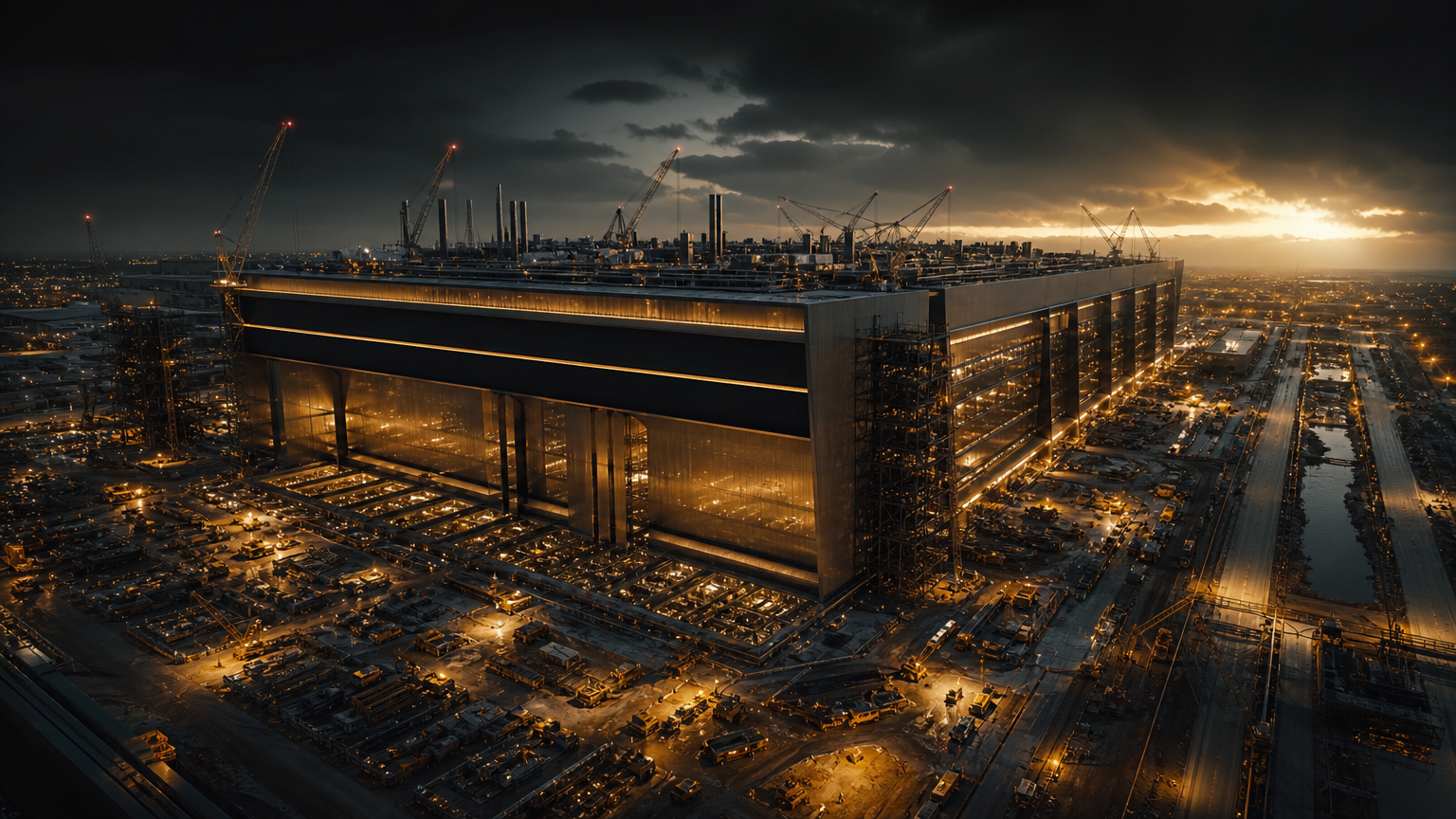
Musk’s clearest Terafab signal yet
Elon Musk’s new update on Terafab is less about architectural bravado than industrial urgency. The project is being described as a Texas-based, vertically integrated semiconductor complex with a potential full buildout of about 119 billion dollars, intended to secure chips for Tesla and SpaceX as AI demand expands across data centers, vehicles, humanoid robots and space infrastructure . In the freshest framing from the All-In Summit, Musk reduced the strategy to a blunt choice: build Terafab or fail to scale .
That sentence matters because it shifts Terafab from “Musk’s biggest building” to “Musk’s supply-chain firewall.” According to recent coverage of the summit, Musk tied the project to two intertwined risks: advanced chips from Taiwan might not always be available, and even if geopolitics remain manageable, global fab capacity may still be too tight for the compute needs he expects from Tesla and SpaceX . A Taiwanese report published on September 16 similarly described Musk’s concern that chips from Taiwan could become unavailable for unspecified reasons, forcing Tesla and SpaceX to plan for supply certainty rather than hope for uninterrupted access .
Why Texas, and why this scale?
The current Terafab concept is not just another fab in the usual sense. HelloBro’s September 16 subject file describes a facility meant to combine logic, memory, advanced packaging, testing and parts of the manufacturing infrastructure in one U.S. complex . That vertical integration is the heart of the idea. Musk is not merely talking about designing chips and sending them to outside foundries; he is talking about pulling more of the semiconductor chain into a controlled domestic system .
The proposed scale is extraordinary. The project has been described as a 100 million square foot facility, roughly 10 times the size of Gigafactory Texas, and Musk has said it could become the largest and most valuable building on Earth if it achieves its long-term compute target . The same September 16 summary says the first phase is estimated around 16.3 billion dollars, while the full multi-phase figure widely associated with the project is 119 billion dollars . TeslaNorth’s September 15 report also points to a 16.8 billion dollar Terafab grounding in Grimes County as the public buildout now sitting behind Musk’s latest strategic comments .
The Taiwan risk is the strategic center
Musk’s latest argument is not that current partners are useless. It is that reliance on external supply becomes dangerous when the demand curve is expected to explode. At All-In, according to TeslaNorth, he said existing fabs are already maxed out while AI scaling requires more logic, memory and packaging capacity for server centers, edge compute, humanoid robots, cars and Mars-related systems . TVBS likewise reported that Musk framed the shortage as broader than geopolitics: server AI, data centers, humanoids, vehicles and edge devices would all need more chips as AI spreads into the physical world .
This is where Terafab becomes a strategic hedge. Tesla’s autonomy and Optimus ambitions depend on inference chips in huge quantities. SpaceX’s satellite, Starlink, launch and possible orbital-compute plans also point toward massive chip needs. If one corporate family depends on the same constrained chip pipeline for cars, robots, rockets and satellites, then chip supply is no longer a procurement issue. It becomes the ceiling on the entire Musk industrial stack.
That explains the sudo apt-get upgrade analogy: Terafab is being presented as a system-level rebuild of the chip supply chain, not as a normal capacity expansion. The software joke lands because the hardware problem is so physical. Clean rooms, lithography, power, water, process engineering and packaging do not scale like code. They scale through concrete, utilities, tools, chemistry and time.
Packaging may be the first practical bottleneck
The newest Terafab discussion also highlights a less glamorous but crucial detail: packaging. TeslaNorth reported that Gwynne Shotwell said SpaceX is already doing chip packaging, while the All-In hosts flagged packaging as a scarce worldwide bottleneck . That is important because advanced AI chips increasingly depend not only on leading-edge logic but also on memory integration, interconnects and multi-chip packaging.
HelloBro’s September 16 brief says Terafab is intended to combine logic, memory, advanced packaging and testing in one system, reducing bottlenecks created when wafers, high-bandwidth memory and packaging are spread across suppliers and countries . That structure would fit Musk’s broader preference for collapsing supply chains when outside vendors cannot move fast enough. But semiconductors are more punishing than rockets or cars in one respect: a fab is only as good as its process stability, yield and tool availability.
The hard constraints: tools, power, water and expertise
The biggest risk is that money alone cannot buy instant semiconductor mastery. HelloBro’s latest file notes that long-term Terafab discussions have included output near 1 million wafers per month and hundreds of billions of chips per year, but such scale would collide with access to EUV lithography systems, where ASML remains the only commercial supplier and global production is limited . It also flags the need for reliable power on the scale of a small city, including configurations mentioning more than 40 natural-gas turbines of about 50 megawatts each, implying nearly 2 gigawatts of on-site generation .
Water is another quiet giant in the plan. Semiconductor manufacturing requires enormous volumes of ultra-pure water for repeated wafer cleaning, so the project would need major treatment, recycling and distribution systems to operate as a self-sufficient industrial city rather than a simple factory . Expertise may be the hardest input of all. The same fresh summary identifies Intel as a potentially important partner or knowledge source because advanced fabs require decades of process experience, not just capital and ambition .
“Crawl, walk, run” rather than instant domination
Musk’s latest comments also contain a dose of realism. TVBS reported that Tesla and SpaceX are building a major R&D fab on the Giga Texas campus, with equipment ordered and a goal of producing something useful by the end of 2027, while early output would not yet be mass production . TeslaNorth described the same path as “crawl-walk-run,” beginning with Austin R&D work before true scale .
That distinction is essential. Terafab is not yet a magic replacement for Taiwan’s semiconductor ecosystem. It is a bet that Musk’s companies can begin learning, integrating and scaling enough of the stack to reduce dependency over time. If successful, the upside is enormous: Tesla and SpaceX would gain more control over the silicon behind autonomy, robotics and space computing. If it fails, the downside is equally large: billions in capital could be locked into an ultra-complex project constrained by tools, yield, utilities and talent.
Why merger talk keeps orbiting Terafab
The All-In appearance also revived speculation about whether Tesla and SpaceX might one day combine, but that should not distract from the chip story. Yahoo Finance reported that Musk did not announce a merger; instead, he pointed to deep collaboration between the two companies and said there was “more and more overlap, especially with Terafab” . That makes Terafab the operational bridge, whether or not any corporate transaction ever happens.
For now, the accurate read is this: Terafab remains a proposed, phased, high-risk semiconductor megaproject, but Musk’s latest update makes its purpose clearer. It is designed to turn chip supply from an external vulnerability into a domestic industrial platform for Tesla, SpaceX and their AI ambitions. The biggest building on Earth is the headline. The real story is control over compute.
Sources from the last 72 hours
- [1]Elon Musk's New Update on $119B Terafab, Biggest Building on Earth!Sep 16, 2026, 11:50 AM UTC
- [2]Terafab Is Taiwan Chip Insurance, Musk Says at All-In SummitSep 15, 2026, 12:00 AM UTC
- [3]馬斯克為何硬要自己造晶片?親曝關鍵竟是台灣:有天可能拿不到Sep 16, 2026, 9:36 AM UTC
- [4]Musk hints (again) at possible SpaceX, Tesla mergerSep 15, 2026, 1:50 PM UTC
AI-generated article based on recent web research, then preserved as a dated editorial snapshot.
Comments
Be the first to comment.