
Daily Podcast full article
Qure.ai clears Class IIb hurdle
Qure.ai says Aira, its clinical decision-support system for frontline primary care, has received Class IIb CE certification under the EU Medical Device Regulation, pushing an AI workflow product beyond pilot-stage promise and into a more demanding European regulatory category [1].
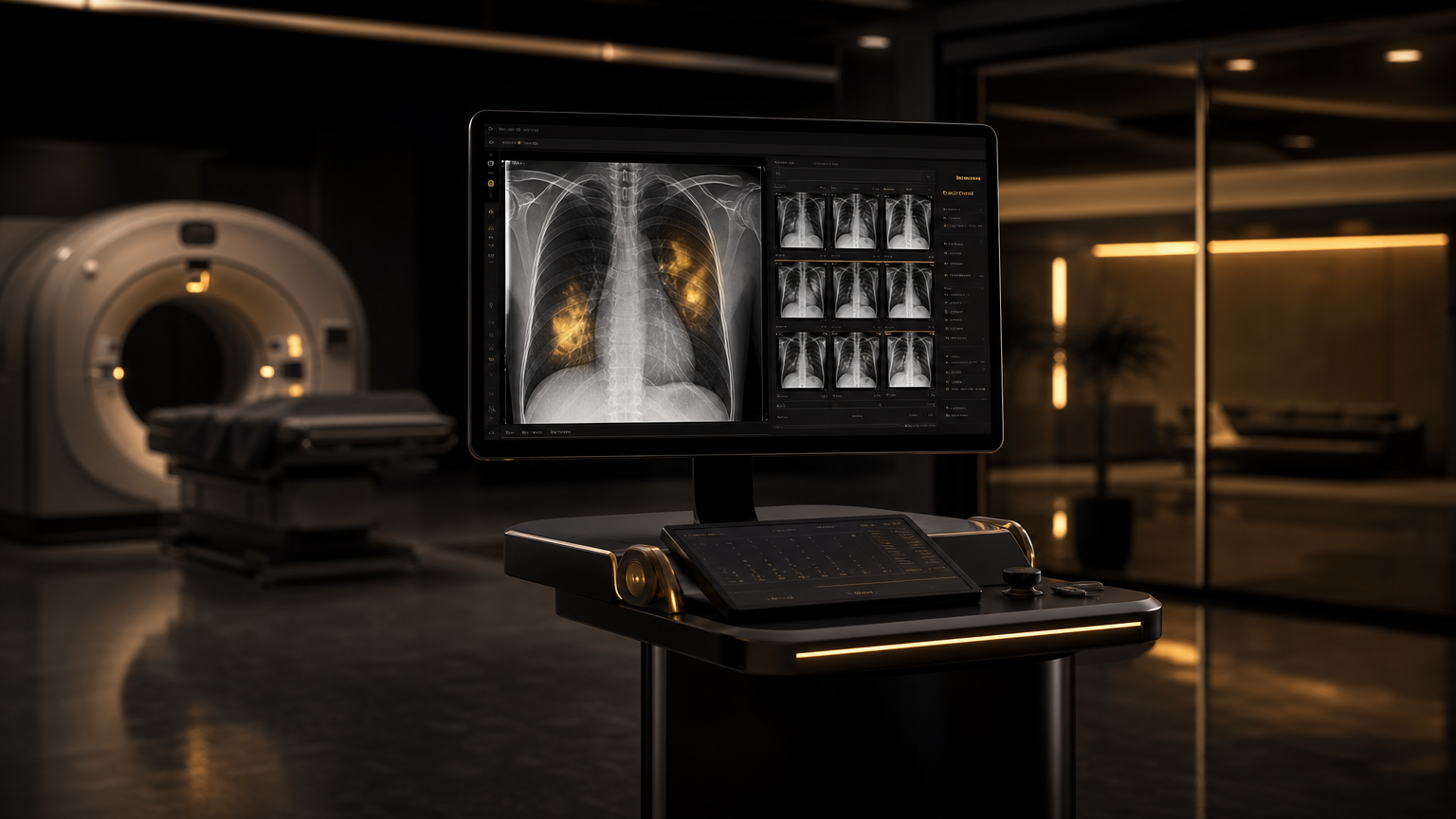
Aira moves from AI demo to regulated device
Qure.ai’s Aira has cleared a notable regulatory threshold: the company announced on September 17, 2026 that the clinical decision-support system has received Class IIb CE certification under the EU Medical Device Regulation for its CDSS use case . In plain terms, Qure.ai is presenting Aira not merely as a productivity assistant, but as regulated medical-device software intended to support clinical decision-making in primary care .
The claim matters because Aira sits in a sensitive part of the AI stack. It is not just reading an image, formatting a note or summarizing a visit. Qure.ai describes the system as combining documentation, workflow automation, patient electronic-health-record analysis and clinical decision-making under a single CE mark . That combination puts the product closer to the daily judgment calls made by health workers, especially in places where staffing, record quality and follow-up systems are thin .
The certification also lands roughly a year after Aira’s launch at the World Health Assembly in 2025, according to Qure.ai’s own announcement . That timing gives the story its strategic edge: Qure.ai is trying to show that an AI product designed for stretched primary-care systems can move from global-health showcase to certified software without abandoning the messy realities of low-resource deployment .
Why Class IIb is the real checkpoint
Class IIb is not a cosmetic label in this story. Qure.ai says the classification reflects one of the EU MDR’s higher levels of scrutiny for software that supports decisions where accuracy and reliability can affect patient outcomes . For buyers, that gives the announcement more weight than a generic “AI-powered” launch.
Hospitals, ministries of health and funders are increasingly being asked to distinguish between three things: prototypes that perform well in controlled settings, operational tools that improve workflow, and regulated products that can be procured with a defensible clinical and quality-management file. Aira’s new status is important because it gives procurement teams a clearer regulatory reference point for evaluation, subject to local rules .
It also creates a benchmark for competitors. The medical-AI market is crowded with copilots, ambient documentation systems, triage assistants and guideline engines. But Qure.ai is arguing that Aira is among the first AI-powered CDSS products globally to combine documentation, automation, EHR analysis and decision support under one Class IIb CE-marked framework . If that framing holds in purchasing conversations, rivals will be judged not only by accuracy claims or interface polish, but by whether they can carry comparable regulatory evidence into clinical environments.
What Aira is built to do
Aira is aimed at frontline primary care, particularly in emerging economies and other settings where the shortage of clinicians is compounded by paper-based or fragmented data systems . Qure.ai says the platform is designed around three persistent problems: workforce shortages, inconsistent adherence to clinical guidelines and administrative burden .
The product’s role is to sit on top of existing health systems as an AI layer rather than requiring a clean-slate technology replacement . In Qure.ai’s description, Aira turns consultations and paper records into a digital care trail, surfaces patient history, provides recommendations based on national guidelines and helps maintain contact with patients between visits . The company also says the system is designed for local languages, ordinary digital devices and unreliable connectivity, which are practical constraints in the primary-care settings it is targeting .
That positioning is important. Many clinical AI tools begin with a narrow, high-value diagnostic event: a scan, a lab result, a specialist referral. Aira is broader. It targets the continuity layer around the visit: history capture, guideline adherence, follow-up and administrative load . In other words, Qure.ai is not selling only an algorithmic opinion. It is selling a way to make a thinly staffed clinic remember, document and follow up more consistently.
Early deployments and measured workflow gains
Qure.ai says Aira has scaled in its first year to ten live pilot sites, reaching thousands of patients and care seekers across Nigeria, Kenya, Mozambique, the Solomon Islands and Bangladesh . The geography is part of the product thesis: Aira is being tested across both last-mile and urban contexts rather than being confined to a single flagship hospital .
The company disclosed several deployment examples. In Nigeria, Aira supports anti-retroviral therapy center health workers with structured data capture and guideline-based decision support, including work with the Catholic Caritas Foundation of Nigeria in Enugu and Ebonyi and the Adamawa State HIV/AIDS and STI Control Program . In Mozambique, it is integrated into AlôVida, the national platform run by the Ministry of Health, with VillageReach as implementation partner and Qure.ai providing the technology . Qure.ai also says Aira has been used in the Solomon Islands to digitize paper-based reporting connected to World Health Organization Western Pacific regional reporting work, and that deployment in Bangladesh is supported by Endless Health .
The early workflow figures are specific enough to watch. Qure.ai says a Kenya outreach program reduced time spent on protocol-driven documentation by 32% while maintaining a 98% completion rate in documentation tasks . In primary HIV care facilities in Nigeria, the company says the clinical-to-administrative time ratio improved by 67% in favor of patient-facing time, while administrative time fell 23% . Those are operational metrics, not definitive patient-outcome proof, but they are exactly the kind of evidence health systems will examine before moving from pilots to scale.
The procurement signal
The immediate commercial implication is that Aira now has a stronger route into regulated healthcare deployments. Qure.ai says the certification gives health ministries, providers and funders an independently assessed foundation for evaluation and procurement, subject to local requirements . The company also says it is working with ministries of health and institutional funders on population-scale deployments over existing national systems .
That phrase, “over existing national systems,” is critical. Aira’s strongest argument is not that every clinic should replace its software stack, but that an AI layer can make current systems more usable for frontline workers . If ministries believe that, procurement can be framed less as buying another app and more as upgrading the reliability of clinical workflows already in place.
For Qure.ai, Aira also extends a broader regulated-AI portfolio. The company says its AI products are deployed in more than 105 countries, with more than 26 FDA-cleared findings and CE marking for more than 60 indications . That history does not automatically prove Aira will improve outcomes at scale, but it gives Qure.ai a regulatory and deployment résumé that many younger medical-AI vendors do not yet have.
The caveat: certification is not the finish line
The current public record around the announcement is still largely company-originated and syndicated. Fortune carried the item as paid content from EZ Newswire, CXOtoday ran it as media coverage, and SignalNews Dallas labeled it as a press release distributed through the XPR Media network and not independently verified by its newsroom . That does not make the certification unimportant; it means the next stage will require evidence beyond announcement copy.
The key questions now are practical. Will Aira’s workflow gains persist outside pilot sites? Will guideline-based support measurably improve care quality, not just documentation completeness? Can language support, connectivity resilience and integration with national platforms hold up as deployments move from thousands of users to population scale? Qure.ai says it wants to build a larger evidence base for AI-supported care and patient outcomes .
For now, the story is a meaningful regulatory save point for medical AI. Aira’s Class IIb CE certification gives Qure.ai a stronger claim in regulated primary-care AI, gives buyers a more concrete basis for scrutiny, and gives rivals a higher bar to clear. The algorithm did not finish the game, but it did reach a certified checkpoint.
Sources from the last 72 hours
- [1]Qure.ai's Clinical Decision Support System Aira Among World's First to Win Class IIb CE CertificationSep 17, 2026, 2:03 PM UTC
- [2]Qure.ai’s Clinical Decision Support System Aira Among World’s First to Win Class IIb CE CertificationSep 17, 2026, 12:26 PM UTC
- [3]Qure.ai’s Clinical Decision Support System Aira Among World’s First to Win Class IIb CE CertificationSep 17, 2026, 12:00 AM UTC
- [4]Qure.ai's Clinical Decision Support System Aira Among World's First to Win Class IIb CE CertificationSep 17, 2026, 12:00 AM UTC
AI-generated article based on recent web research, then preserved as a dated editorial snapshot.
Comments
Be the first to comment.