
Daily Podcast full article
Crusoe raises $3.9B Series F
Crusoe has announced a $3.9 billion Series F at a $30.9 billion post-money valuation, a financing that turns the AI-infrastructure company’s energy-first data-center model into one of the clearest tests of whether private markets will keep funding the physical backbone of frontier AI.
The deal: a giant private round for the AI factory thesis
Crusoe announced the initial closing of an anticipated $3.9 billion Series F financing, valuing the Denver-based AI-infrastructure company at $30.9 billion post-money . The round was co-led by Atreides Management, Mubadala Capital and Valor Equity Partners, with participation from investors including Founders Fund, GIC, NVIDIA, Qatar Investment Authority, Radical Ventures and TPG . Reuters also reported the same valuation and financing amount, framing the raise against surging demand for compute capacity to power AI workloads .
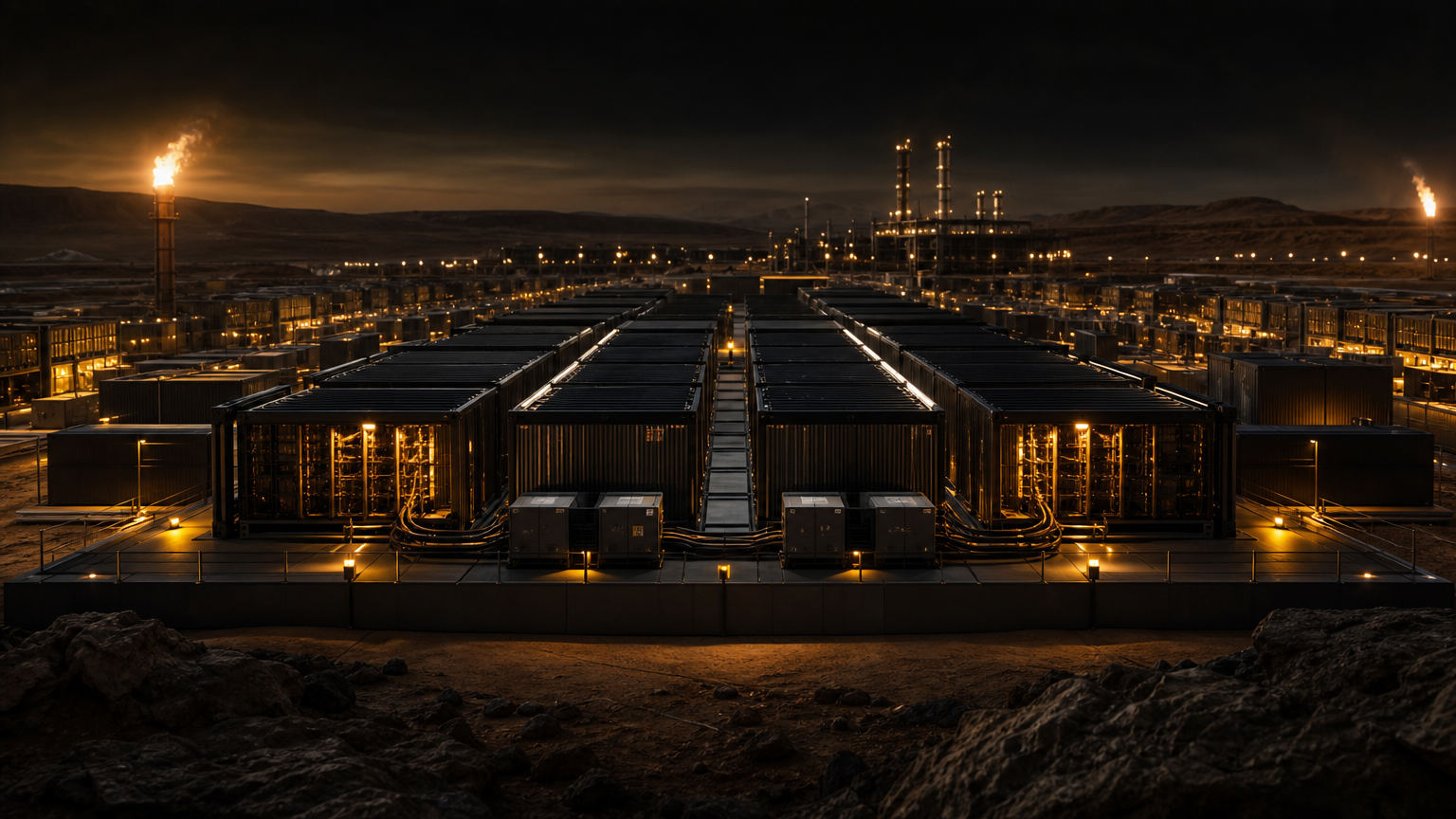
The size is the headline, but the structure of the story is about scarcity. Frontier-model developers, hyperscalers and enterprise AI buyers are no longer competing only for algorithms or application distribution; they are competing for power, land, interconnection, construction speed, GPUs and cloud capacity. Crusoe’s pitch is that those layers should be controlled together. In the company’s own language, the money will support expansion “from energy generation to AI cloud services” and help scale both large AI campuses and modular Crusoe Spark units .
That matters because the market has been asking a harder question in 2026: can AI revenues justify the enormous capital spending needed to build the compute base underneath them? Crusoe’s Series F suggests that, at least for select infrastructure companies, investors still believe the bottleneck itself is investable. When compute is scarce, a company that can turn megawatts into usable AI capacity becomes more than a data-center landlord. It becomes part of the supply chain for model development.
Why the valuation jumped
Crusoe says it now has more than $140 billion in total contracted value across its vertically integrated platform . The company also says it has more than 6 gigawatts of gross contracted capacity across data centers and cloud, including 1 gigawatt already delivered and operational . Reuters highlighted those same figures as evidence of the scale Crusoe is trying to reach .
Those numbers help explain why a private investor group would tolerate a $30.9 billion valuation. The bet is not simply that demand for AI compute remains high. It is that demand remains high enough, and urgent enough, to reward operators that can deliver capacity faster than traditional development cycles allow. TechCrunch reported that Crusoe’s new capital will help finance existing data-center projects, including a large Abilene, Texas site used by OpenAI, as well as smaller modular AI factories that can be transported by truck and connected to large power sources .
That modular angle is important. Large campuses remain central to the AI buildout, but they are slow, politically visible and power-intensive. Smaller factory-built units could give Crusoe another deployment mode: less dependent on giant single-site construction and potentially better suited to available energy pockets. TechCrunch noted that Spark units are manufactured at Crusoe’s own facilities and may reduce the need for large construction workforces .
From neocloud to vertically integrated infrastructure
Crusoe is often described as part of the “neocloud” category: specialized cloud and data-center providers built around AI workloads rather than general-purpose enterprise computing. Reuters described Crusoe as one of the emerging neoclouds that provide specialized AI cloud and data-center services . But Crusoe is trying to differentiate itself from a pure GPU-rental story.
The company says it sources power, develops data centers, manufactures critical components in-house and delivers AI cloud services on top of that infrastructure . Its Series F announcement also pointed to Crusoe Cloud bookings growing more than 20 times year over year to date, and said its managed inference product has contracted more than $100 million in annual recurring revenue since launching late last year .
That stack is the core of the investment case. Leasing GPUs is valuable when chips are scarce, but defensibility can erode if supply normalizes or prices compress. Power access, interconnection rights, construction know-how and customer contracts are harder to replicate quickly. Crusoe’s valuation implies investors are paying for that integrated position rather than for cloud software alone.
Governance follows the capital
The financing was paired with a board expansion that reinforces the same message. Crusoe appointed three independent directors: Cloudflare CFO Thomas Seifert; Bill Stein, executive managing director and chief investment officer of Primary Digital Infrastructure and former CEO of Digital Realty Trust; and JB Straubel, founder and CEO of Redwood Materials, co-founder and former CTO of Tesla .
That is not a random set of résumés. Seifert brings public-company cloud and finance experience, Stein brings data-center and digital-infrastructure operating experience, and Straubel brings energy-systems and storage expertise. Crusoe said the appointments add experience across energy infrastructure, data-center development, capital markets and global cloud technology .
For a company now valued above $30 billion, governance becomes part of the product. Customers that sign long-duration compute and infrastructure contracts need confidence that Crusoe can finance, build and operate reliably. Investors need confidence that the company can manage the capital intensity of multi-gigawatt expansion. A board built around cloud, data centers and energy is a signal that Crusoe sees its next phase less like a startup sprint and more like industrial-scale execution.
What this means for AI infrastructure rivals
Crusoe’s raise raises the bar for competitors in three areas: power access, deployment speed and capital formation. The winners in AI infrastructure will not be judged only by who has the most GPUs on a marketing page. They will be judged by who can secure electricity, bring capacity online, keep utilization high and convert physical assets into contracted cloud revenue.
The investor list also matters. NVIDIA’s participation signals continued strategic interest from the chip ecosystem in companies that can place and operate accelerated-computing capacity . Sovereign and large institutional capital, including Mubadala Capital, GIC and QIA, points to the long-duration infrastructure character of the opportunity . This is not just venture capital funding a software growth curve; it is global capital funding power-hungry industrial infrastructure.
Still, the deal does not erase the risks. AI data centers face grid constraints, permitting complexity, community pushback and uncertainty over how quickly AI customers can monetize their own models. TechCrunch noted that modular units could help Crusoe partly sidestep backlash against massive complexes near neighborhoods, but that framing also underscores that physical expansion has social and political limits . A $30.9 billion valuation gives Crusoe more resources, but it also raises expectations.
The bottom line
Crusoe’s $3.9 billion Series F is a financing event with strategic consequences. It validates the view that the AI boom is as much an infrastructure race as a model race. It also shows that private-market investors remain willing to fund enormous capital requirements when the asset being built is scarce compute capacity tied to power.
The next test is execution. Crusoe must turn contracted value, gigawatts and modular manufacturing into dependable capacity for AI labs, hyperscalers and enterprises. If it succeeds, the company will look less like a data-center developer that caught the AI wave and more like a new industrial platform for intelligence production. If it stumbles, the round will become a reminder that compute scarcity can attract capital faster than infrastructure can be built.
For now, Crusoe has unlocked its Series F expansion pack: $3.9 billion more capital, a $30.9 billion valuation, and a much higher bar to clear.
Sources from the last 72 hours
- [1]Crusoe Raises $3.9 Billion Series F for its Vertically-Integrated AI Infrastructure PlatformSep 17, 2026, 6:25 PM UTC
- [2]Crusoe raises $3.9B to build massive data centers and small modular ‘AI factories’Sep 17, 2026, 11:25 PM UTC
- [3]AI infrastructure provider Crusoe valued at $30.9 billion in latest funding roundSep 17, 2026, 7:25 PM UTC
- [4]Crusoe Adds Cloudflare CFO Thomas Seifert, Digital Realty Former CEO Bill Stein, and Redwood Materials Founder and CEO JB Straubel to its Board of DirectorsSep 17, 2026, 6:00 AM UTC
AI-generated article based on recent web research, then preserved as a dated editorial snapshot.
Comments
Be the first to comment.