
Daily Podcast full article
Googlebook pre-orders opened at $899, with Gemini at the center of Google’s laptop comeback
Google has opened pre-orders for Googlebook laptops starting at $899, turning Gemini from a cloud assistant into the defining feature of a new premium PC category built with Acer, ASUS, Dell, HP and Lenovo.
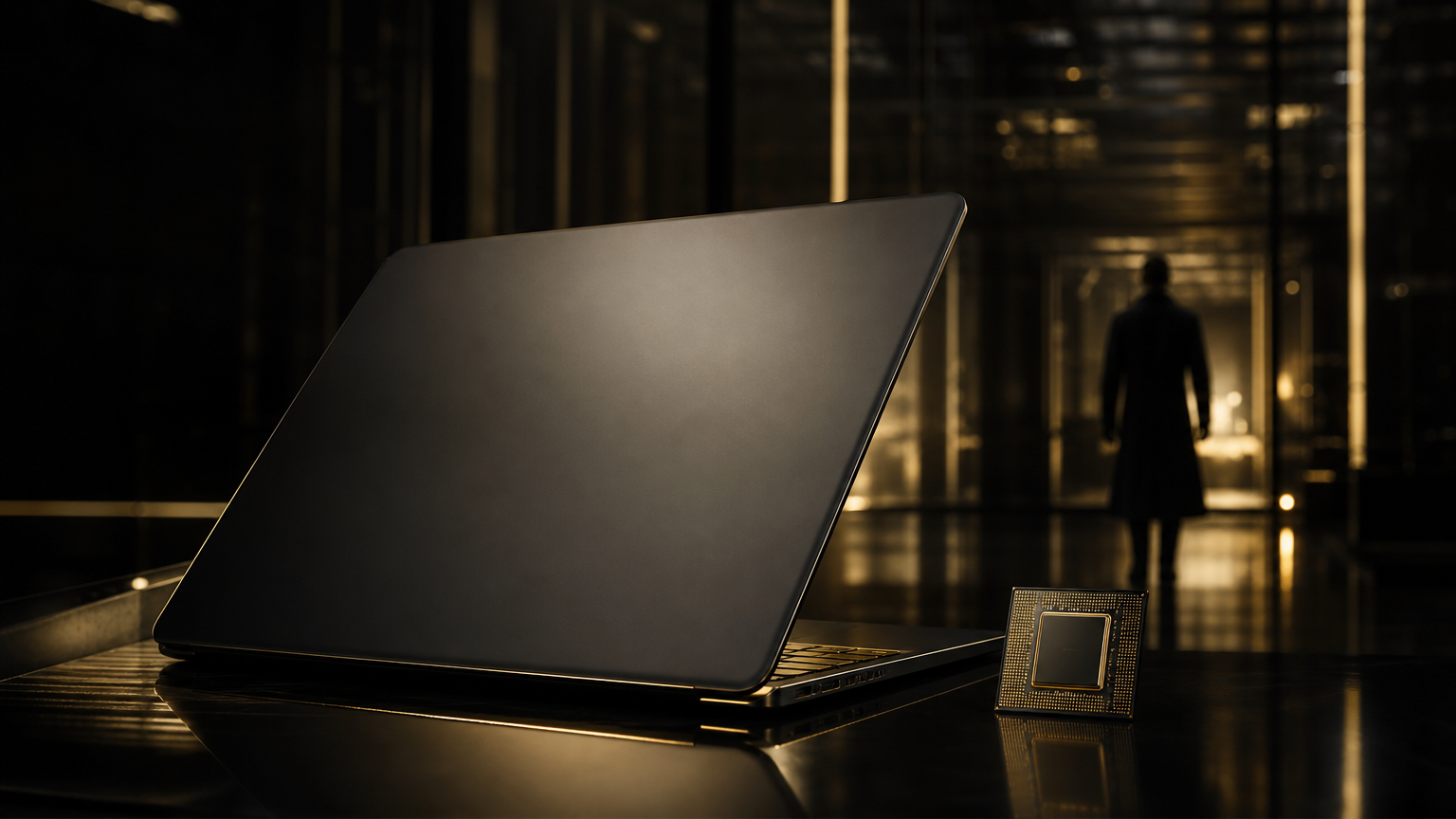
Googlebook arrives as a $899 AI-first laptop bet
Googlebook pre-orders are now open, and Google is positioning the new laptop line as more than a Chromebook refresh. The company says Googlebook is a new category of premium laptops built on the Android technology stack, paired with desktop foundations from ChromeOS, and designed around Gemini Intelligence from the first boot . The launch price starts at $899, with sales through the Google Store, Best Buy and selected retailers before devices reach shelves on October 4 in the United States and October 5 in Canada, the United Kingdom, Ireland, France, Germany and Australia .
The strategic message is clear: Google wants Gemini to be the reason to buy the machine, not just another app installed on it. TechCrunch framed the launch as a bet that consumers will buy a laptop specifically because Gemini is baked into the format, rather than accessed through a browser tab or a separate desktop app . That is the important difference between Googlebook and the older Chromebook story. Chromebooks sold simplicity, price and the web. Googlebook is selling an AI-native desktop, Android continuity and premium hardware.
Five partner laptops, one Google-controlled experience
Google is not launching one single laptop. The first Googlebook wave includes five flagship models from Acer, ASUS, Dell, HP and Lenovo, with Google controlling the software experience while partner manufacturers handle the hardware variety . Google says those models start at $899 and use premium materials such as aluminum, magnesium alloy and carbon fiber, with touchscreens up to 2.8K OLED, haptic glass trackpads, backlit keyboards and processors from Intel and Qualcomm paired with dedicated NPUs rated above 45 TOPS for on-device AI work .
That division of labor matters. It lets Google avoid the narrowness of a one-device launch while still setting the rules for the platform. Axios reported that Google’s approach gives consumers different sizes, designs and form factors while ensuring that each model works with Android phones in the same way . In other words, Googlebook is an ecosystem play wearing a laptop chassis. The hardware can vary; the Android-Gemini-ChromeOS experience is supposed to feel consistent.
Google’s companion hardware post describes the lineup in broad character types: Acer has the convertible model, ASUS emphasizes a 2.2-pound travel design, Dell balances size and display, HP leans into design, and Lenovo offers a 15-inch productivity model . The shared baseline is premium rather than bargain-bin. Google says the portfolio starts with 16GB of RAM, offers some configurations up to 32GB, and targets up to 14 hours of video playback or 16 hours of web browsing .
Gemini becomes the laptop interface
The most important feature is not the screen, battery or chassis. It is how Gemini is integrated into the desktop. Google highlights Magic Pointer, a cursor gesture that brings Gemini to the content on screen, allowing users to ask for help with tasks such as organizing a calendar, translating text or acting on visible information without switching apps . Axios described Magic Pointer as one of Googlebook’s most distinctive features because it gives Gemini screen context from the cursor itself .
Google is also shipping Rambler, a dictation and writing feature that turns spoken thoughts into structured text with headers, checklists and takeaways . Create My Widget lets users describe a widget in plain language and generate a custom desktop tool for ongoing updates . These features make Googlebook feel like an attempt to redesign the interface around AI prompts, voice and context, rather than simply adding a chatbot panel to a familiar laptop.
That is where the subject’s “Gemini chip” idea becomes commercially important. Google’s current materials describe top-end Intel and Qualcomm processors paired with dedicated NPUs above 45 TOPS, which is the hardware layer that makes local AI features plausible instead of purely cloud-dependent . The launch pitch is therefore not only “Gemini is available.” It is “Gemini is close to the screen, close to the cursor, close to your files and close to the silicon.” That is a much tighter full-stack proposition than a browser-based assistant.
Android continuity is the second selling point
Googlebook is also designed to make Android phone owners feel as if their laptop and phone are one continuous device. Google says setup can bring over phone settings, saved passwords, Wi-Fi networks and messages with end-to-end encryption, while features such as Continue On, Files and Cast My Apps let users resume phone tasks, access phone photos and files, or stream phone apps inside a desktop window .
This is the part of the launch that most directly challenges Apple’s ecosystem advantage. Apple has spent years making iPhone and Mac continuity feel natural. Googlebook is Google’s answer for Android users who may have premium phones but still choose between Windows PCs, Macs and Chromebooks when buying a laptop. Axios noted that Googlebook combines an Android base with a desktop experience derived from ChromeOS, allowing native Android apps to sit beside a full desktop Chrome browser, web apps and Linux tools .
The software bundle reinforces that premium positioning. Every Googlebook includes 12 months of Google AI Pro with 5TB of cloud storage and Gemini Advanced tools, plus three months of YouTube Premium and Adobe Photoshop . Ars Technica reported that all models also include a year of GeForce Now for game streaming . Google is trying to make the $899 entry price feel less like a bare hardware purchase and more like an AI, storage, creative and entertainment bundle.
Security and developers are part of the pitch
Google is also emphasizing secure architecture. The company says Googlebook is built on the same security architecture as ChromeOS, anchored by Google Titan hardware root of trust, defense-in-depth protections and on-device malware detection . It also describes a Level 5 security-certified pKVM hypervisor for an isolated Linux environment with terminal access, meant to let developers run tools, pull repositories and execute agentic workflows safely .
That developer angle is not accidental. Googlebook includes Antigravity, Google’s AI agent development platform, and supports terminal environments for tools such as Claude Code or Antigravity CLI . Google is therefore pitching Googlebook to consumers, Android loyalists, students, creators and developers at once. That is ambitious, but it also creates a risk: if the AI features feel unfinished or the Android-desktop blend feels awkward, the premium price will be harder to defend.
The competitive pressure
Googlebook lands in a PC market where every vendor is already talking about AI PCs. The difference is that Google controls Gemini, Android, ChromeOS foundations, the Play Store relationship and the reference experience. Dell’s XPS Googlebook illustrates the partner strategy: Dell announced a 13-inch XPS Googlebook powered by Snapdragon X Elite, with a 2.5K InfinityEdge touch display, up to 32GB of LPDDR5X memory and up to 16 hours of Netflix streaming in Dell’s benchmark . Dell prices that model from $999, above Google’s $899 starting point .
The challenge is that Googlebook is entering a ruthless premium laptop tier. Ars Technica noted that buyers at this price may compare Googlebook not only with Windows AI PCs but also with MacBook Air-class machines, and that early buyers will have to order before independent reviewers have spent substantial time with the devices . That uncertainty matters. Google is asking people to pre-order the future of the AI laptop before the category has proved itself in daily use.
Still, the launch is significant because Google is no longer treating personal computing as merely a browser endpoint. With Googlebook, the company is tying model, silicon acceleration, operating experience, Android continuity and partner hardware into one product story. The result has main-character energy from The Matrix: a laptop that wants to make Gemini the operator behind the screen, not just the oracle you visit in a tab.
Sources from the last 72 hours
- [1]Googlebook: The laptop your Android phone has been waiting forSep 21, 2026, 12:00 AM UTC
- [2]Google’s $899 Googlebook is a bet that you’ll buy a new laptop for GeminiSep 21, 2026, 2:39 PM UTC
- [3]Google takes aim at premium laptop market with $899 GooglebookSep 21, 2026, 1:00 PM UTC
- [4]Dell Technologies Introduces XPS Googlebook: The First XPS Laptop Built for Gemini IntelligenceSep 21, 2026, 12:00 AM UTC
- [5]Googlebooks launch October 4 starting at $899—here are the five models you can preorder todaySep 21, 2026, 12:00 AM UTC
- [6]Premium materials and striking design set Googlebook apartSep 21, 2026, 12:00 AM UTC
AI-generated article based on recent web research, then preserved as a dated editorial snapshot.
Comments
Be the first to comment.