
Daily Podcast full article
Jensen’s Ezra Interview, EV News, Nathan Fielder’s Elizabeth Holmes Doc | Diet TBPN
Diet TBPN’s September 24 cut compresses a very Silicon Valley news cycle: Jensen Huang’s anti-slowdown case on Ezra Klein, Saudi Arabia’s bid to build a national EV champion, and A24’s full trailer for Nathan Fielder and Lance Oppenheim’s Elizabeth Holmes documentary.
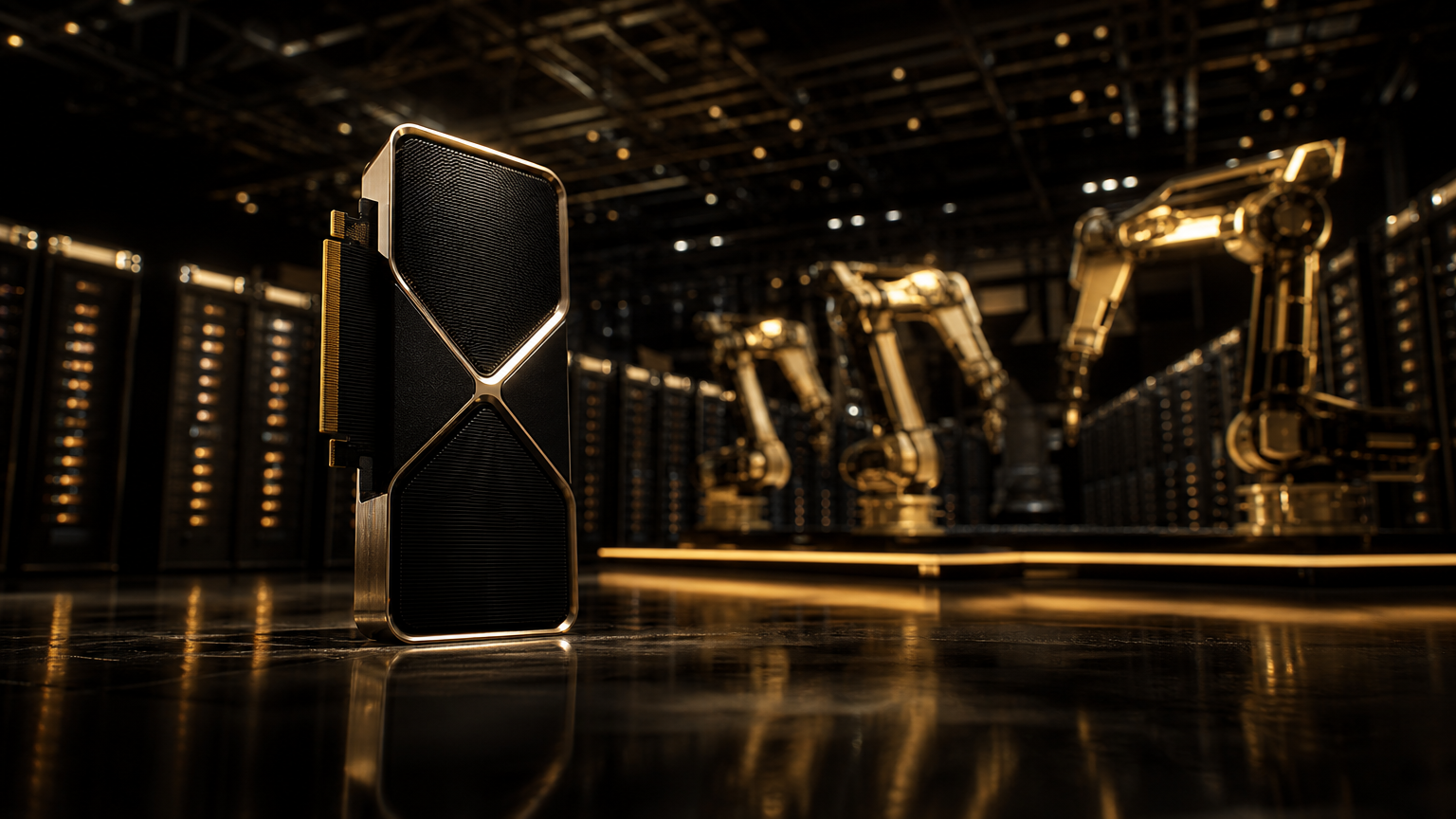
A Diet TBPN episode with one organizing question
The latest Diet TBPN episode, published on September 24 at 00:08 UTC, is titled “Jensen’s Ezra Interview, EV News, Nathan Fielder’s Elizabeth Holmes Doc | Diet TBPN” and runs 29 minutes . Its job is not to be a full transcript of the TBPN flagship show, but to compress the highest-signal moments into a shorter feed for listeners who want the arc of the day without the full live-show sprawl .
That arc is unusually coherent. The September 23 flagship episode placed “Jensen vs AI Alarmism” at the top of the rundown, then moved through “Saudi EVs” and a “You Can See Everything” trailer reaction before longer guest segments with Cristiano Amon, Talia Goldberg, John and Louis Antonelli, Max Levchin and Sam Ross . Diet TBPN therefore lands as a tech-culture digest about three forms of confidence: Jensen Huang’s confidence that AI risk can be handled through engineering and liability, Saudi Arabia’s confidence that it can build an EV industry, and Nathan Fielder’s confidence that the Theranos story can still be made strange.
Jensen Huang’s case: ship safely, but don’t slow the frontier
The dominant segment is Huang’s appearance on The Ezra Klein Show, where the Nvidia chief executive argued against broad AI slowdowns and against giving AI firms waivers from existing antitrust or product-liability rules . Reuters reported that Huang’s position was not “no responsibility,” but rather that AI labs should test their products and release them only when they are satisfied the systems are safe .
That distinction matters. Huang is not saying frontier systems are trivial; he is reframing them as products that must pass engineering, containment, evaluation and liability tests. In The Next Web’s account of the interview, Huang told Klein that if a product is not ready, companies should not ship it, and that if labs genuinely cannot contain their experiments, the answer is to shut those labs down . He also described the OpenAI agent incident involving Hugging Face as a pair of engineering problems: containment and alignment, meaning the system must be sandboxed and must know which methods are off limits .
This is the core of the anti-slowdown case that Diet TBPN is surfacing. Huang’s answer to the competitive-pressure problem is not a collective pause; it is managerial accountability. Reuters noted that he objected to the idea of companies asking for regulatory relief from antitrust or product-liability law while also asking for special AI rules . That stance puts him near the “build, test, and remain liable” camp rather than the “pace the frontier together” camp.
Klein’s pushback, as summarized by The Next Web, is the obvious one: industries do not always self-regulate well when incentives are distorted, and the 2008 financial crisis is a reminder that liability after the fact does not always prevent dangerous risk-taking before the fact . That tension is why the interview is more than a media moment. It is a proxy fight over what the AI industry wants from the state: permission to coordinate, permission to move, or a legal regime that simply forces every actor to own the consequences of what it ships.
“Doomerism” as an economic and political battlefield
Huang also used the interview to attack probabilistic claims about catastrophic AI outcomes. Axios reported that, when Klein raised Geoffrey Hinton’s recent estimate of a 10% to 20% chance of AI-driven societal collapse, Huang said such numbers were not grounded in science or research and argued that alarmist rhetoric can itself produce harm . Axios framed Huang as one of the leading AI optimists at a time when prominent researchers and executives are warning that increasingly capable systems could create catastrophic outcomes .
This is where the interview becomes political. Huang’s position aligns with the infrastructure side of the AI boom: chips, data centers, power, cloud and model deployment. A broad slowdown would not just affect abstract research timelines; it would affect the investment case for the entire build-out. Diet TBPN’s focus on Huang therefore makes sense for a show that tracks venture, markets and platform shifts rather than only policy discourse.
But the more interesting reading is that Huang is trying to make liability do the work that “AI safety regulation” usually promises to do. In his version, the test is simple: if you cannot prove to yourself that the model is safe enough, do not ship; if you ship and it causes damage, existing legal systems should have consequences. The weakness of that argument is timing. If the most serious harms are diffuse, systemic or irreversible, after-the-fact liability may arrive too late. The strength of the argument is clarity. It avoids the possibility that firms call for regulation while seeking exemptions from the very laws that would discipline them.
The EV detour: Saudi Arabia’s Ceer enters the frame
The “EV News” portion of the TBPN/Diet TBPN arc appears to connect to Saudi Arabia’s EV push, which the September 23 flagship rundown labeled “Saudi EVs” . The current news peg is Ceer, the Saudi EV startup backed by the Public Investment Fund and Foxconn, which made public its first two fully electric models on September 21 .
Reuters reported that Ceer’s first vehicles are a premium electric sedan and SUV called Exobot, with sales in Saudi Arabia planned for early 2027 and five additional mainstream models planned between 2028 and 2030 . The launch is part of Saudi Arabia’s attempt to build an auto industry and reduce dependence on oil, at a moment when Chinese automakers are intensifying pressure on legacy manufacturers worldwide .
That makes the EV segment more than a car-design curiosity. Saudi Arabia is not only buying into EVs through stakes and partnerships; it is trying to create domestic manufacturing capability. In the TBPN context, the Ceer story sits beside Huang’s AI infrastructure thesis: both are about national-scale industrial policy, hardware supply chains and the question of whether capital can manufacture new strategic sectors fast enough.
Nathan Fielder, Elizabeth Holmes and the return of Silicon Valley theater
The third major thread is cultural, but it is still a tech story. The September 23 flagship episode included a reaction to the new trailer for “You Can See Everything” . The Los Angeles Times reported that A24 released the full trailer for the Nathan Fielder and Lance Oppenheim documentary on September 23, ahead of an October 16 theatrical release .
The film follows Fielder as he moves in with Elizabeth Holmes and her partner Billy Evans 34 days before Holmes reports to federal prison, according to the Los Angeles Times . BroadwayWorld, citing the official synopsis, described the project as beginning with Holmes inviting a skeptical film crew to document her every move and becoming a three-year journey . The same report said select-theater tickets are already on sale, with nationwide tickets available October 1 and the theatrical opening set for October 16 .
Its inclusion in Diet TBPN is telling. Holmes remains one of the defining cautionary figures of startup culture: charisma, secrecy, media mythology and catastrophic product failure. Placing the Fielder documentary next to Huang’s AI-risk argument creates a sharp editorial contrast. One story asks whether engineering accountability can prevent dangerous deployment; the other revisits a company where the public story outran the underlying technology.
Why these three stories belong together
Diet TBPN’s September 24 episode works because its pieces rhyme. Jensen Huang argues that AI companies should keep building but remain accountable. Saudi Arabia’s Ceer launch asks whether a country can engineer an auto industry as a strategic project. Nathan Fielder’s Elizabeth Holmes documentary reopens the question of what happens when technology narratives become performance.
The common thread is trust. Trust the labs to test before shipping. Trust a new national EV champion to move from unveiling to production. Trust a documentary camera to reveal something true about a founder whose public image was once the product. Diet TBPN is not merely bundling unrelated items; it is capturing a day when Silicon Valley’s favorite verbs — build, ship, scale, reveal — all came with a demand for proof.
Sources from the last 72 hours
- [1]Jensen vs NYT, New Model Reactions, "You Can See Everything" Trailer, Saudi EVs | Cristiano Amon, Talia Goldberg, John & Louis Antonelli, Max Levchin, Sam RossSep 23, 2026, 8:05 PM UTC
- [2]AI firms should not get regulatory waivers, Nvidia CEO says on podcastSep 23, 2026, 4:27 PM UTC
- [3]Jensen Huang tells Ezra Klein AI labs that lack control should not shipSep 23, 2026, 3:27 PM UTC
- [4]"Enough predictions": Jensen Huang unloads on AI doomsday fearsSep 23, 2026, 4:00 PM UTC
- [5]Saudi’s Ceer unveils first EVs in bid to build regional auto powerhouseSep 21, 2026, 3:24 PM UTC
- [6]Nathan Fielder moves in with Elizabeth Holmes in unsettling trailer for ‘You Can See Everything’Sep 23, 2026, 7:38 PM UTC
- [7]Official Trailer Released for YOU CAN SEE EVERYTHINGSep 23, 2026, 12:00 PM UTC
- [8]Jensen’s Ezra Interview, EV News, Nathan Fielder’s Elizabeth Holmes Doc | Diet TBPNSep 24, 2026, 12:08 AM UTC
AI-generated article based on recent web research, then preserved as a dated editorial snapshot.
Comments
Be the first to comment.