
Daily Podcast full article
At All Costs: Elon’s Big Admission
Elon Musk’s latest xAI signal was not a victory lap. By reviving Shaan Puri Maguire’s bullish essay and warning against “complacency and entitlement at all costs,” Musk effectively admitted that the AI race is still fragile, fast-moving, and brutally execution-driven.
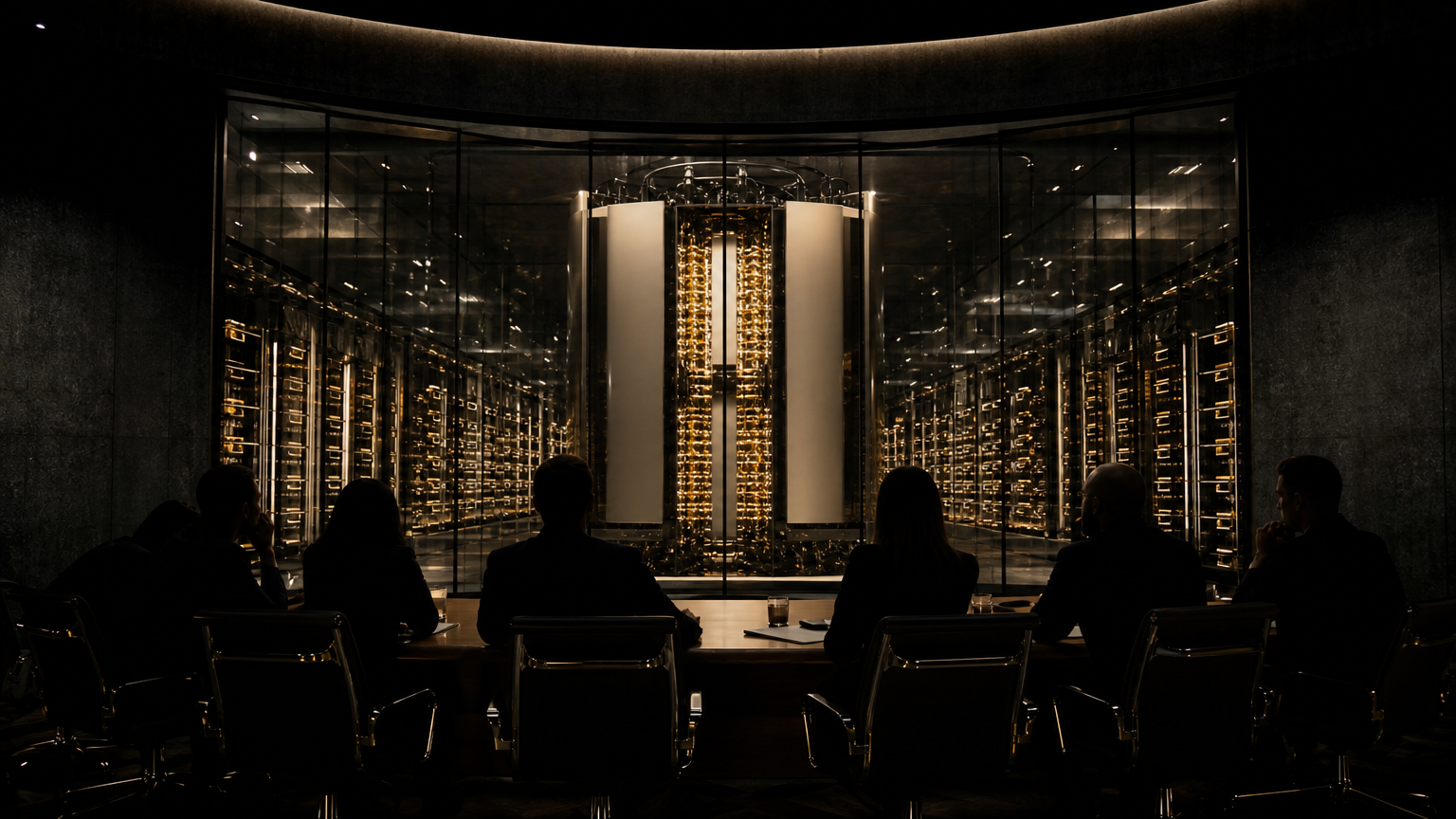
The headline Musk wanted people to notice
Elon Musk’s newest xAI message is easy to misread as confidence. It is better understood as pressure. After a March essay by Shaan Puri Maguire resurfaced in his X feed, Musk responded that it was “a reminder to avoid complacency and entitlement at all costs” . That phrasing matters because it is not the language of a founder declaring the race won. It is the language of someone telling his own side that the race can still be lost.
The story here is not that Musk suddenly believes xAI is doomed. It is the opposite: he appears to believe xAI can still become a leading AI company. But the admission inside the warning is that scale, capital, brand, and early momentum do not create entitlement to victory. In frontier AI, every advantage is temporary unless it keeps compounding.
That is why this moment lands differently from a typical Musk post. The context is a market where model quality, inference cost, distribution, consumer habits, chips, power, and product speed are all moving at once. A company can look ahead on compute and behind on product. It can ship a popular chatbot and still lose to a cheaper or more capable model. It can win a benchmark and fail to become a daily habit. Musk’s warning compresses all of that into one sentence: do not get comfortable.
Compute is still the first bottleneck
The freshest evidence that Musk is thinking in infrastructure terms came from his September 25 update on xAI’s Colossus systems. He said Colossus 1 includes 150,000 H100s, 50,000 H200s, and 30,000 GB200s, while Colossus 2 includes 110,000 GB200s and 440,000 GB300s . He added that another 220,000 GB300s would be fully operational the following week, another 220,000 in November, and possibly another 220,000 by late December if things go well .
Those numbers are not just bragging rights. They explain why Musk keeps framing AI leadership through acceleration rather than static rank. If model improvement is tied to training scale, reinforcement-learning compute, inference supply, and rapid experimentation, then the company that can bring usable compute online fastest gets more shots on goal. It can train more, test more, serve more users, and absorb more product demand.
The caveat is obvious: chips alone do not make a winning AI company. Data pipelines, networking, power delivery, cooling, research talent, product design, safety systems, and user trust all matter. But Musk’s current argument seems to be that compute is the bottleneck that unlocks the others. In that frame, Colossus is not merely a data center; it is xAI’s attempt to buy time, iteration speed, and strategic optionality.
“We will keep accelerating”
Musk’s clearest recent statement of competitive intent came in a reply captured on September 25. He wrote that “we will keep accelerating,” noting that his AI efforts are only three years old compared with six years for Anthropic and ten for OpenAI . He added that if the “second derivative” remains strong, the effort could reach “pole position” in about six months .
That is a striking claim, but the important part is not the timeline. It is the metric. Musk is not saying xAI is already the uncontested leader. He is saying its rate of improvement could matter more than its current position. That is the “big admission” behind the bravado: xAI is still in a catch-up-and-overtake phase.
This is also why complacency is so dangerous in AI. A team that believes it has already won starts optimizing for polish, bureaucracy, and internal narratives. A team that believes it is still behind optimizes for speed, bottleneck removal, and uncomfortable trade-offs. Musk is telling xAI to act like the second kind of team, not the first.
The race is expanding into space
One reason Musk’s warning feels timely is that the compute race is no longer confined to conventional data centers. Google said on September 24 that Project Suncatcher will launch a prototype satellite to test how its Tensor Processing Units perform in orbit, as part of a long-term research effort to explore machine-learning infrastructure in space . Google said the initial mission is tied to SpaceX’s Transporter-18 rideshare and was developed with Planet .
That announcement is relevant to Musk’s xAI stance because it validates one of the broader themes around his empire: future AI leadership may depend on physical infrastructure as much as model architecture. Power, cooling, orbital deployment, launch cadence, and chip supply are becoming strategic variables. If AI compute eventually expands beyond terrestrial data centers, SpaceX becomes more than a launch provider; it becomes part of the industrial substrate around AI.
Still, the practical future of orbital AI compute remains uncertain. Space hardware is expensive, thermal management is hard, and data-center economics on Earth are already challenging. But the fact that Google is testing TPUs in orbit on a SpaceX mission underscores the strategic direction: the AI race is becoming a race for energy, logistics, and physical deployment capacity.
From model power to consumer habits
The other half of Musk’s warning is product. xAI cannot win merely by having more chips. It must convert capability into daily use. That is why recent Grok integration signals matter. A September 24 report said Musk reposted news that Grok is being tested inside XChat group chats, where users would be able to tag Grok, ask questions, generate images or videos, set reminders, and summarize conversations .
If that rollout becomes real at scale, it would move Grok from a destination app into the flow of social communication. That is a different kind of consumer strategy. Instead of asking users to open a chatbot, xAI would place the assistant where people are already talking. In consumer AI, that distinction can matter as much as raw benchmark performance.
The market has already shown that users do not adopt AI only because a model is technically impressive. They adopt it when it becomes useful at the right moment: inside a chat, a coding environment, a browser, a phone, a car, or a workplace tool. Musk’s consumer advantage, if it exists, is that X gives Grok a distribution surface and Tesla may later give AI a physical-world surface. But distribution is not destiny. The product still has to be reliable, fast, affordable, and trusted.
The admission behind the confidence
Musk’s “at all costs” line is therefore less about fear and more about discipline. It says xAI has a plausible path, but not a guaranteed one. It says compute matters, but not alone. It says product integration matters, but not without model quality. It says speed matters, but speed without execution discipline becomes chaos.
That is the right way to read the revived Maguire essay. The bullish case for xAI is that Musk’s companies have historically looked messy while attacking hard bottlenecks, then suddenly appeared inevitable after the bottleneck broke. The bearish case is that AI is less forgiving than rockets or cars because software advantages diffuse quickly, talent moves, and users can switch tools with almost no friction.
Both can be true. xAI can be underestimated and still vulnerable. Musk can be confident and still warning his own team not to act entitled. The “big admission” is that the next phase will not be decided by reputation. It will be decided by compounding execution across compute, models, and products.
For xAI, that means the real test is not whether Musk can produce a dramatic number or a memorable post. It is whether Colossus-scale infrastructure turns into better models, whether better models turn into sticky consumer experiences, and whether those experiences survive a market where every rival is also accelerating. In AI, complacency is not a mood. It is a vulnerability.
Sources from the last 72 hours
- [1]At All Costs” - Elon’s Big Admission · SpaceX · HelloBro.aiSep 25, 2026, 6:15 AM UTC
- [2]Behind Project Suncatcher, our moonshot to put AI in spaceSep 24, 2026, 12:00 AM UTC
- [3]Grok Is Coming to XChat Group Chats as a Conversational Participant | 24/7 Wall St.Sep 24, 2026, 7:48 PM UTC
- [4]@minchoi The strange multiple of 110k is due to the number of fiber optic cables that can be plugged into a central switch — Elon Musk ArchiveSep 25, 2026, 5:16 AM UTC
- [5]@marsrepublica Interesting — Elon Musk ArchiveSep 25, 2026, 7:25 AM UTC
AI-generated article based on recent web research, then preserved as a dated editorial snapshot.
Comments
Be the first to comment.