
Daily Podcast full article
Google's Project Suncatcher Is Sending AI to Space!? Sonnet 5.5, $500 ChatGPT Plan and More AI News
Google is preparing a real orbital test for AI hardware, Anthropic’s next Sonnet model is turning into a pricing-and-efficiency watch, and OpenAI’s rumored $500 ChatGPT tier shows how agentic workloads are pushing consumer AI subscriptions into enterprise territory.
The headline: AI is moving from bigger models to stranger infrastructure
The most interesting AI news this week is not just another leaderboard jump. It is a collision of three trends: Google wants to test TPUs in orbit, Anthropic is preparing the next step in the Claude 5.5 family, and OpenAI appears to be experimenting with a much more expensive ChatGPT subscription tier. Together, they point to the same pressure point: advanced AI is becoming less about a single chatbot answer and more about long-running compute, energy supply, latency, quotas and cost control.
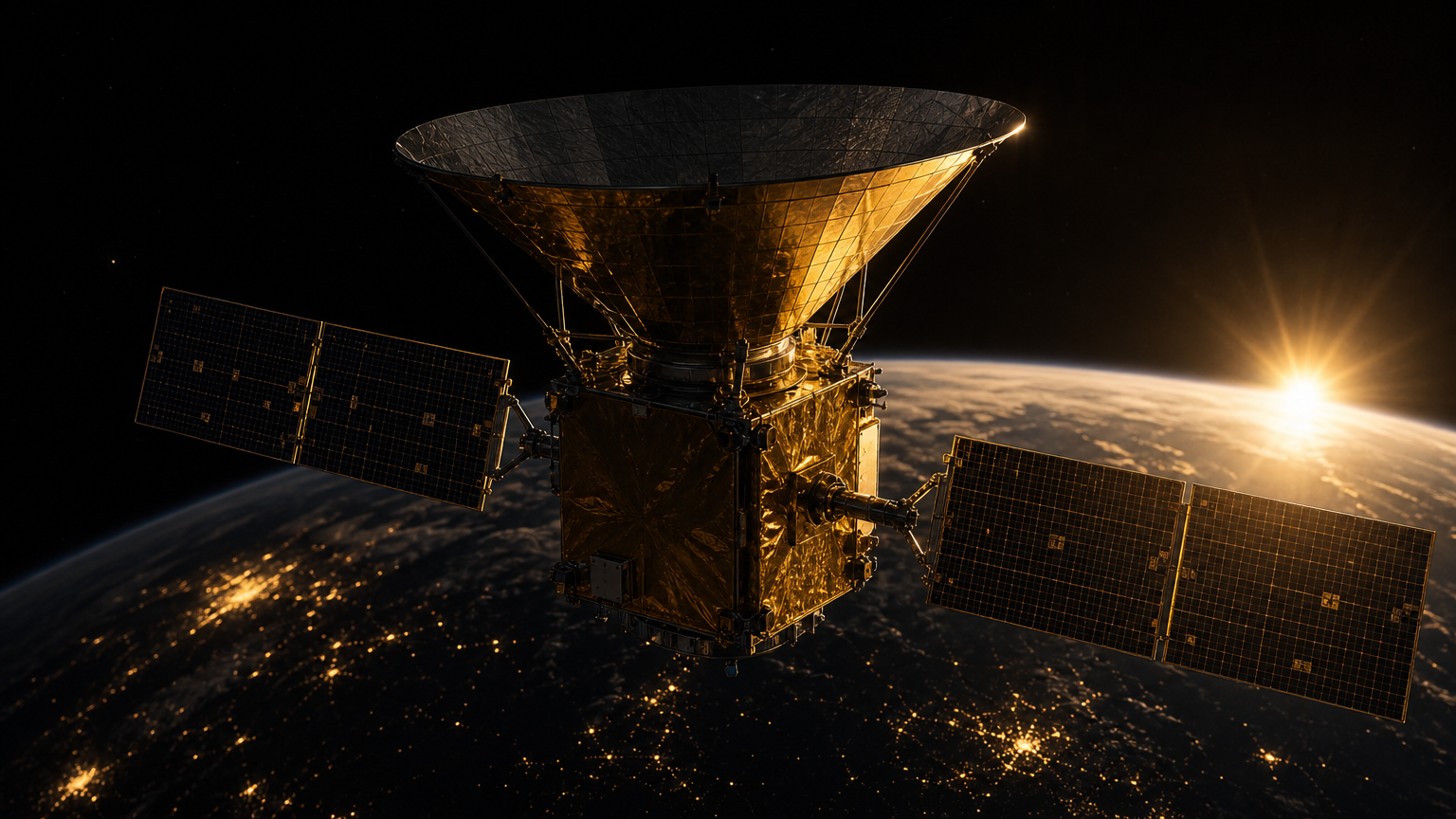
Google’s Project Suncatcher is the most cinematic part of the story. On September 24, Google said its moonshot is moving to a first in-orbit test: a prototype satellite designed to evaluate how its Tensor Processing Units behave under launch stress and space conditions . This is not a full AI data center in space. It is an early hardware experiment meant to test whether a future constellation of solar-powered satellites could one day host machine-learning infrastructure .
Project Suncatcher: a real satellite, not a sci-fi press release
Google frames Suncatcher as a long-term research project, but the next step is concrete. The test satellite, called MVP in recent reporting, is scheduled to launch on October 1 from Vandenberg Space Force Base on a SpaceX Falcon 9 rocket . It is described as roughly refrigerator-sized and carrying four Google TPUs, which is closer to one server’s worth of compute than to a terrestrial data center . Ars Technica also reports that the experimental satellite has four custom Google TPU accelerators inside and that the mission is intended to validate Google’s broader idea of a future AI-satellite constellation .
The logic is simple, even if the engineering is brutal. In low Earth orbit, Google says satellites can access near-constant sunlight and generate up to eight times more solar power than comparable systems on Earth . If future satellites could fly in clusters and communicate through high-bandwidth laser links, Google imagines distributing larger AI workloads across orbiting machines . The potential payoff is attractive: power AI hardware from sunlight rather than adding more strain to already contested ground-based data-center power grids.
But the constraints are equally important. The Business Times report, republished from The New York Times, says MVP’s solar panels provide only about 1 kilowatt of power, enough for short AI tests rather than continuous data-center operation . The same report says the chips can run for about 15 minutes before needing to shut down and cool off, and that the satellite is expected to answer simple AI queries in orbit rather than serve normal consumer demand . In other words, this is a first laboratory in space, not Gemini suddenly running from the heavens.
The hidden problem: heat, vibration and radiation
The reason this test matters is that space makes ordinary server assumptions fail. There is no air convection to carry heat away, so cooling has to rely on conduction and radiating heat into space. The Register notes that Google has not announced a space-rated TPU; instead, it has tested existing Trillium accelerators and is trying to learn how far conventional AI hardware can be pushed . The same report highlights a major cooling challenge: Google may need about 1.3 square meters of radiator area per TPU if it wants to dissipate heat at future scale .
Launch is another stress test. The Register reports that the hardware may experience amplified forces of 50 to 100 g during launch, enough to shake systems apart if they are not properly designed . Radiation is the third enemy: charged particles can flip bits, disrupt calculations and damage electronics. Google’s official framing says the launch will help evaluate how TPUs handle extreme radiation, vibration and cooling constraints in vacuum conditions .
That is why Suncatcher should be read as an infrastructure story, not just a space story. If AI keeps demanding more compute, companies will keep searching for new power envelopes. Space is one extreme answer. Whether it becomes practical is still unknown, and even Google’s own comments suggest years of experimentation before anything operational emerges .
Claude Sonnet 5.5: confirmed direction, unconfirmed details
The second story is Anthropic’s Claude Sonnet 5.5. The reliable news is narrower than the hype: Anthropic has confirmed that Sonnet 5.5 and Haiku 5.5 are coming in the weeks after Opus 5.5, but it has not published a Sonnet 5.5 spec sheet or a launch date . Reports circulating online point to September 30 or October 1 as a possible window, but WindowsForum stresses that Anthropic has not confirmed those dates .
The rumored numbers are what made developers pay attention: a 1 million-token context window, 128,000 maximum output tokens, $2 per million input tokens, $10 per million output tokens and $0.20 per million cache reads. The catch is that these numbers are already the published baseline for Claude Sonnet 5, which means the “leak” may be less about new capacity and more about the assumption that Anthropic keeps the same commercial envelope for the 5.5 refresh . WinCentral reaches the same cautionary conclusion: the Sonnet 5.5 column is still reported or expected, not an official specification sheet .
That does not make Sonnet 5.5 unimportant. If the pricing and context window stay close to Sonnet 5, then the real upgrade would be efficiency: better answers, fewer wasted tokens, and stronger agentic coding behavior at the same broad price point. WinCentral notes that Opus 5.5 has set expectations because Anthropic says it brings performance and efficiency improvements, including lower operating cost and faster output than its predecessor . For everyday developers, a disciplined Sonnet model may matter more than a spectacular Opus model, because Sonnet is the tier people want to run all day.
The $500 ChatGPT Pro Max rumor
The third story is OpenAI’s rumored ChatGPT Pro Max plan. TestingCatalog reports that unreleased ChatGPT subscription references point to a “Pro Max” tier priced at $500 per month, with wording around “Fastest Work and Codex” . The framing suggests a plan aimed less at casual chat and more at developers, researchers and heavy users running long agentic tasks .
But this is not a confirmed OpenAI product launch. AIIDelist’s September 25 analysis says OpenAI has not publicly announced a $500 ChatGPT subscription and that the available leak does not establish a checkout price, launch date, allowance multiple, supported countries, exclusive model or final customer-facing name . That distinction is crucial. A $500 plan would be a major market signal, but for now it should be treated as an internal-test or unreleased-product story, not as a live subscription.
The rumor still makes strategic sense. Agentic AI is expensive because one “task” may involve reasoning, file processing, browsing, code execution, tool calls, retries and long context. A high-end plan would let OpenAI monetize people who want ChatGPT to behave less like a chat app and more like a cloud worker. If it ships, the debate will not simply be “is $500 too much?” It will be whether the plan buys materially more completed work.
Why these three stories belong together
Suncatcher, Sonnet 5.5 and Pro Max all describe the same market transition. AI companies are no longer competing only on “the smartest answer.” They are competing on where compute runs, how long agents can work, how efficiently models spend tokens, and how much users will pay for sustained machine labor.
Google is testing whether AI infrastructure can someday escape Earth’s power and cooling limits. Anthropic is trying to make high-end model behavior cheaper and more efficient for agentic workflows. OpenAI may be probing whether the heaviest ChatGPT users will pay enterprise-like prices for faster and longer-running work. None of these developments is mature yet. But they make the next AI race look less like a chatbot war and more like an infrastructure war.
Sources from the last 72 hours
- [1]Behind Project Suncatcher, our moonshot to put AI in spaceSep 24, 2026, 12:00 AM UTC
- [2]Google takes the AI data centre race to outer spaceSep 24, 2026, 2:27 PM UTC
- [3]Google’s first Suncatcher orbital data center test launches October 1Sep 24, 2026, 4:16 PM UTC
- [4]Google's TPUs to catch some rays in orbit next weekSep 24, 2026, 11:12 PM UTC
- [5]Claude Sonnet 5.5 Confirmed for Coming Weeks; Specs UnannouncedSep 25, 2026, 12:00 AM UTC
- [6]Claude Sonnet 5.5 Could Arrive Soon With a Big Focus on EfficiencySep 24, 2026, 12:00 AM UTC
- [7]OpenAI prepares new $500/month Pro Max plan for ChatGPTSep 24, 2026, 12:00 AM UTC
- [8]ChatGPT Pro Max $500 Plan: What We Know So FarSep 24, 2026, 12:00 AM UTC
AI-generated article based on recent web research, then preserved as a dated editorial snapshot.
Comments
Be the first to comment.