
Daily Podcast full article
AI infrastructure draws $2.17B
A fresh wave of AI-infrastructure news on September 28, 2026, put hard numbers on a market increasingly constrained by power, chips, cooling and long-term capacity: Gimlet Labs lined up roughly 100 megawatts of Cerebras systems, Volato’s Alignment Engine announced $1.17 billion in contracted AI-infrastructure orders, and Seligman Ventures doubled its deployable capital pool to $1 billion for infrastructure-focused bets.
The headline number is about capacity, not hype
The latest AI-infrastructure cycle is being measured less by demo quality and more by megawatts, take-or-pay contracts and deployable capital. On September 28, three separate announcements and reports pointed in the same direction: buyers and backers are trying to secure the physical layer of AI before demand outruns available compute.
The “$2.17 billion” in the headline comes from two disclosed financial commitments: Volato Group’s Alignment Engine subsidiary said it had signed two four-year AI-infrastructure orders worth about $1.17 billion in aggregate contract value, while Seligman Ventures said it had doubled deployable capital for AI infrastructure and related technology from $500 million to $1 billion . Alongside those dollar figures, Cerebras Systems plans to supply Gimlet Labs with AI chips and hardware capable of consuming roughly 100 megawatts, although financial terms for that supply deal were not disclosed .
That mix matters. AI infrastructure is no longer a single procurement category. It now spans accelerators, powered data-center campuses, networking, thermal management, long-duration customer contracts and venture-style capital aimed at suppliers in the stack. The common bottleneck is that model demand is colliding with power, equipment availability and execution risk.
Cerebras and Gimlet make megawatts the metric
The Cerebras-Gimlet arrangement is the clearest example of power becoming a proxy for scale. Reuters reported that Cerebras plans to supply AI chips and hardware with capacity to consume roughly 100 megawatts to Gimlet Labs, a cloud-computing startup building services for AI-heavy customers . Cerebras CEO Andrew Feldman told Reuters that the company plans to supply CS-4 systems over one to two years, while Gimlet plans to make the CS-4 hardware available in its cloud in 2027 .
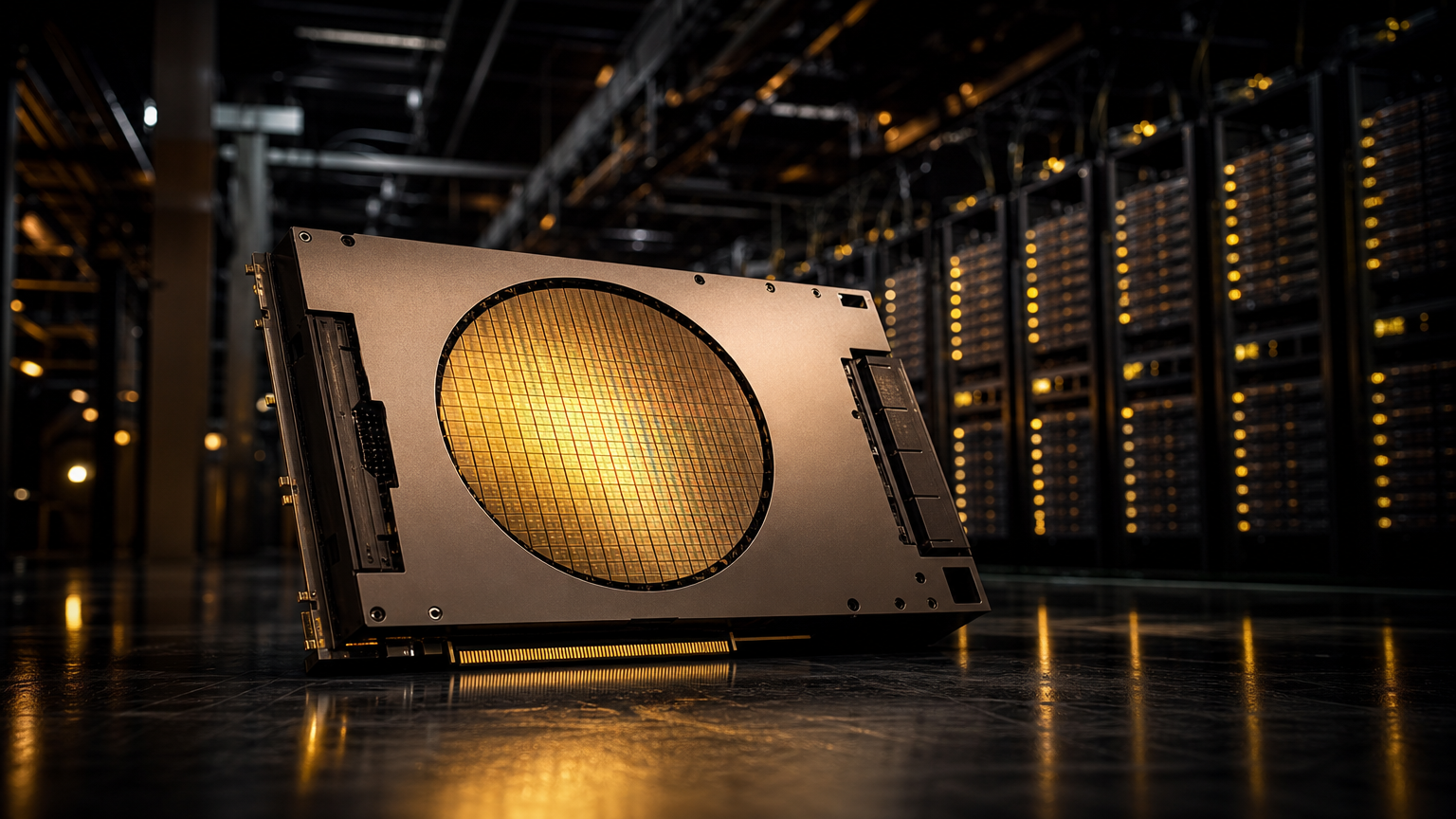
The official Cerebras announcement framed the collaboration around inference speed rather than just raw capacity. Gimlet Cloud will combine Cerebras wafer-scale compute with GPUs in a disaggregated inference cloud, and the companies say they plan to deliver up to 3,000 tokens per second for demanding agentic and real-time applications . The first Cerebras-powered Gimlet Cloud data center is expected to come online later in 2026, according to the companies .
That framing is important because inference has become the production workload of AI. Training creates the model, but inference is what happens every time a chatbot answers, an agent uses tools, a voice interface responds or a security system evaluates events. Gimlet CEO Zain Asgar told Reuters that speedy inference can matter in cybersecurity, voice applications and financial analysis, and that Gimlet is targeting companies and startups building products around AI .
For Cerebras, the deal is also a showcase outside the most familiar Nvidia-centered infrastructure story. Gimlet is positioning itself around heterogeneous infrastructure, meaning different phases of AI inference can run on the silicon best suited to each phase . If that works at production scale, it gives customers a way to think about AI capacity as a portfolio of accelerators rather than a single-vendor bet.
Volato’s aviation-rooted story becomes a data-center story
The Volato news added a second kind of infrastructure signal: contracted demand. Volato said its Alignment Engine subsidiary entered into two four-year, take-or-pay orders with a large AI customer worth about $1.17 billion in aggregate contract value . The orders cover phased deployment of dedicated AMD GPU infrastructure at Alignment Engine’s AI-infrastructure campus in Ohio .
The first deployment is scheduled to use AMD MI355X GPUs with a contractual start date of December 31, 2026, and the second is scheduled to use AMD MI455X GPUs with a contractual start date of June 30, 2027 . Volato said the deployments will operate as dedicated, single-tenant GPU clusters, indicating a model built around long-term contracted capacity rather than spot-market GPU access .
The prepayment structure is one of the most important details. The customer has committed to about $133 million in contractual prepayments, including about $40 million due after execution of the initial order, with remaining prepayments tied to dates and equipment-shipment milestones . Volato’s SEC filing said the master services agreement includes delivery, acceptance, service-level and performance requirements, and it described risks around financing, procuring GPUs, developing and operating infrastructure, obtaining sufficient power and satisfying customer commitments .
That makes the deal both transformational and conditional. If Alignment Engine executes, a $1.17 billion order book could radically change the profile of a company better known historically for aviation-related businesses. But the company’s own disclosures point to the hard part: turning contracted demand into built, powered, cooled and accepted GPU clusters.
Seligman puts another billion behind the stack
Seligman Ventures supplied the capital-market side of the same story. The firm said it doubled deployable capital from $500 million to $1 billion less than a year after launching, citing opportunities across AI infrastructure, modern data-center hardware and cybersecurity . The firm launched in February 2026 and has invested in more than 14 companies since launch, according to the announcement .
Its stated areas of interest read like a map of AI’s physical bottlenecks. Managing Partner Umesh Padval pointed to compute, networking, connectivity, power, thermal management, cybersecurity and AI software infrastructure as areas where opportunities had exceeded expectations . Seligman said its portfolio includes companies working on AI inference, optical connectivity, high-speed interconnects, ultra-low-power AI compute and Physical AI .
This is not the same as a single data-center order. It is a pool of capital that can move into multiple layers of the supply chain. For founders and project developers, that matters because many AI-infrastructure companies are too capital-intensive for traditional software venture models and too early or specialized for conventional project finance.
The new AI moat is operational
Taken together, these developments show the AI market moving from model announcements to infrastructure commitments. Cerebras and Gimlet are betting that speed and heterogeneous inference will be valuable enough to justify a 100-megawatt-scale deployment . Volato’s Alignment Engine is betting that long-term contracted GPU clusters can anchor a new AI-infrastructure platform in Ohio . Seligman is betting that the most attractive venture opportunities will emerge from the constraints beneath AI applications: power, heat, data movement, chips and security .
The risks are just as concrete as the opportunity. Hardware must arrive, campuses must be powered, clusters must meet service levels, customers must pay, and financing must keep pace with deployment. Volato’s filing is explicit that actual results can differ because of risks including equipment procurement, infrastructure development, power availability, financing and customer commitments .
Still, September 28’s cluster of announcements shows why AI infrastructure is becoming its own market narrative. The scarce asset is not just the model. It is the ability to deliver reliable, fast, power-backed compute at scale. In this round, $2.17 billion of disclosed orders and deployable capital, plus a 100-megawatt Cerebras-Gimlet deployment plan, made that physical reality hard to ignore .
Sources from the last 72 hours
- [1]Cerebras to supply AI systems to cloud computing startup Gimlet LabsSep 28, 2026, 3:03 PM
- [2]Gimlet Labs Adds Cerebras to Deliver Ultrafast AI Inference through Gimlet Cloud Deployment Combines Cerebras Wafer-Scale Compute with Gimlet’s Inference Cloud to Deliver Up to 3,000 Tokens per SecondSep 28, 2026, 2:00 AM
- [3]Volato Group’s Alignment Engine Subsidiary Signs $1.2 Billion in AI Infrastructure Orders with Large AI CustomerSep 28, 2026, 2:05 PM
- [4]Volato Group signs $1.17B computing-cluster deal | SOAR 8-K FilingSep 28, 2026, 2:05 PM
- [5]Seligman Ventures Doubles Deployable Capital to $1 Billion as AI Infrastructure Investment Opportunity AcceleratesSep 28, 2026, 4:00 PM
AI-generated article based on recent web research, then preserved as a dated editorial snapshot.
Comments
Be the first to comment.