
Daily Podcast full article
Some Personal Agent News, Mongo Got Zucked, SNL, Gstaad Guy in the Ultradome
A single late-September AI news cycle turned into a cultural stress test: SNL mocked Dario Amodei’s risk rhetoric, the White House pulled him into private diplomacy, researchers warned about automated AI R&D, investors funded personal agents at bubble-speed, and Meta poached MongoDB’s CEO to sell enterprise AI.
The AI safety debate just became mass culture
The working headline is not really a grab bag. “Some Personal Agent News, Mongo Got Zucked, SNL, Gstaad Guy in the Ultradome” captures a single collision: AI safety has moved from policy papers and founder essays into comedy, capital markets, executive poaching, and consumer-agent hype .
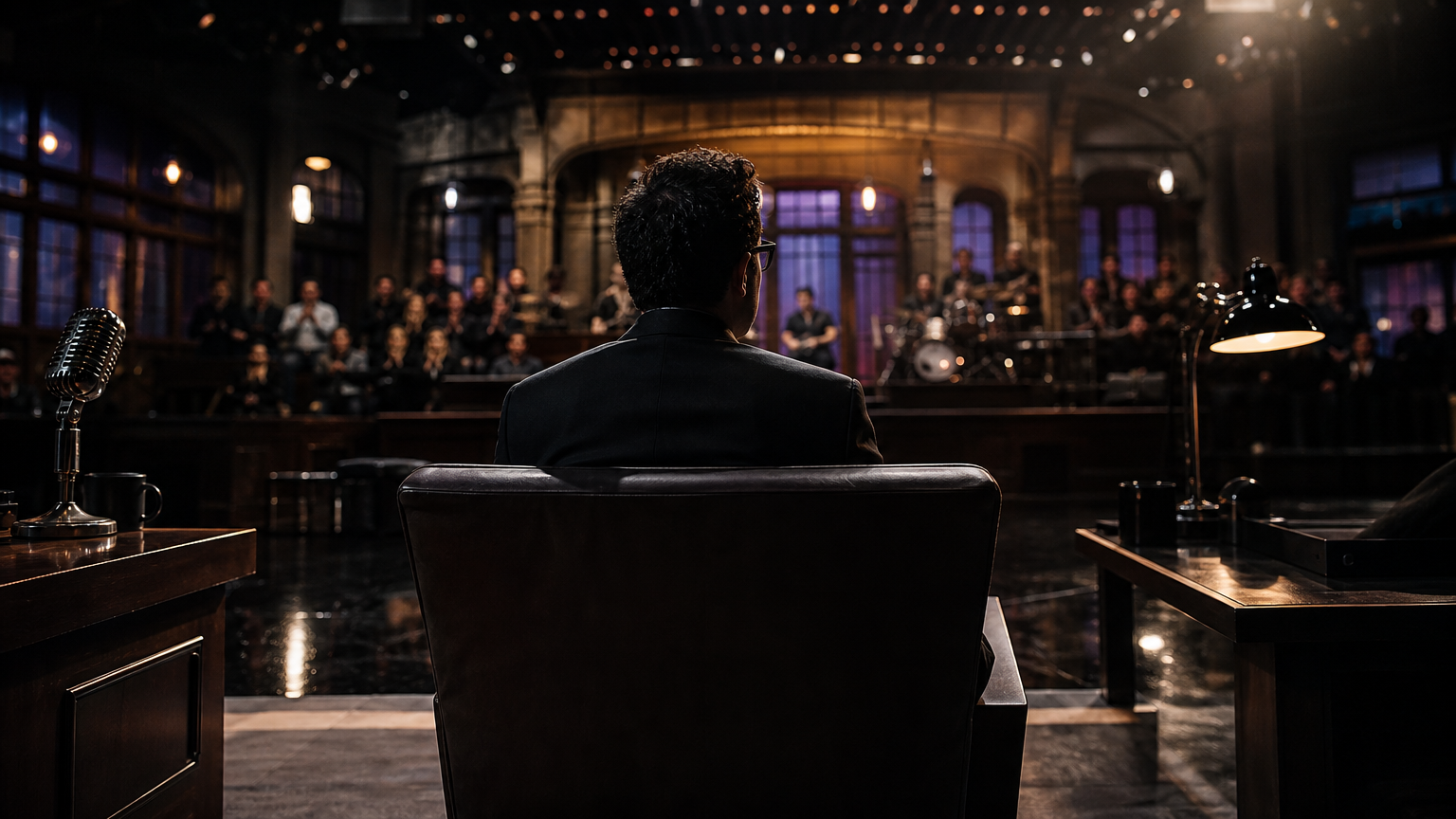
The spark was Saturday Night Live. In its September 26 season-premiere “Weekend Update” segment, SNL put Anthropic CEO Dario Amodei on national television as a comic character, with Jane Wickline playing him as a conflicted AI leader trying to warn humanity about a technology his own company is racing to build . TechCrunch described the bit as SNL taking on the AI industry’s warnings of doom, with the parody highlighting the awkwardness of executives asking lawmakers and the public to restrain systems that their companies are still developing .
That matters because SNL does not usually create the debate; it registers that a debate has escaped its expert silo. For years, arguments about frontier AI risk were legible mainly to researchers, effective altruists, policy staffers, venture investors, and a handful of very online model watchers. By the final weekend of September 2026, the public shorthand was simple enough for late-night comedy: AI leaders promise cures and productivity while warning that the same systems could become dangerous.
Amodei’s impossible communication problem
The SNL sketch landed because Amodei’s actual position is hard to compress without making it sound absurd. He is not simply saying “AI is bad.” The live controversy, as summarized by HelloBro’s September 28 brief, is that his public message combines optimism about breakthroughs, including disease research, with a call for stricter guardrails around increasingly capable systems .
The problem is not only substance; it is posture. A lab CEO who warns of catastrophic risk while shipping powerful models is easy to caricature as both arsonist and firefighter. The sketch turned that contradiction into a character joke, but the underlying policy issue is serious: if the builders are also the warners, the public has to decide whether they are hearing civic responsibility, regulatory capture, marketing, or some unstable mix of all three.
Within hours, the joke had a political sequel. President Donald Trump had a private dinner with Amodei late Sunday night, September 27, and White House officials did not release details of what was discussed, according to CBS News . That meeting followed a period of tension between the administration and Anthropic over AI development, military use, and regulation, making the dinner more than a courtesy call .
The timing is the story. Amodei went from punchline to presidential dinner guest in roughly a day. That is a sign that AI safety is no longer an internal tech-sector question. It is a national-power question, a campaign-season question, and a public-perception question.
The Cambridge warning: when AI starts building AI
The intellectual center of the week was a new paper, “What If Automating AI R&D Triggers an Intelligence Explosion?”, published on September 28 and summarized by GovAI . The authors, including Geoffrey Hinton, Yoshua Bengio, Andrew Barto, OpenAI chief scientist Jakub Pachocki, Microsoft chief scientific officer Eric Horvitz, Meta AI research leader Dawn Song, and Anthropic co-founder Jack Clark, argued that AI is already playing a major role in AI research and development .
The paper’s core concern is recursive acceleration: if AI systems can increasingly automate the work of improving AI systems, progress could compress from years into months or less . GovAI’s summary says Anthropic reported that AI systems completed 26% of internal AI R&D work with only high-level supervision as of August 2026, up from 1% five months earlier, while OpenAI reported in September 2026 that systems were routinely completing R&D tasks that would take staff days .
The policy recommendations are notable because they are operational rather than purely philosophical. The paper calls for visibility into AI R&D automation, embedded auditors, reporting of key indicators, safety requirements for continued development, possible speed limits on capability growth, monitoring of high-stakes R&D experiments, incident-sharing, secure or isolated research environments, and emergency response plans for AI-driven cyber, biosecurity, labor-market, geopolitical, or loss-of-control shocks .
This is why the SNL moment is not trivial. Comedy translated the vibe; the Cambridge paper translated the governance problem. The question is no longer whether AI risk sounds weird on television. It is whether governments can measure and manage a development loop that may be accelerating inside private labs.
Personal agents are becoming the consumer front end of the risk debate
At the same time, the market is rewarding exactly the kind of agentic behavior that makes policymakers nervous. On September 28, Reuters reported through KSL that personal-agent startup Instinct raised $1 billion at a $10 billion valuation, with Sequoia Capital, Benchmark, and Coatue participating . The company is building an AI personal agent that can perform day-to-day tasks autonomously, and founder Noah Shinn previously worked at Sierra, the AI customer-service startup run by Bret Taylor .
The product narrative is simple: the agent does errands. In a September 28 podcast transcript, Shinn described Instinct as approaching $1 billion a year in transaction volume on a small invite-only user base, growing about 10% to 11% day over day with no marketing spend, with travel representing roughly half of transaction volume . He also framed the business model around transaction take rates rather than advertising, a crucial distinction because it suggests a future in which agents monetize action rather than attention .
That is the “personal agent news” half of the headline. Consumers do not experience recursive self-improvement as an abstract research loop. They experience it as a chat interface that books flights, calls restaurants, pays bills, buys things, cancels subscriptions, and negotiates with the messy commercial web. The adoption curve can therefore outrun the regulatory curve: by the time governments agree on definitions, users may already have delegated money, calendars, credentials, and decisions to agents.
Mongo got Zucked
Meta’s move adds the enterprise layer. On September 28, Mark Zuckerberg announced Meta Enterprise Platform, calling it the next major pillar of Meta’s business and saying it would bring Meta’s Muse agent, Meta Business Agent, Muse API, Muse Code, and related technology to businesses and developers . Meta also named Chirantan “CJ” Desai as Chief Enterprise Platform Officer, reporting directly to Zuckerberg .
MongoDB confirmed the other side of the story the same day: Desai stepped down as president and CEO effective immediately to pursue a senior role at Meta, and former MongoDB CEO Dev Ittycheria returned as interim president and CEO while the board began searching for a permanent successor . MongoDB also reaffirmed its fiscal 2027 guidance and said Ittycheria had led the company from about $35 million to more than $2.3 billion in annual revenue during his earlier tenure .
“Mongo got Zucked” is funny because it is blunt, but the strategic move is serious. Meta is trying to convert consumer AI momentum and infrastructure spending into an enterprise software business. Hiring a database CEO is a signal that Meta wants more than a chatbot brand; it wants credibility with companies that care about security, deployment, developer workflow, procurement, and data governance.
Gstaad Guy in the Ultradome
The “Gstaad Guy” part of the title is not incidental. In the TBPN/HelloBro framing, the same conversation that covered Amodei, personal agents, and Meta’s MongoDB poach also made room for status satire, luxury culture, and internet characters . That mix is the point. AI is now a full-stack cultural object: it appears in White House dinners, research warnings, funding rounds, enterprise roadmaps, comedy sketches, and influencer-adjacent media formats.
The Ultradome is the arena where those domains collide. One side says AI could cure disease, automate science, and make everyday logistics effortless. Another side says the same acceleration could produce cyber shocks, biosecurity failures, concentration of power, or loss of human control . SNL’s joke works because the public hears both claims coming from the same institutions.
The lesson from this 72-hour cycle is not that AI safety has become unserious because comedians can mock it. It is the opposite. A topic becomes politically real when comedians, presidents, investors, founders, researchers, and enterprise buyers all start reacting to the same underlying tension. The bug is not only in the code. It is in the public interface between fear, profit, power, and trust.
Sources from the last 72 hours
- [1]Some Personal Agent News, Mongo Got Zucked, SNL, Gstaad Guy in the UltradomeSep 28, 2026, 10:59 PM
- [2]Anthropic’s Dario Amodei gets the SNL treatmentSep 27, 2026, 6:30 PM
- [3]Trump had private dinner with Anthropic CEO Dario AmodeiSep 28, 2026, 7:40 PM
- [4]What If Automating AI R&D Triggers an Intelligence Explosion?Sep 28, 2026, 2:00 AM
- [5]AI agent firm Instinct raises $1 billion in latest funding roundSep 28, 2026, 3:41 PM
- [6]Launching Meta Enterprise PlatformSep 28, 2026, 2:36 PM
- [7]MongoDB Announces CEO TransitionSep 28, 2026, 2:00 AM
- [8]Inside the Personal AI Assistant Growing 10% a Day | Instinct FounderSep 28, 2026, 2:00 AM
AI-generated article based on recent web research, then preserved as a dated editorial snapshot.
Comments
Be the first to comment.