
Daily Podcast full article
Nvidia authorizes record $150B buyback as AI cash floods in
Nvidia’s board has added $150 billion to its share-repurchase authorization, lifting remaining buyback capacity to $235 billion and turning the AI chipmaker’s cash machine into one of the market’s biggest capital-allocation stories [1].
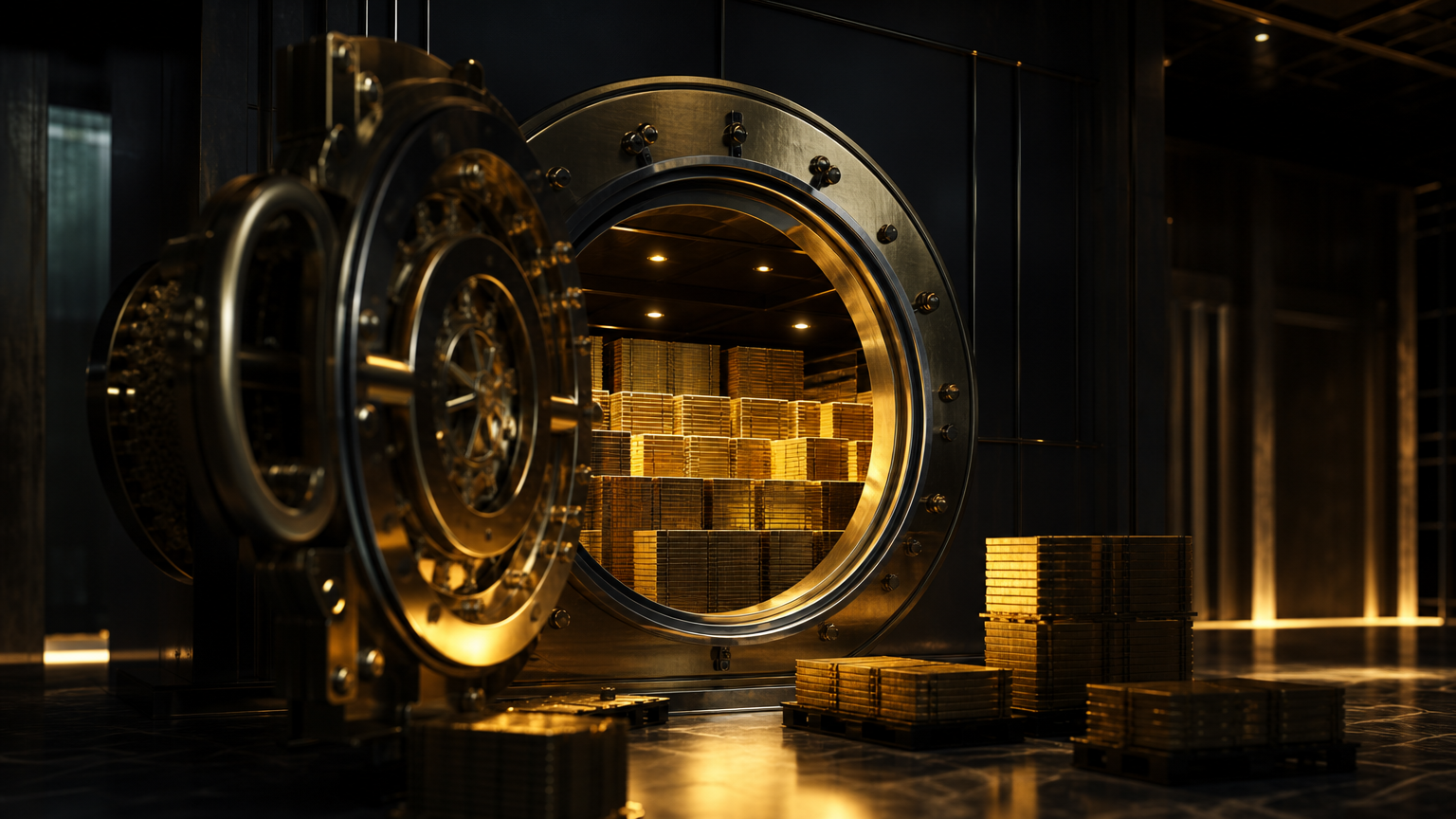
The headline: $150 billion more firepower
Nvidia has authorized an additional $150 billion for share repurchases, a record-scale increase that raises the company’s remaining buyback authorization to $235 billion . The company said it expects to execute the remaining program through fiscal 2028, giving management a defined window to deploy what is now one of the largest corporate repurchase capacities ever announced .
The size is the story. Reuters reported that the $150 billion increase eclipses Apple’s $110 billion authorization from 2024, making Nvidia’s move the biggest-ever buyback plan by that measure . Associated Press likewise described the action as Nvidia clearing the way to spend $150 billion more on its own shares, supported by revenue growth tied to demand for its high-end AI chips .
This is not the same as saying Nvidia bought $150 billion of stock overnight. A buyback authorization is permission from the board, not an obligation to spend the whole amount immediately. Still, authorizations this large matter because they shape investor expectations, signal how management sees future cash generation, and can reduce share count over time if executed at scale.
Jensen Huang’s message: invest and return cash
Nvidia framed the buyback as a confidence signal rather than a retreat from growth. Chief executive Jensen Huang said the company’s growth is being driven by a “once-in-a-generation platform shift” to AI and accelerated computing, and that Nvidia’s cash generation gives it room both to invest in the technologies behind that shift and to return capital to shareholders .
That dual message is important. Nvidia is not presenting itself as a mature technology company that has run out of reinvestment opportunities. Instead, it is arguing that the AI accelerator boom is producing enough cash to fund aggressive product, software, ecosystem and infrastructure investment while still leaving room for shareholder returns .
For investors, that is the central claim: Nvidia can remain a growth platform and behave like a cash-rich mega-cap at the same time. The company’s board is effectively saying that AI demand is not just lifting revenue; it is producing the kind of financial surplus that can move the company’s own stock and, given Nvidia’s market weight, the broader equity market.
Why the timing matters
The authorization comes at a moment when the market is more skeptical about the durability of the AI buildout. Reuters reported that investors have been questioning whether the massive AI infrastructure spending boom that helped make Nvidia the world’s most valuable company can continue at its current pace . That skepticism is exactly what makes the buyback powerful: Nvidia is using capital allocation to answer doubts about future demand.
The market context is also more competitive. Reuters noted that Nvidia’s stock performance this year had lagged AMD and Intel even as Nvidia remained central to AI infrastructure spending . Against that backdrop, a giant repurchase authorization can serve several functions at once: it can absorb dilution from stock compensation, support earnings per share, and show that management sees value in its own equity.
The valuation backdrop adds another layer. Reuters reported that Nvidia shares were trading at about 16.5 times 12-month forward earnings, their lowest multiple since January 2015 and far below the 15-year average of 30, based on LSEG data . For a company still associated with explosive AI growth, that lower multiple gives management a financial rationale for repurchases: if the stock is cheaper relative to expected earnings, buying it back becomes more attractive.
The AI cash-flow engine
Nvidia’s buyback is best understood as a downstream effect of the hyperscaler AI arms race. Cloud giants and other large infrastructure buyers have been expanding data-center budgets to secure the compute needed for training and running advanced AI models. Much of that spending flows into accelerators, networking, systems and software stacks where Nvidia remains the dominant supplier.
Recent reporting from Chosun described Nvidia as the major beneficiary of this infrastructure race: while Big Tech companies are spending heavily on AI data centers and seeing free-cash-flow pressure after investment, Nvidia is capturing a significant portion of that spending through sales of AI accelerators and related equipment . That asymmetry is the heart of the buyback story. The companies building data centers face rising capital intensity; Nvidia sells into that capex cycle and converts demand into cash.
Chosun also reported that Nvidia’s recent quarterly revenue reached a record $96.2 billion, reflecting the surge in AI semiconductor demand . A company with that revenue momentum can contemplate capital returns on a scale that would be impossible for most semiconductor peers.
That does not mean the buyback is risk-free. If hyperscaler spending slows, if customers increasingly shift to in-house chips, or if pricing power fades, today’s repurchase math could look less compelling. But the authorization itself indicates that Nvidia’s board believes the company has enough visibility into cash generation to run the buyback while continuing to invest.
What buybacks do, and what they do not do
Share repurchases can increase earnings per share by reducing the number of shares outstanding, and AP noted that companies use repurchases partly to return cash to investors and support a stock’s price . They can also offset dilution from employee stock awards, which matters for technology companies that use equity compensation heavily.
But a buyback does not automatically create value. It creates value when a company buys shares below their intrinsic value and still preserves enough capital for high-return investment. It destroys value when a company overpays for its own stock or sacrifices better growth opportunities. Nvidia’s case will therefore be judged not by the headline authorization alone, but by the pace, price and opportunity cost of actual purchases through fiscal 2028.
The $235 billion remaining authorization gives Nvidia flexibility. It can accelerate purchases during market weakness, slow down if shares run sharply higher, or preserve cash if supply-chain, geopolitical or customer-demand conditions change. That optionality is one reason large buyback programs are attractive to boards: they are powerful signals but not rigid commitments.
A new phase for Nvidia
The larger message is that Nvidia has crossed into a different category of company. It is still the defining supplier of the AI accelerator cycle, but it is now also a capital-allocation giant. Reuters reported that Nvidia ended the July quarter with $22.44 billion in cash and cash equivalents and had already announced an $80 billion buyback in May before this latest increase . The September authorization therefore looks less like a one-off gesture and more like an emerging shareholder-return policy at unprecedented scale.
That is why the market is treating the move as more than financial housekeeping. Nvidia is telling investors that it can fund the AI platform shift, withstand questions about competition and growth duration, and still commit enormous capital to its own shares. If the AI boom keeps compounding, the buyback may look like a confident use of surplus cash. If the cycle cools, it may be remembered as the moment Nvidia tried to put a record-sized floor under expectations.
For now, Jensen Huang has found the corporate equivalent of an infinite-money cheat code: sell the picks and shovels for the AI gold rush, then use the cash flow to buy back the company supplying them.
Sources from the last 72 hours
- [1]NVIDIA Announces a $150 Billion Share Repurchase Authorization IncreaseSep 28, 2026, 1:00 PM
- [2]Nvidia sets biggest-ever buyback plan as AI chip competition weighs on stock performanceSep 28, 2026, 1:14 PM
- [3]AI 투자로 빅테크 현금 졸라맬 때… 엔비디아, 320조 주주 환원Sep 29, 2026, 8:05 AM
- [4]Nvidia’s board increases chipmaker’s share buyback plan by $150 billionSep 28, 2026, 6:11 PM
AI-generated article based on recent web research, then preserved as a dated editorial snapshot.
Comments
Be the first to comment.