
Daily Podcast full article
Saudi Arabia anchors 14 GW buildout
Saudi Arabia’s AI strategy is no longer just a chip-buying story. A fresh 14 GW power allocation for Humain’s AI factories, NetApp’s 100 TB/s storage push, reported AMD server-CPU scarcity and a 73% jump in Australia’s semiconductor holdings all point to the same conclusion: the next AI bottleneck is physical infrastructure.
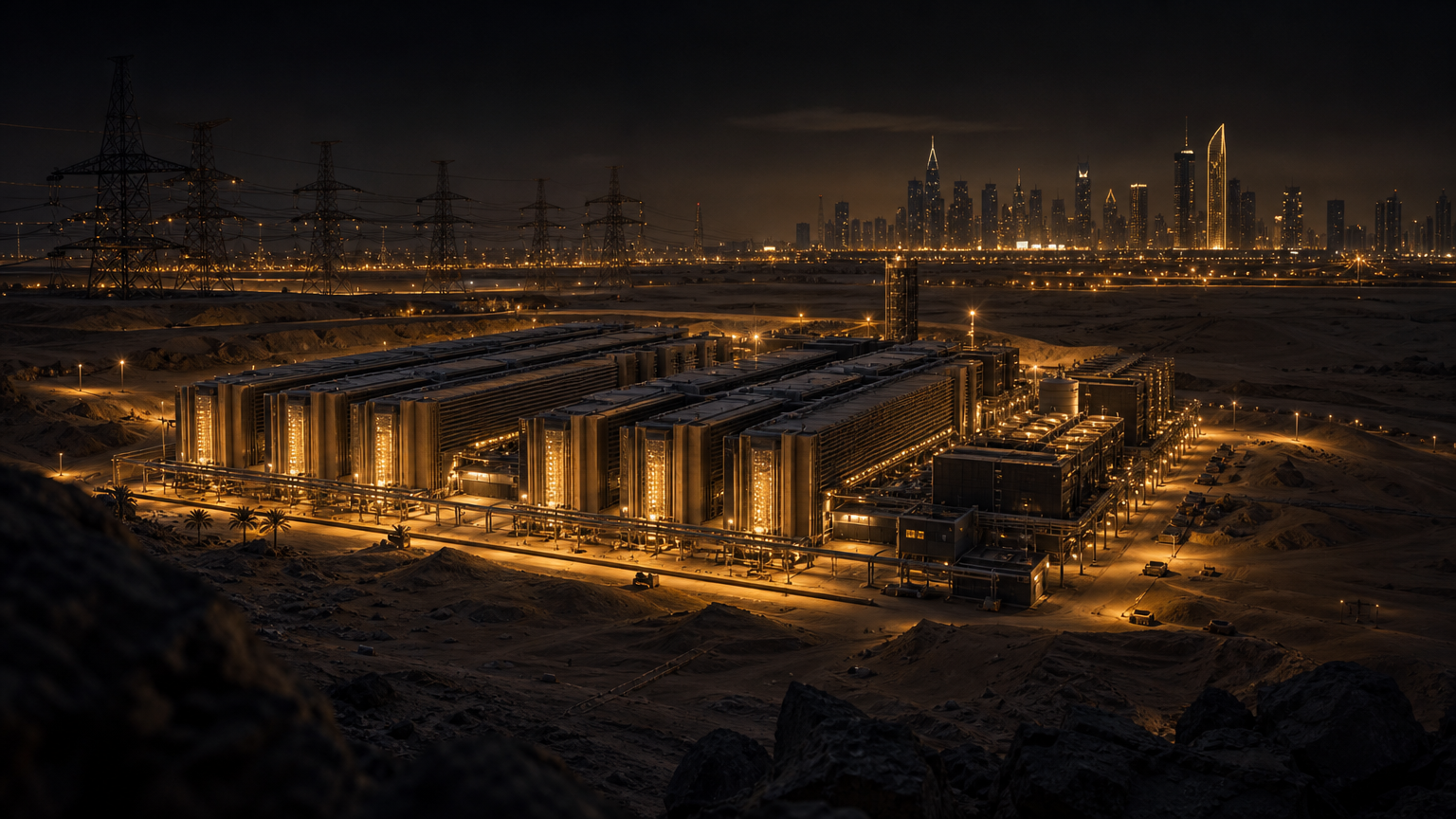
The headline check: Saudi Arabia anchors 14 GW buildout
Saudi Arabia’s latest AI-infrastructure signal is blunt: before models, agents and national platforms can scale, somebody has to secure the electricity. Humain CEO Tarek Amin said about 14 gigawatts of power capacity had been allocated to support the company’s “AI factories,” alongside land and infrastructure coordination with the Ministry of Energy and other government entities . That figure turns AI policy into grid policy. It also reframes the kingdom’s pitch to global technology companies: Riyadh is not merely offering capital or market access, but an attempt to package power, data centers, compute, software and customers into one sovereign industrial stack.
The timing matters because this is not an isolated Saudi announcement. In the same 72-hour window, NetApp launched Novus, a storage architecture designed to reach 100 TB/s aggregate throughput for large GPU environments . Australia’s Future Fund disclosed that the value of nine semiconductor holdings rose from 4.8 billion to 8.3 billion Australian dollars in six months, a 73% gain . Separate market reporting around AMD’s next-generation EPYC Venice server CPUs said channel checks suggest 2027 supply is already sold and 2028 volume is being offered, while also warning that AMD has not confirmed the claim . Put together, these updates show AI infrastructure moving from a GPU-centered story into a broader contest over power, CPUs, storage, cooling, data movement and financing.
Power becomes the platform
The 14 GW number is the anchor because it is a different kind of AI input. GPUs can be ordered, financed or constrained by export rules. Data centers can be designed in phases. But power availability determines whether the cluster exists at all. Amin framed Humain’s strategy as a full ecosystem, spanning energy, computing, digital infrastructure, software, models, applications, consulting services and startup investment . That is a national-industrial view of AI, not a procurement plan.
Saudi Arabia’s advantage is obvious: energy abundance, state coordination and the ability to move large infrastructure projects through a sovereign priority channel. But the ambition also raises hard execution questions. A 14 GW allocation is not the same as energized capacity delivered to live halls, with substations, transmission, backup systems, cooling loops, fiber routes and customer contracts all synchronized. The most important milestone now is not the headline number; it is how quickly capacity becomes usable compute.
That is why the private-sector angle is important. A separate Saudi market roundup described the kingdom’s September 2026 developments as part of a broader shift toward public-private participation, with the AI-capacity pipeline being built with private-sector involvement . For hyperscalers, chip vendors and specialist AI clouds, the question will be contract structure: who pays for power, who owns the facility, who receives priority allocation, and how much flexibility customers have if model economics change.
Humain is selling more than space in a data center
Amin’s comments suggest Humain wants to avoid being perceived as a landlord for GPUs. He said the company is developing software and systems internally, including workflows based on smart agents and systems used in daily operations . That matters because the highest-margin layer of AI infrastructure is not always the building. If Humain can combine power access with software, Arabic and regional models, managed services and enterprise transformation, it can move higher up the value chain.
The challenge is credibility. Global AI companies will care about latency, uptime, security, export-control compliance, cloud interoperability and developer tooling. Enterprise customers will care about whether agentic systems can be integrated into legacy workflows without creating governance chaos. Amin argued that benefiting fully from AI requires redesigning how institutions work, not just adding new tools . That is a sharper thesis than “build data centers and they will come,” but it is also harder to execute.
Storage joins the bottleneck list
NetApp’s Novus announcement is a useful companion to the Saudi power story because it shows what happens after a site has enough electricity and GPUs. NetApp said Novus is designed for AI infrastructure providers operating large GPU environments and is architected for up to 100 TB/s aggregate throughput . The company also said traditional architectures can push GPU utilization below 30% when data cannot be fed fast enough to the cluster .
That claim goes to the economics of AI factories. If a provider spends billions on accelerators but cannot move data, metadata and checkpoints efficiently, the bottleneck shifts from silicon scarcity to storage architecture. NetApp’s design separates metadata from the data path and aims to scale performance, capacity and concurrency under a single namespace using NFS . In practical terms, the company is arguing that the “brain” of the AI system is useless if the memory and inventory system lag behind.
For Saudi Arabia, this is not a side issue. A 14 GW AI buildout would require not only chips and buildings, but storage fabrics that can support multi-tenant training, inference, retrieval, logging, model updates and compliance. The vendors that win in Riyadh may therefore include not just GPU suppliers, but storage, networking, cooling, observability and power-management companies.
CPUs are back in the AI conversation
The AMD-related reporting adds another layer: agents do not eliminate general-purpose compute; they may intensify demand for it. TopCPU summarized channel reports, attributed to Wccftech and leaker Jukan, that AMD’s 2027 EPYC Venice supply is reportedly sold and that AMD is already offering 2028 production, while stressing the claim is unconfirmed . The same report noted that Venice is AMD’s sixth-generation EPYC server processor, based on Zen 6 and TSMC’s 2 nm process, and cautioned that shipment and revenue estimates remain third-party forecasts rather than official AMD targets .
The bigger point is architectural. Agentic AI workloads involve orchestration, tool use, sandboxing, retrieval, code execution, security checks and memory movement. GPUs remain central, but CPUs coordinate the system around them. If AI agents become persistent digital workers rather than occasional chat sessions, server CPU demand can rise alongside accelerator demand. That broadens the AI trade from “who has GPUs?” to “who has balanced systems?”
Investors are already treating scarcity as an asset class
Australia’s Future Fund data shows how infrastructure scarcity is feeding market returns. ABC reported that the fund’s holdings in nine semiconductor and chip companies rose from A$4.8 billion to A$8.3 billion in six months, a 73% increase . The same report said SK Hynix holdings rose 199% in value despite share sales, while Micron holdings rose 304% as the fund bought additional shares .
That does not prove every AI-infrastructure valuation is justified. It does show that investors are rewarding exposure to memory, semiconductors and compute supply chains even when portfolios are not simply buying more shares. The AI boom is increasingly expressed through balance sheets, sovereign funds, long-term capacity reservations and physical buildout commitments.
The new bottleneck is measured in grids
The story connecting Riyadh, NetApp, AMD and the Future Fund is not that one company or country has solved AI infrastructure. It is that the industry’s constraint map is changing. In 2023 and 2024, the dominant question was accelerator access. In 2026, the constraint set includes power allocation, storage bandwidth, CPU supply, cooling, construction timelines and capital discipline.
Saudi Arabia’s 14 GW allocation is therefore more than a local milestone. It is a statement about where AI competition is heading. The winners will not only train better models; they will secure energy, feed GPUs continuously, coordinate agent workloads and finance infrastructure before rivals can even connect to the grid. Arrakis called; it wants its power budget back.
Sources from the last 72 hours
- [1]Humain: Saudi Arabia allocates 14 GW for AI factoriesSep 29, 2026, 12:34 PM
- [2]NetApp Removes Storage Bottleneck for AI FactoriesSep 29, 2026, 7:30 PM
- [3]Weapons makers, SpaceX and semiconductors feature in Australia's Future Fund portfolioSep 29, 2026, 11:12 PM
- [4]Is Morgan Stanley’s 6.75 Million EPYC Venice Shipment Forecast Credible?Sep 30, 2026, 2:00 AM
- [5]September 2026: PPP Pipeline Expands as Saudi Scales AI Computing CapacitySep 28, 2026, 2:00 AM
AI-generated article based on recent web research, then preserved as a dated editorial snapshot.
Comments
Be the first to comment.