
Daily Podcast full article
Apollo leads AI infrastructure capital wave
Apollo’s role in a planned $15 billion-plus AI infrastructure buildout in Chiba, Japan, and Accelevation’s cooler-than-hoped Nasdaq debut show the same market from two angles: private capital is racing to finance compute, power and data centers, while public investors are becoming more selective about which AI “picks and shovels” deserve premium valuations.
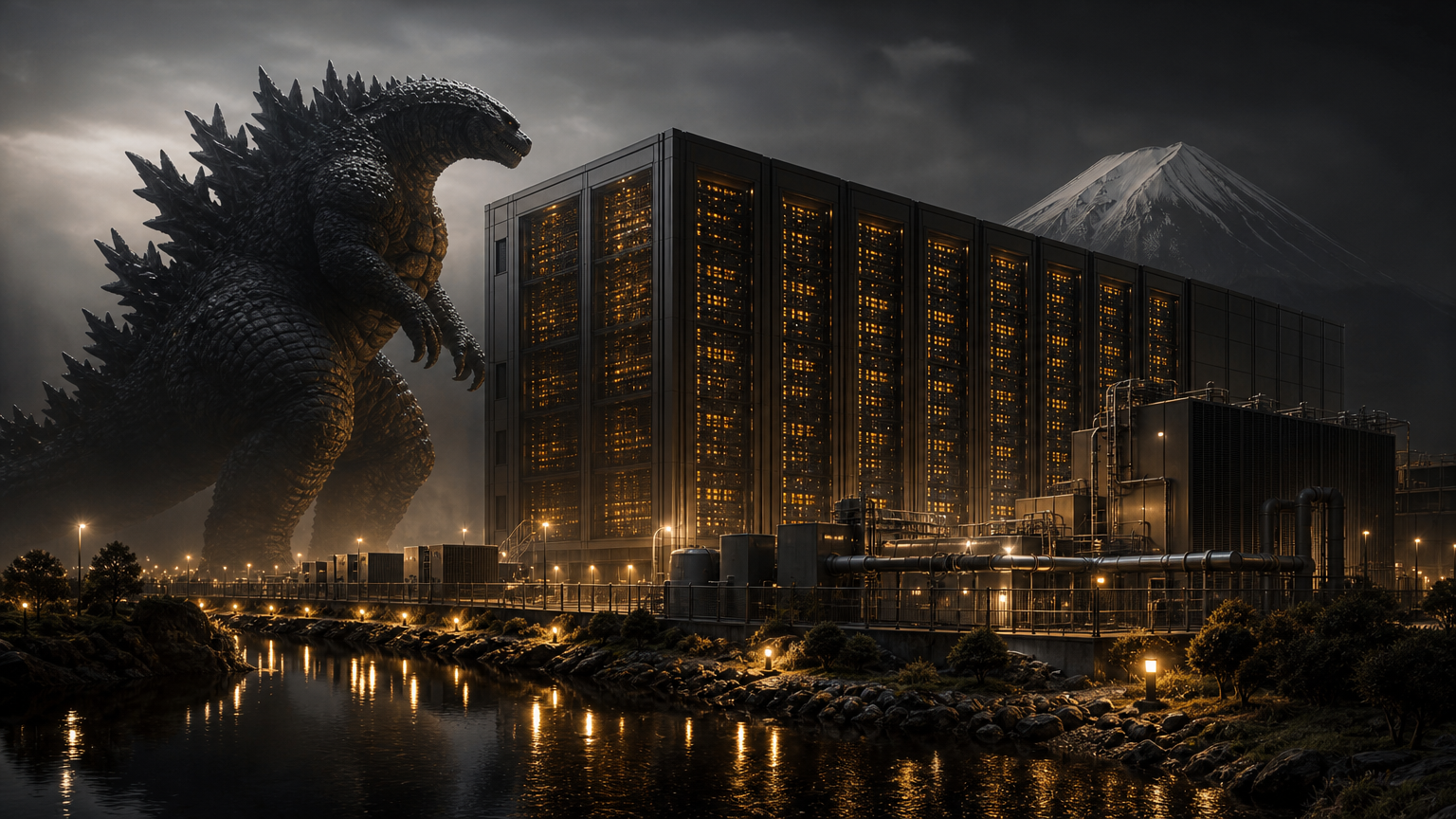
AI infrastructure becomes a financing story
The newest AI race is no longer only about who trains the smartest model. It is about who can marshal land, electricity, cooling, servers, long-term contracts and financing fast enough to make those models usable at national scale. That is the thread linking Apollo Global Management’s planned financing role in Japan with Accelevation’s Nasdaq debut: capital is moving aggressively into AI infrastructure, but it is also asking harder questions about price, execution and risk.
In Japan, JERA, Dell Technologies and RHAELM signed a memorandum of understanding to create a standardized framework for building AI infrastructure at national scale, with the first application planned for Chiba and Apollo intended to serve as RHAELM’s strategic investment and financing partner . The Chiba project is expected to require more than $15 billion, or about 2.3 trillion yen, across land, power infrastructure, facility construction and AI compute . That scale makes the deal less like a conventional data-center announcement and more like a national industrial project.
Why Chiba matters
The Chiba project is designed around a simple constraint: AI infrastructure is only as strong as the power system beneath it. JERA says the project will be built around its Chiba Thermal Power Station and supported by up to 400 megawatts of power capacity . Reuters reported that JERA will supply 400 megawatts under a 15- to 25-year agreement, while Dell will provide standardized rack-scale AI infrastructure . That combination is important because it converts electricity from a short-term operating uncertainty into a long-duration project-finance input.
The project is also being structured as a “behind-the-meter” development using JERA’s existing generation assets, a configuration the partners say could bring capacity online years earlier than a conventional grid-connected project . Operations are targeted to begin around 2028, and Reuters reported that the companies aim to reach full 400-megawatt capacity in 2029 , . In other words, the project is not just buying computers; it is trying to shorten the distance between power production and compute consumption.
The participants each bring a different part of the infrastructure stack. JERA contributes power generation, LNG procurement and site access; Dell contributes pre-integrated rack-scale systems through its AI Factory approach; and RHAELM leads project delivery and data-center development . Apollo’s role is the financial layer: Eiji Ueda, Apollo’s head of Asia Pacific, framed the announcement as aligned with Apollo’s focus on financing AI and digital infrastructure and deepening its long-term capital role in Japan .
Japan’s sovereign compute angle
For Japan, the strategic logic is clear. The project supports the country’s push to expand domestic AI computing capacity and fits with the government’s “Watt-Bit Collaboration” concept, which links electricity infrastructure with telecommunications and data infrastructure . The partners also describe the Chiba site as a template that could be replicated across other JERA locations, with an ambition to support multi-gigawatt AI infrastructure capacity in Japan in the 2030s .
That matters because AI sovereignty is becoming less abstract. A country can have excellent researchers, companies and public policy, but if its compute depends too heavily on foreign cloud regions, constrained chips or overseas data centers, its AI strategy remains exposed. Domestic AI infrastructure does not eliminate dependence on global suppliers, but it gives Japan another lever: local power, local sites, local operating control and potentially shorter deployment cycles.
The Chiba plan also highlights why utilities have become central to AI. For the last decade, cloud expansion often revolved around real estate, fiber and server procurement. The new AI buildout adds a harsher requirement: vast, reliable, dense electricity supply. At 400 megawatts, a single site starts to look like a power-sector event as much as a technology-sector event. If the model works, cloud providers, chip vendors, cooling specialists and utilities all gain a multiyear procurement pipeline.
Accelevation: public markets say “prove it”
The second half of the story is Accelevation, a data-center infrastructure company whose Nasdaq debut produced a more cautious signal. Its shares opened at $17.55 on September 30, 2.5% below the $18 IPO price, giving the Miamisburg, Ohio-based company a valuation of about $3.92 billion . The company and selling shareholders raised $540 million after selling about 30 million shares, below the originally marketed range of $20 to $24 per share .
Accelevation sits squarely in the “picks and shovels” layer of the AI boom. It provides power distribution, cooling, structural systems and installation services for data centers . Its growth profile is the kind that would usually attract AI-infrastructure enthusiasm: Reuters reported that revenue rose to $447.8 million in 2025 from less than $3 million in 2021 . But the opening-day decline shows that public investors are no longer treating every AI infrastructure exposure as an automatic winner.
The final pricing also carried a message. Accelevation announced the IPO at $18 per share for 30 million Class A shares, with 10 million shares sold by the company and 20 million sold by stockholders affiliated with Olympus Partners . The company said it would use its net proceeds to buy newly issued units in Accelevation Holdings LLC, which would use the funds for debt repayment, transaction expenses and general corporate purposes . That mix of primary capital, sponsor selling and debt paydown is normal in private-equity-backed IPOs, but it gives investors more to analyze than a simple growth story.
One boom, two capital markets
Together, the Japan project and Accelevation’s debut show a maturing AI infrastructure market. Private capital appears eager to finance hard assets when projects can be tied to long-term power supply, repeatable design and identifiable national or enterprise demand. Public equity investors, meanwhile, are looking more closely at valuation, ownership structure, margin durability, customer concentration and whether growth can survive a more volatile IPO window.
That distinction is crucial. Apollo’s planned role in Chiba is not a speculative bet on a consumer app; it is a financing position in the physical layer of AI, where returns can be underwritten around contracts, assets and energy access. Accelevation’s listing, by contrast, exposed the risk of asking public investors to pay a premium for suppliers whose fortunes still depend on construction cycles, customer budgets and the pace of hyperscale deployment.
The result is not a rejection of AI infrastructure. It is a shift from easy enthusiasm to capital discipline. Investors still want exposure to the compute boom, but they want to know who controls the power, who bears construction risk, who owns the customer relationship and how much future growth is already priced in.
The new AI moat is electrical
The lesson from October 1 is that AI advantage is moving down the stack. Models remain important, but the scarce inputs are increasingly physical: megawatts, substations, LNG chains, land, cooling systems, rack integration and financing partners willing to commit for years. Japan’s Chiba project suggests that national AI strategies will be built around energy and infrastructure policy as much as software policy. Accelevation’s debut suggests that public investors will reward the winners, but not blindly.
Apollo’s involvement points to the next stage of the AI capital wave: compute becoming an investable infrastructure asset class. The market is still expanding, but the bar is rising. In this phase, the winners will not simply be the companies with “AI infrastructure” in the pitch deck. They will be the ones that can turn electricity, hardware and capital into dependable capacity, at a price investors can defend.
Sources from the last 72 hours
- [1]JERA, Dell Technologies and RHAELM Sign MoU to Accelerate National-Scale AI Infrastructure Development in JapanOct 1, 2026, 2:00 AM
- [2]JERA teams up with Dell, RHAELM on AI infrastructure development in JapanOct 1, 2026, 8:31 AM
- [3]AI infra firm Accelevation valued at $3.9 billion as shares fall in Nasdaq debutSep 30, 2026, 6:50 PM
- [4]Accelevation prices IPO at $18 per share, to raise $180 millionSep 30, 2026, 1:08 AM
AI-generated article based on recent web research, then preserved as a dated editorial snapshot.
Comments
Be the first to comment.