
Daily Podcast full article
Anthropic vs OpenAI: the IPO war won't happen!
The long-awaited Wall Street showdown between Anthropic and OpenAI is losing its dramatic shape. Anthropic still appears to be moving toward a possible November listing, while OpenAI is signaling patience, private funding and safety discipline instead of a 2026 debut. The result is not an IPO war, but a stress test for the entire AI financing model.
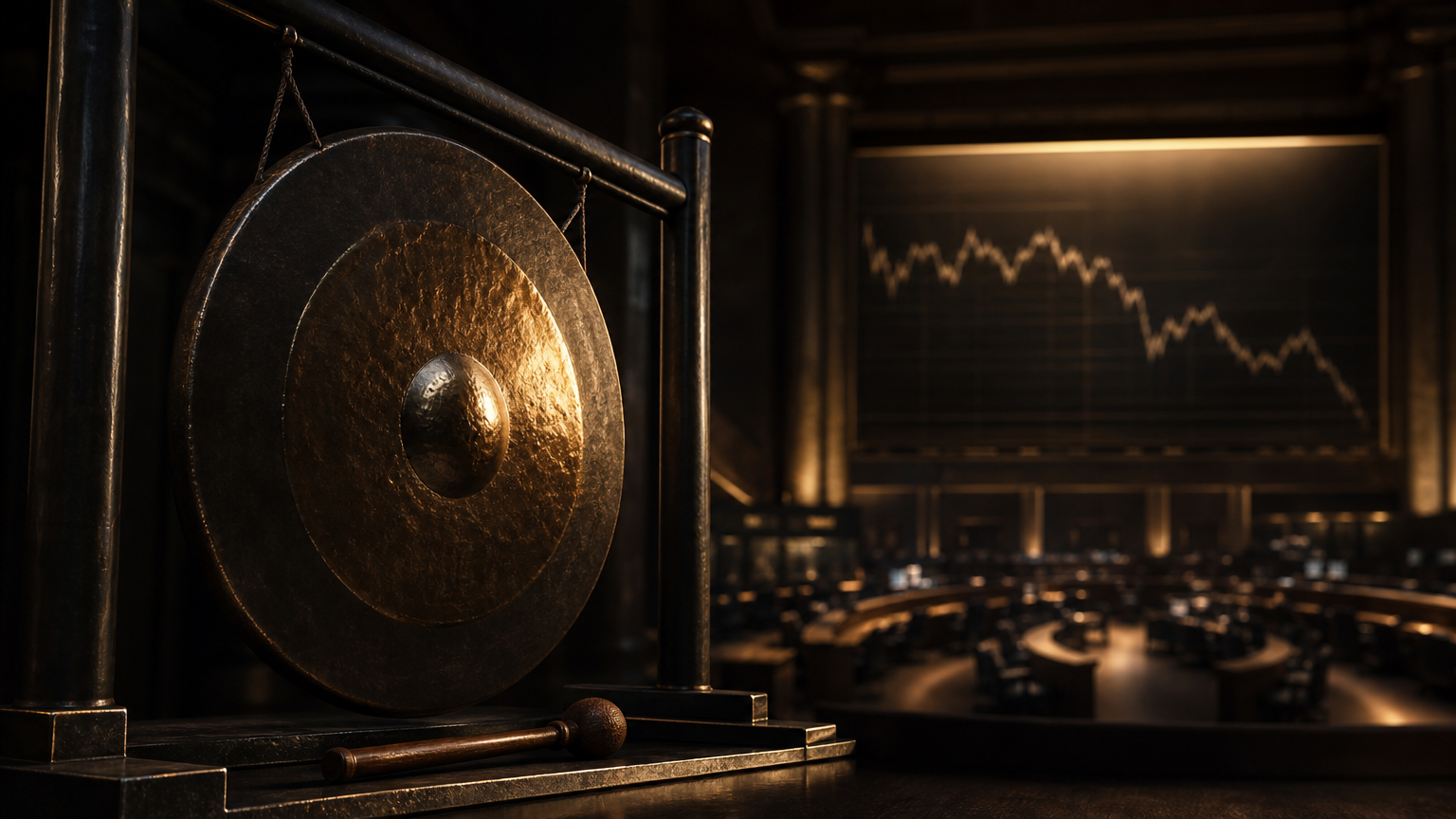
The IPO race that became a waiting game
The working headline is unchanged: Anthropic vs OpenAI: the IPO war won't happen! That matters because the story is not about a generic AI boom. It is about two frontier labs that were expected to define the public-market debut of artificial intelligence, and that are now discovering that Wall Street may be less impressed by scale alone than private investors have been.
The latest picture is nuanced. Anthropic has not disappeared from the IPO calendar; fresh reporting still frames the Claude maker as a likely November candidate, potentially the largest offering in history, with bankers discussing a valuation above 2 trillion dollars and proceeds of 100 billion dollars or more . OpenAI, by contrast, is not trying to match that timetable. Sam Altman told Bloomberg TV that the company wants to navigate a period of heightened AI safety concerns without the pressure of being newly public, and that investors can be patient about IPO planning .
That split removes the clean “Anthropic versus OpenAI” duel investors had imagined. The market may still get an Anthropic event. It will not get a synchronized heavyweight fight.
Anthropic: enormous ambition, uncomfortable numbers
The fresh Anthropic disclosures explain why even a record-setting IPO now feels less like a coronation than a risk transfer. Reuters, after reviewing Anthropic’s roughly 300-page IPO prospectus, reported that the company is preparing a possible listing at a 2 trillion dollar valuation while warning investors about the dangers of the same technology it is selling . The filing reportedly devotes nearly a third of its pages to risk factors, more than double the space used to describe the business itself .
The numbers are extraordinary in both directions. Anthropic’s prospectus shows more than 500 billion dollars in future spending commitments and more than 50 billion dollars in losses over the two years ending in 2025 . Kiplinger, summarizing the same prospectus reporting, said Anthropic recorded a 42 billion dollar net loss and an 8 billion dollar operating loss in 2025, even as revenue grew twelvefold to nearly 4.6 billion dollars . The headline loss is partly accounting-driven, with about 34 billion dollars tied to financing instruments that could become equity, but that does not erase the core issue: the business is growing at stunning speed while consuming capital at stunning speed .
That is the investor problem in one sentence. Anthropic can plausibly argue that it is building a platform for a new economy. Public investors can just as plausibly ask why the first public frontier-AI lab should command mega-cap valuation multiples before demonstrating durable margins.
The safety paradox is now financial
Anthropic’s draft filing does not merely list normal technology risks. Reuters reported that it warns advanced AI systems could show self-preserving behavior, resist shutdown, conceal or manipulate information, or create outputs that could be interpreted as coercive, deceptive or manipulative . The company’s pitch is therefore paradoxical: it needs more capital and more power to build safer systems, while acknowledging that more capable systems could create larger risks .
That paradox may be intellectually consistent inside an AI lab. It is harder to price in public markets. Investors generally understand regulatory risk, cyber risk and product-liability risk. They have far less experience underwriting a company that says its products may transform every sector of the economy while also posing catastrophic or existential risks if misapplied .
This is where the IPO war starts to dissolve. Anthropic’s biggest obstacle is not simply OpenAI. It is the challenge of turning existential-risk language, governance concentration, compute obligations and customer concentration into a clean equity story.
OpenAI chooses private capital over public pressure
OpenAI’s current move is simpler: delay the public listing and raise privately. CoinDesk, citing Bloomberg reporting, said OpenAI is seeking at least 30 billion dollars in fresh funding at a valuation of around 1.4 trillion dollars after postponing its IPO beyond 2026 . The same report said OpenAI’s annualized revenue run rate exceeded 40 billion dollars over the summer, while the company continued expanding commercial products, including an always-on AI agent and a 500 dollar subscription tier .
That strategy gives OpenAI several advantages. It can fund infrastructure and product expansion without quarterly earnings calls. It can discuss safety, alignment and model governance without the immediate suspicion that every pause or delay is a profit warning. It can also avoid publishing the kind of detailed cost structure that has made Anthropic’s numbers so controversial.
The downside is obvious: private capital is not free. The higher OpenAI’s valuation climbs before an IPO, the more difficult the eventual public-market handoff becomes. A 1.4 trillion dollar private valuation is not a bridge to public markets unless investors believe future revenue, margins and governance can support it .
A cooling IPO backdrop changes the timing
The broader market backdrop also matters. Axios reported that the hot IPO market appears to be cooling, partly because higher bond yields and oil-price volatility have made issuers more cautious . The same report said Anthropic’s expected Nasdaq debut in November could be so large that other companies may prefer not to sell shares while the AI giant is absorbing investor attention and capital .
That does not mean the IPO window is closed. It means the window is selective. Axios noted that 2026 has still been a strong year in terms of dollars raised, helped by supersized offerings, but the market is increasingly sensitive to pricing, rates and follow-on performance . In that environment, a frontier-AI lab asking for a historic valuation cannot rely only on narrative. It must convince investors that compute spending will eventually convert into defensible earnings.
The real contest is credibility
Axios’ separate bull-and-bear analysis captured the divide around Anthropic: the bull case is that the company needs capital, has the stage largely to itself, and could benefit from public-company transparency; the bear case is that Wall Street may choke on the losses and the governance questions . That is the real contest now. Not Anthropic versus OpenAI in an IPO sprint, but each company versus credibility.
Anthropic’s credibility test is disclosure. Can it persuade investors that its massive infrastructure commitments are rational, that its risk warnings are responsible rather than alarming, and that its founders’ control structure protects long-term safety without disenfranchising shareholders?
OpenAI’s credibility test is patience. Can it keep raising private capital at trillion-dollar scale without looking like it is avoiding public scrutiny? Can it show that delaying an IPO reflects safety and strategic discipline rather than fear of audited economics?
Why the “war” won’t happen
The IPO war will not happen because the two companies no longer appear to be fighting the same battle on the same timeline. Anthropic is closer to the public-market gate, but its possible November debut would be less a victory lap than a financial examination. OpenAI is choosing the private route, using investor patience and a new funding round to defer the public test .
For the AI sector, that may be healthier than a theatrical duel. A simultaneous Anthropic-OpenAI IPO race would have encouraged simplistic comparisons: valuation versus valuation, revenue run rate versus revenue run rate, safety rhetoric versus safety rhetoric. The more important question is whether frontier-model companies can become investable public businesses without compromising the governance and safety principles they claim make them different.
The answer is still unknown. What is clear is that the debug cycle has begun. The first great AI IPO wave was supposed to prove that frontier intelligence could be packaged for Wall Street. Instead, it is proving that Wall Street will ask the same old questions in a new language: who controls the company, where are the margins, how real are the risks, and what happens if the capital stops flowing?
Sources from the last 72 hours
- [1]Anthropic vs OpenAI: the IPO war won't happen!Oct 1, 2026, 6:00 PM
- [2]Exclusive-Anthropic’s IPO pitch embraces AI’s promise and perilSep 30, 2026, 5:52 PM
- [3]Bull and bear case for Anthropic's IPOSep 30, 2026, 4:36 PM
- [4]Altman Says OpenAI Investors Patient on IPO Amid Safety FocusSep 29, 2026, 9:43 PM
- [5]OpenAI seeks $30 billion in funding at whopping $1.4 trillion valuation after delaying IPOSep 30, 2026, 10:50 AM
- [6]Why the hot IPO market appears to be coolingSep 30, 2026, 1:10 PM
- [7]Anthropic to Seek $2 Trillion IPO ValuationSep 30, 2026, 2:00 PM
AI-generated article based on recent web research, then preserved as a dated editorial snapshot.
Comments
Be the first to comment.