
Daily Podcast full article
GPT-6 Astra hits 8x speed
OpenAI’s GPT-6 Astra Ultrafast story has moved from a fast-service-tier announcement to a hardware-and-economics question: NVIDIA says the tier runs on Blackwell GPUs and can generate tokens up to eight times faster than Astra Standard, while fresh coverage warns that the claim is still vendor-reported, workload-dependent and not yet independently benchmarked.
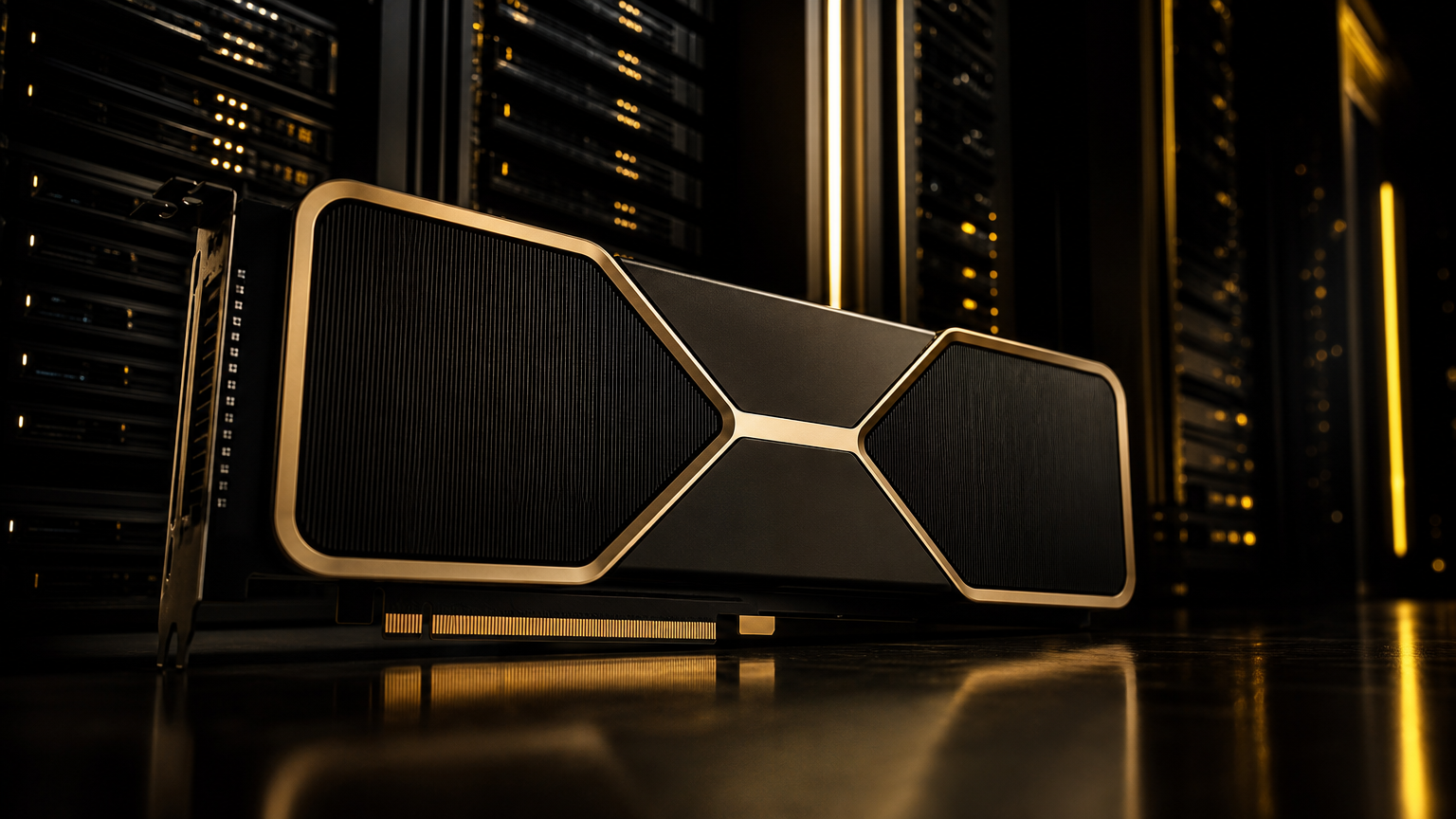
The headline: Astra gets a Blackwell fast lane
GPT-6 Astra Ultrafast is now being framed as the fastest lane for OpenAI’s flagship Astra model, with NVIDIA saying the service runs on Blackwell GPUs and is available in the OpenAI API as well as to eligible ChatGPT Work and Codex users . The key number is “up to 8x faster token generation” compared with Astra Standard mode, a claim NVIDIA ties to inference optimizations that use the capabilities of the Blackwell architecture .
That is a big number, but it is also a narrow one. It refers to token generation speed, not necessarily the total elapsed time of a complete task such as editing code, calling tools, running tests and deciding what to do next . In practical terms, the promise is not that every agentic workflow becomes eight times faster end to end; it is that the model’s output stream can arrive much faster in the part of the workflow where generation is the bottleneck .
OpenAI’s own developer-community announcement described Ultrafast as a premium speed tier for GPT-6 Astra, saying it can offer up to 8x faster token generation in Codex and up to 6x in the API, with WebSocket mode promoted for real-time experiences . That split matters because the public narrative often compresses the story into one “8x” figure, while the fresh OpenAI-linked announcement distinguishes between Codex and API behavior .
Why Blackwell matters
The Blackwell detail gives the story its infrastructure weight. NVIDIA’s post says GPT-6 Astra Ultrafast runs on NVIDIA Blackwell GPUs and that OpenAI used internal models to optimize inference on NVIDIA hardware . Philippe Tillet, OpenAI’s inference lead, is quoted by NVIDIA as saying OpenAI’s models have become exceptionally good at programming Blackwell and Rubin GPUs, and can turn that knowledge into high-performance kernels . Uday Ruddarraju, OpenAI’s chief technology officer of compute, is quoted as saying OpenAI used internal models to optimize inference on NVIDIA GPUs .
For enterprise teams, this is less about chip branding and more about predictability. If the same frontier model can produce output materially faster on a scaled GPU architecture, applications that were previously too sluggish for live coding, real-time research, responsive tool use or customer-facing agent loops may become easier to justify. NVIDIA’s own explanation focuses on repeated workflows: an agent writes code, uses a tool, checks the result and chooses the next step . Every pause between those stages is a place where lower latency can change the feel of the product.
Still, the Blackwell attribution is also part of the caveat. OrcaRouter’s analysis argues that NVIDIA’s October 1 post added three main facts: the hardware label, two named OpenAI engineers quoted on the record and the broader audience of API, ChatGPT Work and Codex users . It also notes that the hardware attribution is single-sourced to NVIDIA, not independently benchmarked by a third party . That does not make it wrong, but it does mean readers should treat it as a vendor-disclosed architecture claim rather than a neutral lab result.
The economics: speed is priced as a premium
The most immediate business question is not only whether Ultrafast is faster, but whether the extra speed is worth the premium. FourWeekMBA’s October 2 analysis says NVIDIA’s 8x figure is a speed claim, while OpenAI’s published pricing implies a much more concrete cost ladder; the publication calculates Ultrafast output pricing at six times the Standard output price for comparable GPT-6 Astra usage . Its arithmetic puts short-context Astra output at $50 per million tokens in Standard and $300 in Ultrafast, with similar six-times ratios across the table it reviewed .
That price-speed relationship is the core procurement debate. If an agent produces tokens up to 8x faster but costs roughly 6x as much in the relevant tier, some latency-sensitive use cases may look attractive, especially where user waiting time, developer iteration time or agent throughput is the expensive variable. But if a workflow spends most of its time in external tools, web requests, database operations, test suites or human review, faster token generation may have a smaller effect on the total cost per completed task.
This is why “up to” deserves attention. NVIDIA’s claim is an upper-bound comparison against Astra Standard mode, and AI Affairs emphasizes that it concerns token generation rather than the elapsed time of a complete workflow . For a coding agent, the difference between generating a patch and running the test suite may be enormous. For a chat product with short answers, network overhead and first-token latency may matter as much as raw generation rate. For a research agent producing long reports, output speed could be far more visible.
Capacity planning changes before benchmarks do
Even without independent benchmarks, the announcement changes how teams think about capacity. A faster premium lane can become a release valve for urgent workloads: interactive coding, high-value customer support, executive research, time-boxed analysis or agent chains where each step waits on the previous one. OpenAI’s community announcement says Ultrafast for Astra is available in Codex and ChatGPT Work on Enterprise plans and through the Pro 500 plan, while also saying it is available to all developers via the API .
Fresh reporting also stresses that availability does not equal unlimited throughput. OrcaRouter notes that OpenAI’s documentation presented Ultrafast as available to API users at low rate limits, with the tier behaving as an access-controlled service setting rather than a separate model ID . FourWeekMBA similarly highlights rate limits and residency constraints as part of the operational picture, not footnotes .
That is important for deployment planning. If a company moves a latency-sensitive agent from Standard to Ultrafast, the relevant question is not simply “is it faster?” It is: how many concurrent sessions can run, what rate limits apply, which regions are supported, how much of the workload is generation-bound, and whether the premium tier can be reserved for the moments where speed has the highest marginal value.
What is still unproven
The strongest version of the story is clear: GPT-6 Astra Ultrafast pairs OpenAI’s frontier model with NVIDIA Blackwell GPUs, and NVIDIA says that combination delivers up to eight times faster token generation than Astra Standard mode . The cautious version is just as important: the figure is vendor-reported, workload-specific, and not the same as an independent latency distribution across real enterprise workloads .
AI Affairs makes the practical distinction well: faster token production can reduce waiting inside a repeated agent loop, but the final effect depends on how much of the loop is actually spent generating text instead of executing tools or checking results . FourWeekMBA adds the commercial lens, separating NVIDIA’s “up to 8x” speed claim from pricing arithmetic based on OpenAI’s published rate table .
The result is a benchmark speedrun with real stakes. If the 8x ceiling holds across enough production workloads, Astra Ultrafast could reshape inference economics by letting teams buy time directly: fewer seconds between tool calls, more responsive coding agents, faster drafts, faster retries and denser use of expensive frontier intelligence. If the gains appear only in narrow conditions, the tier may still be valuable, but mainly for carefully selected workloads where output generation dominates.
Bottom line
GPT-6 Astra Ultrafast is not just another model headline. It is a sign that the next frontier of AI competition is shifting from model capability alone to the system around the model: GPU architecture, inference kernels, service tiers, latency budgets, rate limits and price-performance trade-offs.
Blackwell may have found the turbo button, but serious buyers should bring a stopwatch, a bill calculator and their own prompts. The 8x claim is meaningful enough to test immediately, and specific enough that every enterprise team can ask the right question: not “is Astra Ultrafast fast?” but “is it fast enough, on our workload, to pay for itself?”
Sources from the last 72 hours
- [1]How NVIDIA GPUs Help Accelerate OpenAI’s GPT-6 Astra UltrafastOct 1, 2026, 2:00 AM
- [2]Build Ultrafast with Astra in Codex and the APIOct 1, 2026, 12:38 AM
- [3]GPT-6 Astra Ultrafast Runs on Blackwell: NVIDIA Names the Hardware Behind the 8xOct 2, 2026, 2:00 AM
- [4]OpenAI Prices Astra Ultrafast at 6x StandardOct 2, 2026, 2:00 AM
- [5]OpenAI releases GPT-6 Astra Ultrafast on Nvidia Blackwell GPUsOct 2, 2026, 11:05 PM
AI-generated article based on recent web research, then preserved as a dated editorial snapshot.
Comments
Be the first to comment.