
Daily Podcast full article
Musk courts TSMC for Terafab
Elon Musk has confirmed that Terafab is in discussions with TSMC, adding a second potential semiconductor heavyweight to a project already tied to Intel and designed to feed Tesla, SpaceX and xAI with dedicated chips. The talks are still preliminary, but they show how Musk’s companies are trying to turn chip supply from a bottleneck into a vertically controlled strategic asset.
The news: talks, not a deal
Elon Musk has acknowledged that Terafab is talking with TSMC, the Taiwanese foundry that dominates advanced contract chip manufacturing, after reporting from Tim Culpan’s Culpium said TSMC was exploring ways to work with the project . Musk’s public formulation was deliberately cautious: “Just discussions, but something may come of it,” according to Culpium and Tom’s Hardware . That is the key line for investors, suppliers and competitors: the talks are real, but there is no announced agreement, no disclosed ownership structure and no public timetable for a TSMC-built Terafab line.
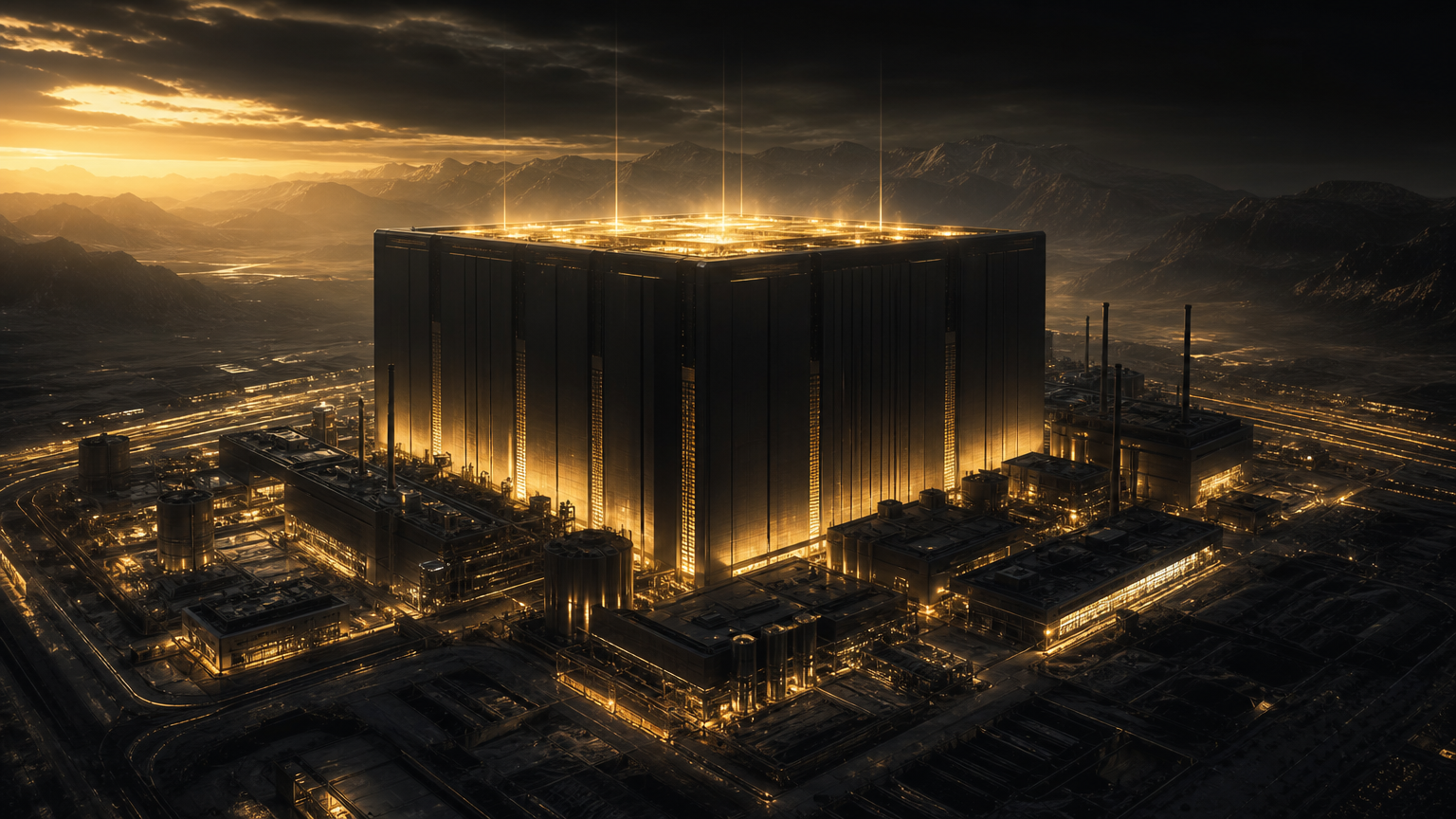
The possible collaboration would center on a semiconductor facility dedicated to Musk’s own demand rather than a broad merchant foundry business. Tom’s Hardware reported that the facility under discussion would exclusively serve Tesla, SpaceX and xAI, with TSMC potentially building and operating it . DigiTimes also reported that Musk confirmed Terafab, backed by SpaceX and Tesla, is in discussions with TSMC, following reports that the Taiwanese foundry is looking at running new chip factories in Texas .
That makes the story larger than a routine supplier negotiation. Tesla wants chips for vehicles, robotics and AI training or inference; SpaceX has growing compute and spacecraft electronics needs; and xAI is built around enormous demand for accelerators and supporting infrastructure. A dedicated Terafab supply chain would bind those three empires to a common semiconductor strategy.
What TSMC might bring
The most discussed scenario is not simply that TSMC would sell more wafers to Musk’s companies. Culpium reported that the most likely path would see TSMC try to own and operate the new factory, while SpaceX or Terafab could participate through equity, a guaranteed purchase commitment, or both . Tom’s Hardware summarized a second possible model in which SpaceX or Terafab could hold majority ownership while TSMC contributes process technology and operational expertise .
Those two models are strategically very different. A TSMC-owned and operated facility would look more like a dedicated customer-backed expansion, with Musk’s companies acting as anchor demand. A SpaceX-controlled venture operated with TSMC know-how would be more unusual, because it would ask the world’s most important pure-play foundry to place its methods, process discipline and reputation inside another company’s industrial moonshot.
Either version would shift the center of gravity of Terafab. Until now, the named semiconductor partner in the project has been Intel. Tom’s Hardware notes that Intel remained the only other named partner and that its 14A process technology had been expected to supply the project’s manufacturing base . If TSMC enters with its own process technologies, packaging knowledge or operating role, Intel’s exact place becomes less clear. It does not necessarily disappear, but it becomes one component in a more complex negotiation.
Why Intel’s role is suddenly under scrutiny
The TSMC talks matter because Terafab was already framed around Intel’s manufacturing comeback. Intel’s appeal to Musk is obvious: it is a U.S.-based manufacturer trying to win advanced foundry customers, and Terafab would be a gigantic anchor project. But TSMC is the benchmark supplier for leading-edge manufacturing, yield learning, ecosystem depth and advanced packaging execution.
Culpium’s latest note says the story triggered pushback from Intel supporters and also references chatter that collaboration with Intel on Terafab was not making progress . That should be treated carefully: the public record does not show Intel being formally displaced. What has changed is that Musk has now confirmed the existence of TSMC discussions, which creates a live question about whether Terafab becomes Intel-led, TSMC-led, split by process and packaging roles, or redesigned around a different division of labor.
The smartest reading is that Musk is preserving options. If the objective is exclusive chip supply for Tesla, SpaceX and xAI, he does not need Terafab to become a direct competitor to TSMC, Samsung or Intel Foundry. He needs dependable output, preferential access and enough control to avoid being trapped in industrywide allocation cycles. Tom’s Hardware makes the same point: Musk’s likely goal is surplus custom silicon for his own companies, not a general-purpose foundry empire .
Texas as the geographic clue
The geography is not incidental. DigiTimes described the talks in the context of TSMC’s potential interest in running new chip factories in Texas . TeslaNorth also reported that Culpan’s work described TSMC as potentially using Terafab as an anchor customer for a future Texas site tied to a reported $16.8 billion chip project involving Tesla and SpaceX .
That Texas angle matters because Musk’s industrial base is already heavily concentrated in the state. Tesla has major operations there, SpaceX has deep Texas roots, and a chip facility in the same broader ecosystem could simplify coordination among design teams, power planning, construction, logistics and executive oversight. For TSMC, however, Texas would not be a casual add-on. A fab is not just a building; it is a dense network of equipment suppliers, chemicals, gases, water, power, talent, maintenance systems and years of process learning.
That is why the “who operates it?” question is as important as the “who pays for it?” question. Money can start a fab project. Operating discipline determines whether it produces competitive chips at useful yield.
The exclusive-supply logic
Terafab’s most important feature may be exclusivity. A facility serving Tesla, SpaceX and xAI would let Musk aggregate demand across electric vehicles, robots, rockets, satellites, AI data centers and model training infrastructure. Each business has different chip needs, but all point in the same direction: more custom silicon, more packaging capacity, more power-aware systems and less dependence on a crowded external supply chain.
This is where the strategy becomes almost imperial. Tesla’s chips influence autonomy and robotics. SpaceX’s needs extend from spacecraft electronics to ground and orbital compute. xAI’s requirements pull in the opposite direction of scarcity: more accelerators, more memory bandwidth, more packaging and more energy. One fab to rule three empires may sound like a tech-themed Mordor, but the strategic logic is plain: whoever controls advanced chip supply controls the pace of the product roadmap.
The challenge is that semiconductor manufacturing punishes impatience. A fab cannot be willed into existence by demand alone. TSMC’s possible participation would be valuable precisely because it has spent decades turning process technology into repeatable, high-yield industrial execution.
What remains unresolved
The current state of the story is therefore clear but unfinished. Musk has confirmed discussions. TSMC has not announced a deal. Intel remains the only other named partner. The potential facility is still described as dedicated to Tesla, SpaceX and xAI. The structures under discussion appear to range from TSMC ownership and operation to a SpaceX/Terafab majority model with TSMC expertise, but none has been confirmed .
For now, Terafab is less a signed semiconductor alliance than a pressure point in the global foundry system. Musk is signaling that his companies’ chip needs are large enough to justify extraordinary arrangements. TSMC is being courted because it has what every AI-era customer wants: advanced manufacturing credibility. Intel is still in the frame because it offers a U.S. manufacturing path and an ambitious 14A roadmap.
The next real milestone will not be another social-media confirmation. It will be a binding structure: who owns the fab, who operates it, which process node it uses, who supplies packaging, what volume Tesla, SpaceX and xAI guarantee, and how much risk each side is willing to carry. Until then, Terafab remains both a semiconductor project and a negotiation over industrial control.
Sources from the last 72 hours
- [1]Elon Musk confirms discussions with TSMC about Terafab chipmaking collaboration — Intel is the only other named partner, Terafab to exclusively supply Tesla, SpaceX, and xAIOct 3, 2026, 2:00 AM
- [2]Elon Musk Confirms TSMC-Terafab TalksOct 3, 2026, 2:00 AM
- [3]Musk confirms talks with TSMC over his Texas chip factory projectOct 3, 2026, 4:36 PM
- [4]Elon Musk Confirms TSMC Talks for $16.8 Billion Texas Terafab ProjectOct 3, 2026, 2:00 AM
AI-generated article based on recent web research, then preserved as a dated editorial snapshot.
Comments
Be the first to comment.