
Daily Podcast full article
SoftBank’s AI appetite strains finances
Masayoshi Son has completed another giant OpenAI payment, but the bigger story is the financing architecture now wrapped around SoftBank’s AI strategy: high-yield bonds, a cancelled bridge loan, a new DigitalBridge infrastructure platform and growing pressure to prove that private AI stakes can eventually support very public liabilities.
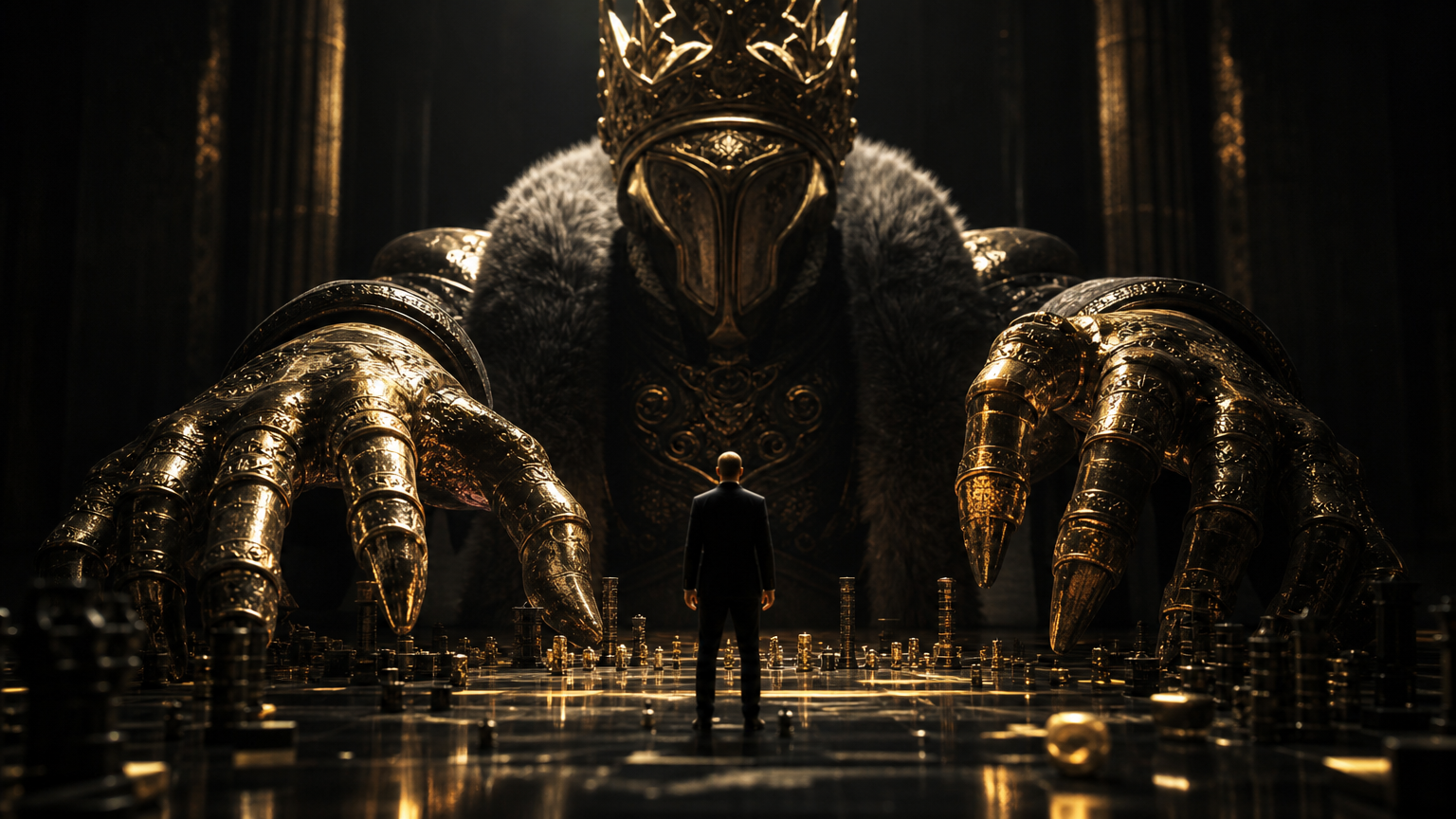
The headline is not just another OpenAI cheque
SoftBank’s latest AI milestone looks simple on the surface: the group has finished a $30 billion follow-on investment in OpenAI, with the final $10 billion tranche taking its cumulative OpenAI exposure to $64.6 billion and its ownership interest to about 13% . But the financial signal is larger than the payment itself. Masayoshi Son is trying to make SoftBank a central capital provider to the artificial-intelligence boom, while the group’s own funding needs are becoming an increasingly visible constraint.
That is why the story has shifted from “How big is Son’s AI ambition?” to “How is SoftBank going to finance the next layer of that ambition?” Reuters reported that the three $10 billion tranches were made through Vision Fund 2, and that SoftBank has become one of OpenAI’s biggest backers under Son’s push to make the Japanese conglomerate a dominant AI investor . The question for investors is whether a balance sheet built around concentrated technology stakes can keep expanding into models, chips, power and data centres without forcing a sharper choice among debt, asset sales, partners and strategy.
Debt has replaced the bridge
The most important financing detail is that SoftBank’s final OpenAI tranche was funded with proceeds from foreign-currency senior notes rather than from the remaining capacity under its bridge facility . The company also cancelled the remaining $10 billion of undrawn capacity under a $40 billion bridge facility, after earlier repayment left all borrowings under that facility repaid and no undrawn commitments remaining . In other words, the short-term bridge risk has been cleaned up, but the economic exposure has not disappeared; it has been transformed into longer-term funded debt.
That conversion matters. A bridge loan is a temporary solution while a company arranges permanent financing, sells assets or waits for a liquidity event. Bonds are more durable, but they also create coupon obligations and maturity dates that do not wait for private-market valuations to become cash. The Next Web reported that the last tranche was paid from a bond sale, lifting SoftBank’s total OpenAI investment to $64.6 billion for a 13% stake, and said the bond raise amounted to $11.1 billion . Cinco Días likewise described SoftBank’s September international debt placement as one of the largest high-yield operations by an Asia-Pacific issuer, with $10 billion of the proceeds intended for the third and final OpenAI tranche .
The consequence is a classic balance-sheet tension: SoftBank owns a larger stake in one of the world’s most strategically important private AI companies, but it has financed part of that position with market debt. The upside is linked to OpenAI’s growth, valuation and eventual liquidity. The obligations, however, are fixed.
Markets noticed the strain
SoftBank shares fell after the company completed the OpenAI tranche, with Investing.com reporting a 5.6% drop to 6,329 yen by 05:34 GMT on October 2 . A one-day share move is not a verdict, especially for a stock exposed to AI sentiment, yen movements and technology valuations. But the direction fits the broader investor debate: the more SoftBank concentrates its portfolio around AI, the more shareholders and creditors focus on how the group funds that concentration.
Reuters reported that OpenAI had secured $122 billion in commitments earlier in the year at an $852 billion valuation, with Amazon, Nvidia and SoftBank anchoring the fundraising . Cinco Días reported a related final funding step by Nvidia and SoftBank, saying each had completed the remaining $10 billion of a $30 billion commitment to OpenAI, according to The Information . These numbers show why SoftBank is not merely participating in the AI cycle; it is helping underwrite it.
That role creates prestige and leverage in the strategic sense. It may give Son influence across the AI ecosystem, from foundation models to chips and infrastructure. But it also turns SoftBank’s investment case into a referendum on whether AI’s private-market valuations, commercial adoption and infrastructure buildout can justify the cost of capital being layered underneath them.
DigitalBridge is the new financing valve
The Financial Times report that framed Son’s AI ambitions as outgrowing SoftBank’s balance sheet also pointed to DigitalBridge as a key part of the next phase, with DigitalBridge chief executive Marc Ganzi saying the data-centre investment group would become SoftBank’s “third-party infrastructure arm” after a roughly $4 billion takeover . That detail is important because SoftBank cannot fund every AI data-centre, power and infrastructure project from its own balance sheet if it also wants to keep committing tens of billions to OpenAI and other strategic positions.
The logic of DigitalBridge is to make AI infrastructure investable for outside capital. Instead of SoftBank owning every asset directly, DigitalBridge can raise funds from institutional investors for data centres, power and related digital infrastructure tied to the AI buildout . That could allow Son to pursue a broader “AI stack” strategy while limiting the amount of SoftBank equity required for each project.
But this is not a free solution. Infrastructure funds need credible projects, tenants, power access, permitting and attractive risk-adjusted returns. If data-centre valuations cool, financing tightens or local opposition delays construction, the infrastructure arm can slow down exactly when AI demand is supposed to accelerate. The model reduces SoftBank’s direct funding burden, but it also adds execution risk through partners, project finance and market appetite.
The AI stack is becoming a capital stack
Son’s strategy is often described in technological layers: OpenAI for models, Arm for chips, and data-centre or power assets for the physical infrastructure. The more revealing lens now may be the capital stack. At the top sit private AI equity stakes whose values can rise quickly but may not be easy to monetise. Beneath them sit bonds, loans, possible asset-backed financings and outside infrastructure funds. The mismatch between liquid liabilities and illiquid assets is the central risk.
SoftBank has dealt with versions of this before. The Vision Fund era taught investors that Son is willing to make enormous, concentrated bets and then manage volatility through asset sales, refinancing and portfolio reshuffling. The difference this time is scale and strategic centrality. AI infrastructure is not just a portfolio theme; it is becoming an arms race in compute, power, chips and data-centre capacity. Even large technology balance sheets face limits, and SoftBank is not a hyperscaler with the same recurring cloud cash flow as Amazon, Microsoft or Google.
That does not mean the strategy is doomed. If OpenAI’s revenue growth, product adoption and eventual liquidity match investor expectations, SoftBank’s stake could become a defining asset. If Arm continues to benefit from AI chip demand, SoftBank’s semiconductor exposure could reinforce the same thesis. If DigitalBridge successfully channels institutional capital into AI infrastructure, SoftBank could extend its reach without absorbing every dollar of cost.
The problem is sequencing. Coupon payments arrive before exits. Data-centre capital calls arrive before long-term returns. Private valuations can support confidence, but they do not automatically fund cash obligations. The more SoftBank becomes a financing hub for AI, the more the group must convince both equity and credit investors that its assets are not only valuable but financeable.
What to watch next
The immediate OpenAI funding overhang has eased because the final tranche is now complete and the bridge facility has been repaid and cancelled . The next phase is more subtle. Investors will watch the cost and maturity profile of SoftBank’s new debt, any asset monetisation, the performance and valuation marks of OpenAI, and whether DigitalBridge can bring in external capital at scale .
They will also watch whether Son narrows the strategy or keeps widening it. A narrower strategy would mean prioritising OpenAI, Arm and selected infrastructure projects while reducing optionality elsewhere. A wider strategy would require more partners, more debt capacity or more asset sales. Either path can work, but the market is no longer treating SoftBank’s AI appetite as an abstract vision. It is treating it as a financing problem.
That is the real story behind the latest cheque. SoftBank has not run out of ambition. It has reached the stage where ambition must be syndicated, refinanced or converted into cash-generating infrastructure. In the AI boom, even the boldest wallets eventually meet the balance sheet.
Sources from the last 72 hours
- [1]SoftBank completes final phase of $30 billion investment in OpenAIOct 1, 2026, 9:11 PM
- [2]SoftBank shares slide after completing final tranche of OpenAI investmentOct 2, 2026, 7:40 AM
- [3]SoftBank completes $30bn OpenAI investment with final $10bn paymentOct 2, 2026, 10:13 AM
- [4]Nvidia y SoftBank desembolsan los últimos 17.800 millones comprometidos con OpenAIOct 2, 2026, 8:56 AM
- [5]Masayoshi Son’s AI ambitions outgrow SoftBank’s balance sheetOct 4, 2026, 8:00 AM
AI-generated article based on recent web research, then preserved as a dated editorial snapshot.
Comments
Be the first to comment.