
Daily Podcast full article
TSMC surges on Terafab talks
TSMC’s U.S.-listed shares pushed to a fresh high after Elon Musk confirmed early discussions with the Taiwanese foundry about Terafab, the proposed Texas chipmaking venture meant to serve Tesla, SpaceX and xAI. The talks remain preliminary, but the market read them as a signal that Musk may not rely on Intel alone for advanced manufacturing.
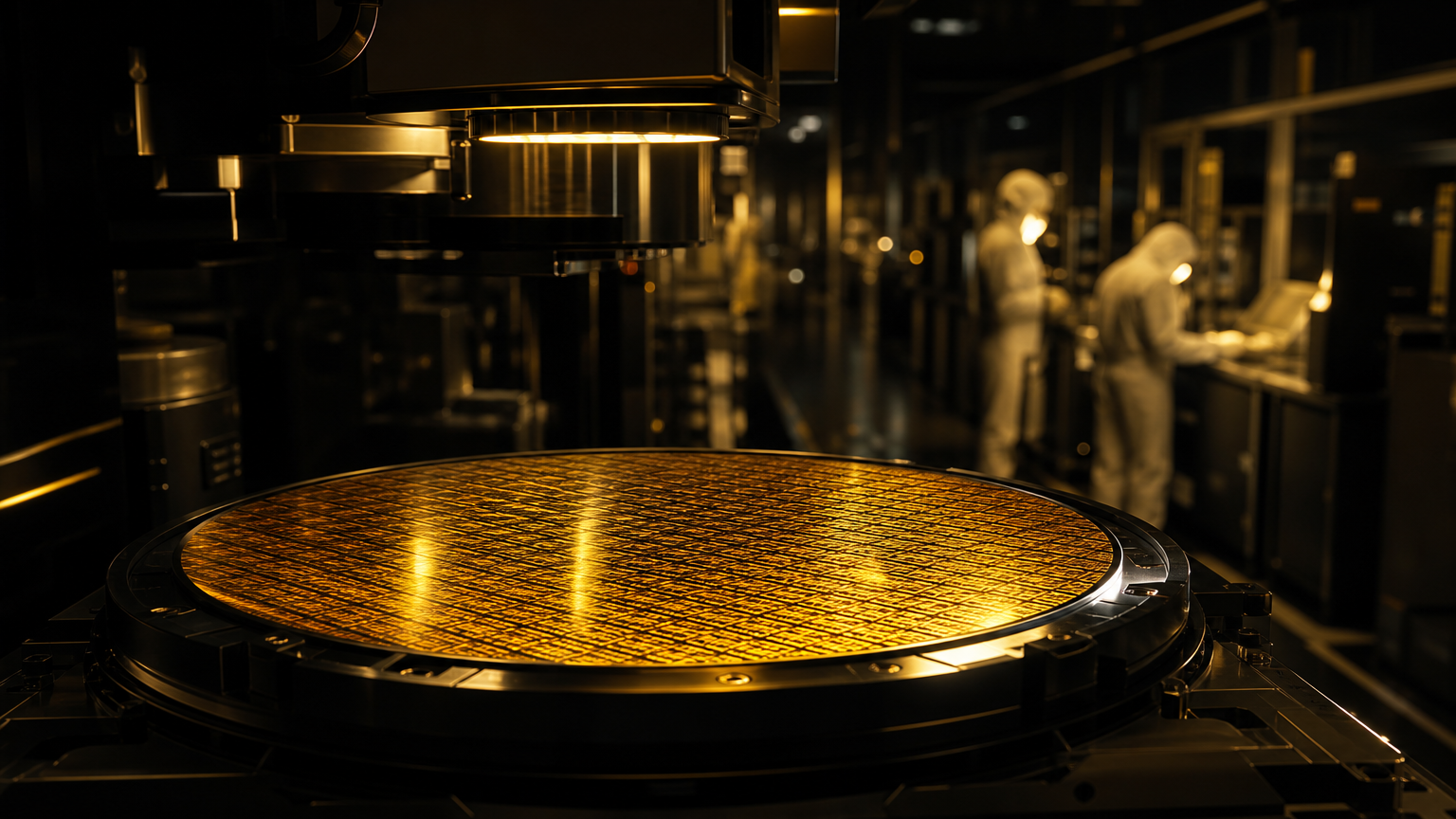
The market heard one word: TSMC
The semiconductor market did not move because a factory was announced, a contract was signed or a production date was fixed. It moved because Elon Musk publicly acknowledged that Terafab and TSMC are talking. In response to reporting that the Taiwanese foundry was exploring a role in the Texas project, Musk said the matter was “just discussions,” while adding that “something may come of it” .
That was enough. TSMC’s U.S.-listed shares closed at $485.80 on October 5, 2026, up 2.75% on the day, with the quote page showing a 52-week range that topped out near $487.47 during the session . The rise put a spotlight on how powerful TSMC’s brand remains in advanced manufacturing: even a possible future role in a still-unsettled Musk project was enough to change investor positioning.
The move was also a reminder that Terafab is no ordinary industrial rumor. Musk has framed the project as a way to secure a huge supply of custom chips for Tesla, SpaceX and xAI, tying it to electric vehicles, robotics, AI training and space infrastructure . If those companies become as chip-hungry as Musk suggests, the identity of the manufacturing partner becomes a market event in its own right.
What is actually on the table
The most important detail is also the most easily lost: there is no announced TSMC-Terafab deal. Tom’s Hardware reported that the talks involve a potential collaboration under which TSMC could build and operate a facility serving Musk’s companies, but it also noted that Musk did not elaborate and that TSMC had not commented .
Two broad structures appear to be under discussion. In one version, TSMC would own and operate a new semiconductor production facility, while SpaceX or Terafab would contribute capital, commit to buying a guaranteed volume of chips, or do both . In another version, SpaceX would hold majority control, with TSMC contributing less capital but providing process technology and operational expertise .
Those distinctions matter. If TSMC owns and operates the fab, Terafab could look less like a fully independent Musk manufacturing empire and more like a captive-demand project anchored by the world’s strongest foundry operator. If SpaceX or Terafab controls the asset while TSMC supplies know-how, the project would be more unusual for TSMC and potentially more complex to govern.
Hardware Busters emphasized that the talks have no disclosed timeline, contract or dollar figure, and that Musk did not confirm any specific structure . That caveat should shape any serious reading of the story. The current market reaction is not about certainty; it is about optionality.
Why Intel suddenly looks less comfortable
Before the TSMC angle emerged, Intel was the only major manufacturing name publicly attached to Terafab. Benzinga noted that Musk had previously said Tesla planned to use Intel’s next-generation 14A manufacturing process for chips at the project, giving Intel a potentially important external customer for a technology it needs to prove in the market .
That is why the TSMC discussions hit Intel’s narrative so directly. Intel’s foundry strategy depends on convincing outside customers that it can compete with TSMC on leading-edge process technology, high-volume execution and advanced packaging. Terafab looked like the kind of anchor customer that could validate that pitch. If TSMC enters the discussion, Intel’s win becomes less exclusive.
Benzinga framed the new setup as a possible “two-horse race,” with Intel’s 14A process forced to compete for Musk’s future chip business instead of simply supplying it . That does not mean Intel is out. Musk has indicated that TSMC could supplement, rather than replace, Intel . But the negotiating balance changes when a customer can credibly point to TSMC as an alternative.
The result is a more complicated story for Intel investors. On one hand, Terafab could still provide the volume Intel Foundry needs to demonstrate 14A at scale. On the other, a TSMC role could limit Intel’s share of the project or push Intel into a lower-margin, more contested position. For a company trying to rebuild confidence in its manufacturing roadmap, that uncertainty matters.
Why TSMC benefits even before a deal
For TSMC, the upside is more subtle but powerful. The company does not need Terafab to prove that it can manufacture advanced chips at scale; that is already its core identity. What the talks offer is a new way to extend that dominance into a U.S. project built around captive demand from some of the most chip-intensive companies in Musk’s orbit.
Tom’s Hardware reported that one discussed model resembles TSMC’s joint-venture approach in Japan and Germany, where local partners bring capital and demand while TSMC brings process technology and operates the fabs . If a similar structure were adapted for Terafab, TSMC could reduce demand risk by tying capacity to guaranteed buyers.
That is why investors reacted quickly. A future Terafab role could give TSMC a dedicated channel into Tesla, SpaceX and xAI workloads without requiring it to become a general-purpose competitor inside Musk’s industrial ecosystem. It could also support TSMC’s broader U.S. manufacturing footprint, especially if a Texas facility becomes part of the strategic map.
Still, the opportunity is not free. TSMC is famously selective about how it deploys engineering talent, equipment allocations and management attention. Leading-edge fabs are not just buildings filled with machines; they are ecosystems of yield learning, process discipline and supply-chain orchestration. Terafab’s ambition may be attractive, but it would also be demanding.
The deeper message: Musk wants leverage
The cleanest interpretation is not that Musk is abandoning Intel or handing Terafab to TSMC. It is that he is building leverage. Terafab’s stated purpose is to secure a vast, reliable supply of custom silicon for Musk-controlled companies . If that is the goal, relying on a single manufacturing path would be risky.
Dual sourcing is common in semiconductors where possible, especially when supply security is strategically important. Benzinga’s analysis pointed to the investor question now facing the market: whether Musk’s willingness to consider both Intel and TSMC gives him leverage to demand better economics, capacity and manufacturing performance .
That interpretation fits the facts currently available. Intel brings U.S. manufacturing capacity, advanced packaging ambitions and the political value of domestic production. TSMC brings unmatched credibility in high-volume leading-edge manufacturing. Musk’s companies bring demand. The tension is over who captures the economics and who controls the operational risk.
A rally built on possibility, not closure
The TSMC surge is therefore both rational and fragile. It is rational because the possibility of TSMC involvement materially changes how investors think about Terafab’s chance of execution. A Musk fab with TSMC operating discipline looks more credible than a greenfield effort trying to reinvent advanced manufacturing from scratch.
It is fragile because nothing has been signed. There is no disclosed ownership model, node, production schedule, capacity target or capital commitment . TSMC has not commented publicly on the talks, and Musk’s own wording was deliberately cautious .
The story is ultimately about the market’s respect for execution. Musk can move markets with a sentence, but TSMC moves them for a different reason: investors believe it can turn advanced chip designs into volume production. That is why one short confirmation pushed TSMC higher and put Intel under pressure. Terafab is still a proposal; TSMC’s manufacturing reputation is already a fact.
Sources from the last 72 hours
- [1]Elon Musk confirms discussions with TSMC about Terafab chipmaking collaboration — Intel is the only other named partner, Terafab to exclusively supply Tesla, SpaceX, and xAIOct 3, 2026, 4:50 PM
- [2]Why TSMC’s Talks with Elon Musk Are a Direct Threat to Intel’s Chip AmbitionsOct 5, 2026, 5:21 PM
- [3]Musk Confirms Terafab TSMC Talks, and Intel’s 14A Is No Longer the Only Name in the RoomOct 4, 2026, 2:00 AM
- [4]Taiwan Semiconductor Manufacturing Company Limited (TSM) Stock Price, News, Quote & HistoryOct 5, 2026, 10:00 PM
AI-generated article based on recent web research, then preserved as a dated editorial snapshot.
Comments
Be the first to comment.