
Daily Podcast full article
Google signs $4.3B nuclear deal to feed AI data centers with 890 MW of nuclear capacity
Google and Constellation Energy have struck a 20-year nuclear power agreement built around $4.3 billion in reactor upgrades, aiming to add 890 megawatts of firm capacity to the PJM grid as AI data centers intensify the race for round-the-clock clean electricity.
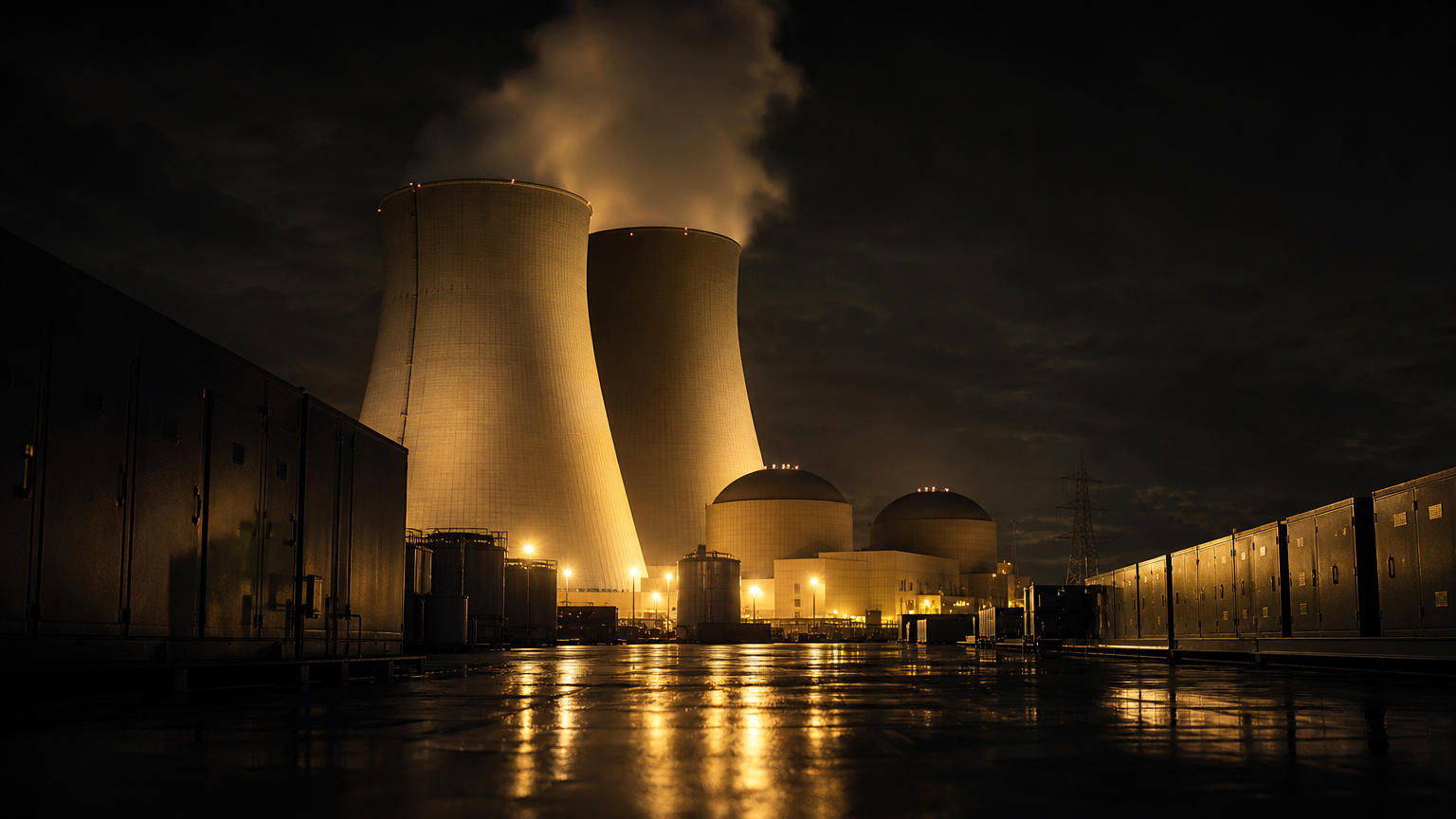
Google moves from clean-energy credits to hard power
Google’s latest energy move is not another symbolic renewable certificate purchase. It is a long-term bet on physical megawatts. On October 6, 2026, Google and Constellation Energy announced a strategic clean-energy collaboration designed to bring 890 megawatts of additional nuclear capacity onto the PJM Interconnection grid through upgrades at existing reactors . The agreement is structured around a 20-year power purchase agreement and more than $4.3 billion in new investment by Constellation .
The core story is simple: AI data centers need reliable electricity all day, every day, and Google is now helping finance the infrastructure that can supply it. The new capacity will come from equipment and technology upgrades at 11 Constellation-owned nuclear units in Illinois, Pennsylvania and New Jersey, rather than from building a new nuclear plant from scratch . Constellation and Google describe the added output as roughly equivalent to a large new reactor, but with a shorter path to delivery because the work uses existing nuclear sites .
For Google, the deal marks another step away from the older hyperscaler playbook of matching electricity consumption with renewable energy certificates and toward a more direct strategy: create or preserve firm clean generation where data-center demand is growing. Google said the agreement brings the new U.S. nuclear capacity it has helped enable through uprates and restarts to more than 1.5 gigawatts .
What the $4.3 billion buys
This is not a purchase of reactors by Google. Constellation remains the nuclear operator, while Google’s long-term offtake commitment provides the revenue certainty that supports the investment. The upgrades are expected to include modernized turbines, steam generators and digital control systems, improving the thermal and electrical efficiency of existing nuclear units . In other words, the plan is to squeeze more output from plants that are already connected to the grid, licensed, staffed and integrated into local economies.
That matters because new nuclear plants can take many years to license, finance and build. Reactor uprates are not instant, and they still involve engineering, outages, regulatory review and grid planning. But they can be faster than greenfield nuclear construction. Google says the full 890 MW should be online before the end of 2032, with the first uprate expected in 2028 . POWER Magazine also reported that the 20-year PPA is designed to support the $4.3 billion upgrade program across 11 nuclear units, with the capacity slated to arrive by the end of 2032 .
The deal also includes a wider commercial package. Alongside the 890 MW of new nuclear capacity, Google and Constellation entered into a separate 15-year energy supply agreement covering an additional 2,700 MW from Constellation’s existing PJM fleet . Power Engineering described the overall arrangement as 3,590 MW, while emphasizing that only the 890 MW of uprates represents new capacity .
That distinction is important. The headline number shows the scale of Google’s electricity procurement, but the grid impact depends on what is incremental. The 890 MW is the new supply story; the 2,700 MW is about securing long-term supply from existing assets and supporting their continued operation in PJM .
Why PJM is the battleground
The PJM Interconnection is one of the most consequential power markets in the United States, spanning the Mid-Atlantic and parts of the Midwest. Google says PJM serves 67 million people, and the company framed the nuclear deal as a way to strengthen that grid while supporting its own growth . The geography is no accident: data-center expansion has been especially intense across parts of the PJM footprint, including Virginia and Pennsylvania, creating pressure for new dependable capacity.
Google’s blog post is unusually direct about the driver. It says the financing for upgrades at six operating nuclear plants is “driven by Google’s data center growth” and is intended to unlock more power from the existing energy system for all customers . That is the real strategic shift: AI demand is becoming large enough that hyperscalers cannot treat the grid as a passive input. They increasingly need to help shape supply.
Constellation and Google also pitch the agreement as a ratepayer-protection model. Google says its anchor-customer role gives Constellation the long-term revenue certainty needed to invest while ensuring other grid customers do not bear the associated costs . The companies also say the deal aligns with PJM’s “Bring Your Own Power” concept and includes demand-response features that would allow non-critical electricity use to be curtailed during grid stress events .
That promise will be closely watched. If the upgrades arrive as planned, they could add firm capacity without shifting costs to households. If execution slips, the agreement will illustrate a different risk: the cloud build-out is increasingly tied to utility project management, nuclear maintenance schedules, regulatory approvals and transmission realities.
AI for energy, energy for AI
There is also a software layer. As part of the expanded partnership, Constellation selected Google Cloud and Gemini Enterprise under a five-year technology alliance intended to create an “AI for energy” blueprint . The companies say the tools will be used to improve activities such as capacity delivery, asset dispatch and critical-infrastructure protection .
That creates a circular but revealing structure. Google needs electricity to run AI infrastructure. Constellation needs capital certainty and operational tools to expand and optimize power production. The partnership therefore links AI demand and AI deployment inside the energy system itself.
Google says Gemini Enterprise workflows will be deployed across Constellation’s core operations to accelerate uprate planning, streamline construction and optimize plant output . That is an ambitious claim, and it should be treated as a target rather than a guaranteed result. Nuclear operators work inside heavily regulated environments where safety, reliability and documentation matter more than speed. Still, the move shows how cloud companies are not only buying power; they are trying to become technology vendors to the utilities that supply it.
The nuclear industry gets a new lease on life
The agreement lands amid a broader nuclear revival driven by technology companies. Axios described the deal as part of Big Tech’s push to fund new nuclear generating capacity for its data-center build-out and noted that upgrades to existing reactors can take less time and money than entirely new nuclear projects . POWER Magazine also placed the Google deal alongside Constellation’s separate agreement with Amazon at Calvert Cliffs, reporting that the two arrangements together support about 1,080 MW of planned Constellation nuclear uprates through long-term technology-company contracts .
This is why the Google-Constellation agreement is bigger than one corporate power purchase. It signals a new financing model for nuclear assets that already exist. Instead of waiting for public policy, rate cases or merchant-market prices to justify uprates, large electricity buyers are providing the demand certainty.
For Constellation, the logic is clear. A 20-year customer commitment can help justify multibillion-dollar capital spending on reactors that may otherwise face market uncertainty. For Google, the logic is equally clear: AI systems, cloud services and data centers need power that is clean, dispatchable and not dependent on whether the sun is shining or the wind is blowing.
The boss level of power procurement
The risk is that “faster than new nuclear” does not mean “easy.” Uprates still require complex engineering, planned outages, supply chains, skilled labor, regulatory review and coordination with the grid operator. The first additional capacity is expected in 2028, while the full 890 MW target stretches to 2032 . That timeline is quicker than a new plant, but long enough to matter for a company racing to deploy AI infrastructure now.
The opportunity is equally clear. If successful, Google gets a long-term supply of firm clean power, Constellation gets a funded path to expand existing reactors, and PJM gets new capacity without waiting for a brand-new nuclear site. The agreement also supports roughly 4,400 existing jobs and about 7,200 new construction jobs during the build period, according to the companies .
The message from the deal is blunt: the AI boom has entered the electricity-infrastructure phase. Google is no longer just optimizing algorithms and buying renewable credits. It is helping pay to upgrade nuclear reactors. In gaming terms, the company has reached the power-hungry boss level, and its latest move adds 890 megawatts of extra mana to the grid.
Sources from the last 72 hours
- [1]Google and Constellation Announce Landmark Agreement to Bring 890 MW of New Nuclear Capacity to PJM Grid as Part of Long-Term Power DealOct 6, 2026, 2:00 AM
- [2]Why we're backing America's existing nuclear plantsOct 6, 2026, 2:00 AM
- [3]Google Deal Backs 890 MW of Constellation Nuclear Uprates at 11 PJM ReactorsOct 7, 2026, 2:00 AM
- [4]Constellation, Vistra uprate deals signal fastest path to new nuclear megawattsOct 7, 2026, 2:00 AM
- [5]Google and Constellation Energy sign latest nuclear energy dealOct 6, 2026, 11:11 PM
AI-generated article based on recent web research, then preserved as a dated editorial snapshot.
Comments
Be the first to comment.