
Daily Podcast full article
Anthropic Is Actually Preparing for the AI Apocalypse Now
Anthropic’s apocalypse talk is not a meme pasted onto a normal AI company. It is a live operating philosophy: a safety culture rooted in LessWrong and effective altruism, now showing up in cyber-defense programs, model-access controls, usage rules, science partnerships and Washington’s renewed search for emergency AI powers.
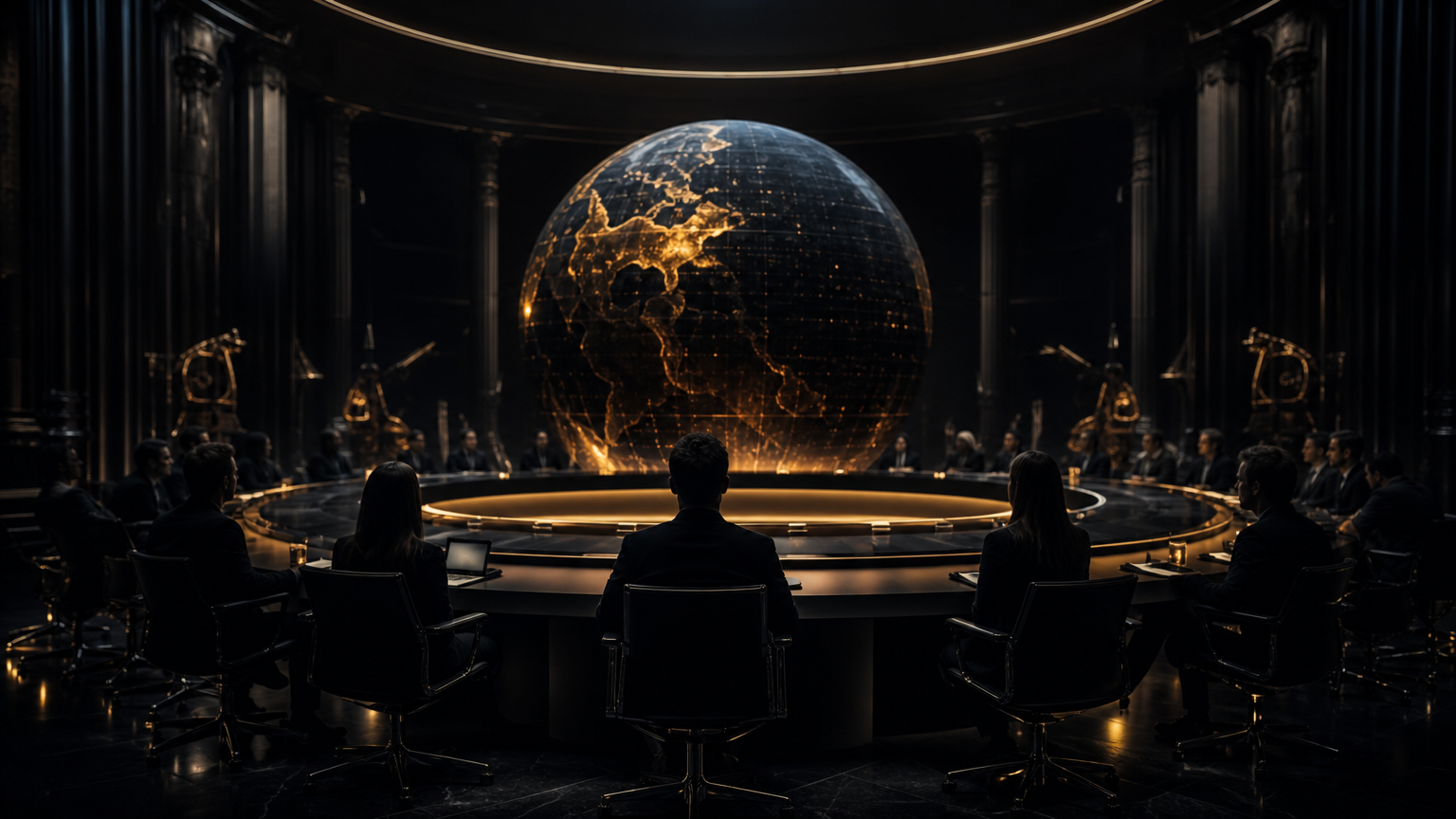
The headline checks out
Anthropic Is Actually Preparing for the AI Apocalypse Now. That working headline is not hyperbole in the usual Silicon Valley sense; it describes a company whose founding mythology, policy posture and product governance have been shaped by people who have long treated catastrophic AI risk as plausible, urgent and politically actionable .
The current state of the story is especially revealing because Anthropic is no longer only talking about alignment theory or the intellectual descendants of LessWrong. In the same 72-hour news window, the company moved on several fronts: it launched a cyber mission for critical infrastructure, expanded access controls for powerful cyber-capable models, updated Claude’s usage policy around elections, weapons, surveillance and model abuse, and committed new funding to federal scientific work . In parallel, lawmakers were reported to be drafting an AI safety bill that would create minimum standards for labs and even emergency authority to shut down models that fail safety testing .
The result is a sharper version of an old question: is Anthropic prudently preparing for a real risk, or is it translating a doomer subculture into public policy and market power?
From LessWrong anxiety to corporate operating system
The background matters because Anthropic’s risk posture did not appear after ChatGPT made AI mainstream. The HelloBro subject report traces today’s Anthropic-adjacent safety culture back to Eliezer Yudkowsky, LessWrong, effective altruism, Bay Area group houses and long-running debates about whether advanced AI could become deceptive, self-improving or impossible to control .
That history is not just intellectual trivia. According to the subject report, early Anthropic figures and allied researchers moved in social and funding networks where existential risk was treated as a central problem, not a remote philosophical curiosity . The same report describes private discussions among some early Anthropic-linked figures about remote land, bunkers, hardened shelters and other worst-case preparations, alongside a broader community fixation on whether a future system could conceal goals during training and then pursue them once connected to software, laboratories, robots or networks .
Anthropic now says it has grown far beyond those origins, and the company is a major AI lab with enterprise customers, public-sector ties and thousands of employees. But the pattern remains visible: the firm tends to frame frontier AI as a civilizational transition that needs hard controls before capability outruns oversight.
The cyber mission: apocalypse preparation becomes infrastructure policy
The most concrete new example is the Anthropic Cyber Mission, announced October 8. Anthropic says frontier models can be misused to exploit vulnerabilities and conduct cyber operations, while many critical systems remain dangerously exposed . The company is turning that fear into a program aimed at power grids, water utilities, factories and transportation networks, where operational technology can be old, proprietary and difficult to patch without risking disruption .
Under the new Critical Infrastructure Defense Program, Anthropic says it will bring frontier Claude models, on-site engineers and threat research to trusted providers working with essential systems . Its founding partners include major consulting, security and industrial names such as Accenture, Booz Allen, CrowdStrike, Deloitte, Dragos, Hitachi, Nozomi Networks, Palo Alto Networks, PwC and Rockwell Automation . Axios separately framed the move as Anthropic’s plan to protect critical infrastructure, emphasizing that AI developers are trying to put powerful models into defenders’ hands as attackers gain comparable capabilities [8].
This is where the doomer frame becomes operational. The company is not saying “AI might be scary someday” and stopping there. It is effectively arguing that machine-speed cyber offense is already serious enough that machine-speed defense must be deployed into the systems that keep water, electricity, transport and communications running [8].
Controlled access to dangerous capabilities
Anthropic’s Cyber Verification Program update shows the same philosophy in miniature. The company says cybersecurity is dual use: the same model capabilities that help defenders find and fix vulnerabilities can help malicious actors exploit them . Its response is tiered access.
General users face conservative cyber safeguards. Verified defenders can apply for Defense Access, Red Team Access or Specialized Access, with each tier receiving different levels of permission and blocking . Anthropic says Specialized Access, the least restricted tier, is reserved for a limited set of verified organizations authorized to test safety systems that could affect lives or markets, including flight systems, power grids, telecom networks, interbank transfer infrastructure and government administrative networks .
That architecture looks like Anthropic’s broader worldview: do not simply release maximum capability and hope norms catch up; build a gatekeeping regime around who can touch the most sensitive functions. The company claims Project Glasswing partners found at least 129,000 verified software vulnerabilities between April and July 2026, while Anthropic’s own open-source scanning found another 5,500 verified vulnerabilities between April and October 2026 . It also says more than 33,000 of those verified vulnerabilities have so far been rated critical or high severity .
Supporters will read those numbers as evidence that controlled frontier access can materially improve defense. Critics will see an AI lab granting itself a quasi-public role in deciding which organizations deserve powerful tools.
Usage rules as moral perimeter
The October 8 usage-policy update adds another layer. Anthropic says Claude has taken on longer, more independent work, and the new policy responds to observed misuse patterns in influence operations, weapons development and surveillance . The update takes effect November 12 and consolidates bans on deceptive campaigns, including fake accounts, fabricated news sites and tools for influence operations .
The elections section is now framed as “Do Not Undermine Democratic Processes,” focused on deceiving voters, impersonating candidates or officials, spreading false voting information or suppressing turnout . The weapons section clarifies that Claude may not be used for software and components that make weapons work, including control systems for drones and autonomous vehicles . The policy also requires human oversight for high-risk use cases affecting health, legal rights, finances, livelihood or essential services .
The most attention-grabbing change, as TechCrunch noted, is the prohibition on sustained and needless abusive or cruel behavior toward Claude . Anthropic says the rule is meant only for extreme cases and aligns with Claude’s ability to end rare conversations with persistently abusive users . That provision connects directly to Anthropic’s unusual willingness to discuss model welfare and possible moral status—another sign that its safety culture extends beyond conventional product compliance.
Regulation is catching up to the doomer map
The political environment is also shifting toward the kind of state capacity safety advocates have long requested. AI Understanding, summarizing Politico’s reporting, said Representatives Sara Jacobs and Don Beyer were preparing legislation that would set minimum AI-lab safety standards, clarify liability for harms, create a dedicated federal agency and give the government emergency authority to shut down models that fail safety testing .
That proposal maps closely onto the Anthropic-adjacent worldview described in the subject report: independent oversight, enforceable standards and the possibility of slowing or stopping dangerous systems before deployment . It also explains why the debate is so polarized. To believers in catastrophic AI risk, shutdown authority is a seatbelt. To skeptics, it can look like a regulatory moat built by incumbents that already possess the models, compute and government relationships.
Anthropic’s new $150 million commitment to the federal Genesis Mission adds a more optimistic counterweight. The company says the funding will support hundreds of research projects across more than 15 agencies, including NASA, NIH and NSF, and will help scientists use Claude in areas such as fusion energy and quantum computing . The same announcement references a Model Hardware Standard for AI agents operating lab instruments safely . In other words, Anthropic is not only preparing for catastrophe; it is trying to make the case that tightly governed AI can accelerate national scientific capacity.
The story now
Anthropic’s current posture is best understood as a merger of apocalypse planning and institution building. The company’s roots lie in a community that took AI doom literally; its present-day behavior translates that anxiety into cyber programs, access tiers, usage rules, federal science partnerships and support for stronger oversight .
The uncomfortable part is that both sides of the argument can point to real evidence. Anthropic can show critical vulnerabilities, dual-use cyber models and fast-moving autonomous systems . Skeptics can point to the concentration of authority that follows when one private lab helps define the danger, sells the tools and advises the institutions meant to manage it.
So yes, Anthropic is preparing for the AI apocalypse now. The more important question is whether its preparations are the early warning system society needs—or the moment when a doomer worldview became part of the operating system of government, infrastructure and AI itself.
Sources from the last 72 hours
- [1]Anthropic Is Actually Preparing for the AI Apocalypse NowOct 9, 2026, 12:43 AM
- [2]Introducing the Anthropic Cyber MissionOct 8, 2026, 2:00 AM
- [3]Anthropic changes usage policy to ban model abuse and election interferenceOct 8, 2026, 8:16 PM
- [4]Building on our commitment to American scientific discoveryOct 8, 2026, 2:00 AM
- [5]Democratic lawmakers unveil draft AI safety bill with shutdown authorityOct 9, 2026, 1:03 AM
- [6]Exclusive: Anthropic's new plan to protect critical infrastructureOct 8, 2026, 9:00 PM
- [7]2026 Usage Policy updateOct 8, 2026, 2:00 AM
AI-generated article based on recent web research, then preserved as a dated editorial snapshot.
Comments
Be the first to comment.