
Daily Podcast full article
SpaceX invades U.S. wireless: Starlink Mobile turns spectrum buyer
SpaceX’s agreement to buy Grain Management’s nationwide 800 MHz spectrum portfolio gives Starlink Mobile a low-band coverage layer, a possible terrestrial path and a sharper competitive profile against Verizon, AT&T and T-Mobile. The deal still needs FCC approval, but markets reacted immediately: T-Mobile fell 6.9% in premarket reports, and Reuters later reported broad U.S. and European telecom declines as investors recalculated the value of incumbent wireless moats [2] [3] [6].
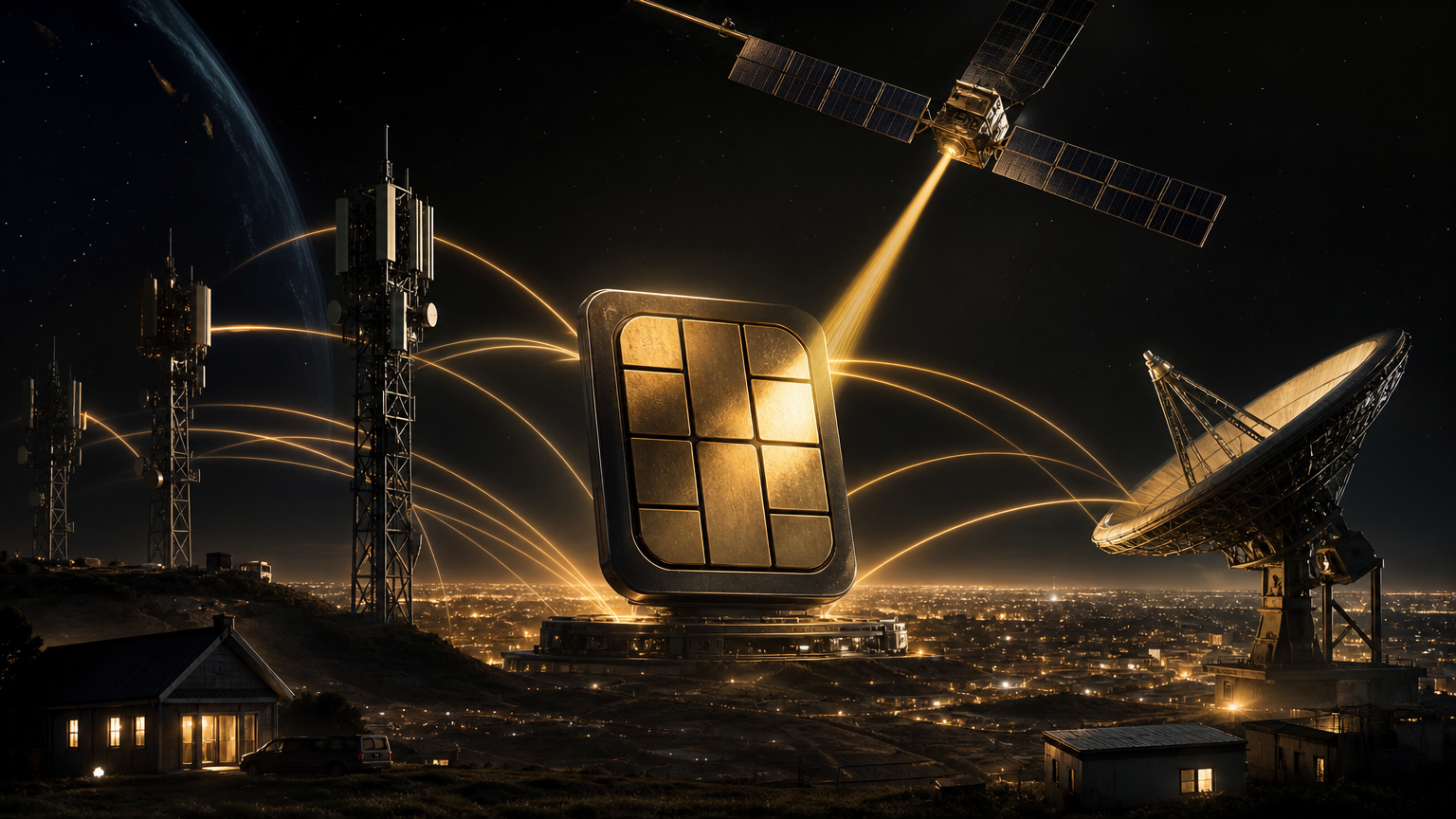
The news: SpaceX buys the missing layer
SpaceX has moved from being a satellite partner for mobile carriers toward being a spectrum owner that can challenge them. On October 8, Grain Management announced a definitive agreement to sell 100% of its nationwide 800 MHz spectrum portfolio to SpaceX, subject to FCC approval and customary closing conditions . SpaceX described the portfolio as up to 14 MHz of paired spectrum in the 800 MHz band and said the low-band licenses address a key technical gap for making Starlink Mobile a major U.S. mobile carrier .
That distinction matters. Until now, Starlink’s phone ambitions were largely understood through partnerships and supplemental coverage: satellites filling holes where terrestrial networks do not reach. Low-band spectrum changes the storyline because 800 MHz is valuable precisely where mobile networks struggle most visibly: broad-area propagation, rural reach and indoor penetration. SpaceX said its global 2 GHz mid-band spectrum can provide capacity in the United States, while the newly acquired 800 MHz layer would help signals pass through obstacles such as walls and keep devices connected indoors .
In other words, this is not just a space story. It is a wireless story.
Why 800 MHz is strategically different
Low-band airwaves are not glamorous in the way millimeter wave once was, but they are the foundation of reliable coverage. Reuters noted that low-band spectrum travels longer distances and penetrates buildings and obstacles better than higher-frequency spectrum, which is why the Grain portfolio strengthens Starlink Mobile’s satellite-to-cellular push . For SpaceX, that can mean a coverage layer that complements satellites rather than replaces every cell tower.
The architecture SpaceX sketched is hybrid: a satellite-to-mobile constellation in space plus terrestrial deployment that connects ordinary devices more seamlessly . That is the part that should worry incumbents. A satellite-only service can be dismissed as emergency coverage, rural backup or a premium add-on. A hybrid service with licensed terrestrial spectrum starts to look more like a carrier, especially if SpaceX can bundle connectivity with Starlink broadband, enterprise mobility, vehicles, logistics or government contracts.
Grain’s own language pointed in that direction. The firm said the agreement uses scarce low-band spectrum to support next-generation direct-to-device services and would let Starlink Mobile reach customers from both the ground and space . Grain also tied the transaction to the FCC’s July 2026 order approving its earlier acquisition of the 800 MHz portfolio from T-Mobile, saying the new SpaceX deal aligns with efforts to expand coverage and integrate satellite and terrestrial networks .
The market reaction: investors priced a new rival
Telecom investors did not wait for a commercial launch date. Yahoo Finance reported that T-Mobile shares fell 6.9% in premarket trading on October 9 after SpaceX’s spectrum agreement raised competition concerns . Reuters later reported an even broader selloff: T-Mobile slid 9.1% in early trading, AT&T dropped 7.4%, Verizon lost 5.9%, and all three were among the biggest percentage decliners on the S&P 500 .
The pressure crossed the Atlantic. Reuters reported that Deutsche Telekom, T-Mobile’s controlling shareholder, fell 7.1%, while Orange, Telefonica and Vodafone also declined as European investors extrapolated the U.S. threat into a broader reassessment of telecom defensibility . The reported transaction value also sharpened the signal: Reuters said the companies did not disclose financial terms, but the Wall Street Journal reported the deal was worth about $8 billion .
This is the core investor anxiety: SpaceX is not merely renting someone else’s coverage. If approved, it will own strategic spectrum. That shifts bargaining power. A company that owns satellites, launch capacity, consumer broadband distribution and now low-band U.S. airwaves can negotiate with carriers from a very different position than a coverage partner asking for wholesale access.
The regulatory backdrop: Starlink Mobile already had momentum
The Grain deal landed in the same week as a major regulatory win. Via Satellite reported on October 7 that the FCC approved SpaceX’s request to deploy 15,000 satellites for direct-to-device services, while deferring some parts of the application . The approved system is intended to provide mobile satellite service using spectrum acquired from EchoStar, supplemental coverage from space using wireless spectrum, and related backhaul and command functions .
Fierce Network reported that this 15,000-satellite approval would use EchoStar spectrum and reduce SpaceX’s reliance on existing mobile operators, while current T-Satellite service relies on roughly 650 satellites and T-Mobile spectrum . That context makes the Grain acquisition look less like an isolated transaction and more like the second half of a stack: EchoStar-linked satellite spectrum and satellites for capacity, plus 800 MHz terrestrial spectrum for coverage and indoor reach.
There are still constraints. The Grain transaction requires FCC approval . Via Satellite also reported that the FCC deferred decisions on certain requested spectrum uses, including U.S. operations in the 2020-2025 MHz band and some federal-heavy bands . Starlink Mobile may be moving fast, but spectrum law, interference protection and buildout requirements remain gates that cannot be skipped.
What changes for Verizon, AT&T and T-Mobile
The immediate risk is not that every urban wireless customer cancels tomorrow. Building a nationwide retail mobile business requires devices, billing, customer care, emergency services compliance, roaming, retail distribution, tower strategy and years of capital planning. Incumbents still have dense networks, deep spectrum portfolios, huge subscriber bases and long experience operating at carrier-grade reliability.
The bigger risk is margin pressure and narrative compression. If SpaceX can credibly offer “good enough everywhere” service, it can attack the industry’s weak spots: rural coverage, dead zones, backup connectivity, IoT, fleets, remote workers and customers frustrated by indoor gaps. It can also use Starlink’s brand to make coverage feel like a software upgrade rather than a cell-site construction project.
The incumbents’ previous comfort came from scarcity: spectrum scarcity, tower density, retail scale and regulatory complexity. SpaceX is now pressing on each layer. It controls its own launches, has a direct customer base through Starlink, has obtained approval for a large D2D satellite system and has agreed to buy a nationwide low-band spectrum portfolio . Even if Starlink Mobile begins as a complement, it changes negotiations over roaming, wholesale access and partnership economics.
That is why tower stocks reportedly bucked the selloff. Reuters said American Tower, Crown Castle and SBA Communications rose as investors considered whether SpaceX’s wireless ambitions might ultimately require towers, rooftops and small cells rather than eliminate them . The “satellite versus tower” frame may be too simple. The more disruptive version is satellite plus terrestrial infrastructure plus licensed spectrum.
The bottom line
SpaceX has not yet conquered U.S. wireless. It has, however, bought a path into the part of wireless economics that matters most: licensed spectrum. The Grain portfolio gives Starlink Mobile a low-band layer that can improve coverage and indoor usability, while the FCC’s fresh satellite approval gives SpaceX a larger orbital platform for direct-to-device service .
For Verizon, AT&T and T-Mobile, the threat is not only a new entrant. It is a new kind of entrant: vertically integrated, capital-intensive, brand-rich and willing to combine space and ground networks. The incumbents just met a roaming boss battle. The fight now moves to the FCC, the buildout plan and, eventually, the customer’s phone.
Sources from the last 72 hours
- [1]BUILDING THE WORLD’S MOST ADVANCED MOBILE NETWORKOct 8, 2026, 2:00 AM
- [2]Grain Management Announces Definitive Agreement to Sell Nationwide 800 MHz Spectrum Portfolio to SpaceXOct 8, 2026, 10:17 PM
- [3]US, European telecom stocks slide as SpaceX spectrum deal rattles sectorOct 9, 2026, 10:58 AM
- [4]FCC Grants SpaceX Approval for 15,000 Direct-to-Device Satellites in MSS SpectrumOct 7, 2026, 2:00 AM
- [5]SpaceX scores 15K-satellite win as FCC doubles down on D2DOct 8, 2026, 12:13 AM
- [6]T-Mobile Shares Fall 6.9% as SpaceX Spectrum Acquisition Raises Competition ConcernsOct 9, 2026, 12:42 PM
AI-generated article based on recent web research, then preserved as a dated editorial snapshot.
Comments
Be the first to comment.