
Daily Podcast full article
$119B Elon Musk's Terafab Amazing Inside New Update!
Elon Musk’s Texas Terafab story has shifted from “how big can it get?” to “who actually controls the fab?” Fresh reporting in the last 72 hours points to a clearer picture: Musk is insisting that his companies will build and run the complex, Intel says it remains involved, TSMC is being discussed only as a possible limited participant, and the headline-grabbing $119 billion figure still belongs in the category of maximum multi-phase ambition, not committed spending.
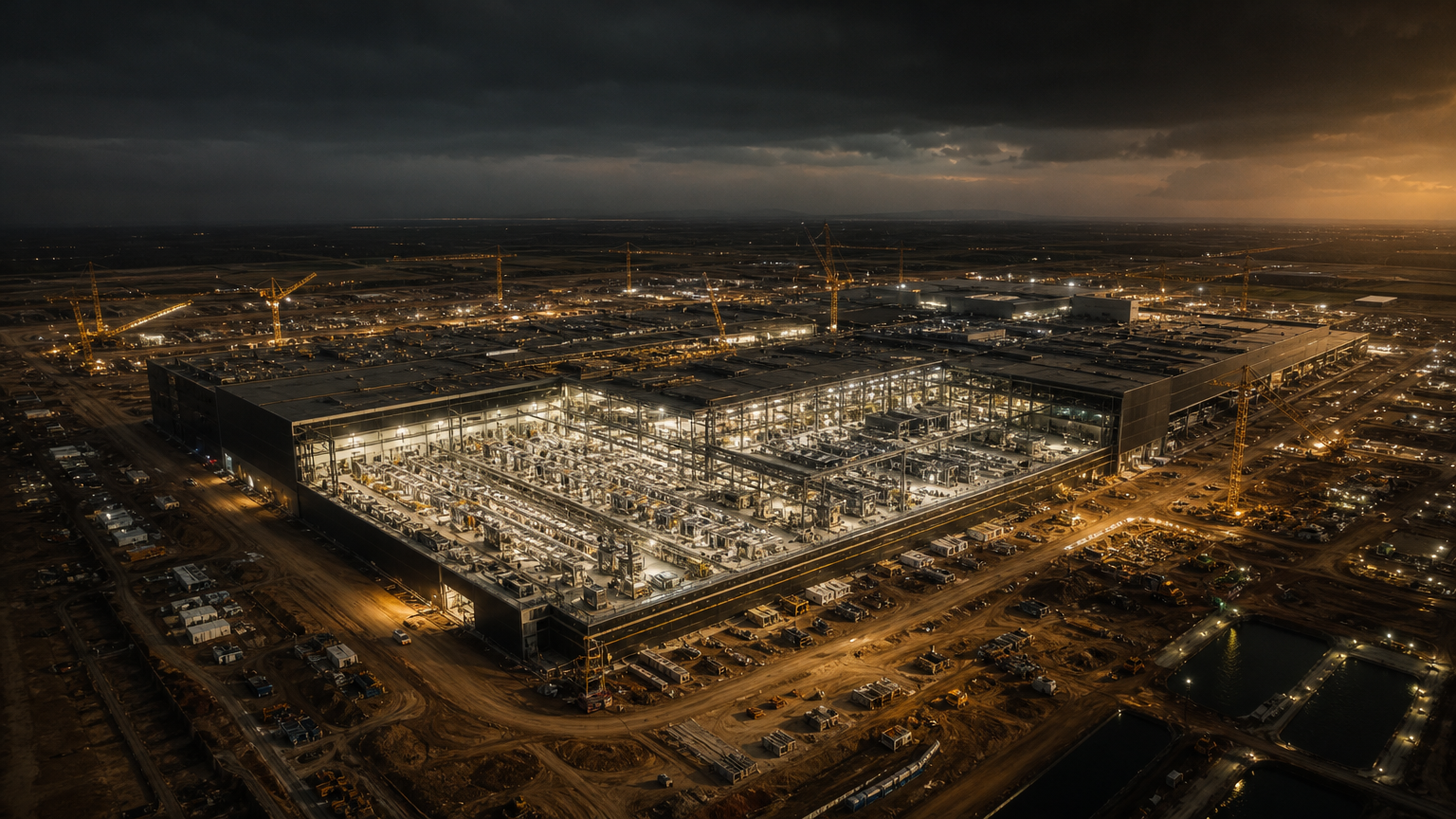
The headline still matches the story
The working headline is exactly the subject: $119B Elon Musk's Terafab Amazing Inside New Update! The current update is not that Terafab suddenly became a finished chip city. It is that the power structure around the project has become more explicit. After days of speculation that TSMC could take a major operating role, Musk reportedly pushed back and said Tesla and SpaceX would build and run the fab, while Intel’s CEO Lip-Bu Tan also confirmed Intel would keep working on the project .
That matters because Terafab is being framed as more than a factory. It is the proposed semiconductor backbone for Musk’s AI-heavy ecosystem: Tesla vehicles and robotics, SpaceX systems, xAI compute, autonomous platforms, and eventually space-linked computing infrastructure. If it is built as described, it would be a rare attempt to pull chip fabrication, memory, packaging and system-level iteration closer to the same corporate orbit.
Control is the new center of the story
The sharpest new point is control. Musk’s latest position, as summarized by multiple fresh reports, is that his companies will own the operating burden rather than handing the keys to an established foundry. Yahoo Finance reported that Musk said Tesla and SpaceX would build and run the Terafab AI chip complex, and that any TSMC role would be limited to possibly subleasing part of the site .
eeNews Europe reached a similar reading: the Intel-Terafab arrangement remains in place, Musk has rejected the idea that TSMC would take control, and a possible TSMC role would look more like a separate operation inside or alongside the campus than a takeover . This is a meaningful distinction. A fab is not a warehouse. It is a system of proprietary process flows, contamination controls, tooling recipes, yield-management software, water and chemical infrastructure, power stability, metrology, and deeply protected intellectual property.
That is why a “sublease” sounds simple but is technically awkward. If Intel-derived 14A manufacturing is the core production route, and a TSMC line were placed nearby, the two operations would need strict physical, contractual and data separation . In other words, the latest update does not make the project simpler. It makes the governance question sharper.
Intel is still in, but the role is not fully quantified
Intel’s continued involvement is the second major development. The latest coverage says Lip-Bu Tan confirmed Intel would remain involved with Terafab even after Musk’s TSMC discussions unsettled investors . eeNews Europe adds that Intel’s 14A technology remains at the center of the manufacturing plan, while also noting that commercial terms, wafer volumes and the exact form of manufacturing support have not been publicly detailed .
That uncertainty is important. Intel can benefit enormously if Terafab becomes a marquee external use case for its foundry roadmap. But investors still do not know whether Intel is licensing process technology, providing ramp support, supplying packaging expertise, or entering a deeper operational partnership. For now, the public picture is: Intel remains attached, 14A remains central, but the binding economics are not transparent .
The market noticed that ambiguity. 24/7 Wall St. reported on October 8 that Intel shares were under pressure as chip stocks sold off, with Terafab adding a specific question around the size and durability of Intel’s foundry role . The same report noted that Intel’s fabrication exposure makes Terafab more material for Intel than for fabless chip designers such as Nvidia or AMD .
The $119 billion number needs discipline
The subject title uses $119 billion, and that figure is the attention magnet. But the most careful current reading is that $119 billion is an upper-end, multi-phase possibility, not a confirmed check being written today. eeNews Europe reported that the Texas project is advancing with a first phase previously announced at more than $16.8 billion and 3,000 jobs, while larger multi-phase local filings should not be treated as committed spending .
That distinction keeps the story grounded. A semiconductor campus can move through land, incentives, design, utilities, cleanroom shell work and tool ordering long before the final capital stack is locked. Terafab’s ambition may reach the $119 billion scale if all phases proceed, but the current state is still defined by partner roles, process choices, local development work and financing clarity.
iTechGuides also emphasized that the project’s one-terawatt annual compute ambition should be treated as a long-term target, not current output, and that some widely circulated cost figures remain unconfirmed rather than finalized budgets . That is the right lens: Terafab is a giant strategic option, not yet a proven production machine.
TSMC: discussion, not deal
TSMC’s name is why the story re-accelerated this week. Chip Dispatch reported on October 9 that TSMC is exploring cooperation with Terafab, but that no terms, node, capacity figure, timeline or signed agreement has been disclosed . That makes TSMC a possible variable, not a confirmed partner.
This is strategically logical. Musk wants secure access to advanced AI silicon. TSMC has the world’s deepest leading-edge foundry experience. But the latest reporting also makes clear that any collaboration would need to fit within Musk’s insistence that his companies run the fab and Intel’s existing role around 14A . The result is not a clean replacement story. It is a more complex “multi-partner, tightly partitioned campus” possibility.
Why Tesla Semi belongs in the same industrial narrative
The subject context also points to Tesla’s Semi expansion, and it belongs here because it shows the same industrial logic: lower operating cost claims, vertical integration, and factory scale. Fresh October 8 coverage said Tesla is pitching electric Semi operating costs in the range of 20 to 30 cents per mile, contrasted against higher diesel economics . Another October 8 report said Tesla filed for a Semi service center in Las Vegas as the production ramp begins, reinforcing that the truck program is moving from launch theater toward support infrastructure .
The connection to Terafab is not that a Semi truck needs a frontier AI chip in every subsystem. The connection is that Musk’s companies are trying to compress supply chains. Tesla wants batteries, power electronics, vehicles, charging and service economics to reinforce each other. Terafab extends that logic upstream into chips.
The real inside update
The “amazing inside update” is therefore not a single new rendering or a bigger number. It is a governance update. Musk wants Terafab to be operated by his companies. Intel remains in the story. TSMC is a discussion, not a takeover. The $119 billion scale remains the ceiling of the vision, not the verified current budget. And the Semi ramp shows the same appetite for vertically integrated industrial control.
If Terafab succeeds, it could become a Texas semiconductor hub serving AI, robotics, autonomous vehicles and space systems. If it stumbles, the weak points are already visible: partner boundaries, power and water intensity, cleanroom execution, capital discipline, and the brutal difficulty of making advanced chips at yield. For now, Terafab is no longer just a Musk mega-project headline. It is a test of whether vertical integration can move from cars and rockets into the most unforgiving manufacturing industry on Earth.
Sources from the last 72 hours
- [1]Elon Musk Reaffirms Control Over Terafab AI Chip Complex As Intel Remains InvolvedOct 8, 2026, 2:43 PM
- [2]Intel Terafab deal survives TSMC takeover rumoursOct 8, 2026, 2:00 AM
- [3]What Is Terafab? Musk’s $20B Chip Factory Plan ExplainedOct 8, 2026, 2:00 AM
- [4]Intel Slides 3% as Chip Stocks Sell Off With Yields and Oil Higher; NVIDIA and AMD SlipOct 8, 2026, 4:05 PM
- [5]Is Terafab AI Role Altering The Investment Case For Intel (INTC)?Oct 10, 2026, 2:00 AM
- [6]TSMC Reportedly in Talks Over Role in Musk's Terafab ProjectOct 9, 2026, 2:00 AM
- [7]Tesla Semi Attracts U.S. Freight Carriers Amid Rising Diesel PricesOct 8, 2026, 2:00 AM
- [8]Tesla Files Permit for Semi Service Center in Las VegasOct 8, 2026, 2:00 AM
AI-generated article based on recent web research, then preserved as a dated editorial snapshot.
Comments
Be the first to comment.