
Daily Podcast full article
Google and SpaceX extend infrastructure skyward
Google’s off-planet AI-compute experiment and SpaceX’s Starlink Mobile expansion point to the same strategic shift: infrastructure that once meant data-center campuses, fiber routes and cell towers is being redesigned for orbit.
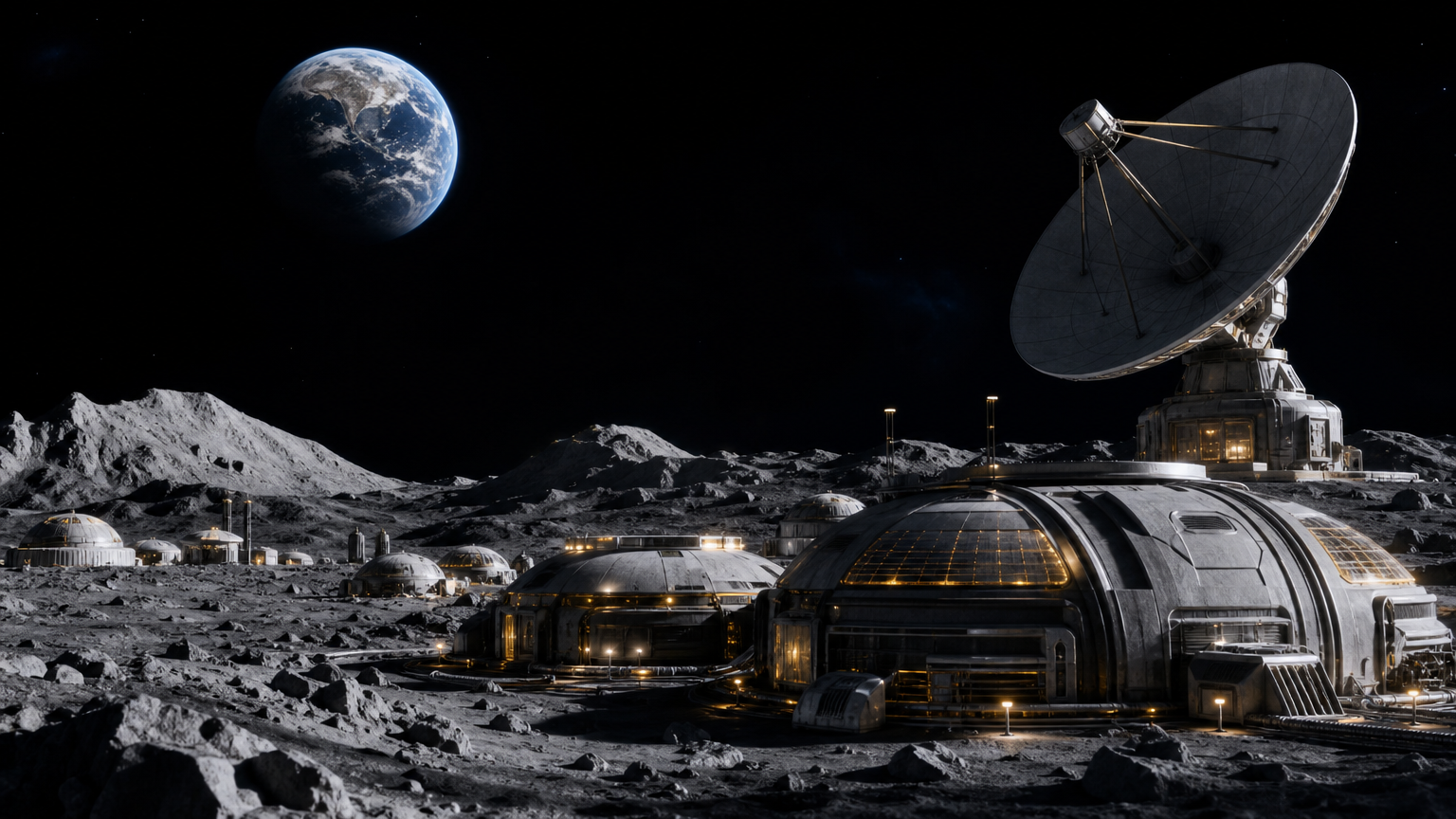
The sky becomes an infrastructure layer
The working headline is exactly the story: Google and SpaceX extend infrastructure skyward. The latest signal is not that the Moon, Mars or orbit suddenly make terrestrial infrastructure obsolete. It is that two of the world’s most aggressive infrastructure builders are treating space as a plausible extension of the compute and connectivity stack.
On Google’s side, Project Suncatcher has moved from a moonshot concept into a physical test: a refrigerator-sized satellite carrying four Google AI chips is in orbit, built with Planet Labs, and Google says it is operating as expected . On SpaceX’s side, Starlink Mobile has been pulled closer to the shape of a real mobile-carrier business after a fresh spectrum agreement and the regulatory path for a much larger satellite layer , . Taken together, the two moves push “cloud” and “coverage” into a literal orbital frame.
That does not mean either plan is near maturity. Google is testing whether TPU-class hardware can survive and perform in the thermal, radiation and maintenance constraints of space . SpaceX is trying to combine satellite-to-phone links, low-band spectrum and terrestrial deployment into something that could compete with existing mobile networks , . Both are still constrained by physics, regulation and economics. But both are also reframing the next decade of infrastructure competition.
Google’s orbital compute test is small, but the ambition is not
The Google development should be read carefully. The current vehicle is not a production data center and not a lunar or Martian server farm. It is a pathfinder: four AI chips, a single spacecraft, and a mission designed to gather evidence about whether machine-learning infrastructure can operate beyond Earth .
That distinction matters because the headline ambition around off-planet compute is far larger than the present hardware. The strategic idea is that AI demand is growing faster than many grids, permitting processes and cooling systems can comfortably absorb. If compute can eventually be placed in space, it might draw abundant solar power and avoid some land and water conflicts that shadow Earth-based data centers. That is the seductive version of the story. The engineering version is harsher: power is only useful if heat can be rejected, data can be moved, chips can tolerate radiation, and failed components can be handled without a technician walking into a server hall.
The current mission is therefore less a miniature cloud region than a reality check. According to the fresh summary of the mission, Google has said its chips survived a ground radiation dose greater than a five-year mission’s exposure, but the in-orbit flight is the test of whether that promise holds under real conditions . The project is also a reminder that “space data center” can mean several very different things: low-Earth-orbit chip tests, future constellations of networked satellites, or the more speculative Moon-and-Mars infrastructure timetable that gives the initiative its sci-fi force. For now, the confirmed step is the orbital experiment.
The important signal is timing. In the AI infrastructure race, 2030 is close enough to shape investment decisions today. If Google wants a credible path to off-planet AI workloads by then, it needs flight data now, not in 2029. The satellite’s real output may be mundane telemetry: temperature curves, error rates, workload behavior, radiation events and power limits. But those measurements are exactly what turns a slogan into an architecture.
SpaceX’s Starlink Mobile plan turns satellites into carrier infrastructure
SpaceX’s move is more commercial and more immediate. Grain Management announced a definitive agreement for SpaceX to acquire 100% of Grain’s nationwide 800 MHz spectrum portfolio, subject to FCC approval and customary closing conditions . That spectrum matters because low-band frequencies travel farther and penetrate buildings better than higher-frequency bands, which is central to making satellite-supported mobile service feel less like an emergency backup and more like everyday coverage.
CBS reported that SpaceX agreed to buy radio-airwave licenses to support Starlink Mobile and quoted the company’s ambition for the service to become a major U.S. mobile carrier . The same report noted that the spectrum agreement still needs FCC approval and that SpaceX says the plan would combine satellite-to-mobile transmissions with an advanced terrestrial deployment . In other words, this is not a pure “phones talk only to satellites” model. It is a hybrid network story.
The scale is what makes it strategically disruptive. Recent coverage says the FCC approved Starlink Mobile’s Gen2 constellation application, allowing SpaceX to launch 15,000 new satellites optimized for mobile service and 2 GHz spectrum . Tom’s Guide likewise reported that SpaceX’s approved V2 Starlink Mobile satellite plan involves 15,000 satellites and that SpaceX says the new generation would offer about 100 times the bandwidth of the current generation . Yahoo Finance’s MT Newswires summary also tied the 15,000-satellite authorization to SpaceX’s 800 MHz spectrum agreement .
That proposed fleet would not simply add capacity. It would change bargaining power. If Starlink Mobile can offer direct-to-device service at scale, it pressures terrestrial carriers in dead zones, rural markets, disaster response, maritime coverage and eventually ordinary consumer plans. Even if SpaceX still needs towers, roaming deals or more spectrum, the company is no longer acting only like a satellite broadband provider. It is assembling pieces of a mobile operator.
The common logic: infrastructure without local permission bottlenecks
Google and SpaceX are solving different problems, but the strategic rhyme is clear. Data centers are limited by land, grid interconnection, water, permitting and community pushback. Mobile networks are limited by tower placement, spectrum, roaming, backhaul and national licensing. Space does not remove those constraints, but it changes where the hardest constraints sit.
For Google, orbit offers solar exposure and physical separation from Earth’s overloaded data-center geographies. For SpaceX, orbit offers wide-area reach that no tower grid can replicate, especially over oceans, deserts, mountains and rural corridors. In both cases, the promise is not “space is easier.” It is “space may scale differently.”
That is why the infrastructure race is moving from facilities to systems. Google’s future off-planet compute would need chips, solar arrays, radiators, optical links, launch cadence, orbital operations and Earth-to-space data routing. SpaceX’s future mobile carrier would need satellites, spectrum, terrestrial nodes, handset compatibility, billing, roaming, lawful-intercept compliance and country-by-country approvals. The visible hardware is only the front end.
What could slow the skyward shift
The risks are substantial. Google must prove not merely that chips survive in space, but that useful compute can be delivered at costs that compete with Earth-based data centers. Radiation-induced errors, thermal throttling, launch costs and maintenance cycles could keep orbital AI infrastructure in the research category for years.
SpaceX faces a different set of gates. The 800 MHz acquisition still depends on FCC approval , . The mobile plan also depends on turning satellite authorization into launched, operational, commercially integrated capacity. Handsets may support relevant bands, but a carrier-grade experience requires more than compatibility. It requires dependable indoor coverage, enough spectrum, low latency, customer support and regulatory acceptance in every country where the service operates.
The near-term conclusion is not that cloud regions and mobile carriers have moved to space. It is that their next expansion layer is being designed there. Google is asking whether AI infrastructure can leave the planet. SpaceX is asking whether mobile coverage can be rebuilt from above it. Cloud regions are finally taking the word “cloud” far too literally; Starlink’s proposed mobile fleet is less a constellation than an orbital org chart.
Sources from the last 72 hours
- [1]Google's Project Suncatcher puts four AI chips in orbitOct 10, 2026, 3:01 PM
- [2]Grain Management Announces Definitive Agreement to Sell Nationwide 800 MHz Spectrum Portfolio to SpaceXOct 8, 2026, 10:17 PM
- [3]SpaceX says Starlink is set to become a "major mobile carrier" after spectrum dealOct 9, 2026, 7:00 PM
- [4]Starlink confirms plans to become ‘the world’s most advanced mobile network’ and a ‘major’ US carrierOct 9, 2026, 12:12 PM
- [5]SpaceX just announced plans to make Starlink a 'major' US mobile carrierOct 9, 2026, 1:14 PM
- [6]SpaceX Agrees to Acquire Nationwide 800 MHz Low-Band Spectrum PortfolioOct 8, 2026, 11:22 PM
AI-generated article based on recent web research, then preserved as a dated editorial snapshot.
Comments
Be the first to comment.