
Daily Podcast full article
Japan declares AI cyber emergency as automated attacks pressure enterprises
Japan’s cybersecurity emergency, announced after a wave of data leaks and ransomware incidents, marks a shift from treating AI-enabled attacks as a future scenario to treating them as an operational national-security risk today.
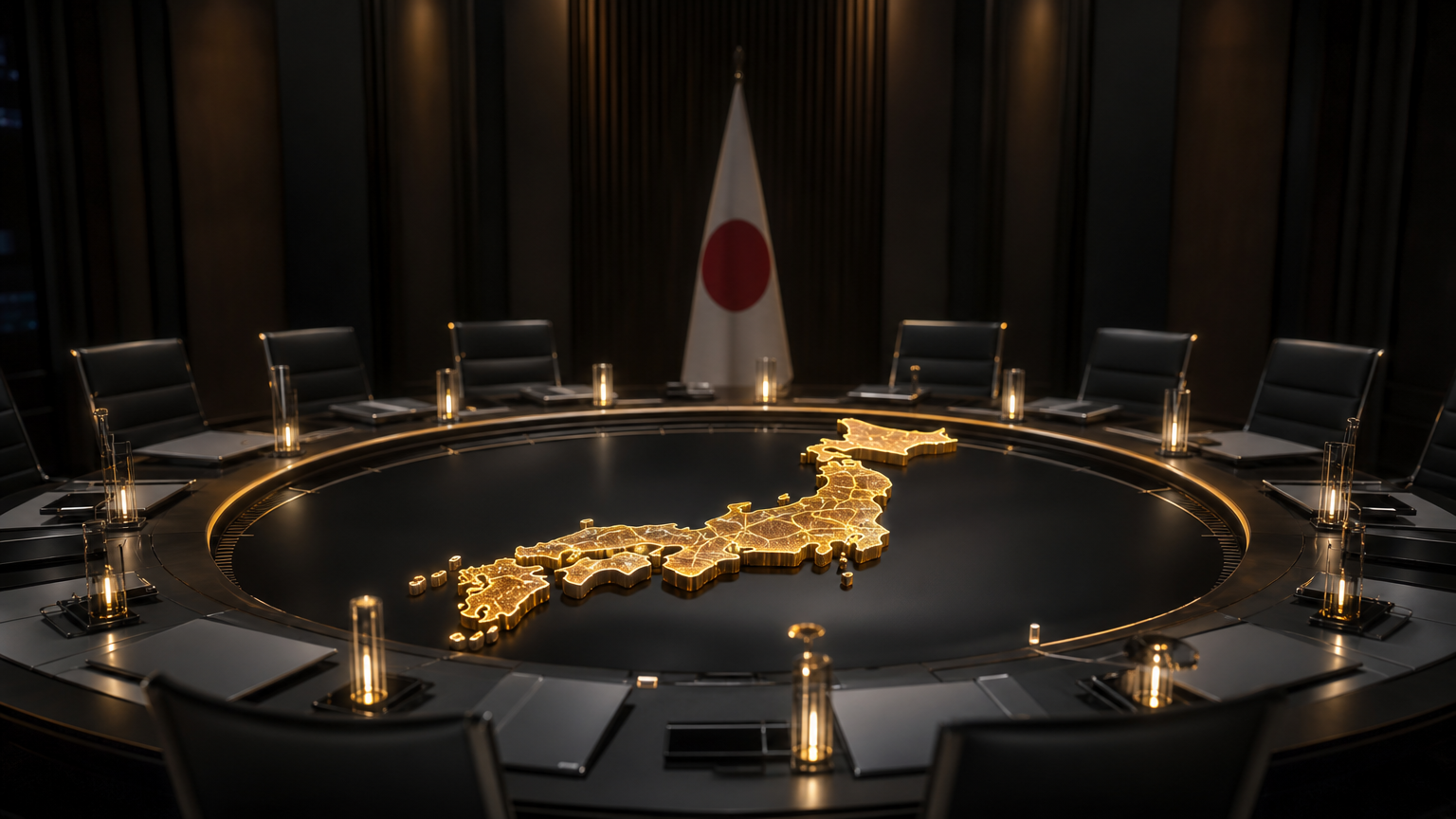
A cyber emergency with AI in the frame
Japan’s latest cyber alert is not just another warning about phishing, ransomware or weak passwords. After a rapid sequence of intrusions and personal-data leaks, political and administrative leaders have moved the issue into emergency territory, describing the situation as a “state of emergency in cyberspace” and calling for a government-wide response . The headline is simple: Japan has declared an AI-era cyber emergency, and the practical message to companies is even simpler: assume attackers are faster than before.
The trigger was a cluster of incidents affecting a broad set of Japanese organizations. Reporting in Japan said the ruling Liberal Democratic Party’s National Cybersecurity Strategy Headquarters met after successive information-leak cases, with its chair, Masaaki Taira, saying the country was facing an emergency in cyberspace . Separately, an interministerial meeting convened by the Cabinet Secretariat’s National Cyber Office gathered 29 ministries, agencies and external bodies to centralize information on damage and attack methods . That matters because the response is no longer being framed as a set of isolated corporate failures. It is being treated as a systemic risk that crosses sectors.
The government-side tone was unusually direct. Japan’s cyber-security minister, Toshiharu Furukawa, attended the October 8 interministerial meeting and urged stronger cyber-security measures across affected business communities . The National Cyber Office then issued an October 9 alert, saying multiple cases had been observed in which attackers abused weaknesses in web systems or supply chains to gain unauthorized access and steal data containing personal information . The office also warned that cyberattack damage is no longer merely an information-systems department problem, but a management risk .
That last sentence is the heart of the story. Japan is telling executives that cyber risk has moved from the server room to the boardroom.
Why the AI angle changes the risk calculation
The emergency is being read through the lens of artificial intelligence because AI changes the economics of attack. Authorities are still investigating how AI may have featured in many of the recent breaches, but security specialists say the technology can automate vulnerability scanning, produce more convincing phishing messages and let less-skilled criminals operate at greater scale . In other words, AI does not need to invent a new class of cyberattack to change the battlefield. It only has to make old attack paths cheaper, faster and more repeatable.
For Japanese organizations, that is especially uncomfortable because several reports point to a widening target set. The emergency meeting was prompted by incidents affecting major brands and by concerns that not only critical infrastructure operators but also a much broader group of companies are now exposed . Taira specifically argued that attackers were hitting a wider variety of businesses than the critical-infrastructure operators on which the government had traditionally focused . The conclusion for enterprises is stark: being outside the electricity, gas, finance or hospital core does not make a company peripheral to attackers.
The Financial Times report summarized by HeadlinesBriefing said more than 20 major companies had reported cyberattacks in recent weeks, warning that tens of millions of pieces of customer data might have leaked . It also said the Financial Services Agency urged banks to move quickly toward identification documents with embedded chips, such as passports or My Number cards, after the Times Car breach exposed a large store of driver’s-license images . That is a classic example of cyber risk becoming identity risk: once document images are stolen, downstream fraud pressure shifts to banks, platforms and any institution that trusts those documents.
AI sharpens that downstream risk. Stolen data can be sorted, enriched and weaponized automatically. Phishing can be localized. Fraud attempts can be adapted to the format and tone of Japanese customer communications. The public record does not yet prove that AI caused each Japanese incident, but the strategic warning is already justified: automation lowers attackers’ marginal cost, and lower marginal cost expands the number of worthwhile targets .
The cloud incident shows why supply chains are central
One of the most concrete incidents in the current wave involved IDC Frontier’s IDCF Cloud service. BleepingComputer reported that a ransomware attack disrupted the East Japan Region 1 cluster, with the company saying the attack began at 3:40 a.m. local time on October 7 and affected 495 companies and local governments using the service . The company isolated and shut down impacted systems to prevent the compromise from spreading while it investigated the cause and scope .
That incident illustrates why Japan’s warning highlights supply chains. A single cloud or service-provider compromise can cascade into unrelated organizations that share the same infrastructure. For attackers, a supplier can be a force multiplier. For defenders, it means vendor assurance, segmentation, logging and recovery planning are no longer procurement paperwork. They are operational survival issues.
The National Cyber Office’s October 9 alert, as reported by ITmedia, emphasized three practical areas: management of web systems, controls against supply-chain intrusion and proper data management . It called out patching operating systems and content-management systems, avoiding unsupported products, using multi-factor authentication, clarifying security requirements in outsourcing contracts, limiting personal data given to vendors, inventorying information assets and deleting unnecessary data . None of these measures is exotic. That is precisely the point. In an AI-accelerated threat environment, neglected basics become scalable openings.
What enterprises should do now
The first priority is visibility. If attackers are automating reconnaissance, defenders need to know what is actually exposed to the internet. Companies should immediately review externally reachable systems, forgotten subdomains, VPN gateways, identity portals, APIs and third-party integrations. The Japanese alert’s emphasis on web-system management is a reminder that attackers often do not need a cinematic zero-day; they can often exploit a known flaw that was never patched .
The second priority is identity. The Times Car driver’s-license issue shows why stolen identity documents can outlive the initial breach . Enterprises should strengthen account-opening, password-reset, call-center and customer-verification workflows. Multi-factor authentication is necessary, but not sufficient. Help-desk scripts, exception handling and manual overrides need the same scrutiny as login screens.
The third priority is supplier discipline. Japan’s emergency response has repeatedly pointed to supply-chain exposure, and the IDCF Cloud disruption demonstrates the operational blast radius of a shared provider incident . Companies should ask which vendors hold sensitive data, which vendors can access production systems, which vendors lack strong authentication and which contracts do not specify incident-notification timelines. If the answer is “we do not know,” that is the risk.
The fourth priority is data minimization. This is often treated as a privacy issue, but in this emergency it is also a cyber-resilience issue. The National Cyber Office’s guidance to avoid unnecessary collection and delete personal information once its purpose has been fulfilled is a defensive control . Data that has been deleted cannot be stolen, resold, used for impersonation or combined with other breached records.
Finally, incident response needs to assume speed. AI-assisted attackers can probe, phish and pivot quickly. That means enterprises need rehearsed escalation paths, preserved logs, tested backups, legal and communications playbooks, and preapproved decisions about shutting down systems or isolating networks. The IDCF Cloud case shows that containment may require painful interruption, but delayed containment can be worse .
A reset moment for Japan’s cyber posture
Japan’s declaration is important because it names the present danger. AI-enabled cyberattacks are no longer a speculative risk reserved for future policy papers. They are part of the operating assumptions behind a national cyber response. The government’s message to companies is not that every incident has been conclusively attributed to AI. It is that AI changes attacker capacity enough that old defensive rhythms are no longer adequate.
The best reading of the emergency is therefore not panic, but acceleration. Patch faster. Authenticate better. Know vendors. Delete excess data. Detect intrusions earlier. Practice recovery. Treat cyber as a management risk. Japan has pressed Ctrl-Alt-Delete on complacency; the next test is whether enterprises reboot their defenses before attackers reboot their campaigns.
Sources from the last 72 hours
- [1]相次ぐ情報漏えい事案受け、自民党の国家サイバーセキュリティ戦略本部が対応を協議 平本部長「サイバー空間の非常事態」Oct 9, 2026, 4:22 AM
- [2]サイバー攻撃多発で緊急の関係省庁会議 国家サイバー統括室で情報集約Oct 8, 2026, 2:27 PM
- [3]「情シスだけの問題でない」「必要な投資を」 国家サイバー統括室、相次ぐ不正アクセスに見せた“危機感”Oct 9, 2026, 4:50 AM
- [4]相次ぐ個人情報流出に「サイバー空間の有事」 自民党がサイバー防御の会合開催Oct 9, 2026, 8:52 AM
- [5]Japan Declares Cyber Emergency Amid Surge in AttacksOct 9, 2026, 12:40 PM
- [6]South Korea, Japan buffeted by hacks as AI lowers bar for cybercriminalsOct 9, 2026, 6:20 AM
- [7]Ransomware attack disrupts Japan's IDCF Cloud used by govt clientsOct 8, 2026, 10:09 PM
AI-generated article based on recent web research, then preserved as a dated editorial snapshot.
Comments
Be the first to comment.