
Daily Podcast full article
Elon's Brutally Honest Answer to the Terafab Question
Elon Musk’s latest Terafab comments were striking because they mixed an enormous semiconductor ambition with an unusually plain admission: he does not yet know how to make chips. The current picture is not a finished fab, a sealed TSMC partnership, or a guaranteed shortcut around the semiconductor industry. It is a high-risk attempt by Tesla and SpaceX to compress chip design, fabrication, packaging, testing and equipment iteration into a faster loop, powered by the same vertical-integration logic that shaped Tesla factories and SpaceX rockets.
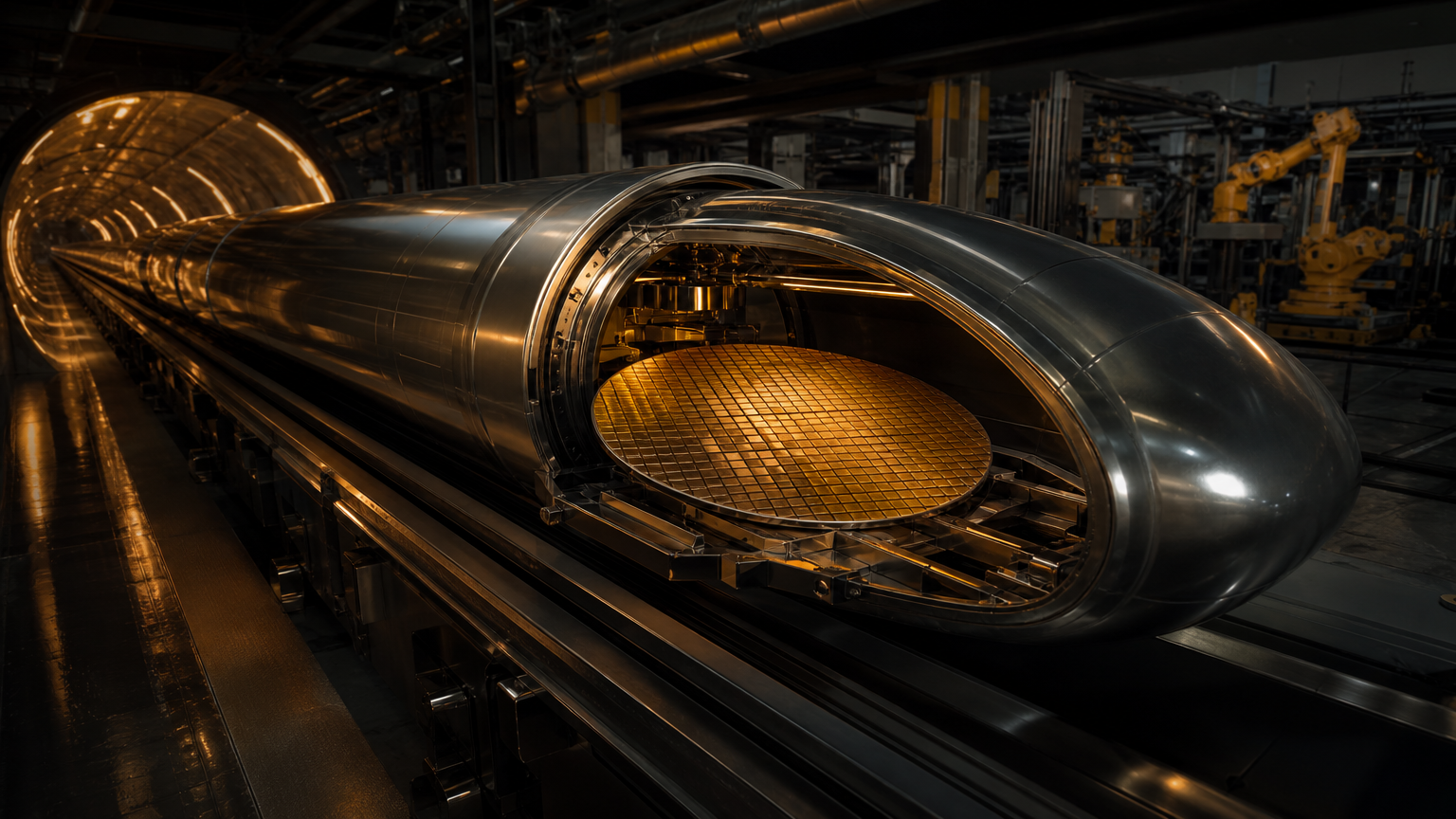
The honest part came first
Elon Musk’s answer to the Terafab question was not polished corporate certainty. Speaking by live video at the X Takeover event at Giga Texas on October 10, he was asked what he had learned about chipmaking as Tesla and SpaceX push deeper into the idea of manufacturing their own advanced processors . His answer was disarmingly blunt: he said he had no idea how to make chips, then immediately added that his companies would figure it out .
That one admission is the real headline. Terafab has been framed as a possible answer to a massive future chip bottleneck for Tesla vehicles, Optimus robots, SpaceX systems and AI compute. Yet Musk did not pretend that semiconductor fabrication is simply another factory problem waiting for a bigger building. He called chipmaking one of the hardest things in the world and suggested the learning curve could take years .
The important nuance is that Musk’s doubt was not about whether chips matter. It was about how hard it will be to master production. In his telling, Tesla and SpaceX are being pushed toward Terafab because the future demand curve for AI and robotics silicon could outrun the supply that outside vendors can rationally build for one customer, even a very large one. His “we’ll figure it out” posture therefore sounds less like a casual side project and more like strategic necessity dressed in startup language.
Terafab as a speed machine, not just a big fab
The freshest detail in Musk’s comments is not merely that Tesla and SpaceX want chips. It is the specific goal of accelerating the learning cycle. Recent reporting says Musk wants a Giga Texas research fab connected to Terafab to make and test roughly 10 chip designs per year, a sharp contrast with the roughly two-year cycle he described for taking one major chip design to volume production .
That is where the “brutally honest” answer becomes an engineering thesis. Musk’s point was that technological progress depends on how many iterations a team can run and how much improvement each iteration produces . A semiconductor program that can design, fabricate, package, test, revise masks and try again inside one tightly linked operation would be aimed less at conventional capacity expansion and more at reducing the time cost of learning .
This is also why he focused so heavily on equipment. Musk said that, after touring fabs run by Intel, Samsung and TSMC, he was surprised by how much of the machinery appeared to come from the same pool of suppliers and how little custom equipment he saw . By contrast, he pointed to Tesla’s habit of designing custom manufacturing systems, including work tied to Tesla Automation in Germany, as a possible advantage if applied to semiconductor bottlenecks .
The proposed path is incremental rather than magical: start with conventional semiconductor tools, identify bottlenecks, modify the tools, and eventually build custom equipment where higher wafer throughput is possible . That does not remove the difficulty of lithography, yield, contamination control, materials handling or packaging. It does, however, explain why Musk sees chipmaking through a Tesla lens: not simply “buy the best machine,” but “change the machine that makes the thing.”
The recruiting signal is already public
Musk followed the technical argument with a talent call. On October 11, he publicly urged world-class chip design and production engineers to consider joining SpaceX or Tesla, presenting the appeal as a chance to iterate on designs and customize production machines at high speed . That matters because Terafab is not only a capital project. It is a human-capital project in one of the most talent-constrained industrial fields on Earth.
The recruitment pitch also clarifies the type of person Musk is trying to attract. This is not aimed at executives who want to manage a supply contract. It is aimed at engineers frustrated by long design cycles, rigid foundry queues and the separation between design teams and production machinery. Musk is selling Terafab as a place where the loop closes: design, masks, fabrication, packaging, test data and factory equipment all feed one another faster than they do in a conventional distributed supply chain .
That vision is compelling, but it also exposes the risk. Semiconductor manufacturing is not an industry where enthusiasm substitutes for process knowledge. Digital Citizen’s summary of Musk’s comments underlined that Terafab remains early stage and that modern chip production requires specialized equipment, advanced materials, experienced engineers and highly controlled environments . In other words, recruiting is not a side note. It is one of the first measurable tests of whether the plan can move beyond ambition.
TSMC, Intel and the control question
The latest Terafab discussion has also been shaped by the question of who would run the fab. Recent reporting says Musk has rejected the idea that TSMC would take ownership or operational control, instead saying Tesla and SpaceX would build and run the facility themselves, with TSMC at most potentially subleasing part of it . The same reporting says no final TSMC arrangement has been announced and that key Intel-related terms remain unpublished .
That distinction is crucial. If Terafab were simply a TSMC-operated plant with Musk companies as customers, the risk profile would look more familiar: a world-class foundry would bring operating discipline, process knowledge and credibility. Musk’s answer points in a different direction. He wants his companies to own the manufacturing problem, not merely reserve capacity inside someone else’s system .
That choice fits his broader industrial pattern, but it raises the bar. Running a fab means mastering uptime, yield, contamination, materials flow, power, water, tooling, qualification and process control. Subleasing space to TSMC, if it ever happened, would not automatically transfer those capabilities to Tesla and SpaceX. It might help with ecosystem density, but it would not make Terafab a finished semiconductor company.
Intel remains part of the wider conversation, according to current summaries of the partner picture, but the exact shape of that role is still not transparent . For readers trying to separate signal from noise, the safest conclusion is this: the operating model is not settled publicly, but Musk’s stated preference is clear. Control stays with Tesla and SpaceX.
Why the answer matters
Musk’s answer matters because it reframes Terafab from a boast into a bottleneck strategy. He is not saying the incumbents are incompetent. He is saying the demand curve he imagines for autonomy, humanoid robots, AI and space compute is so steep that buying from incumbents may not be enough. If that premise is right, Terafab becomes a hedge against the future shortage of the one component every Musk company increasingly needs: compute.
The answer also reveals a tension. Musk is unusually confident that custom equipment and faster iteration can change semiconductor economics, yet unusually candid that he starts from ignorance of chip manufacturing itself . That combination is either the beginning of another vertical-integration breakthrough or the warning label on a project far harder than cars and rockets.
For now, the current state of the Terafab question is clear. There is no proven production line, no announced final TSMC deal, no public timetable showing when advanced chips will actually emerge at scale, and no evidence that the hard parts of semiconductor manufacturing have been solved . What exists is a strategic imperative, an iteration thesis, a recruiting campaign and Musk’s promise that Tesla and SpaceX will attack chipmaking the same way they attacked earlier bottlenecks: by learning in public, building tools, and pushing until the factory itself becomes the product.
That is why the answer landed. It was not “we already know.” It was “we do not know yet, but we have to learn faster than everyone else.”
Sources from the last 72 hours
- [1]Musk's Hardest Problem Is a Robot HandOct 11, 2026, 8:04 AM
- [2]Elon Musk Says He Still Has Much to Learn About Chip Manufacturing as Terafab Plans Take ShapeOct 11, 2026, 2:00 AM
- [3]Elon Musk Wants Tesla, SpaceX To Test 10 Chip Designs A Year At Terafab As TSMC Reportedly Eyes TexasOct 12, 2026, 6:07 AM
- [4]馬斯克放話 Terafab 年拚 10 款晶片、技術超車對手Oct 12, 2026, 3:10 AM
- [5]Musk recruits chip engineers for SpaceX and Tesla to hit 10 designs a yearOct 11, 2026, 3:15 PM
- [6]Musk Says Tesla and SpaceX Will Run Terafab Themselves; TSMC Could Only Rent Space, and Intel Says It's StayingOct 11, 2026, 2:00 AM
AI-generated article based on recent web research, then preserved as a dated editorial snapshot.
Comments
Be the first to comment.