
Daily Podcast full article
Eye AI diagnoses in 30 seconds
A randomized trial in Tanzania has shown what may be the most important medical-AI metric: not just whether software can read an eye scan, but whether it can collapse a care pathway from weeks to seconds and get more patients to treatment.
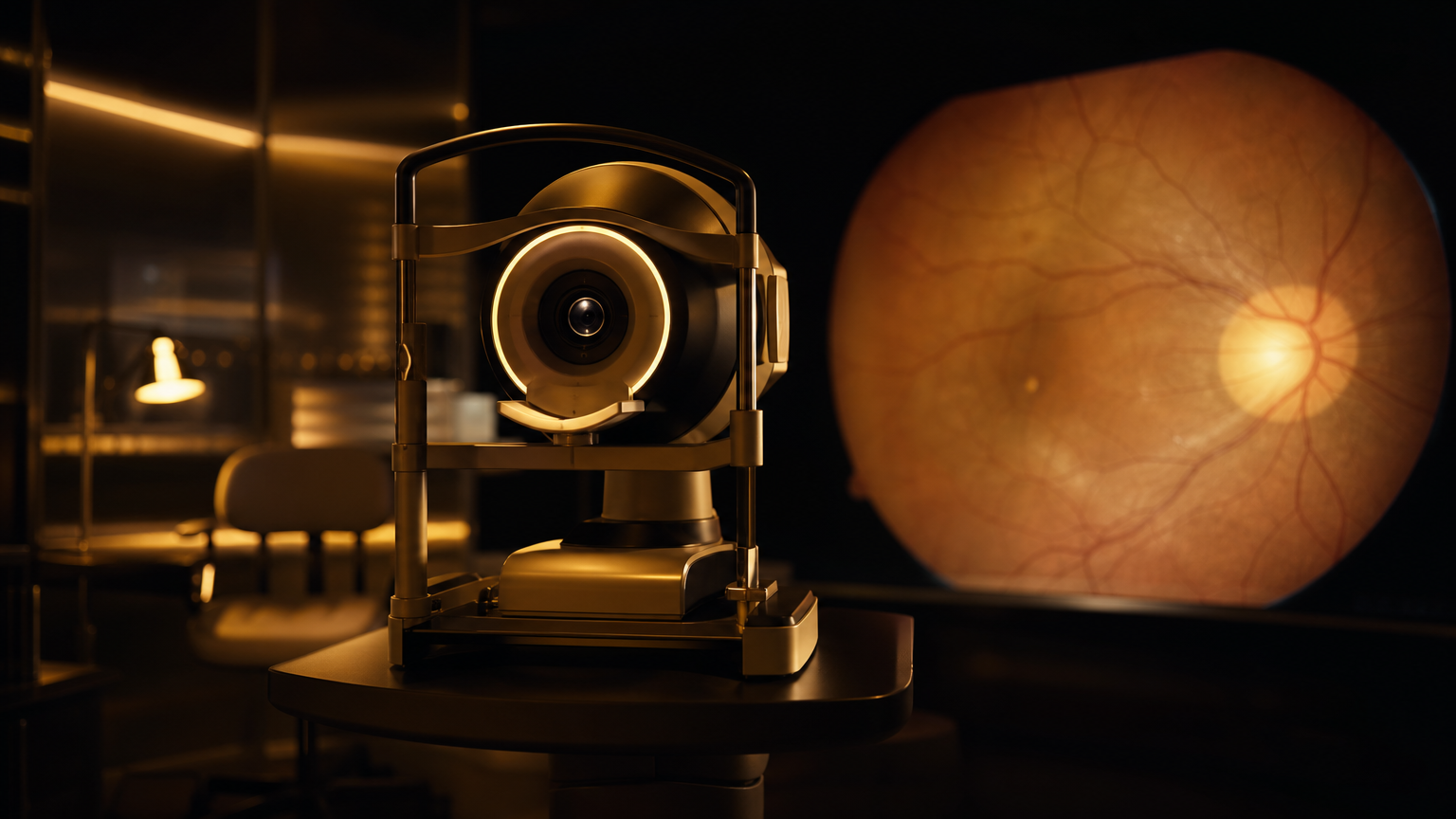
The headline is speed, but the outcome is follow-up
The new result behind the “30 seconds” figure comes from a randomized controlled trial of AI-supported screening for diabetic retinopathy in northern Tanzania, published in The Lancet Global Health and publicized by the London School of Hygiene & Tropical Medicine and Kilimanjaro Christian Medical Centre team . In practical terms, the trial tested a simple but consequential workflow change: patients with diabetes had retinal photographs taken, and the AI pathway returned a referral decision while the patient was still present, instead of sending images away for later human grading and delayed phone counselling .
That compressed the result stage from an average 23-day wait in standard care to about 30 seconds in the AI-supported pathway, a reduction of roughly 66,240 times when 23 days are converted into seconds . The number is striking, but the more clinically meaningful finding is what happened next: among patients with true referable diabetic retinopathy, 35.9% in the AI-supported group attended the central ophthalmology clinic within eight weeks, compared with 18.2% in standard care . In other words, the faster diagnostic loop nearly doubled attendance at specialist follow-up.
What the trial actually did
The trial enrolled 2,378 adults with diabetes who were attending diabetic eye screening across 24 hospitals in the Kilimanjaro and Arusha regions of Tanzania . Participants were randomly assigned to either AI-supported diabetic retinopathy screening or the standard-of-care pathway: 1,192 were allocated to the AI-intervention group and 1,186 to standard care . Both groups had retinal photographs taken, but the difference lay in when the result reached the patient and how counselling was delivered .
In the AI arm, images were submitted to software and patients received a result before leaving the photography room: non-referable, referable, or ungradable, with referral if needed . In the standard-care arm, retinal images were assessed later by a health worker, and patients received their results and counselling by phone weeks afterward . That distinction matters because a referral is not a treatment unless the patient can act on it.
The primary endpoint was attendance at the central ophthalmology clinic within eight weeks among participants later confirmed by masked UK-certified graders to have true referable diabetic retinopathy . Of 904 participants with true referable disease, 157 of 437 in the AI group attended within eight weeks, compared with 85 of 467 in the standard-care group . The absolute difference was 17.7 percentage points, with an odds ratio of 2.52 and a p value below 0.0001, indicating a statistically robust effect on follow-up attendance .
Why diabetic retinopathy is a workflow disease
Diabetic retinopathy is a complication of diabetes in which high blood sugar damages small blood vessels in the retina, and it can progress without obvious early symptoms . That makes screening essential: the patient may feel fine, but the retina may already show changes that require specialist assessment or treatment . If screening only produces a result weeks later, the health system has created a fragile handoff: the patient must receive the call, understand the risk, arrange travel, and decide to attend a clinic despite competing work and family responsibilities.
The Tanzanian setting makes that handoff especially important. The standard pathway described in the reporting involved photographs being sent for later assessment, with patients contacted by phone or text if follow-up was needed . In communities where people may travel long distances, work in farming, or have limited access to specialist eye care, a 23-day wait is not just administrative delay; it is an opportunity for patients to fall out of the pathway.
This is why the AI result is not merely about image classification. The software’s value came from turning a deferred decision into a same-visit conversation. LSHTM reported that patients in the AI-supported pathway received immediate results and face-to-face counselling, while patients in the standard pathway received counselling by phone weeks later . The trial therefore suggests that the “diagnostic” impact of AI may be inseparable from the human conversation it enables at the point of care.
The 30-second result changes the clinic, not just the scan
The clearest industry lesson is that medical AI succeeds when it removes a bottleneck inside an existing care system. Ophthalmology has long been one of the strongest use cases for AI because retinal photographs are structured, image-based data, and diabetic retinopathy has recognizable visual patterns. But a technically accurate model is not enough if it leaves the rest of the pathway unchanged.
Here, the AI system changed the queue. The patient did not have to wait nearly a month to learn whether the scan suggested danger. The clinic did not have to rely on a later phone call as the only moment for counselling. Health workers could explain the result immediately, answer questions, and make the referral feel concrete rather than abstract . Among those who did attend specialist care, LSHTM reported that AI-screened patients arrived sooner, after an average of 10.9 days, compared with 36.9 days for those in standard care .
That speed matters because diabetic retinopathy is treatable when caught and managed early, but can cause irreversible sight loss if missed or left too long . The AI pathway did not magically create more ophthalmologists, lasers, medicines, or transport. What it did was make the first step faster and more persuasive.
A cautious breakthrough
The findings should not be read as proof that every AI eye-screening tool will work equally well in every country. The trial was conducted in a specific program, across specific regions of Tanzania, with a defined screening pathway and a defined follow-up endpoint . The study measured specialist attendance after referral; it did not by itself prove long-term reduction in blindness, which depends on access to treatment after the patient reaches the clinic.
The authors and LSHTM also emphasized that better screening must be matched by better access to specialist clinics and treatments . This caveat is crucial. If AI increases the number of people referred but the treatment system remains under-resourced, the bottleneck may simply move downstream. The strongest reading of the study is therefore not “AI solves diabetic eye disease.” It is: AI can make a key part of the pathway fast enough that more patients remain connected to care.
Why this story matters beyond Tanzania
The Tanzanian Ministry of Health, a collaborator on the study, has committed to integrating AI diagnostics into diabetic eye screening programs in multiple regions, according to LSHTM . That makes the trial more than a laboratory result: it is already pointing toward implementation.
For health systems elsewhere, the lesson is broader. The most valuable AI tools may not be the ones that replace clinicians in a dramatic sense, but the ones that let scarce clinical expertise reach the right patients sooner. In this case, the AI did not only read an image; it converted a delayed referral into an immediate decision, a conversation, and a higher probability that the patient would attend follow-up.
That is why “23 days to 30 seconds” is more than a catchy ratio. It describes a redesign of trust, timing, and triage. In diabetic eye care, where quiet disease can become permanent blindness, the fastest diagnosis is the one that keeps the patient in the system long enough to be treated.
Sources from the last 72 hours
- [1]Artificial intelligence-supported diabetic retinopathy screening in Tanzania: a randomised controlled trial.Oct 12, 2026, 2:00 AM
- [2]AI screening helps more people with diabetes access sight-saving eye careOct 13, 2026, 2:00 AM
- [3]AI cuts diagnosis for eye disease from 23 days to just 30 secondsOct 13, 2026, 12:30 AM
AI-generated article based on recent web research, then preserved as a dated editorial snapshot.
Comments
Be the first to comment.