
Daily Podcast full article
Japan declares national cyber emergency as breaches hit millions
Japan’s cyber emergency turns a run of corporate hacks into a national resilience test. The immediate lesson is not only that personal data is leaking at scale, but that access gateways, cloud suppliers and identity checks have become public-policy infrastructure.
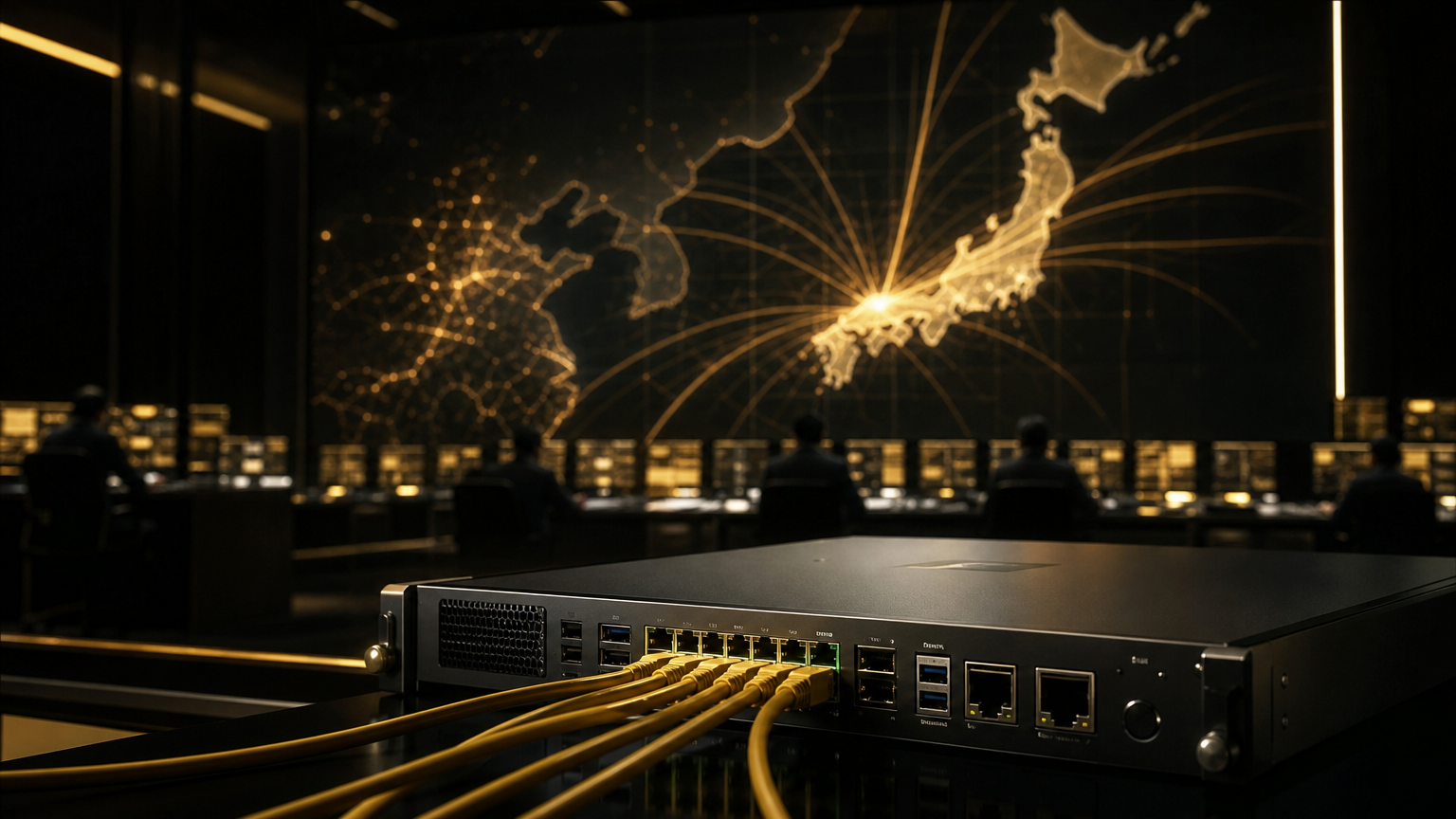
A cyber crisis moves from IT desks to the cabinet table
Japan’s latest cyber emergency is no longer just a collection of breach notices. It is now a national-policy event, with ministries, local authorities, banks and private companies being told to tighten defences after attacks exposed data belonging to millions of users . The political signal matters: a senior ruling-party cyber official described the situation as a “state of emergency in cyber space,” while the government’s National Cybersecurity Office sent instructions through ministries for distribution to local governments and companies .
The trigger is the accumulation of incidents. Times Car, the car-sharing service, disclosed a leak affecting about 6.6 million member accounts, including sensitive identity material; JR East lost 1.67 million customer email addresses; and an IDC Frontier ransomware incident disrupted hundreds of downstream customers, including companies and local governments . Separate reporting also named Lawson, Daiwa Securities and BookOff among companies hit by customer-data leaks, underscoring that the crisis spans transport, retail, finance and services rather than a single sector .
That breadth is why this moment feels different. A breach at one consumer platform is a privacy incident. A breach wave across transport, convenience stores, securities, car sharing and cloud infrastructure becomes a governance problem. It forces the state to ask whether basic cyber hygiene, supplier security and identity verification are keeping pace with the speed of attackers.
Identity is now part of critical infrastructure
One of the most concrete policy consequences is in banking. Japan’s financial regulator has warned banks to strengthen fraud protections after the data leaks, while officials have pushed for stronger verification when new bank accounts are opened . The Times Car leak is especially sensitive because it reportedly included driving-licence images, making it easier for criminals to attempt follow-on identity fraud if banks continue to accept weak or image-based checks .
That shifts the story from “data breach” to “fraud pipeline.” Once attackers have names, contact details, emails and ID images, the harm does not end when the victim company restores systems. The data can be reused in account-opening scams, phishing, credential stuffing and impersonation. Japan’s public guidance has therefore focused on practical controls: software updates, stronger passwords, multi-factor authentication, supply-chain security and caution around suspicious messages .
The warning also arrives as Japan has activated new “active cyber defence” powers. Deputy Chief Cabinet Secretary Yusuke Nakanishi said the government can now take “access neutralization” steps to stop attackers using their tools, with those powers coming into force on October 1 under Japan’s active cyber defence law . That does not mean every incident becomes an offensive cyber operation. But it does show that Tokyo is trying to move from passive advisories toward a broader defensive posture.
The SonicWall case shows why the clock is shrinking
The SonicWall SMA 1000 exploitation wave is not the same incident as the Japanese breach wave, but it illustrates the operational problem behind Japan’s emergency: internet-facing access systems are being weaponized almost immediately after disclosure. Threat actors began exploiting CVE-2026-102255, a CVSS 10.0 pre-authentication server-side request forgery flaw in SonicWall SMA 1000 appliances, within days of public disclosure .
According to The Hacker News, SonicWall released patches on October 6 for the flaw, including fixed platform-hotfix versions 12.4.3-03670 and 12.5.0-03082; exploitation attempts were then observed from October 8 by threat-intelligence firms Defused Cyber and Previdian . Previdian data cited in that report showed 135 attempts from two U.S.-based IP addresses, a small number in absolute terms but a large warning in timing terms .
The technical point is simple: public vulnerability details are no longer just information for defenders. They are also input for scanning, exploit adaptation and attack automation. eSecurity Planet reported that researchers had not confirmed successful compromises from the observed activity, but it also noted that the vulnerability affects SMA 1000 models 6210, 7210 and 8200v and that organizations were being urged to upgrade to the fixed firmware versions .
For Japan, the relevance is direct. Remote-access appliances, cloud providers and identity systems form the digital edge of government and enterprise operations. If those systems lag behind in patching, segmentation or monitoring, attackers do not need a cinematic monster on the network map. They need one exposed gateway, one supplier outage or one reusable identity document.
What defenders should do now
The first operational response is to treat patch cadence as a measurable resilience metric. For externally reachable devices, “patched this month” is too slow when exploitation can begin within two days of disclosure . Security teams should maintain an inventory of internet-facing systems, rank them by business criticality and require emergency patch windows for maximum-severity flaws affecting access gateways.
The second response is identity hardening. Japan’s warnings around bank-account opening show that identity proofing is no longer a back-office compliance detail . Organizations should reduce stored ID images, encrypt what they must retain, adopt phishing-resistant multi-factor authentication for administrators and contractors, and monitor for attempts to reuse leaked email addresses or licence data in account recovery workflows.
The third response is segmentation and recovery planning. The IDC Frontier incident’s reported impact on 495 companies and local governments shows how a supplier outage can become a multi-organization disruption . Customers should map dependencies, test failover paths, and ensure that a compromised remote-access device cannot become a bridge into identity stores, backup systems or operational networks.
Finally, boards should stop asking only whether the company was breached. They should ask how quickly the company can verify exposure, rotate credentials, isolate remote-access layers, notify regulators and restore services. Japan’s emergency demonstrates that cyber resilience is now a civic function as much as an enterprise function. The next phase will be judged not by whether attacks stop, but by whether public and private systems can absorb them without turning each breach into a national shock.
Sources from the last 72 hours
- [1]Japan steps up cyber warnings as data leaks hit millions of customersOct 12, 2026, 10:48 AM
- [2]Japan declares cyber emergency, millions of citizens' data exposedOct 12, 2026, 11:45 AM
- [3]Critical SonicWall SMA 1000 Flaw Targeted in 135 Exploitation Attempts After PatchOct 12, 2026, 12:36 PM
- [4]Critical SonicWall Flaw Targeted Just Two Days After DisclosureOct 12, 2026, 2:00 AM
- [5]Japan declares cyber ‘emergency’ after millions affected in hacksOct 12, 2026, 2:00 AM
AI-generated article based on recent web research, then preserved as a dated editorial snapshot.
Comments
Be the first to comment.