
Daily Podcast full article
Elon Will Be Devastated When He Finds Out
Starlink Mobile just gained a louder path toward becoming a U.S. wireless carrier, but the hard part is no longer the headline. SpaceX has spectrum, satellites, ambition and Elon Musk’s bravado; what it still needs is the boring, expensive, terrestrial machinery that makes phones work reliably in cities, buildings and crowded markets.
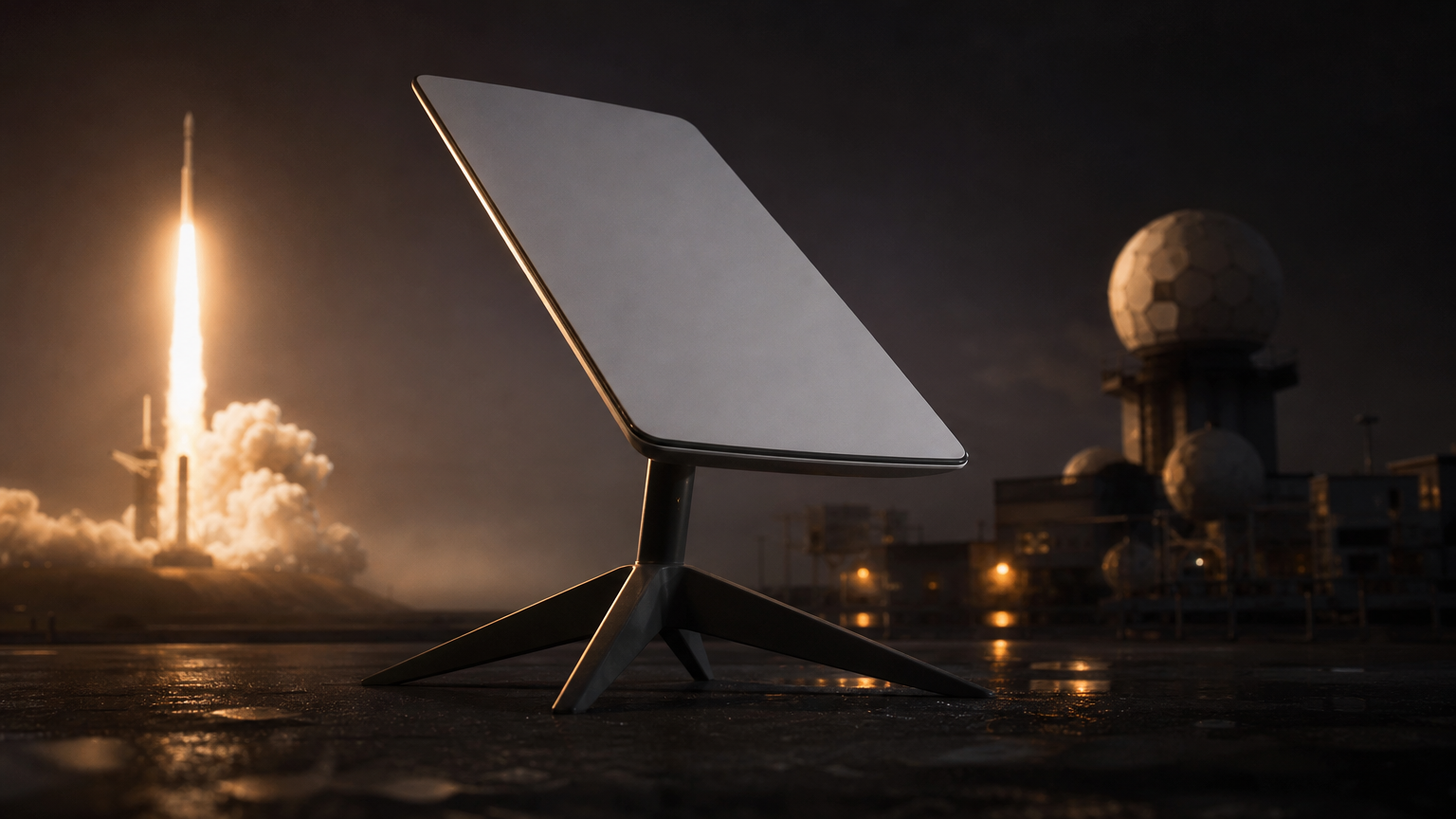
The dream: a carrier from space
SpaceX wants Starlink Mobile to be understood as more than a wilderness texting feature. The company’s latest spectrum push has been framed as a step toward turning Starlink into a major mobile carrier in the United States, not just a satellite add-on for emergencies or dead zones . The story is intoxicating: a global satellite brand, a giant launch engine, a growing broadband customer base, and a phone service that promises to work where towers stop.
That is the part Elon Musk would enjoy. The part he may not enjoy is the network math.
Fresh reporting this week shows why investors took the announcement seriously. SpaceX agreed to acquire Grain Management’s nationwide 800 MHz spectrum portfolio, a low-band asset that can travel farther and penetrate buildings better than higher-frequency airwaves . The portfolio has been described as up to 14 MHz of paired 800 MHz spectrum, and reports put the possible price at about 8 billion dollars . That is not a casual experiment. It is a strategic move into the domain of AT&T, Verizon and T-Mobile.
But a spectrum license is not a wireless network. It is permission to use airwaves. Turning those airwaves into a service that can compete with the Big Three requires sites, radios, backhaul, power, permits, handoff engineering, customer support, device optimization and years of operational repetition. That is where the “devastating” reality check begins.
Why Wall Street panicked, then looked at the towers
The market reaction tells the story better than any slogan. Carrier shares dropped after the SpaceX spectrum news, while tower companies moved higher . Inside Towers reported that Verizon, AT&T and T-Mobile suffered average double-digit losses by Friday’s close after the announcement, while tower-company shares rose by an average of 12 percent, reflecting the belief that SpaceX may need terrestrial infrastructure after all .
That split reaction is revealing. If Starlink Mobile could bypass towers completely, tower stocks would not be obvious winners. Their rally suggests investors see SpaceX not as a pure replacement for ground networks but as a potential new tenant, partner or infrastructure customer. In other words, the market is saying: yes, SpaceX is coming; no, physics has not been repealed.
Wireless Estimator made the same point through T-Mobile CTO John Saw’s critique. Saw argued that SpaceX’s latest spectrum purchase falls far short of creating a national wireless competitor, because reaching millions of indoor and urban users requires the capacity of dense terrestrial networks . His bluntest technical point was that one satellite beam can cover an area served by hundreds of terrestrial cell sectors . That is not a small difference. It is the difference between coverage and capacity.
Coverage means a phone can see a signal. Capacity means that thousands of phones in the same neighborhood can stream, call, upload, navigate and message at the same time. Starlink’s satellites are powerful for filling gaps. They are less naturally suited to replacing dense city networks where towers divide traffic into many small service areas.
The spectrum helps, but it does not solve everything
The 800 MHz band matters because low-band spectrum is useful for distance and building penetration. SpaceX’s existing satellite-to-phone story has been strongest in places where conventional coverage is poor. Low-band holdings could help Starlink Mobile reach deeper into rural areas, vehicles and buildings, and support a hybrid network that blends satellites with ground infrastructure .
Still, the size of the portfolio matters. Up to 14 MHz of paired 800 MHz spectrum is valuable, but it is not comparable to the layered holdings of the established carriers. Wireless Estimator reported Saw’s estimate that Starlink Mobile’s prospective holdings would be roughly 80 MHz, with some uplink-only, compared with T-Mobile’s nearly 400 MHz of low- and mid-band spectrum . That gap is important because modern mobile networks rely on multiple frequency layers: low band for reach, mid band for capacity, and dense sites for reuse.
VoIP Review framed the same caution in plain terms: coverage does not equal network capacity . A signal can reach a phone in a remote area and still fail to support heavy mobile data demand in a dense city. Urban service needs many sites, strong backhaul and additional spectrum layers . For a company that loves solving impossible-looking problems, that is not a stop sign. But it is a very expensive checklist.
The ground network is the real plot twist
The most important phrase in the current Starlink Mobile story is not “satellite.” It is “terrestrial deployment.” Recent coverage notes that SpaceX’s plan involves combining a satellite-to-mobile constellation with an advanced ground deployment after regulatory approval . That phrase changes the whole competitive picture.
If SpaceX builds or leases ground infrastructure, it becomes less like a magical tower killer and more like a new hybrid carrier. That may still be disruptive. It could pressure incumbents in rural markets, connected vehicles, backup connectivity, maritime and enterprise services. It could bundle phone connectivity with Starlink broadband. It could create enough competitive anxiety to affect pricing. But it would not instantly make the Big Three obsolete.
The cost estimates are sobering. Wireless Estimator cited Bernstein’s estimate that a standalone U.S. terrestrial network could cost 50 billion to 130 billion dollars, including spectrum, depending on scope . VoIP Review reported similar caution, noting Bernstein’s 50 billion to 130 billion dollar range and BNP Paribas’ suggestion that a U.S. build could reach 100 billion dollars . Those numbers explain why the tower stocks rallied. If SpaceX wants a national ground layer, it may be buying, leasing and installing for years.
What Starlink can realistically win first
The near-term opportunity is not to beat Verizon in Manhattan or T-Mobile in downtown Dallas. It is to own the places where conventional cellular economics are weakest. Rural roads, national parks, farms, emergency zones, logistics routes, boats, remote worksites and disaster recovery are the natural first territories for Starlink Mobile.
That still matters. The U.S. wireless market is mature, but dead zones remain a real consumer frustration. If Starlink can make ordinary phones more useful outside normal coverage, it can create a premium perception even before it matches carrier capacity. The service does not need to replace every tower to become strategically important. It only needs to make customers ask why their expensive phone still goes dark.
There is also a negotiation angle. A company with satellites, spectrum and brand power can pressure carriers even before it owns a full network. It can seek wholesale deals, roaming structures, tower leases or targeted deployments. VoIP Review noted that SpaceX could start with rural users, vehicles and Starlink broadband bundles, while also leasing towers or buying wholesale capacity . That path would be less dramatic than “Starlink replaces cellular,” but more credible.
The reality Elon may hate
The punchline is not that Starlink Mobile is doomed. It is that becoming a real mobile carrier is less like launching a rocket and more like maintaining millions of tiny promises every second. Calls must not drop. Indoor coverage must work. Congested cells must hold. Billing must be boring. Regulators must approve transfers. Devices must behave. Towers, rooftops and small cells must be negotiated one by one.
The latest spectrum move is a genuine advance. It gives SpaceX a better coverage tool and makes Starlink Mobile more credible than it was before . It also explains why telecom investors are suddenly repricing risk and why tower investors see opportunity . But the same news exposes the central contradiction: if SpaceX needs a terrestrial deployment to become a major carrier, then the wireless incumbents’ deepest advantage remains intact.
Starlink can disrupt the edges first. It can shame dead zones. It can force carriers to defend rural coverage. It can make satellite-to-phone service feel normal. But competing head-on with AT&T, Verizon and T-Mobile in dense, indoor, high-capacity markets will require spectrum depth, tower access and capital on a scale that even SpaceX cannot wish into existence overnight .
Elon may love the future where Starlink turns every phone into a satellite-connected device. The present is less glamorous: 800 MHz helps, satellites help, and the brand helps. But towers still matter. Capacity still matters. Scale still matters. And that is the part that may require the reboot.
Sources from the last 72 hours
- [1]SpaceX Spectrum Deal Sends Tower Stocks Up and Carrier Stocks DownOct 12, 2026, 12:00 PM
- [2]T-Mobile’s John Saw questions SpaceX’s wireless ambitions—and makes the case for towersOct 12, 2026, 6:00 AM
- [3]SpaceX Expands Mobile Reach with Key Spectrum AcquisitionOct 12, 2026, 2:00 AM
- [4]Elon Musk's SpaceX Could Shake Up US Wireless Market — And Wall Street Sees a Surprise WinnerOct 13, 2026, 5:10 AM
AI-generated article based on recent web research, then preserved as a dated editorial snapshot.
Comments
Be the first to comment.