
Daily Podcast full article
Musk spends $366M on midterms
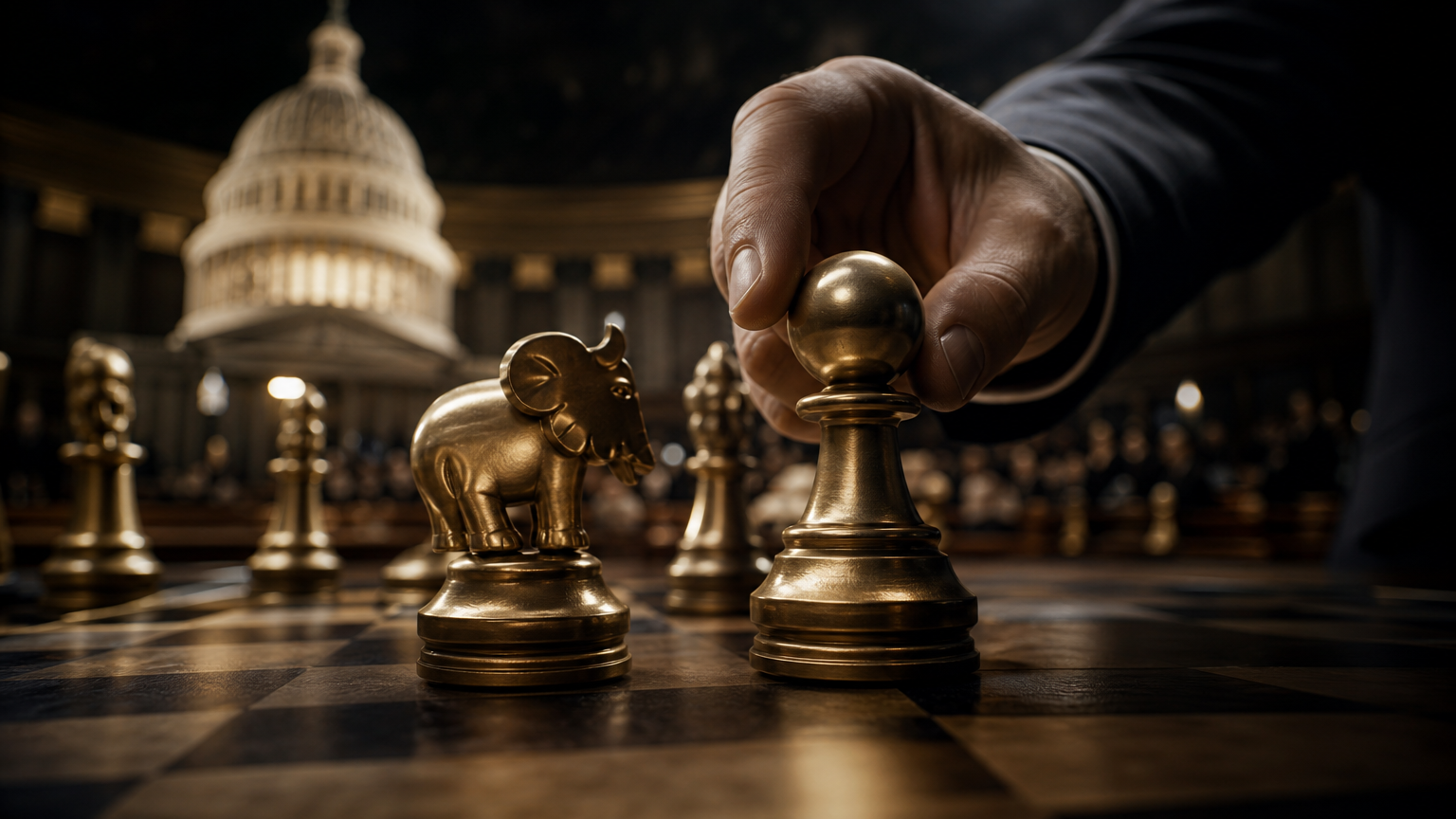
Elon Musk has become the biggest known individual donor of the 2026 U.S. midterm cycle, with roughly $366 million directed into Republican-aligned political groups and campaigns across the 2025–26 election period; the late-cycle flood of money turns the chief of Tesla, SpaceX and xAI into a direct power broker over the lawmakers who will shape AI, space, automotive and platform policy.
The story: a tech fortune becomes election infrastructure
Elon Musk has moved from being a loud political actor to being the central financial actor in the 2026 U.S. midterms: new reporting places his total giving for the 2025–26 federal election cycle at about $366 million, making him the largest known individual donor of the cycle . Other current accounts put the disclosed late-cycle surge at more than $276 million since July, a narrower figure that covers the newest tranche rather than the full 2025–26 cycle . The two numbers are not contradictory; they describe different scopes of the same intervention, with $276 million representing recent Republican-focused giving and $366 million capturing the broader cycle total .
That distinction matters because the headline number is not just another billionaire-donor statistic. Musk is the head of companies whose business models sit directly in front of federal power: Tesla depends on transportation, energy and safety policy; SpaceX operates in a contracting, launch, satellite and national-security environment; xAI sits inside the emerging fight over artificial-intelligence rules; and X remains part of the broader platform-governance debate . In other words, the donor is not merely buying ideological reach; he is increasing leverage in the same Congress that will decide rules and budgets affecting his technology empire.
Where the money is going
The largest disclosed slice of Musk’s recent giving went to the Senate Leadership Fund, the main super PAC supporting Republican Senate candidates, which received $158 million from him in the third quarter . That single allocation is larger than most conventional campaign operations and is being aimed at the chamber where appointments, regulation, national-security oversight and federal spending priorities are shaped. Another $20 million went to the Congressional Leadership Fund, the House Republican super PAC aligned with Speaker Mike Johnson . The House money matters because control of the chamber shapes committee agendas, investigations, budget bargaining and the probability of passing tech-related legislation.
Musk also put $76 million into America PAC, his own super PAC, which is building a turnout operation modeled on the door-knocking machinery it used in 2024 . That creates a different kind of influence from television advertising: a donor-funded field operation can shape who actually votes in close races, especially when it is concentrated in states and districts where the margins are thin. The current breakdown also includes $10 million to Lone Star Liberty PAC, which supports Republican Ken Paxton’s Senate campaign in Texas, plus $10 million to the Republican Governors Association and $2 million to the Republican Attorneys General Association . The Texas component is especially notable because Musk’s companies have substantial operations and interests in the state, making the state-level and federal overlap difficult to ignore .
Why $366 million changes the political software stack
Campaign spending is often discussed as messaging money, but Musk’s midterm spending looks more like infrastructure money. The $158 million Senate Leadership Fund contribution helps a national party vehicle decide where to defend, where to attack and which races remain viable . The $76 million for America PAC supports an organization that can collect data, hire canvassers, test messages and pursue low-propensity voters in ways that survive beyond a single ad buy . The $20 million to the House Republican super PAC adds another layer to that stack, giving Republicans resources in a chamber where late money can change the advertising and turnout balance in individual districts .
The result is a billionaire-funded political architecture rather than a one-off donation. Musk’s money is not only amplifying candidates; it is strengthening Republican campaign capacity across Senate, House, gubernatorial and attorney-general contests . That matters because these offices interact with tech policy from multiple angles: Congress writes statutes and appropriates money, governors influence state-level regulation and attorneys general can pursue or decline enforcement actions affecting platforms, labor practices, consumer protection and AI deployment.
The lower-profile strategy
One of the striking features of Musk’s 2026 spending is how quiet it appears compared with his 2024 political persona. The Associated Press reported that Musk has kept a lower profile than in 2024, when he appeared with Donald Trump at rallies, and lower than during the early period of Trump’s second term, when he led the Department of Government Efficiency . The money, however, suggests that the retreat is stylistic rather than strategic. Musk may be posting less and campaigning less visibly, but he is financing more.
That gap between public visibility and financial intensity is central to the story. A rally appearance is easy to see; a super PAC transfer is harder for voters to translate into power. Yet the latter may matter more. A $366 million cycle-level commitment can pay for field staff, data systems, media buys, polling, opposition research and late emergency spending . It can also make party committees and candidates more attentive to the donor’s worldview, even without a formal quid pro quo.
Why the tech industry should pay attention
For the technology sector, the significance is not simply that a tech billionaire is spending money. The significance is that one founder-operator is converting extraordinary corporate-era wealth into direct political capacity at a moment when lawmakers are deciding how to govern artificial intelligence, space infrastructure, electric vehicles, social platforms, federal procurement and national security . That is a governance pull request submitted with a $366 million commit.
AI policy is the clearest example. Congress is still wrestling with questions about model safety, copyright, compute access, export controls, liability and federal pre-emption. A donor with an AI company has an obvious interest in how those rules are written. Space policy is another. SpaceX’s launch, satellite and government-contracting environment depends on appropriations, defense priorities, spectrum policy and regulatory agencies. Automotive policy is equally exposed, as Tesla’s future intersects with vehicle safety, charging infrastructure, tax incentives, labor rules and China-related trade policy.
The platform layer matters too. X remains bound up in disputes over content moderation, election information, advertiser pressure, speech rules and government requests. If the same individual funding a major election operation also owns a major platform used by politicians, journalists and voters, the influence stack is unusually dense. Money, media distribution, technological infrastructure and corporate lobbying interests all sit in the same ecosystem.
The democratic question
The legal structure of U.S. campaign finance allows super PACs to raise and spend unlimited sums as long as they do not coordinate directly with candidates in prohibited ways. But legality is not the same as democratic comfort. Musk’s spending raises an old question in a new scale: when one person can become the largest known donor of an entire midterm cycle, how much political equality is left in the system?
Republicans argue that this spending gives their candidates a fighting chance in a difficult political environment, and America PAC’s spokesperson confirmed the broad figures reported this week . Critics see something different: a system in which a single ultra-wealthy technology executive can help determine congressional control and then face that same Congress as regulator, contractor, investigator and policymaker .
The most precise reading is also the most unsettling. Musk’s $366 million does not guarantee Republican control of Congress, and money can still be wasted, mistargeted or overwhelmed by voter mood. But it buys options: the option to defend more seats, to fund more canvassers, to rescue endangered candidates, to dominate late advertising windows and to make party leaders answer the donor’s calls. In politics, options are power.
The bottom line
The 2026 midterm story is not only that Elon Musk spent an unprecedented amount of money. It is that the money came from a technology executive whose companies are deeply exposed to decisions made by the very institutions he is trying to shape. The $276 million late-cycle figure shows the intensity of the push since July . The $366 million cycle figure shows the larger scale of the project . Together, they mark a new phase in which tech wealth is not merely lobbying government from the outside; it is financing the electoral machinery that decides who runs it.
Sources from the last 72 hours
- [1]Elon Musk becomes biggest political donor of US midterms cycle with $366m spentOct 13, 2026, 7:13 PM
- [2]Elon Musk spends $366 million on 2026 US midterm electionsOct 12, 2026, 11:24 PM
- [3]Elon Musk quietly becomes biggest known donor in midterm contests as he tries to save RepublicansOct 12, 2026, 4:44 PM
- [4]Elon Musk emerges as the top booster for Republicans with $276 million in donationsOct 12, 2026, 3:54 PM
- [5]Elon Musk has dropped $276M to help his right-wing candidates get elected in NovemberOct 13, 2026, 1:03 AM
AI-generated article based on recent web research, then preserved as a dated editorial snapshot.
Comments
Be the first to comment.