
Daily Podcast full article
TSMC profit surges 69% as AI demand tests the chip selloff
TSMC’s third-quarter profit jumped nearly 69% to a record, powered by AI-related demand and a striking 79% revenue contribution from advanced process nodes. The result is a hard demand signal from the world’s key chip foundry, but it arrived as semiconductor shares were being repriced for valuation, funding and volatility risk.
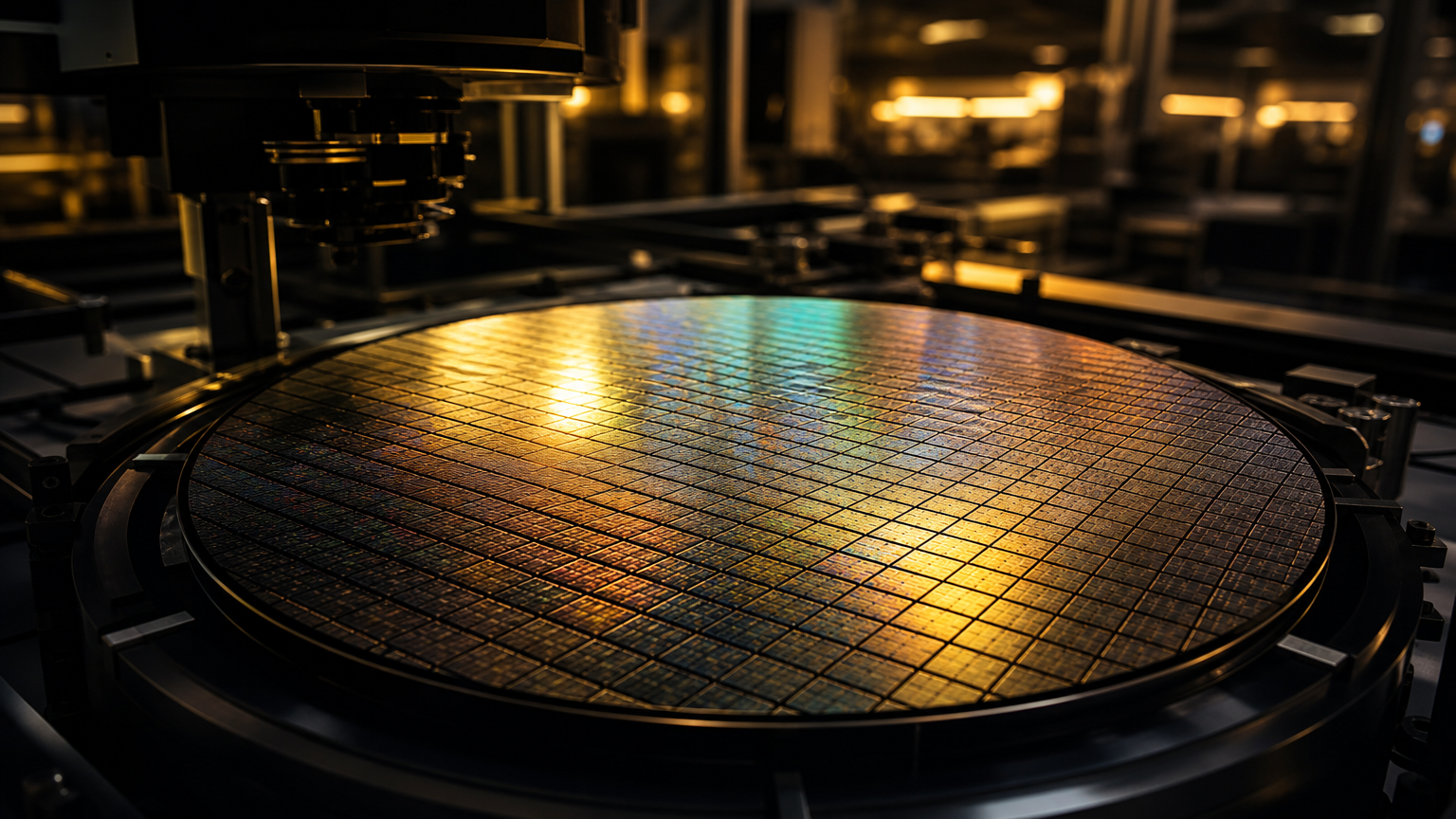
The headline: record profit, not a soft landing
TSMC’s latest quarter delivered exactly the kind of operating result that should, in normal market weather, calm doubts about the semiconductor cycle. Taiwan Semiconductor Manufacturing Company reported third-quarter net income of NT$763.06 billion, revenue of NT$1.49424 trillion and diluted earnings per share of NT$29.43 for the period ended September 30, 2026 . Year over year, revenue rose 50.9%, while net income and diluted EPS both increased 68.7%, the figure rounded in market coverage to a 69% profit surge .
The scale matters because TSMC is not just another chip stock. It is the manufacturing bottleneck behind much of the world’s leading-edge silicon, including the processors and accelerators used in AI data centers. Reuters reported that the profit beat market forecasts, with net income above an LSEG SmartEstimate of NT$746.3 billion, and tied the record quarter to surging demand for AI processors . In other words, the income statement is still saying “capacity wanted,” even as parts of the equity market are asking whether the AI trade has run too far.
Advanced nodes are now the center of gravity
The most important number inside the report may be 79%. TSMC said advanced technologies, defined as 7-nanometer and more advanced processes, accounted for 79% of total wafer revenue in the third quarter . The breakdown shows how quickly the company’s mix is shifting toward the bleeding edge: 2-nanometer shipments already contributed 8% of wafer revenue, 3-nanometer contributed 33%, 5-nanometer 28% and 7-nanometer 10% .
That mix explains why the quarter reads as more than a cyclical rebound. Customers are not merely ordering more chips; they are moving toward the most expensive, scarce and strategically important manufacturing nodes. For AI systems, that matters because performance, power efficiency and packaging complexity are all tied to the most advanced production capabilities. TSMC’s 79% figure is therefore a measure of pricing power, customer urgency and the degree to which the AI buildout depends on one foundry’s execution.
The company’s margins reinforce that point. Gross margin was 66.4%, operating margin was 58.7% and net profit margin was 51.1% in the third quarter . Those are unusually rich figures for a capital-intensive manufacturer that must keep pouring money into fabs, tools and process transitions. Focus Taiwan noted that gross margin fell from the prior quarter as 2-nanometer shipments increased, showing that even a spectacularly profitable ramp still carries transition costs .
Guidance says the AI order book is still alive
TSMC’s outlook did not sound like a company seeing an immediate AI air pocket. For the fourth quarter of 2026, management guided revenue to a range of US$52.3 billion to US$54.3 billion, with gross margin expected between 65% and 67% and operating margin between 56.5% and 58.5% . CFO Wendell Huang said the fourth quarter should be supported by continued strong demand for leading-edge process technologies, including the steep ramp-up of 2-nanometer technology .
That is an important signal for the broader technology stack. If hyperscalers, AI chip designers and hardware vendors were sharply cutting plans, the pressure would likely show up first in leading-edge wafer demand and packaging bottlenecks. Instead, TSMC is guiding to higher dollar revenue after an already record quarter. The message is not that every AI investment will earn an attractive return; it is that the physical buildout is still feeding the foundry with real orders.
The distinction matters. Investors can be right to question whether all AI infrastructure spending will pay back quickly, while TSMC can still be right that demand for its most advanced capacity remains strong. The industry’s income statement and the market’s valuation mood are not always synchronized.
Why chip stocks sold off anyway
The complication is that TSMC’s record results landed in the middle of a broader semiconductor selloff. Bloomberg reported that a rout in global technology hardware stocks extended on Thursday as Asian chipmakers followed U.S. peers lower, with investors worried about interest rates and AI funding pressures . The same report said Samsung Electronics and SK Hynix fell more than 6% each, pulling South Korea’s Kospi down as much as 6.5% .
AP also described a technology-led decline across global shares, with sharp drops in South Korea and Japan, and reported that SoftBank Group lost 9.3% while TSMC dropped 2% ahead of its earnings report . The point is not that TSMC’s numbers were weak. They were not. The point is that investors are no longer rewarding every AI-linked data point automatically.
That shift had been building before the earnings release. Bloomberg reported a day earlier that TSMC faced a high bar to calm AI-stock jitters after the Philadelphia Semiconductor Index shed more than US$1.5 trillion in market value over six sessions . Strong reports from Samsung and ASML had already failed to settle the trade, according to that report . By the time TSMC delivered its own beat, the market question had changed from “Is AI demand real?” to “How much of that demand is already priced in, and who ultimately earns the return?”
The new debate: demand signal versus valuation risk
The quarter gives both bulls and skeptics something to cite. Bulls can point to record profit, 50.9% revenue growth in New Taiwan dollars, 68.7% profit growth, resilient margins and a fourth-quarter revenue guide above US$52 billion . They can also point to the advanced-node mix as evidence that customers still need TSMC’s highest-value capacity .
Skeptics can counter that a foundry boom does not prove every AI business model is sustainable. Bloomberg’s selloff coverage cited worries about AI funding, financing conditions and fatigue in investor sentiment . Axios similarly framed the chip wobble around a market increasingly dependent on a concentrated group of AI chip and hyperscaler stocks . If the market’s profit pool is too narrow, then even excellent results from the manufacturing layer may not be enough to support elevated valuations across the whole ecosystem.
This is the core of the desynchronization bug. TSMC’s factories are reporting scarcity, demand and pricing strength. Public markets are reporting anxiety about duration, capital intensity and return on investment. Both can be true at once.
Why this quarter matters beyond TSMC
TSMC’s third quarter is a reality check for the AI cycle. It does not end the debate about an AI bubble, but it narrows the debate. The question is no longer whether AI infrastructure spending exists at scale. A company does not print NT$763.06 billion in quarterly profit, generate 79% of wafer revenue from advanced nodes and guide to more than US$52 billion in fourth-quarter revenue without massive customer commitments .
The better question is how those commitments translate into returns across the chain. TSMC captures value by manufacturing the scarce silicon. Chip designers capture value if their accelerators remain preferred. Cloud companies capture value only if they can turn compute capacity into profitable services. Enterprises capture value only if AI deployments produce productivity gains. Investors are now sorting those layers with less patience than they showed earlier in the boom.
For now, TSMC has supplied the clearest hard signal in the sector: the leading edge is still full, AI demand is still material and advanced silicon has become the industry’s new difficulty setting. The share-price mood may remain volatile, but the operating message from Hsinchu is difficult to dismiss.
Sources from the last 72 hours
- [1]TSMC Reports Third Quarter EPS of NT$29.43Oct 14, 2026, 6:00 PM
- [2]TSMC Q3 profit jumps 69% to record, beating expectations By ReutersOct 15, 2026, 2:00 AM
- [3]TSMC's Q3 net profit hits new quarterly highOct 14, 2026, 6:00 PM
- [4]Chip Rout Deepens as Rate Fears Collide With AI Funding WoesOct 15, 2026, 2:27 AM
- [5]A tech sell-off drags stocks lower as markets in South Korea and Japan sinkOct 15, 2026, 3:50 AM
- [6]TSMC Results Face High Bar to Calm Global AI Stock Trade JittersOct 15, 2026, 12:22 AM
- [7]Why the chip stocks wobbledOct 14, 2026, 1:10 PM
AI-generated article based on recent web research, then preserved as a dated editorial snapshot.
Comments
Be the first to comment.