
Daily Podcast full article
Google rewires AI Search discovery
Google’s latest Search updates put links, news carousels and source context back into the foreground of AI Mode and AI Overviews, while Universal Cart turns Search and Gemini into a more complete shopping funnel. The move is both a publisher appeasement strategy and a commerce land grab: more visible exits for readers, more controlled paths for buyers.
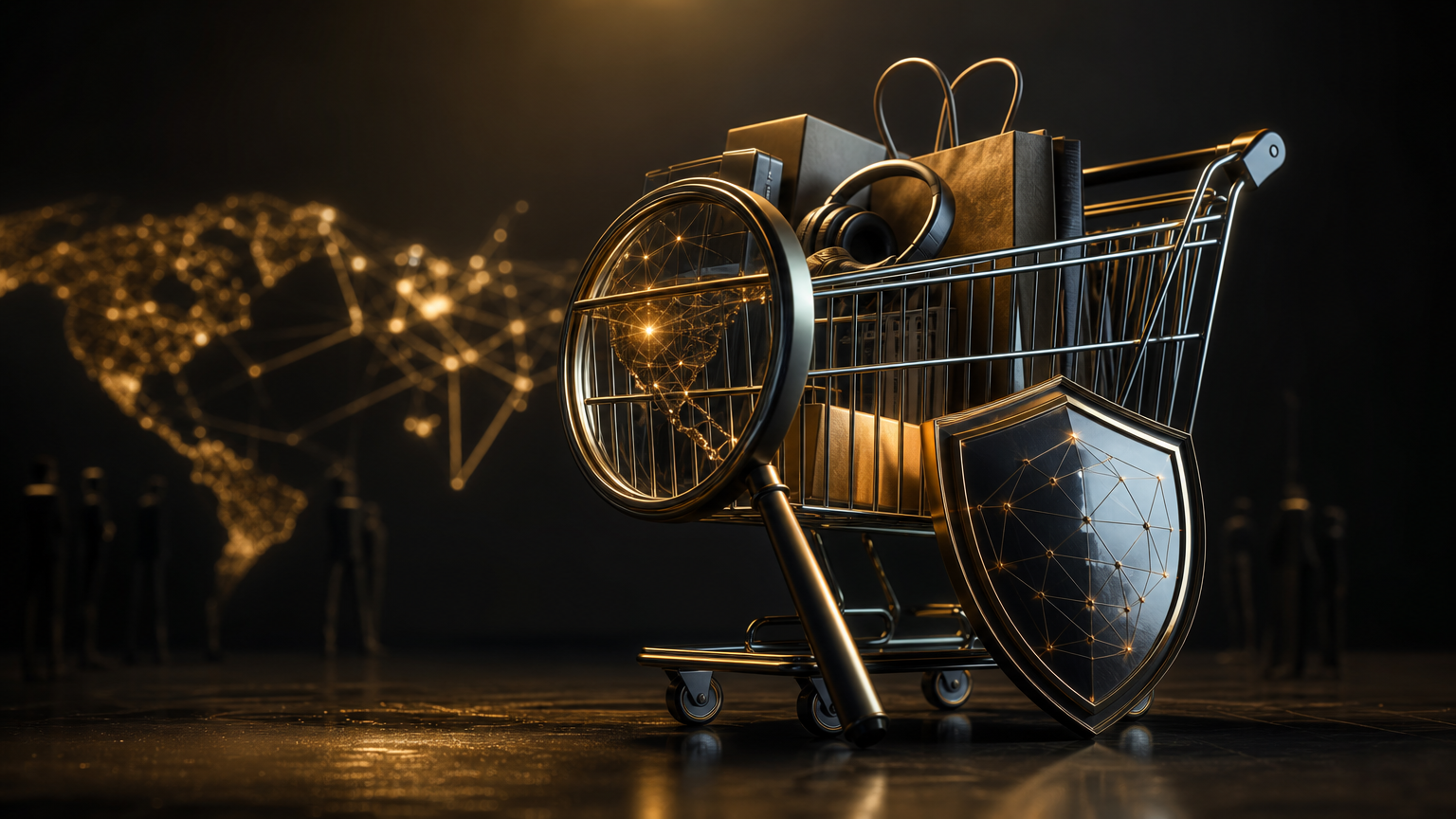
The blue link returns, but inside Google’s AI frame
Google’s newest AI Search update is best understood as a redesign of discovery, not a retreat from generative answers. On October 15, 2026, Google said AI Mode and AI Overviews would show more inline links, place some links higher in AI responses, add clearer context around sources and expand visual article carousels for timely topics . That is a direct answer to a central criticism of AI search: if the generated response satisfies the query, publishers can provide the raw material while losing the visit.
The new package includes five discovery changes. Google says inline links will appear more often inside AI-generated text and higher in responses; certain task-based answers will test a dedicated top section for one or two official web pages; timely article carousels will expand to more locations and languages; end-of-answer “Dive deeper” links will become more visual with thumbnails; and AI Mode will test clickable creator and publisher names on video results that open Search profiles . Android Central described the same shift as an attempt to make linked sources more visible and easier to assess inside AI Overviews and AI Mode .
This matters because placement is power. In classic search, ranking in the first organic results shaped traffic. In AI search, a citation embedded near the top of an answer may become the new front page. Google is not restoring the old results page; it is building a layered answer page where the link survives as part of the AI interface.
Why publishers pushed so hard
The update lands amid pressure from news organizations, traffic analysts and regulators. The Straits Times, citing AFP, reported that Google announced on October 15 that it would display website and article links more prominently and higher up in AI-powered search results . The same report noted that Chartbeat found a 40% drop in Google traffic to news publishers between July 2025 and July 2026, and that France’s Apig had alerted the French Competition Authority that AI summaries violated 2022 agreements with publishers .
Those details explain the urgency. AI Overviews and AI Mode are not just interface experiments; they alter the economics of search. If a user receives a complete summary, the incentive to click through weakens. If the cited publisher appears late, hidden or visually subordinate, the value of producing original reporting declines. Google’s promise of “more inline links” is therefore not a cosmetic tweak. It is a proposed compromise between answer completeness and the open-web referral model .
Google is also leaning on personalization. The company said usage of Preferred Sources has grown more than sevenfold since the start of 2026, and its expanded news carousels will highlight a user’s Preferred Sources . That gives loyal publishers a route back into prominent surfaces, but it also means discovery becomes more dependent on Google-controlled preference signals.
Discovery becomes an SEO battleground
For search optimization teams, the immediate lesson is clear: being mentioned by an AI answer is no longer enough. The strategic contest is whether a page becomes an inline citation, a top task link, a carousel card, a thumbnail-enhanced related link or an invisible source behind a fluent answer.
The new “official web page” test is especially important. Google says some AI responses will show a dedicated section near the top when there are one or two official places to complete a task or find exact information . That could privilege government agencies, brands, documentation pages, ticketing sites and merchants over aggregators or editorial explainers. In other words, AI Search may compress whole categories of navigational and transactional SEO into a smaller number of sanctioned exits.
The news carousel expansion points in a different direction. For timely topics, Google says it is rolling prominent article carousels to additional locations and languages globally . That creates an opening for publishers, but not an equal one: the carousel can elevate preferred or visually strong sources while leaving others below the fold. The blue link has not died. It has respawned with extra armor, richer packaging and more rules.
Universal Cart moves the same logic into commerce
The second half of Google’s move is shopping. In a separate October 15 announcement, Google said Universal Cart is rolling out in the United States across Google Search and the Gemini app . The feature lets users save products from multiple retailers into one cart, track price and inventory changes, surface promo codes and card perks, and check out through Google Pay or transfer items to a merchant’s site .
Search Engine Land reported that Universal Cart centralizes product discovery, savings and checkout across Search and Gemini, allowing a shopper to add an item in AI Mode, save another through Gemini and return later to find both in the same cart . 9to5Google similarly described the feature as an intelligent cart that works across retailers and Google touchpoints, including Search, Gemini and AI Mode .
The feature is powered by Google’s Shopping Graph, which Google says contains more than 60 billion continually refreshed product listings . That scale gives Universal Cart a practical advantage: it can watch saved items for price drops, inventory returns and promotions across a broad merchant universe . Search Engine Land noted that participating checkout experiences include merchants such as Nike, Sephora, Target, Ulta Beauty, Walmart, Wayfair and many Shopify retailers, while retailers remain the seller of record for confirmations and customer support .
The transaction funnel tightens
Universal Cart changes Google’s role from referrer to orchestrator. Traditional shopping search sends users outward: compare, click, evaluate, buy. Universal Cart keeps more of that process inside Google’s environment. A user can discover a product in AI Mode, continue the shopping conversation in Gemini, collect items from several stores, receive deal alerts and then choose either Google Pay or merchant checkout .
That threatens comparison sites because Google can perform more of the comparison layer itself. It also challenges Amazon’s grip on high-intent commerce by offering a web-wide cart at the moment of search intent. Google does not need to own the inventory to control the funnel; it only needs to own discovery, cart memory, savings prompts and payment routing.
For merchants, the bargain is familiar. Universal Cart can create distribution and conversion opportunities, but under Google’s rules. Product feed quality, pricing, promotions, inventory accuracy and wallet-linked incentives become more consequential when the cart is assembled inside Search and Gemini . The merchant may remain seller of record, but Google increasingly owns the shopping session.
Antitrust scrutiny will follow the interface
The common thread between the link update and Universal Cart is control over exits. In news, Google is promising more and better exits from AI answers to the open web. In commerce, it is building a more complete path that may reduce the need to exit until payment or fulfillment. Both choices will matter to regulators because interface design can shift market power without a formal change in business model.
Google can argue that it is improving user experience: faster answers, better source context, easier shopping, fewer lost tabs and more savings. Publishers, comparison engines and rival marketplaces can argue that Google is deciding which links receive visibility, which merchants receive cart placement and which transactions remain inside its ecosystem.
The most important signal is that Google is still tuning the boundary between complete AI answers and a navigable web. The company is not abandoning AI summaries, and it is not returning to ten blue links. It is rebuilding discovery around AI-generated responses, richer citations, personalized source preferences and transaction tools. For media companies, the fight is now for citation prominence. For merchants, it is for cart inclusion. For users, the web is still there — but increasingly reached through Google’s AI dashboard.
Sources from the last 72 hours
- [1]More ways to connect with the web from SearchOct 15, 2026, 2:00 PM
- [2]The facts matter: Google updates AI Overviews, drawing more attention to linked sourcesOct 15, 2026, 2:00 PM
- [3]Google boosts news and link visibility in AI modeOct 16, 2026, 1:47 AM
- [4]An intelligent new shopping cartOct 15, 2026, 2:00 PM
- [5]Google launches Universal Cart across Search and Gemini for easier shoppingOct 15, 2026, 4:53 PM
- [6]Google rolling out Universal Cart that lets you shop the web and find deals with Gemini, SearchOct 15, 2026, 4:40 PM
AI-generated article based on recent web research, then preserved as a dated editorial snapshot.
Comments
Be the first to comment.