
Daily Podcast full article
iPhone Duo sells out rapidly
Apple’s first foldable iPhone has moved from rumor to retail reality with a preorder rush that pushed delivery estimates into January 2027. The sellout is a powerful demand signal, but the bigger question is whether Apple can scale foldable production fast enough without weakening margins, quality control or the Duo’s durability promise.
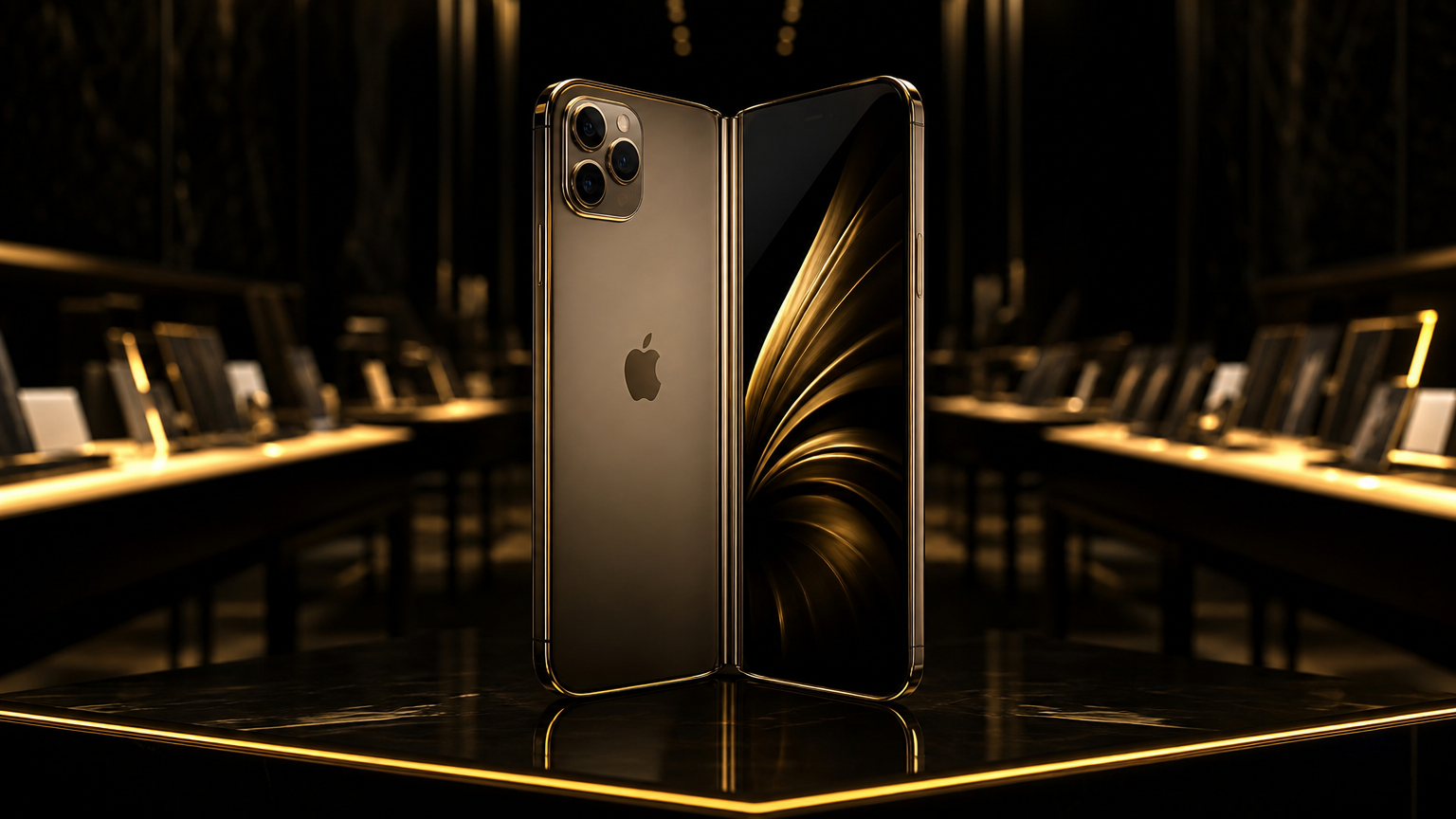
The preorder window closed almost as soon as it opened
Apple’s first foldable iPhone Duo went up for preorder on Friday, October 16, at 5 a.m. Pacific time, after Apple had urged customers to prepare carts, financing and trade-ins in advance . Within minutes, the launch shifted from a normal product rollout to a supply watch. Reports tracking Apple’s U.S. store showed estimated delivery dates moving rapidly through November and December before landing in January 2027 for all colors and storage options .
The most striking detail is not just that the iPhone Duo sold through its opening inventory, but that the slip appeared broad. The delays were not confined to a single color, carrier configuration or high-end storage tier. By roughly 8:30 a.m. Eastern time, all U.S. configurations were reportedly backordered until January 25, with some buyers seeing January 29 . TechRadar separately reported that every storage configuration in both Star White and Night Sky had slipped to January 2027 about five hours after preorders opened .
That speed gives Apple the launch-day headline it wanted: its most radical iPhone redesign in years attracted immediate buyers despite a $1,999 starting price . But sellouts can be deceptive. A product can sell out because demand is exceptional, because supply is thin, or because both are true. In this case, the evidence points to the combination Apple now has to manage: intense curiosity around the first foldable iPhone and constrained opening inventory .
A real demand signal, not yet a full market verdict
The iPhone Duo’s preorder performance answers one question clearly: there was a large audience willing to pay for Apple’s interpretation of the foldable phone on day one. Forbes reported that initial stocks were exhausted within about half an hour, after preorders opened at 5 a.m. Pacific, 8 a.m. Eastern and 1 p.m. in the U.K. . That matters because the Duo is not a routine annual upgrade. It asks customers to accept a new form factor, a hinge, a different app experience and a price closer to a laptop than to a mainstream smartphone.
Still, the first day does not prove the sustainable size of Apple’s foldable category. Apple has not disclosed preorder totals or launch inventory, so a January delivery estimate cannot be translated into unit demand. If initial stock was intentionally conservative, a sellout says less about the total market. If stock was substantial and still disappeared rapidly, the signal becomes much stronger. For now, the safe conclusion is narrower: Apple created measurable urgency, and the company’s loyal high-end customer base was ready to test the foldable idea when it came with Apple’s software, services and retail support around it.
The early resale market reinforces that urgency. Forbes noted that confirmed iPhone Duo preorders quickly appeared on eBay at large premiums, including examples where buyers appeared willing to pay roughly $1,800 above Apple’s listed price to avoid waiting until January . Resale premiums are not a perfect demand gauge, because they can reflect speculation as much as real end-user appetite. But they show that scarcity immediately became part of the launch story.
Why supply is the central story now
The iPhone Duo’s launch has quickly become less about whether people want Apple’s foldable and more about whether Apple and its suppliers can make enough of it. Bloomberg described shipping estimates slipping into January within minutes as evidence that strong demand and short supply could make the $1,999 device difficult to buy on or soon after its October 23 release date . That framing is important. The Duo is not merely another iPhone with a different camera module. It depends on a foldable display stack, hinge tolerances, new casing geometry, dual-battery design and durability validation.
Apple’s own description of the product underlines the manufacturing challenge. The company says the iPhone Duo has Apple’s largest iPhone display ever, a foldable design, a 5.4-inch outer screen, a precision-engineered hinge and an inner display 50 percent larger than the iPhone 18 Pro Max display . Those features are exactly why the device is exciting, and exactly why ramping production is harder than ramping a conventional slab phone.
For suppliers, the key word is yield. Foldable OLED panels are harder to manufacture consistently than standard displays; hinges add mechanical complexity; and the assembled device must survive daily opening, closing, pocket pressure, dust exposure and accidental handling. Apple can tolerate a slow ramp more easily than a durability scandal. In practical terms, that means the company may prefer to let delivery dates stretch rather than flood the channel with units that risk returns, repairs or reputational damage.
The Samsung problem changes shape
Samsung has spent years normalizing foldable phones, refining its Galaxy Z Fold line and teaching consumers that a phone can also be a small tablet. Apple’s entry does not erase that lead overnight. But it changes the competitive frame. Until now, Samsung’s strongest advantage was that Apple did not have a foldable at all. With the iPhone Duo, Samsung now faces the most dangerous kind of challenger: not the first mover, but the ecosystem owner that arrives late and converts curiosity into mainstream attention.
The preorder sellout is therefore a strategic message to Samsung as much as a sales event. Apple has shown that many premium iPhone users were not necessarily rejecting foldables; they may simply have been waiting for one that kept iMessage, FaceTime, Apple Watch, AirPods, iCloud, AppleCare and the App Store in the same loop. Apple’s launch article emphasized direct support, AppleCare options, trade-in credits, carrier deals and Apple Store pickup or delivery as part of the buying process . That infrastructure can reduce the perceived risk of adopting a new device category.
Samsung still has advantages: more foldable generations, broader hardware experience and likely stronger early knowledge of foldable display behavior. But Apple now has the attention of customers who were hesitant to cross ecosystems. If Apple can make the Duo durable, available and useful beyond novelty, Samsung’s foldable lead becomes a contest rather than a moat.
January delivery is a holiday-season problem
The timing is awkward for Apple. The iPhone Duo is scheduled to reach early buyers and stores on October 23, but customers ordering after the first rush may not receive the device until late January . That means many would-be buyers will miss the holiday window, a critical period for premium electronics. TechRadar noted that the January estimates push the device well beyond the holiday season .
This creates three immediate consequences. First, Apple Stores could see unusually intense launch-day traffic from customers hoping for walk-in or pickup inventory. Second, carriers and retailers may become alternative hunting grounds if they have separate allocation. Third, scalpers gain leverage as long as official channels quote January dates.
Apple’s challenge is to keep demand warm without creating frustration. A three-month wait can increase desirability when the product is new and scarce, but it can also push buyers toward an iPhone 18 Pro, a Samsung foldable or a decision to wait for the second generation. The company’s next operational win would be pulling some January dates forward, even modestly, because that would signal that production is improving.
The hinge test starts now
The iPhone Duo’s launch is a classic Apple moment: late to a category, unusually visible once it arrives, and judged less by being first than by whether it feels finished. The first preorder wave suggests Apple has cleared the “will anyone buy it?” hurdle. The harder test is what comes next.
If Apple can raise output while maintaining panel quality, hinge consistency and repair economics, the Duo could turn foldables from a specialist category into a mainstream premium iPhone branch. If supply remains constrained deep into 2027, the launch will look more like a limited high-end experiment, successful in headlines but narrow in scale.
For now, Cupertino has finally learned the Tetris hinge maneuver. The pieces fit on preorder day. The next challenge is making enough of them.
Sources from the last 72 hours
- [1]Open up to new possibilities with iPhone DuoOct 15, 2026, 9:00 AM
- [2]iPhone Duo sells out immediately, now backordered until next yearOct 16, 2026, 2:32 PM
- [3]iPhone Duo in Short Supply After Shipments Slip Into 2027Oct 16, 2026, 6:25 PM
- [4]iPhone Duo Sells Out In Minutes As Delivery Dates Slip To January 2027Oct 16, 2026, 10:00 PM
- [5]Well, that went fast — Apple iPhone Duo shipping estimates have slipped to 2027Oct 16, 2026, 2:00 AM
AI-generated article based on recent web research, then preserved as a dated editorial snapshot.
Comments
Be the first to comment.