
Daily Podcast full article
OpenAI device case gains Saudi angle
A federal case over an alleged recording device inside an OpenAI executive conference room has widened from an insider-security story into a possible counterintelligence concern, after prosecutors said the former engineer at the center of the case appeared to have received support from Saudi government-linked figures.
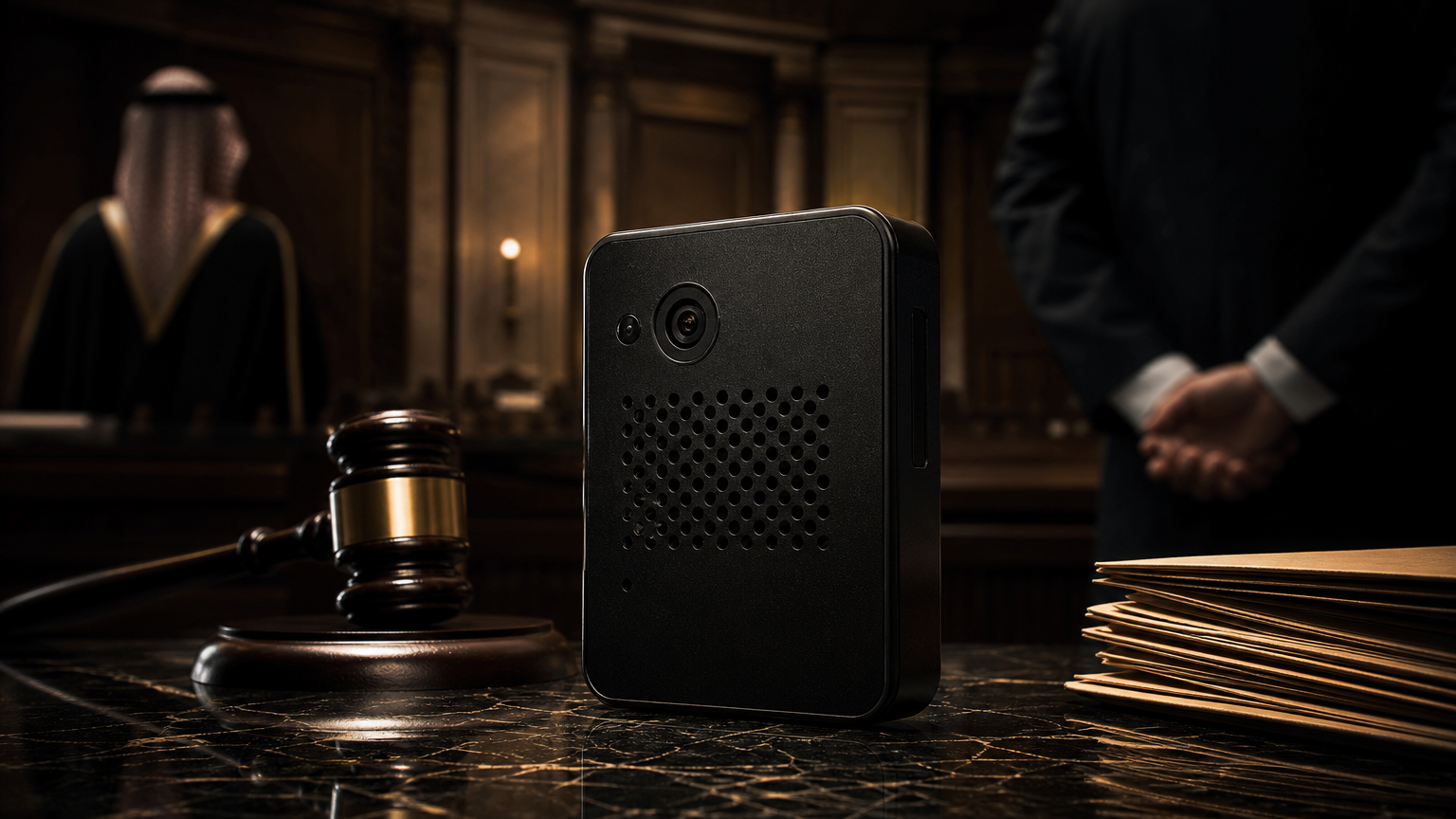
A workplace bugging allegation becomes something larger
The case against former OpenAI engineer Abdulrahman Alfozan has taken a sharper geopolitical turn. Prosecutors now say the 35-year-old Saudi national, accused of planting a recording device in an executive conference room at OpenAI’s San Francisco offices, appeared to have received “considerable support” from the Saudi government while pursuing opportunities in Saudi Arabia . That does not mean a court has found Saudi state direction, nor that prosecutors have publicly proved espionage. It does mean the case is no longer just about a suspicious device found behind office hardware.
According to the detention filing described in current reporting, prosecutors allege that Alfozan had frequent communications with an unnamed member of the Saudi royal family, and that a Saudi military official paid for a one-way plane ticket for his wife and young son to return to Saudi Arabia after his arrest . The same filing was submitted as prosecutors asked a federal judge in San Francisco to keep him in custody before trial, arguing that he posed a flight risk .
The charge itself remains narrower than the national-security atmosphere around it: Alfozan has been charged with using, or attempting to use, a device to intercept oral communications, an offense that carries a maximum possible sentence of five years if convicted . He is presumed innocent, and the allegations have not been tested at trial.
What prosecutors say happened inside OpenAI
The central allegation is that Alfozan plugged a recording device into the back of a television in an executive conference room at one of OpenAI’s San Francisco buildings . OpenAI previously said it discovered the device on September 30 and referred the matter to the FBI . Prosecutors say meetings involving government officials took place in that room around the time the device was installed, adding to the sensitivity of the alleged conduct .
The government’s detention memo frames the room as more than an ordinary meeting space. Prosecutors said the device was allegedly meant to capture sensitive discussions involving senior OpenAI personnel, executives, high-level business counterparts and government officials . For an AI company whose research, product strategy and government relationships are strategically important, that distinction matters: a conversation can reveal priorities, vulnerabilities or policy commitments even if no model weights, source code or customer data are copied.
The new Saudi-linked details deepen the stakes. Reporting on the filing says Alfozan communicated with a Saudi royal throughout 2025 and 2026, with the most recent contact on October 5, four days before his arrest . Prosecutors said the royal discussed a Saudi AI initiative and sought to recruit him for it; in one May 2026 exchange, the royal wrote, “Saudi needs you more then the US,” and Alfozan replied “100” . The filing does not say that the royal directed Alfozan to install the device or steal information .
That caveat is critical. The difference between “state-linked contacts” and “state-directed operation” is legally and politically significant. Prosecutors appear to be using the Saudi contacts to argue flight risk, national-security sensitivity and motive, not to announce a proven espionage conspiracy.
Flights, family and the detention fight
The immediate legal question is whether Alfozan should remain detained while the case proceeds. Prosecutors say he was scheduled to travel to Riyadh during a planned two-month parental leave, and that his wife told investigators she and their son planned to move permanently to Saudi Arabia, with Alfozan eventually intending to join them . They also say the Saudi government, and then a Saudi military member, helped arrange travel for his wife and infant son after his arrest disrupted an earlier family trip .
That is the prosecution’s picture: a defendant with Saudi government support, overseas opportunities, family relocation plans and access to a country that does not have a straightforward extradition path for U.S. prosecutors . The government says the investigation remains active and that additional charges could be brought .
The defense is presenting a different frame. Alfozan’s lawyer has sought release under conditions including home detention, GPS monitoring and a co-signed bond, and has argued that nationality is not evidence of flight . Defense counsel says the planned travel was for family and immigration reasons, and that the Saudi Consulate General told U.S. Pretrial Services in writing that it would not issue travel documents to Alfozan during release . In other words, the defense is trying to separate a Saudi family and professional background from an inference that he would flee.
Both narratives can coexist at this stage because a detention hearing is not a trial. The judge is weighing risk: whether any conditions can reasonably assure Alfozan’s appearance in court and protect the community. The court does not need to decide every factual dispute about motive in order to decide custody.
Why this matters for AI labs
The case lands in a moment when frontier AI companies increasingly resemble strategic infrastructure. Their most sensitive assets are not only code repositories and model weights. They also include internal roadmaps, deployment timelines, safety assessments, government discussions, partnership negotiations, hardware plans and the tacit knowledge of employees who know what is coming next.
That is why an alleged recorder in a conference room can matter even without proof that source code was taken. Executive conversations may expose what a company believes it can do, what it fears, which governments it is briefing and which commercial partners it is courting. For a foreign government seeking advantage in AI, that type of information could be useful even if it falls short of technical theft.
The OpenAI case also underscores the uncomfortable overlap between personnel vetting, physical security and national security. Traditional startup security often focused on laptops, badges and cloud permissions. Frontier AI security now has to assume that meeting rooms, visitor flows, internal calendars, personal devices, lab hardware and employee travel patterns may all be part of the threat surface.
That does not mean every international employee is suspect. It means controls must be evidence-based and role-based, not nationality-based. The relevant questions are practical: who can enter rooms where sensitive meetings occur; whether unauthorized devices are detected quickly; how meeting spaces are swept; whether access rights match job duties; how anomalous behavior is escalated; and how companies avoid turning legitimate dissent or personal travel into suspicion.
The zero-trust office
The old “zero trust” idea was mostly about networks: never assume a device or user is safe just because it is inside the perimeter. The lesson here is that AI labs may need the same principle for physical spaces. A television, USB port, conference table, charger or development board can become part of an information pathway if nobody is responsible for continuously questioning why it is there.
For OpenAI and its peers, the incident is a reminder that protecting AI assets is no longer a purely digital problem. A lab may have strong encryption, strict code access and advanced monitoring, yet still face risk from a cheap device hidden in a room where strategic decisions are spoken aloud. The office itself becomes part of the security architecture.
The Saudi angle raises the pressure further. Prosecutors have not publicly shown that Riyadh ordered the alleged recording, and responsible analysis should not jump beyond the filing. But the reported contacts with a royal family member, the alleged travel support and the recruitment discussions place the case in a more serious category than ordinary employee misconduct . It is now a test of how courts, companies and governments handle AI-era insider threats when personal ambition, state interest and frontier technology intersect.
For the AI industry, the message is blunt: model security cannot stop at the model. It has to include the people, the rooms, the calendar invites, the hardware ports and the assumptions that make an office feel safe.
Sources from the last 72 hours
- [1]OpenAI bugging suspect was in frequent contact with a Saudi royal, prosecutors sayOct 19, 2026, 2:00 AM
- [2]Alfozan in contact with Saudi royal before arrestOct 18, 2026, 2:00 AM
- [3]Ex-OpenAI employee accused of planting device appears to have Saudi backing, US prosecutors sayOct 19, 2026, 4:19 PM
AI-generated article based on recent web research, then preserved as a dated editorial snapshot.
Comments
Be the first to comment.