
Daily Podcast full article
TSMC profit jumps 69% as AI chip bottleneck tightens
TSMC’s latest quarterly profit surge underlines a simple but uncomfortable truth for the AI economy: the most valuable chip designs still need one manufacturer’s most advanced fabs, packaging lines and capital budget. The 69% jump strengthens the growth case for Taiwan Semiconductor Manufacturing, but it also makes the industry’s dependence on a single supplier harder to ignore.
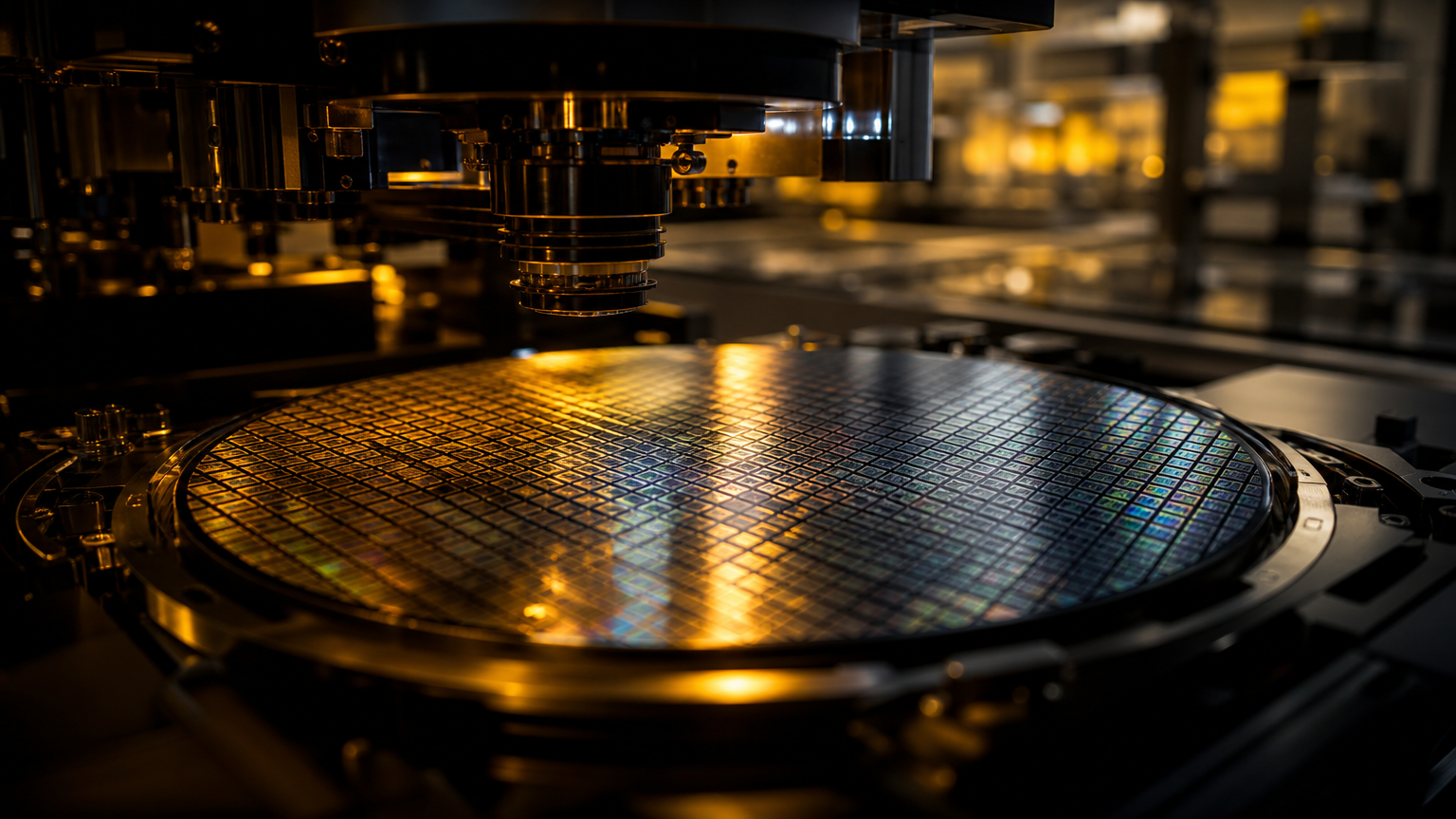
A record quarter from the factory behind AI
TSMC’s profit jumps 69%, and the headline matters because the company is not just another beneficiary of the AI boom; it is the production layer that many of the boom’s most visible winners need in order to ship. In the quarter ended September 30, Taiwan Semiconductor Manufacturing reported the strongest quarter in its history, with revenue of about $46.7 billion and net profit up 68.7% year over year, a gain widely rounded to 69% .
That scale gives the result a different meaning from a normal earnings beat. Nvidia, Apple, Broadcom and other chip designers can write the architecture, tune the accelerators and sell the systems, but they still need advanced manufacturing capacity to turn those designs into high-performance silicon . TSMC’s quarter therefore reads less like an isolated corporate win and more like a status update on the global AI supply chain.
The numbers were not only large; they were efficient. Net profit grew faster than revenue, which suggests that TSMC’s expensive factories are being used at very high intensity . For a foundry, that operating leverage is the prize: once a fab is built and equipped, fuller utilization can turn incremental demand into disproportionately strong earnings. In silicon terms, 69% is a serious overclock.
Why AI demand flows through TSMC
The reason investors keep returning to TSMC is simple: the company sits where design ambition meets manufacturing reality. The most advanced AI processors require leading-edge process technology, massive yield discipline and sophisticated packaging; those capabilities cannot be quickly replicated by customers that mostly design chips rather than fabricate them .
That is why TSMC’s customer list is both a strength and a risk. It gives the company exposure to much of the AI buildout without forcing it to bet on a single end-user product, but it also ties the investment case to the capital spending plans of a relatively concentrated group of large technology companies . If those companies continue building data centers and ordering custom chips, TSMC’s fabs remain scarce infrastructure. If their spending slows, the same concentration becomes a vulnerability.
Recent commentary around the quarter suggests the demand signal remains strong. TSMC has guided for fourth-quarter revenue of $52.3 billion to $54.3 billion, and one current analysis noted that the midpoint would imply roughly 58% year-over-year growth . Another report said the company now expects full-year 2026 revenue growth of about 44% . Those figures are not just about more chips; they reflect an AI cycle that is spreading across accelerators, CPUs, networking components and packaging capacity.
High-performance computing made up 68% of TSMC’s third-quarter revenue, reinforcing how directly AI and data-center demand are shaping the company’s growth profile . The company’s advanced technologies also dominate its wafer mix: processes at 7 nanometers and below accounted for 79% of wafer revenue, while 2-nanometer technology already contributed 8% . That is the manufacturing bottleneck in numerical form.
The bottleneck is becoming broader
The story is not only about wafer fabrication. Advanced packaging has become a second choke point because AI chips increasingly depend on connecting multiple components into larger, power-hungry systems. One current analysis stressed that TSMC’s edge is not merely a leading process node, but the combination of manufacturing and packaging that customers need together .
That combination is difficult for rivals to match. A competitor may develop a promising process, but winning the largest AI customers also requires volume, yields, integration and the ability to plan capacity years ahead. That is why the 69% profit jump reinforces TSMC’s strategic importance to both customers and governments: it is proof that the world’s AI spending is hitting a real industrial constraint.
The company is responding with enormous investment. TSMC has reiterated a 2026 capital expenditure budget of $60 billion to $64 billion, and its chief financial officer has indicated that spending from 2026 through 2028 should run significantly higher than in the prior three years . Another current report noted that TSMC has nearly 20 fabs in progress worldwide and that its 2-nanometer capacity is expected to more than double in 2027 .
That expansion is a bullish signal, but it is also a warning label. The AI boom is no longer an asset-light software story. It requires factories, power, land, machines, water, clean rooms, packaging lines and multi-year financial commitments. TSMC is monetizing scarcity today by building more supply for tomorrow.
Margins show both power and pressure
The quarter also showed the first signs of the cost side of the boom. Gross margin reached 66.4%, an exceptionally high level for a manufacturer, but it was down from 67.7% in the prior quarter as the 2-nanometer ramp began . That matters because new process nodes are expensive before they are fully mature: yields start lower, equipment costs are high and depreciation begins before every line reaches optimal utilization.
Overseas expansion adds another layer of pressure. One current analysis said management expects overseas fabs to reduce gross margin by about 3 to 4 percentage points in the latter part of the coming five-year period . That is the price of geographic diversification. Customers and governments want more advanced capacity outside Taiwan, but duplicate supply chains and overseas construction do not come with Taiwan-level cost structures overnight.
The equipment cycle adds further complexity. TheStreet reported that TSMC’s larger spending pledge did not automatically lift chip-tool stocks; instead, equipment makers sold off even as TSMC promised heavier investment . The reason is subtle but important: if markets worry about financing conditions, AI infrastructure returns or whether capacity additions are already priced in, a bigger capital budget can look like a larger burden rather than an immediate revenue guarantee for suppliers.
The investment case: growth with concentrated risk
For investors, TSMC’s 69% profit jump strengthens the growth argument. The company has scale, pricing power, technological leadership and a central role in AI hardware. Motley Fool’s current analysis argued that TSMC remains one of the clearest ways to invest in the AI buildout because it benefits from the broader arms race in compute rather than from only one chip designer’s product cycle .
But the same quarter also clarifies the risk. TSMC is indispensable because so much advanced chip demand runs through it. That means the industry’s risk is also concentrated there: execution risk in new nodes, capex risk, customer concentration, margin dilution from overseas fabs and the geopolitical exposure of having the center of gravity still in Taiwan .
The market’s hesitation after the results suggests investors understand that distinction. A record quarter can prove demand is real, but it cannot prove that every future AI infrastructure dollar will earn an attractive return. Nor can it remove the political pressure attached to a company whose factories have become critical infrastructure for the United States, Taiwan, Japan and the wider technology ecosystem.
The takeaway
TSMC’s 69% profit jump is a milestone for the AI economy. It shows that demand for advanced chips is still translating into record earnings at the manufacturing bottleneck. It also shows that the bottleneck is expensive to widen.
The result reinforces TSMC’s unique position: not the loudest AI brand, but one of the hardest to replace. For chip designers, it is a manufacturing partner. For governments, it is strategic infrastructure. For investors, it is both a growth story and a concentration risk. The quarter’s message is clear: the AI boom still runs hot, and TSMC is where much of that heat becomes silicon.
Sources from the last 72 hours
- [1]Taiwan Semiconductor’s (TSM) Profit Rose 69% Last Quarter. Is the Stock Still Cheap?Oct 18, 2026, 4:34 PM
- [2]Taiwan Semiconductor Just Proved Why It's a Top AI InvestmentOct 18, 2026, 10:23 PM
- [3]Chip toolmakers can’t catch a break, even as TSMC spends moreOct 18, 2026, 1:17 PM
- [4]Taiwan Semiconductor Supply Struggles To Keep Pace With Explosive DemandOct 18, 2026, 2:53 PM
- [5]TSMC’s (TSM) Record AI Demand Comes With a Growing CostOct 18, 2026, 4:40 PM
AI-generated article based on recent web research, then preserved as a dated editorial snapshot.
Comments
Be the first to comment.