
Daily Podcast full article
Tenstorrent lands $1.5B Series E
Tenstorrent’s $1.5 billion Series E gives the Jim Keller-led AI compute company fresh scale at a $6.2 billion post-money valuation, reinforcing investor appetite for alternatives to Nvidia’s accelerator ecosystem and for customers that want more control over chips, servers and software.
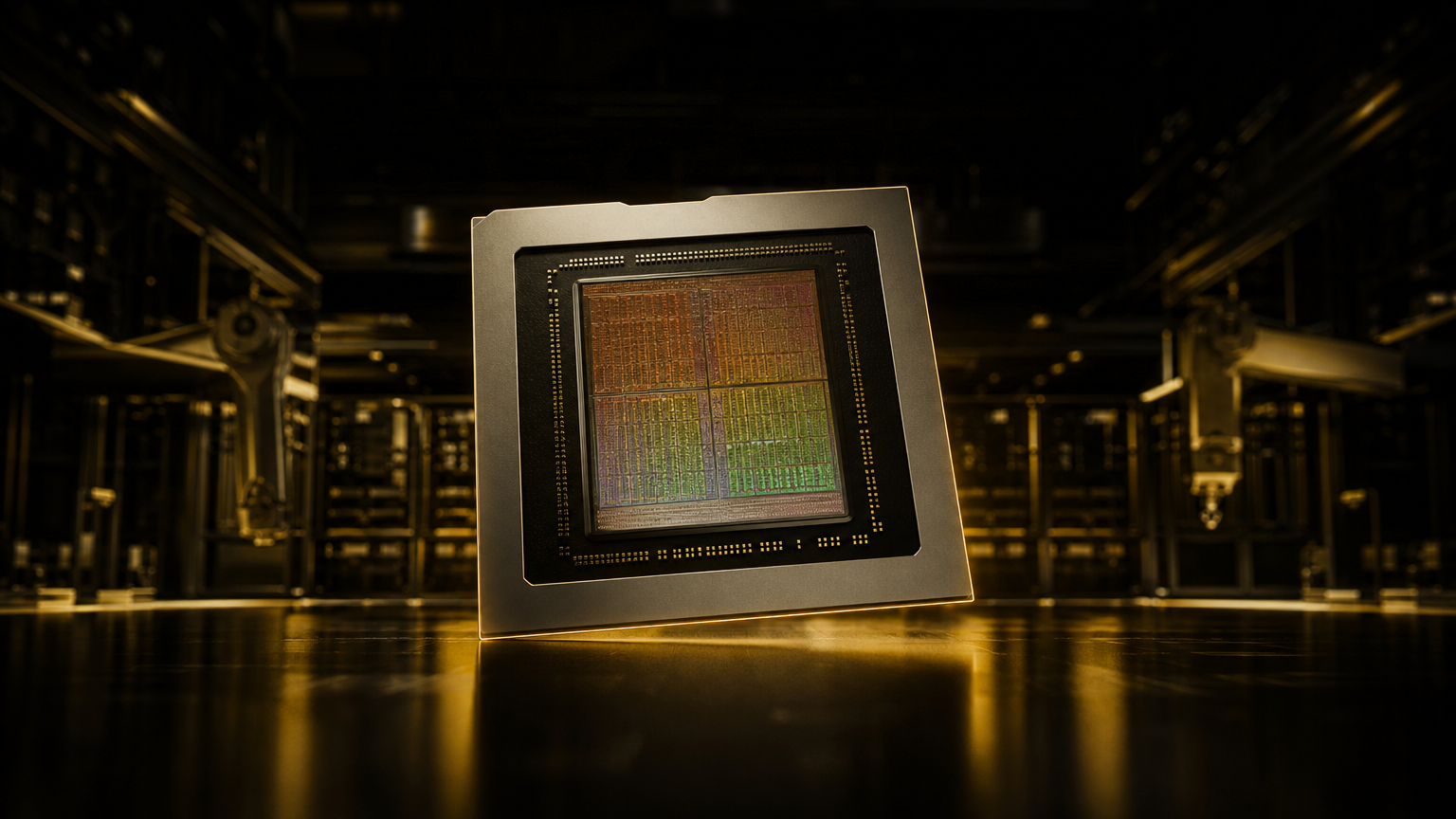
The round: a billion-dollar vote for non-Nvidia AI compute
Tenstorrent has closed a $1.5 billion Series E financing at a $6.2 billion post-money valuation, one of the largest recent checks written for an AI chip company trying to widen the market beyond Nvidia’s GPU-centered stack . The round was led by Trace Capital and Innovation X, with participation from investors including Agostinelli Group, ARK Invest, Cadence Ventures, Eclipse, Fidelity Management & Research Company, Maverick Silicon, Morgan Stanley, Protagonist, Sandisk, T. Rowe Price, Tether Investments, Troluce Capital, Virtu Financial and XTX Markets .
The basic message is simple: Tenstorrent is no longer being financed like a speculative chip design lab. It is being financed like a company expected to manufacture, deploy and support AI compute infrastructure at commercial scale. The company says the capital will fund volume manufacturing and global commercial expansion as chip designers, sovereign AI buyers and inference platforms seek to own more of their AI compute . Axios reported that the new money will be used to scale manufacturing, while noting that Tenstorrent has expanded from chipmaking into servers .
That shift matters because AI hardware economics are now as strategic as model architecture. Training and inference demand have created a market where customers do not only ask which chip is fastest. They ask who controls the roadmap, how much the software stack locks them in, whether systems can be bought in smaller or customized configurations, and whether supply can be secured without depending on one dominant supplier. Tenstorrent’s Series E is a financing event, but it is also a market signal: investors still believe there is room for architectural disruption, not just marginally cheaper accelerators.
What Tenstorrent says it will build next
Tenstorrent says the funding will help it deploy Galaxy servers at scale, serve open-weight models across large language models and video generation, and advance the AI and CPU intellectual property it licenses to customers designing their own silicon . The company describes its offering as a full-stack compute business, ranging from a single card or workstation to racks, superclusters and custom IP .
That breadth is central to the pitch. In the Nvidia ecosystem, customers often buy into a deeply integrated hardware-and-software platform. Tenstorrent is trying to tell a different story: one architecture, sold at multiple levels, with enough openness and customization to appeal to enterprises, cloud challengers, sovereign AI projects and chip designers. Jim Keller, Tenstorrent’s chief executive, framed the company’s approach around open and scalable compute in the company’s announcement .
The Galaxy server line is especially important because it moves Tenstorrent from being viewed mainly as a chip vendor into the higher-value systems layer. Reuters reported that the company plans to scale production of Galaxy servers that combine dozens of Tenstorrent AI chips for uses including chatbots, coding assistants and video generators . Data Center Dynamics reported that Galaxy servers began shipping in April 2026 and include 32 RISC-V Blackhole processors with Tensix AI cores, delivering 23 petaflops of FP8 compute performance .
Those system-level details matter because AI buyers increasingly purchase outcomes: throughput, latency, deployability, availability and total cost. A chip alone is not enough. The winning vendor must provide boards, servers, networking assumptions, compilers, runtimes, model support and field engineering. Tenstorrent’s Series E gives it more room to turn architectural ambition into deployable infrastructure.
The independence angle
The financing also clarifies Tenstorrent’s near-term strategic path. Axios reported that the startup was courted earlier in 2026 by Intel and Qualcomm but is choosing to remain independent for now . TechCrunch similarly reported that the new round followed earlier acquisition interest from Intel and Qualcomm at valuations of as much as $5 billion . Quartz, citing Bloomberg, reported that Tenstorrent held discussions with Intel, Qualcomm and other industry players about a possible sale while also pursuing new backers .
That context changes how the $6.2 billion post-money valuation should be read. This was not only a company raising money because it needed capital. It was a company choosing funding over a sale, at least at this stage. TechCrunch reported that the round more than doubled Tenstorrent’s late-2024 valuation of $2.6 billion . Reuters also said the new valuation more than doubled the level from December 2024 .
For employees and customers, independence can be part of the product promise. A startup absorbed by a larger chipmaker may gain distribution and balance-sheet support, but it can also become tied to the parent company’s priorities. Remaining independent gives Tenstorrent more freedom to court cloud providers, sovereign projects, enterprise customers and chip designers that may not want their AI roadmap mediated by Intel, Qualcomm, Nvidia, AMD or Arm.
Why investors are paying attention
Tenstorrent sits at the intersection of three large themes: inference growth, open-weight models and hardware sovereignty. The first theme is straightforward. As AI moves from experimentation to production, more of the spending shifts toward serving models repeatedly and cheaply. TechCrunch described Tenstorrent as a chip startup focused on inference, and said the fresh capital will go toward scaling chips tailored for serving open-weight AI models and video generation .
The second theme is model flexibility. Open-weight models give enterprises, governments and developers more room to tune, host and control AI systems. Tenstorrent says developers can run frontier models locally and enterprises can deploy models on-premises with its open-source software stack . If that promise holds, it speaks directly to customers concerned about cloud concentration, data control and recurring infrastructure costs.
The third theme is sovereignty. Tenstorrent’s own announcement identifies sovereign players among the buyers moving to own their AI compute . That phrase is doing a lot of work. Governments and national champions increasingly view AI infrastructure as a strategic asset, not just an IT expense. For those buyers, dependence on a single foreign chip supplier, a single cloud, or a single proprietary software stack can become a political and operational risk.
The RISC-V and licensing story
Tenstorrent’s use of RISC-V is not just branding. Reuters described RISC-V as an open-source chip architecture that lets companies design processors without license fees and reduce dependence on proprietary chip ecosystems such as Arm . Tenstorrent develops AI chips and software using RISC-V, and it also licenses designs to organizations that want to build their own silicon .
That makes the company unusual among AI hardware startups. Many challengers want to sell accelerators directly. Tenstorrent also wants to sell IP, systems and software. Axios noted that the company has worked to take share from Nvidia partly by licensing designs to companies that want their own AI chips . Data Center Dynamics also reported that Tenstorrent is developing a RISC-V CPU and licenses its designs to other organizations .
This licensing model could be especially attractive for large customers that want differentiation. A hyperscaler, sovereign fund-backed AI platform, automotive company or industrial customer may not want an off-the-shelf accelerator if it can justify a custom design. Tenstorrent’s challenge is to make customization economically and technically practical without losing the scale benefits that come from a common architecture.
The Nvidia question
No Tenstorrent story can avoid Nvidia. The $1.5 billion Series E is a bet that the AI accelerator market will not remain a one-company story. Reuters framed Tenstorrent’s technology as a way to reduce dependence on proprietary ecosystems, while Quartz reported that Nvidia, AMD and Broadcom dominate the chips behind AI software even as startups try to compete .
The realistic question is not whether Tenstorrent replaces Nvidia everywhere. It will not. Nvidia’s advantage includes GPUs, networking, software, developer mindshare, cloud availability and a massive installed base. The more interesting question is whether parts of the market become large enough for specialized alternatives: inference clusters for open-weight models, on-prem systems for enterprises, sovereign AI installations, and customized silicon programs for companies that want control.
Tenstorrent’s financing suggests that investors see those niches not as small side markets but as the beginning of a broader compute diversification cycle. If AI infrastructure spending keeps rising, even a modest shift away from the dominant stack can support large independent companies.
What comes next
The next proof point is execution. The company has fresh capital, a higher valuation, a prominent CEO and a narrative that fits the moment. But AI hardware is unforgiving. Customers will judge Tenstorrent on software maturity, supply reliability, price-performance, energy efficiency, deployment support and model compatibility. A large Series E buys time and capacity; it does not buy automatic adoption.
Still, the round is one of the clearest signs that the market wants credible alternatives. Tenstorrent is positioning itself not merely as another accelerator startup, but as a compute-platform company spanning chips, systems, software and IP. If it can convert the $1.5 billion raise into reliable Galaxy deployments and broader customer wins, the Series E may be remembered as the moment the silicon rebellion moved from promise to production.
Sources from the last 72 hours
- [1]Tenstorrent Announces a $1.5B Series E at a $6.2B valuationOct 19, 2026, 2:00 AM
- [2]Tenstorrent raises $1.5 billion for AI computeOct 19, 2026, 2:00 AM
- [3]AI chip startup Tenstorrent more than doubles its valuation to $6.2 billion in funding roundOct 19, 2026, 9:42 AM
- [4]Tenstorrent hits $6.2B valuation to scale open-weight AI chipsOct 19, 2026, 8:37 PM
- [5]AI chip startup Tenstorrent raises $1.5bn at $6.2bn valuationOct 19, 2026, 2:00 AM
- [6]Tenstorrent raised $1.5 billion, more than doubling its valuation to $6.2 billionOct 19, 2026, 2:00 AM
AI-generated article based on recent web research, then preserved as a dated editorial snapshot.
Comments
Be the first to comment.