
Daily Podcast full article
BioWare closes after 30 years as EA cancels the next Mass Effect
Electronic Arts has closed BioWare, ending more than three decades of role-playing history and stopping early development on the next Mass Effect. The shutdown, confirmed in EA’s own restructuring memo and followed by reports of roughly 400 job cuts across the company, turns one of gaming’s most recognizable creative studios into a warning about consolidation, debt and the shrinking tolerance for long, expensive AAA RPG cycles.
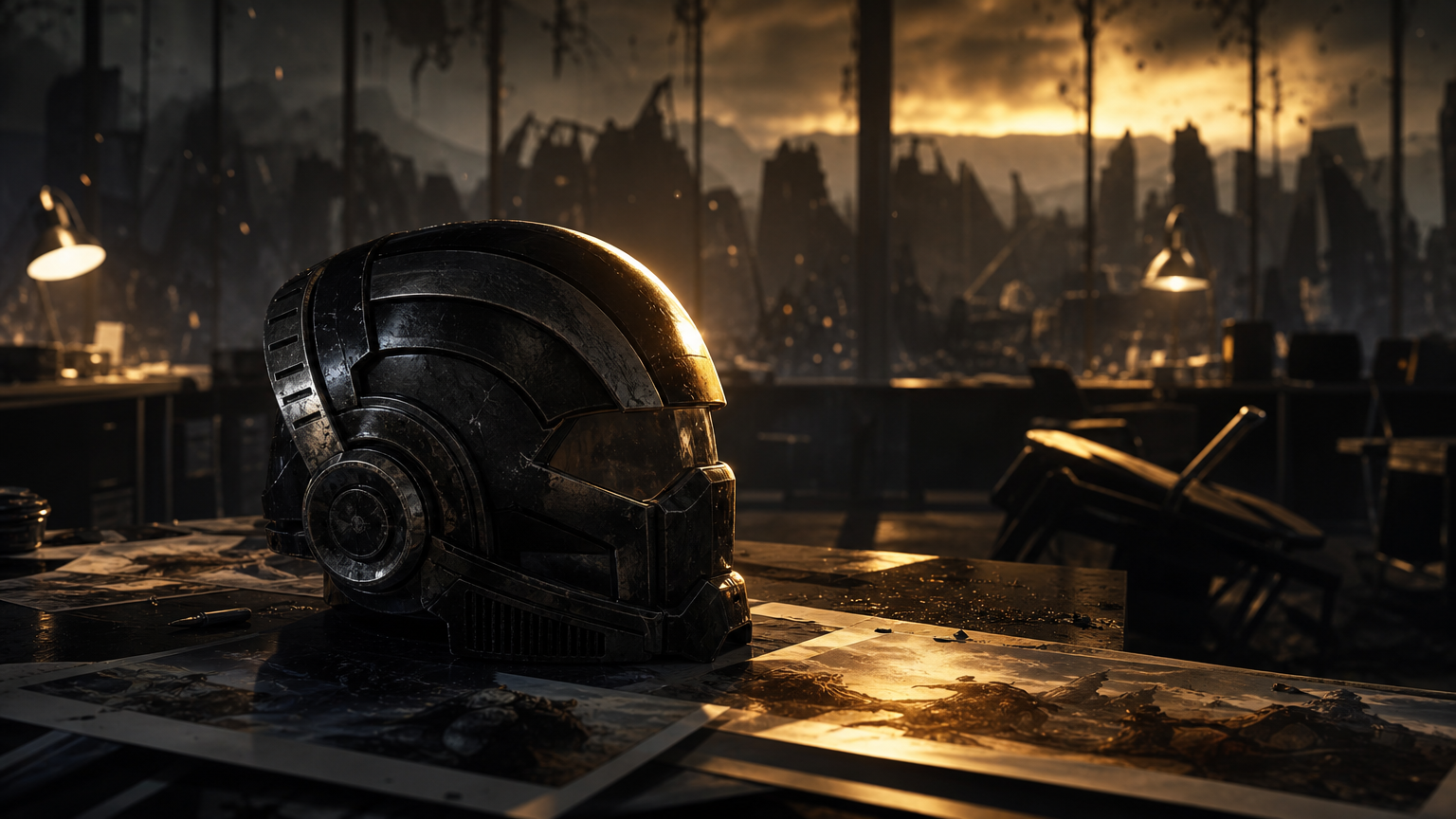
The end of BioWare is now official
BioWare closes after more than 30 years, and the next Mass Effect project is not going forward. Electronic Arts confirmed on October 21 that it had decided “not to move forward” with the early-development Mass Effect work, and that the decision means “closing the studio and our Edmonton workspace” . The statement, signed by EA executives Cam Weber and David Tinson, framed the move as part of a wider effort to concentrate teams, technology and investment behind fewer, larger priorities .
Bloomberg reported the same day that EA will cut around 400 jobs, about 3 percent of its workforce, including roughly 50 positions at BioWare . The Los Angeles Times version of the Bloomberg report added that the cuts follow EA’s move to go private in August after a $55 billion leveraged buyout led by Saudi Arabia’s Public Investment Fund, with Silver Lake and Affinity Partners also part of the transaction . AP later summarized the announcement in stark terms: BioWare, the Canadian studio behind Mass Effect and Dragon Age, is shutting down after more than three decades, and the upcoming Mass Effect game has been canceled .
That makes this more than a studio closure. It is the formal end of the company that helped define the modern narrative RPG, from Baldur’s Gate and Neverwinter Nights to Star Wars: Knights of the Old Republic, Dragon Age and Mass Effect . For players, the news lands like a final save file with no reload option. For the industry, it is a reminder that even famous brands can be erased when development timelines, debt service and private-market return expectations collide.
What EA says it is doing instead
EA’s memo does not present BioWare’s closure as an isolated failure. It describes a portfolio reset built around three priorities: deepening EA’s core franchises, expanding into new platforms and markets, and transforming the business through sports-linked interactive experiences . In practical terms, that means sports, shooters and selected action-adventure games survive the cut, while BioWare’s slow-burn RPG work does not.
The company said Battlefield 6 had been a success and that EA would use its learnings and technology to build a broader shooter portfolio . EA also said Respawn and DICE would collaborate on a future project, while Apex Legends would continue receiving heavy investment through new modes and other experiences . On the action-adventure side, EA pointed to Marvel’s Iron Man and the next Star Wars Jedi game as major projects still moving ahead .
The contrast with BioWare is sharp. EA described the next Mass Effect as a small-team, early-development project and said it would not advance . In other words, the franchise was not killed after a disastrous launch or a public beta. It was stopped before the most expensive phase of production, the point at which a modern AAA RPG begins consuming hundreds of developers, years of iteration and a marketing campaign big enough to compete with the rest of the entertainment market.
That is what makes the decision especially revealing. Mass Effect remains one of EA’s best-known story franchises, but recognition alone was not enough. In the new EA structure, a beloved RPG brand without a near-term, scalable return appears to have lost to franchises that can be monetized more frequently, updated continuously or attached to annualized sports ecosystems.
The Saudi-led buyout changed the background pressure
The timing matters. Bloomberg reported that EA went private in August after a $55 billion leveraged buyout led by Saudi Arabia’s Public Investment Fund, and that the deal placed about $18 billion in debt on EA’s books . The Los Angeles Times report said EA had previously told investors it planned to save up to $700 million, partly by cutting research and development costs . VGC reported that EA’s sale to the Saudi-led investor group had completed two months before the BioWare shutdown, and connected the closure to the new cost discipline around the private company .
EA’s public memo avoids the language of debt and buyout pressure. It speaks instead about focus, growth, player opportunity and “hardest choices” . But the pattern is familiar: after a major leveraged transaction, management is pushed to identify projects that are expensive, uncertain or slow to produce returns. A Mass Effect sequel in early development checks all three boxes.
This does not mean BioWare’s struggles began this week. AP noted that Anthem, BioWare’s 2019 attempt to move into multiplayer shooters, failed to build the loyal audience that sustains major online games . AP also noted that Mass Effect: Andromeda and Dragon Age: The Veilguard drew mixed or disappointing reactions from parts of the audience . PC Gamer similarly described Anthem as a failed live-service detour and noted that The Veilguard had underperformed, according to EA .
Still, recent creative turbulence and corporate restructuring are different forces. A studio can survive a bad game if its owner wants to reinvest in its identity. BioWare did not get that chance this time. The new calculation seems to be that a long-cycle RPG studio, even one with BioWare’s history, no longer fit the portfolio EA wants to build.
Why BioWare mattered
BioWare’s importance cannot be measured only by sales. The studio was founded in 1995 and acquired by EA in 2007 . In the years before and after that acquisition, it became synonymous with dialogue trees, party relationships, moral choices and worlds shaped by player identity. The studio’s best games made players feel that a role-playing game was not just a combat system with lore attached, but a network of loyalties, betrayals and personal consequences.
Mass Effect was the purest expression of that promise. Commander Shepard became not just a protagonist, but a vessel for player authorship: ruthless or diplomatic, loyal or pragmatic, romantic or solitary. Dragon Age brought that same sense of consequence into fantasy, turning origin stories, companions and political choices into the spine of the experience. Even when BioWare stumbled, fans kept returning because the studio had trained them to expect characters worth arguing about and endings worth debating.
That is why the closure hurts beyond the loss of jobs and intellectual property momentum. BioWare represented a particular AAA bet: that big-budget games could be cinematic and choice-driven, not only competitive, seasonal or endlessly replayable. Its shutdown suggests that the market for that kind of game has become harder to justify inside the largest publishers, especially when those publishers are carrying new debt and chasing steadier revenue.
The Mass Effect cancellation is the symbolic blow
EA’s memo is careful to say that early development on the next Mass Effect project is ending . It does not say the Mass Effect intellectual property is being sold, retired forever or legally abandoned. But in practical terms, the cancellation removes the known next chapter, and BioWare’s closure removes the studio most associated with the franchise.
That distinction matters. EA may still own Mass Effect and could one day assign it to another team. But a Mass Effect made without BioWare would be a different proposition. Franchises can outlive studios, but identity is harder to transfer than trademarks. The Normandy, the Citadel and the Paragon/Renegade legacy carry BioWare’s design DNA, and players know it.
The cruel irony is that Mass Effect was always about impossible choices dressed up as dialogue options. Save one squadmate or another. Cure a species or preserve strategic leverage. Trust synthetic life or destroy it. Now the franchise itself has met the kind of corporate decision screen no player can talk their way out of: cancel the project, close the studio, redeploy the capital.
A warning for AAA RPGs
BioWare’s closure should worry anyone who cares about large-scale single-player RPGs. The genre is not dead; successful role-playing games still exist, and some have reached enormous audiences. But inside a publicly traded or newly private megacompany, the question is not simply whether a game can succeed. It is whether that success is predictable enough, fast enough and large enough to justify the risk.
Long-cycle RPGs are expensive because they are content-heavy. They require writing, cinematic design, branching quests, world-building, animation, voice work, localization and systems that must accommodate player choice. They are also difficult to convert into the recurring revenue models that publishers increasingly prefer. A shooter can sell battle passes. A sports game can reset its economy annually. A narrative RPG usually has to land as a complete, coherent work.
That was BioWare’s art, and increasingly its business problem. EA’s decision indicates that, after the buyout, the company would rather place bigger bets on shooters, sports, Apex, Battlefield, Star Wars Jedi and Iron Man than continue funding BioWare’s uncertain road to another Mass Effect . For fans, that is a cultural loss. For developers, it is a labor-market shock. For publishers, it is a case study in what happens when the financial architecture around games becomes less patient than the games themselves.
The final dialogue option
There will be tributes, anger and probably years of speculation about whether Mass Effect or Dragon Age can return elsewhere inside EA. But the central fact is already settled: BioWare is closing, and the next Mass Effect is canceled . The studio that taught a generation to pause before choosing a line of dialogue has reached an ending chosen far above the player’s head.
Commander Shepard saved the galaxy more than once. BioWare could not save itself from the economics of modern consolidation. This time, the dialogue wheel had no blue or red escape route, only the unwinnable option.
Sources from the last 72 hours
- [1]Building EA's Next ChapterOct 21, 2026, 2:00 AM
- [2]Electronic Arts to Shed 400 Jobs, Shut Down BioWare to Cut CostsOct 21, 2026, 7:04 PM
- [3]Electronic Arts to cut 400 jobs and shut down BioWare, studio behind ‘Mass Effect’Oct 21, 2026, 8:21 PM
- [4]EA is closing BioWare and cancelling the next Mass EffectOct 21, 2026, 8:10 PM
- [5]RIP BioWare: EA has shut down the legendary RPG developerOct 21, 2026, 2:00 AM
- [6]Video game developer BioWare shuts down, next ‘Mass Effect’ canceled amid broader layoffs at EAOct 22, 2026, 3:10 AM
AI-generated article based on recent web research, then preserved as a dated editorial snapshot.
Comments
Be the first to comment.