
The real bottleneck is getting closer to the reactor
Commonwealth Fusion Systems has become one of the clearest examples of a fusion company moving from physics demonstration toward industrial execution. Its latest step is an $85 million proposed federal R&D award under the CHIPS and Science Act, signed as a letter of intent with the U.S. Department of Commerce . The headline sounds like another fusion funding story, but the target is narrower and more revealing: chips, controllers and power electronics tough enough to work in and around a fusion power plant.
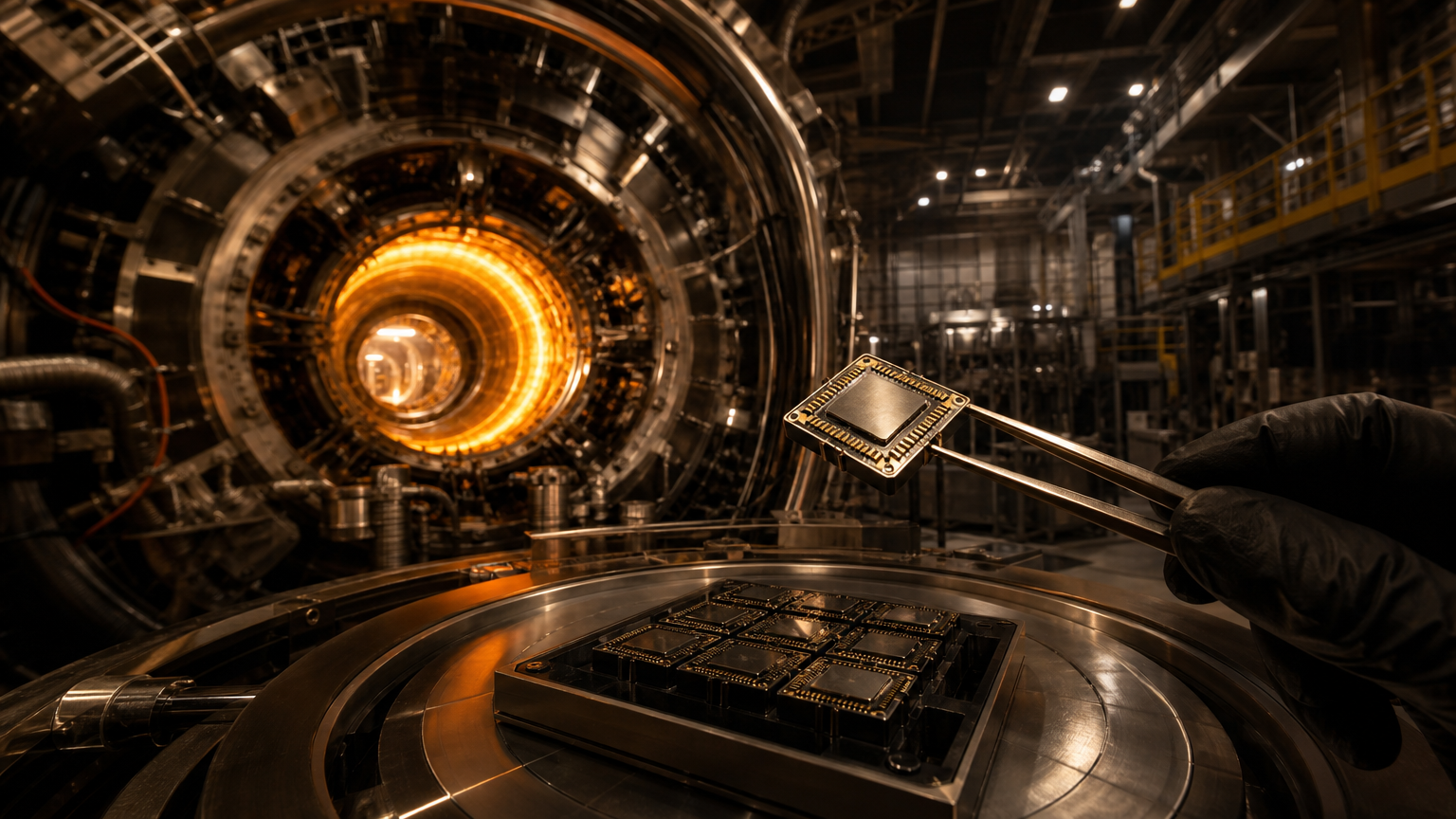
That matters because fusion is not just a plasma problem. A reactor has to heat fuel, power magnets, read sensors, control fast-changing conditions and keep doing all of that in an environment that punishes ordinary electronics. Commerce described the CFS award as funding for semiconductors used in radio-frequency plasma heating, power electronics, embedded electronics for fusion diagnostics and radiation-hardened electronics . In other words, the money goes to the nervous system and power muscles of future fusion plants, not to the plasma chamber alone.
CFS said the proposed award will support semiconductor technologies important to its ARC power-plant roadmap, including artificial intelligence, next-generation radio-frequency power generators and a variety of power electronics . The company also framed the work as a way to bring more suppliers and partners into a fusion industrial base, which is a practical concern if fusion moves from one-off prototypes to fleets of plants .
What the $85 million is supposed to fund
The project list points to several unglamorous but critical systems. First, CFS wants to improve semiconductor technologies for robotic maintenance systems that could help ARC plants perform better . That is an important detail because commercial reactors will need maintenance concepts designed from the start for difficult access, activation, heat loads and tight operating schedules.
Second, the proposed work includes radio-frequency power generators, which are used to support plasma heating in commercial fusion systems . TechCrunch reported that CFS’s award will support next-generation radio-frequency generators used to heat fusion fuel, alongside advanced electronics for faster reactor control . These systems are not optional extras. If a fusion plant cannot inject power precisely, measure the plasma accurately and respond quickly, it cannot be operated like a dependable power station.
Third, the funding is meant to advance fast and embedded controllers for managing fusion plasma and power-plant systems at scale . Fast control is a quiet but central theme in fusion commercialization. A grid-connected plant must coordinate magnets, heat sources, diagnostics, cooling, protection systems and power conversion hardware under demanding conditions. The electronics have to be accurate, fast and resilient.
Fourth, CFS and Commerce both emphasize radiation-hardened electronics . Fusion environments create neutron fluxes and electromagnetic stresses that shorten component life and complicate maintenance. Better radiation tolerance could extend electronics lifetimes and reduce operating costs, according to TechCrunch’s summary of the award’s goals .
Why CHIPS money is going into fusion
The Commerce Department did not announce the CFS letter of intent in isolation. It was part of four letters of intent totaling up to $389 million for energy-related semiconductors and critical materials . The package includes up to $175 million for Helion, up to $85 million for CFS, up to $73 million for Vertical Semiconductor and up to $56 million for Sibelco . Reuters also reported the same $389 million package and noted that the federal government would receive minority, non-controlling and non-voting equity stakes as a condition of the awards .
That structure says a lot about how Washington is now treating power electronics. Commerce argued that semiconductors for control, conversion and delivery of power are foundational to modernizing the grid and supporting critical energy infrastructure . It also said better power converters can improve efficiency, strengthen grid stability and reduce thermal losses . Fusion happens to be one of the harshest test cases for that broader industrial push.
For CFS, the logic is straightforward. Commercial fusion plants would require bursts of power, high-current systems, precision controls and rugged sensors. If those components depend on fragile or foreign supply chains, the reactor business remains constrained even if the plasma physics works. Commerce’s decision to include CFS in a semiconductor package therefore signals that the government sees fusion not only as an energy technology, but also as a demanding customer for next-generation chips and power devices.
A letter of intent, not a blank check
The word “lands” should be read carefully. CFS announced a signed letter of intent for a proposed federal R&D award, not a fully completed final award agreement . Commerce used similar language, saying the companies have entered into letters of intent and that final awards would support R&D across power semiconductor devices, modules and materials . Reuters likewise described the department as planning awards and signing letters of intent .
That distinction matters. Letters of intent usually precede final terms, milestones, compliance requirements and disbursement schedules. The public announcements do not provide a detailed split of the $85 million across each CFS workstream, nor do they specify when every technical milestone must be reached. Investors, suppliers and competitors will therefore watch for definitive award documents and subsequent technical announcements.
Still, the direction is clear. CFS is trying to reduce the distance between fusion physics and manufacturable infrastructure. The company says its SPARC project is intended to generate net energy and its ARC program is aimed at commercial power plants . TechCrunch reported that CFS is aiming to turn on its SPARC reactor next year, while the chip award is intended to support the more durable electronics needed if fusion startups want to build many commercial plants rather than a single proof point .
The supply-chain signal
The most interesting part of the announcement may be the supply-chain message. CFS said the R&D effort is expected to catalyze a stronger industrial base and attract suppliers and partners to the fusion sector . Brandon Sorbom, CFS co-founder and chief science officer, wrote that the proposed funding would help both the U.S. chip and power-electronics industries while accelerating fusion’s path toward the electric grid .
That is a subtle shift in the fusion narrative. For years, the sector has been judged mainly by plasma milestones: temperature, confinement, magnetic-field strength and net-energy claims. Those still matter, but the CFS award highlights a second race: the race to industrialize everything around the plasma. The companies that can standardize controllers, sensors, power modules, maintenance robotics and radiation-tolerant electronics may become as important as the reactor builders themselves.
The award also suggests that commercial fusion may create demand for specialized semiconductor niches. Silicon carbide power electronics, radio-frequency generators, embedded diagnostics and AI hardware adapted for power plants are not consumer-chip categories. They sit closer to advanced industrial controls, aerospace-grade reliability and grid hardware. That makes the $85 million relevant beyond CFS’s own machine.
What to watch next
The near-term question is whether the proposed award turns into a definitive agreement with clear milestones. The second question is whether CFS uses the funding to pull in suppliers that can scale beyond lab quantities. The third is whether these chips and controllers become common building blocks for the wider fusion sector, or remain customized for CFS’s own architecture.
If CFS succeeds, the result will not be as visually dramatic as a glowing plasma shot. It will look more like tougher inverters, faster embedded controllers, smarter diagnostic electronics and power systems that fail less often. That is exactly why the announcement matters. Commercial fusion will not be built only by the companies that make the hottest plasma. It will also be built by the companies that make the electronics survive next to it.
Comments
Be the first to comment.