
Daily Podcast full article
EA closes BioWare and cancels Mass Effect
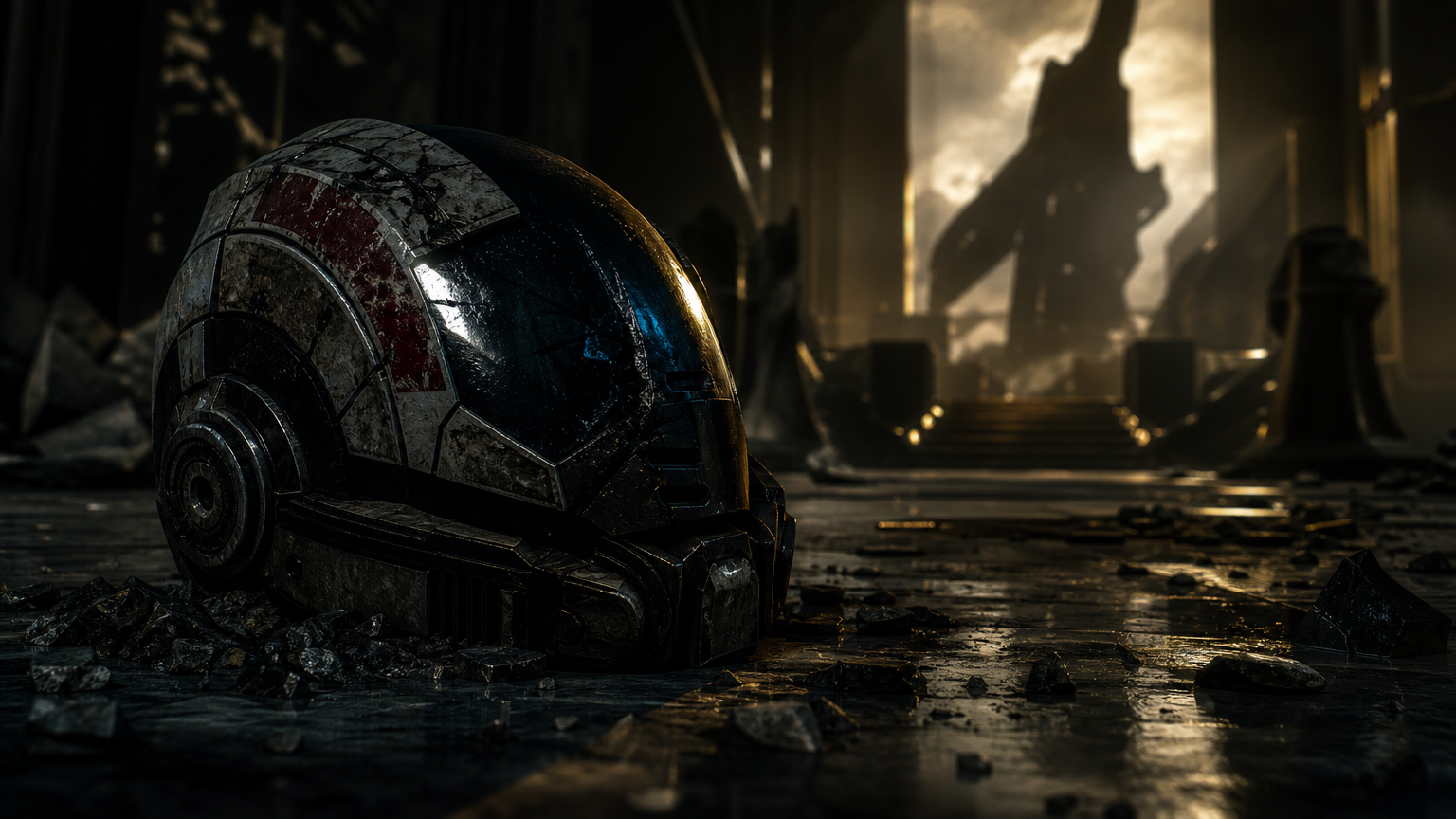
Electronic Arts has closed BioWare and stopped early development on the next Mass Effect, ending one of gaming’s most recognizable RPG studios and turning a long-troubled sequel into the first symbolic casualty of EA’s tighter post-buyout portfolio review.
A studio-ending decision, not just another cancellation
Electronic Arts’ decision is now clear: BioWare is closing, and the next Mass Effect game is no longer moving forward . In EA’s own staff communication, the company described the project as a small team effort in early development and said the decision not to continue it also meant closing BioWare and its Edmonton workspace . That phrasing matters. This was not presented as a delay, a change of engine, or a transfer to another internal team. It was a full stop for the studio and for the Mass Effect project attached to it.
For fans, the headline lands with unusual force because BioWare was not an anonymous support studio. Its name was tied to a specific idea of mainstream role-playing: cinematic companions, moral choices, branching dialogue, and a sense that science fiction or fantasy could be built around character relationships rather than only combat loops. The studio’s farewell post name-checked Baldur’s Gate, Neverwinter Nights, Star Wars: Knights of the Old Republic, Dragon Age, Mass Effect, and Anthem before saying that, after more than three decades, BioWare is closing and early development on the next Mass Effect is ending . The list reads like a résumé, but also like an obituary.
What EA says it is choosing instead
EA’s public explanation frames the move as portfolio discipline. The company said it had reviewed its business over recent months and would concentrate investment behind fewer, clearer priorities . In practical terms, EA pointed to sports, Apex Legends, Battlefield, Marvel’s Iron Man, the next Star Wars Jedi game, and other large action or shooter bets as areas where it will keep investing . That makes the BioWare closure less a one-off accident than a sign of what the publisher now views as strategically defendable.
The canceled Mass Effect project was especially vulnerable under that logic. It had been announced in 2020, but remained in early development years later . A prestige role-playing game with a long production runway, no near-term launch date, and a team that had already been reduced is exactly the kind of asset a cost-focused publisher can classify as expensive uncertainty. The tragedy is that Mass Effect’s cultural value did not translate into a business case strong enough to survive the review.
The financial pressure around EA
The closure also arrives in the shadow of EA’s recent $55 billion leveraged buyout by a consortium led by Saudi Arabia’s Public Investment Fund, Silver Lake, and Affinity Partners . VGC reported that the deal left EA with about $18 billion in debt and around $1.8 billion in annual interest costs, while the company had told debt investors it would seek $700 million in annual cost reductions . Those numbers do not explain every internal decision by themselves, but they make the logic of cutting long-cycle projects easier to understand.
Analysts quoted by GameSpot were blunt about that logic. Joost Van Dreunen argued that a small team working on a game still years from release becomes an obvious line item in a leveraged-buyout environment, while Piers Harding-Rolls pointed to BioWare’s recent commercial record and the pressure on expensive high-end game development . In that reading, the end of BioWare is not simply about Mass Effect. It is about the collision between beloved intellectual property and balance-sheet discipline.
The human cost behind the strategy
The business language should not obscure the human cost. VGC, citing Bloomberg, reported that roughly 400 jobs are being cut across EA, around 3% of staff, including about 50 at BioWare . EA’s staff letter said affected employees would be supported in exploring other opportunities within the company and treated with care and respect . That is the expected corporate framing. For the developers involved, however, the consequence is immediate: careers, teams, and creative relationships built around BioWare’s projects have been broken apart.
There is also a community cost. Mass Effect fans had been reading teasers, N7 Day posts, and leadership comments for years as signs that the franchise still had a future. The cancellation turns that slow anticipation into a dead end. The same goes for Dragon Age players who now face the question of what happens to a series after the studio that gave it shape has been shut down. EA has not announced a new home, buyer, or development plan for either franchise .
What happens to existing BioWare games?
The closure does not mean existing BioWare games disappear overnight. A current check of EA’s service-shutdown information found no new shutdown listing for Mass Effect games, Dragon Age: The Veilguard, or Star Wars: The Old Republic as of October 22 . The same analysis notes that publisher rights, store listings, and server operations are separate from the existence of the development studio . In other words, EA can close BioWare while continuing to sell or operate BioWare’s old games.
That distinction is important for players. A studio closure ends new development work, but games usually stop functioning only when a publisher removes them, disables activation systems, or shuts down required servers . Mass Effect Legendary Edition and other single-player titles therefore depend less on BioWare’s continued existence than on EA’s future support decisions. The more fragile cases are online-dependent games, as Anthem already demonstrated when its service ended before the BioWare closure .
The Mass Effect screen project remains a separate track
There is one surviving branch of the franchise, at least for now: the Mass Effect television project at Amazon MGM Studios. A report summarizing IGN’s exclusive says sources inside Prime Video indicated the show remains in development despite BioWare’s closure, with the creative team still attached [5]. That does not guarantee the series will reach screens, but it does show that the franchise has not been erased from all media planning.
The split is revealing. A TV adaptation can be developed through Amazon while EA avoids funding a new, expensive, years-long role-playing game. That leaves Mass Effect in a strange limbo: valuable enough to license and adapt, but not currently valuable enough for EA to keep its original game studio alive around it.
Why this feels bigger than one studio
BioWare’s closure is painful because it compresses several industry anxieties into one event. It shows how risky long development cycles have become. It shows how even famous franchises can be judged too uncertain if their next revenue moment is far away. It also shows how leveraged ownership can intensify the pressure to convert creative portfolios into shorter-term financial plans.
The end of BioWare does not erase its games, and it does not legally kill Mass Effect or Dragon Age. EA still owns those properties, and another studio could theoretically revive them one day . But the studio that made players associate those names with conversations, companions, and impossible choices is gone. Commander Shepard survived Reapers, betrayals, and suicide missions. The franchise’s next game did not survive EA’s portfolio review.
Sources from the last 72 hours
- [1]EA is closing BioWare and cancelling the next Mass EffectOct 21, 2026, 7:10 PM
- [2]A Game Studio Closing Doesn’t Kill Its Games. This List Does.Oct 22, 2026, 2:00 AM
- [3]‘Mass Effect’ TV Series Reportedly Lives On at Amazon Despite BioWare’s ClosureOct 22, 2026, 2:00 AM
- [4]Cancelling Mass Effect And Closing BioWare Was An Obvious Thing For EA To Do, Experts SayOct 23, 2026, 2:00 AM
AI-generated article based on recent web research, then preserved as a dated editorial snapshot.
Comments
Be the first to comment.