
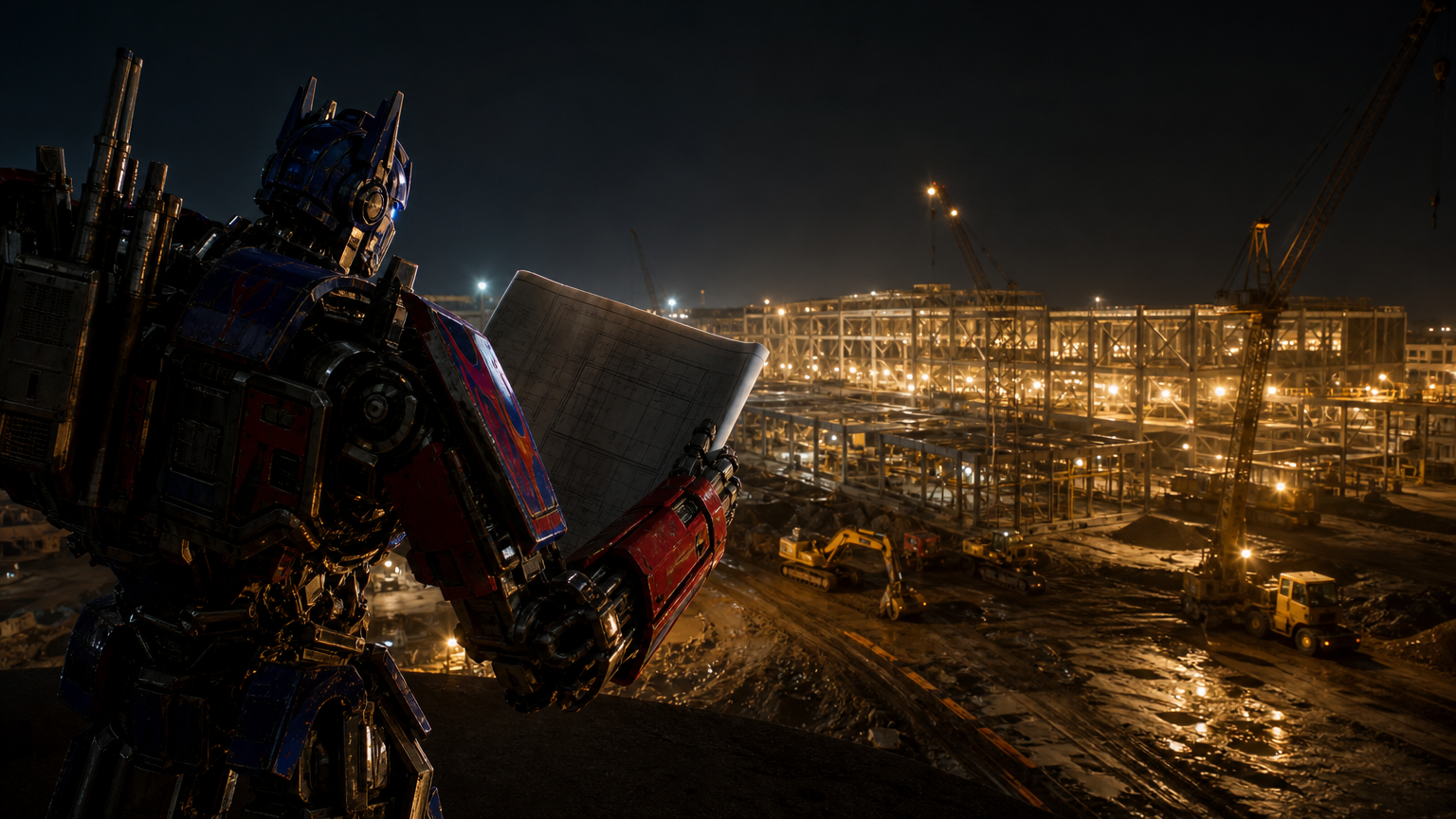
Audi commits $4B to Georgia
Audi has chosen Georgia for its first U.S. vehicle production site, a commitment the company describes as an investment of around $4 billion and the creation of approximately 4,500 jobs . The project is planned for the Middle Georgia Megasite in the Perry area, with Audi saying the factory will be designed for annual capacity of up to 200,000 vehicles, construction scheduled to begin in 2027, and production planned for the early 2030s .
President Donald Trump announced the project on Saturday, October 24, at a campaign rally in Perry, Georgia, framing it as evidence that his manufacturing and tariff agenda is drawing auto investment into the United States . Trump put the figure at $4.2 billion and said the factory would be built near Macon, while Audi’s own release rounded the investment to about $4 billion . That difference matters less than the strategic direction: Audi, a Volkswagen Group brand that has long served the U.S. market through imports, is preparing to localize high-end production in the country.
The announcement is not only another factory headline. For Georgia, it adds a premium European automaker to a fast-growing automotive manufacturing base. For Audi, it answers a structural weakness in North America: competitors such as BMW and Mercedes-Benz already have deep U.S. manufacturing footprints, while Audi imports vehicles for American buyers from Europe and Mexico. Reuters reported that Audi has said U.S. tariffs on autos, steel, aluminum and parts cost it roughly €1.2 billion, or about $1.4 billion, last year . Local production would not eliminate every trade risk, but it would give Audi more flexibility on pricing, supply chains, currency exposure and market-specific product planning.
What Audi says it is building
Audi says the plant will produce “premium SUVs tailored to North American customers,” and CEO Gernot Döllner said the company has “much greater ambitions” in America than it has yet realized . At Trump’s rally, Döllner said Audi planned to produce its “biggest and most premium SUVs” in Georgia . Reuters, citing a U.S. official, reported that the plant is expected to assemble the Q7, Q8 and Q9 SUVs, though Audi’s official release did not list specific models .
That distinction is important. The confirmed facts are the investment scale, the Georgia site, the job target, the intended capacity, and the broad focus on premium SUVs . Model assignments, exact launch timing by vehicle line, and detailed supplier awards remain less settled publicly. Reuters also reported that Volkswagen’s supervisory board still needs to take a final decision for the investment to proceed . In other words, the plan is highly advanced and publicly endorsed by Audi, Georgia officials and Trump, but some corporate approvals and execution details still sit ahead.
Georgia Governor Brian Kemp’s office said Audi plans to build a “state-of-the-art manufacturing facility” at the Middle Georgia Megasite, delivering approximately 4,500 jobs to the region . Kemp credited the state’s earlier acquisition and improvement of the megasite, and he named Peach, Macon-Bibb and Houston counties as part of the regional effort behind the project . Local station 41NBC reported that the facility is planned for the 1,474-acre Middle Georgia Megasite along Georgia Highway 96 near Interstate 75 in Peach County . The same report said local development partners expect grading to begin in 2027 and construction in 2028 .
Why the site matters
Modern vehicle plants are not just assembly halls. They become anchors for robotics vendors, software integrators, logistics firms, electronics suppliers, tooling specialists, maintenance contractors, workforce training programs and battery-adjacent supply chains. Audi’s own language points in that direction: the company says the site gives it an “investment-ready” location, a skilled workforce, logistics infrastructure, an established automotive supplier network and room for future expansion .
For Middle Georgia, that supplier effect could be as important as the initial 4,500 jobs. A 200,000-unit annual plant needs inbound parts, outbound logistics, plant services, quality systems, stamping or body-shop support, seating and interiors, electronics, software-driven testing, and a pipeline of technicians. Not all of that will arrive at once, and not all of it will necessarily locate next door. But an Audi plant would give regional economic developers a strong anchor tenant around which to recruit second- and third-tier suppliers.
The project also reinforces Georgia’s attempt to market itself as a U.S. auto technology corridor rather than only a low-cost manufacturing destination. Audi’s planned factory would be a premium-vehicle plant, and premium vehicles typically carry dense electronic content, sophisticated driver-assistance systems, high software integration and flexible manufacturing demands. The plant’s technology profile will depend on the vehicles ultimately assigned to it, but the strategic value is clear: a high-volume Audi SUV operation would concentrate capital, skilled labor and supplier capabilities in a region already working to attract automotive investment.
Politics, tariffs and corporate risk
The timing and venue were politically charged. AP reported that Trump announced the project at a Perry rally designed to help Republican candidates in competitive Georgia races before the midterm elections . Reuters reported that Döllner defended appearing with Trump, saying the decision followed months of planning and negotiations and that an invitation from the American president should be accepted out of respect for the office and the country where Audi plans to invest .
That defense signals the delicacy of the move. In the United States, Trump presented the announcement as proof that tariffs can bring factories home . In Germany, the same move lands amid anxiety about industrial competitiveness, Volkswagen job pressures and the possibility that future growth could move away from domestic plants. Reuters reported criticism from Germany’s IG Metall union, while also noting that union and political figures acknowledged the need for Volkswagen and Audi to strengthen their U.S. position, provided German workers are not disadvantaged .
For Audi, the business logic is easier to explain than the politics. The U.S. is one of the world’s most important premium markets, and Audi says North America should become a third major pillar of its global production network alongside Europe and China . Producing locally can help align vehicles with American demand, shorten some supply chains and lower exposure to currency swings and trade barriers . But the plant will be judged over years, not by the applause line that introduced it.
The key open questions
The headline number is large, but the real story now moves into execution. First, Audi and Volkswagen must move from public commitment to final board approval, site agreements and construction milestones . Second, the region must turn 4,500 promised jobs into training pipelines, housing capacity, transportation planning and supplier recruitment. Third, Audi must decide how much technology, purchasing and model responsibility will be localized around Georgia rather than merely assembled there.
There is also a timeline gap to watch. Audi says construction is scheduled to start in 2027 and production in the early 2030s . Local reporting says grading is expected in 2027, with construction scheduled for 2028 . That is not necessarily a contradiction; large industrial projects often separate site preparation from vertical construction. But it does show why the next visible milestones will matter.
If completed as described, Audi’s Georgia plant would be one of the most consequential automotive manufacturing announcements in the state’s recent history. It would give Audi its first U.S. production base, add a premium European nameplate to Middle Georgia, and create the conditions for a supplier cluster tied to robotics, electronics, logistics and advanced manufacturing. The announcement began on a political stage, but the test will be industrial: whether a $4 billion commitment becomes a durable American production platform for Audi’s next decade.
Comments
Be the first to comment.