
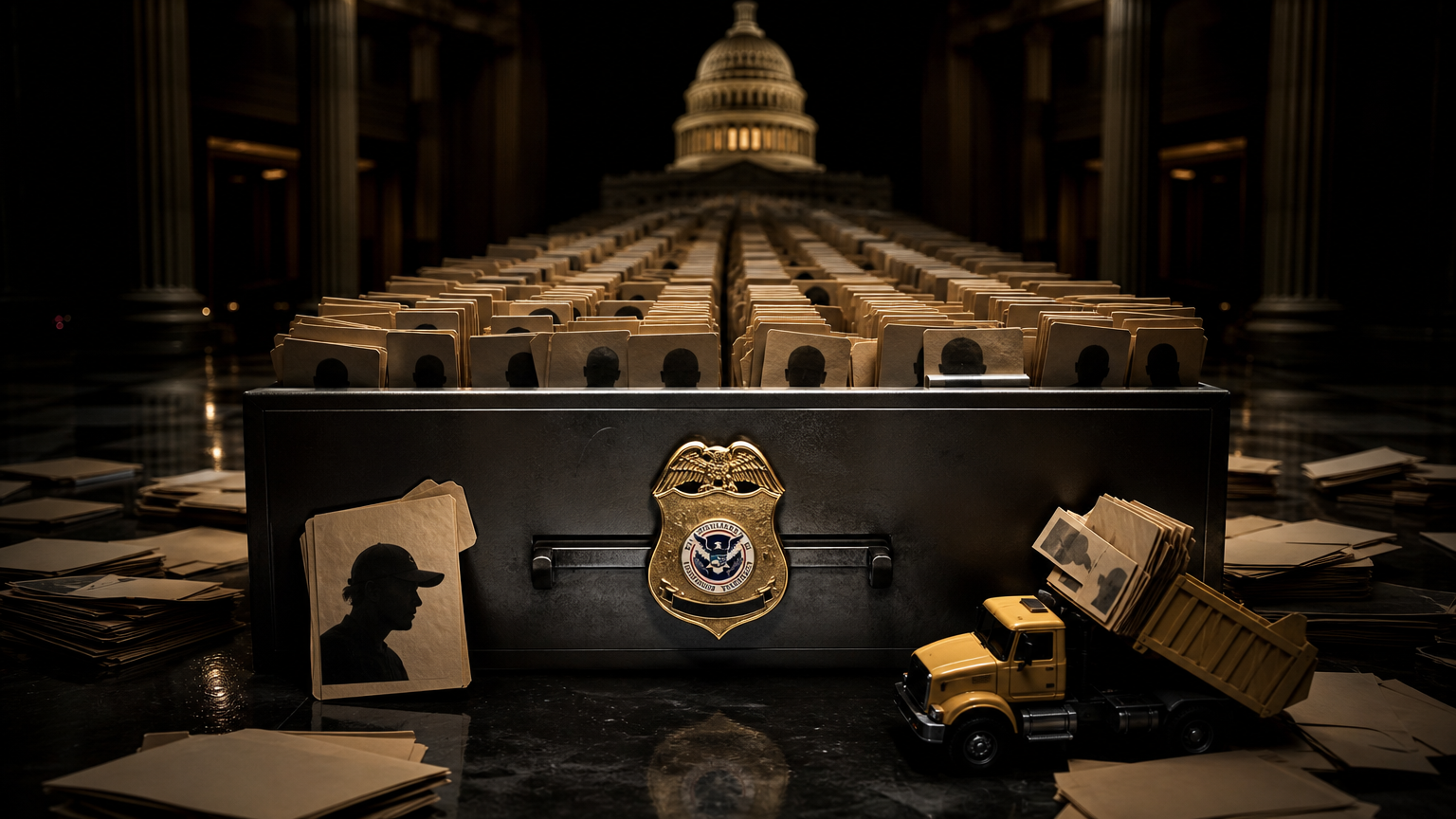
A personnel database becomes an intelligence map
The working headline is the story: DHS leak exposes 41,000 personnel. The current reporting describes a leak of records on more than 41,000 Department of Homeland Security employees and contractors, spanning DHS and several component agencies including Immigration and Customs Enforcement, Customs and Border Protection, Citizenship and Immigration Services and CISA . The records reportedly include names, email addresses, phone numbers, office information and internal group memberships, as well as references to sensitive programs and technologies .
That combination is what makes the incident different from a routine personnel-data exposure. A spreadsheet of names is damaging; a searchable map of offices, reporting lines, access groups and specialized programs can become an intelligence product. WIRED reported that the records include references to internal systems, undercover and surveillance programs, and groups tied to tools such as Palantir software, xAI’s Grok chatbot and wiretap-related programs . Unicorn Riot’s review of the published material listed 41,191 people, 55,603 groups, 6,958 offices and 2,278 locations in the data set, with the largest count tied to CBP .
The archive has been released under the name “Icepick” by Distributed Denial of Secrets, which said it received the material from a group calling itself the Department of Peace, with journalist and hacker maia arson crimew involved in making the records searchable . CyberScoop reported that the group claimed to have obtained the database from an Okta single sign-on service used by DHS, while Okta said it had no evidence that its own systems or data had been compromised . That leaves the public record in an important unresolved state: the data appears real enough for multiple outlets to analyze it, but the precise intrusion path has not been publicly established.
Why the exposure is operationally dangerous
The exposed records appear to cover only a portion of DHS, but that portion is large and unusually sensitive. WIRED reported that CBP staffers account for more than half the records, ICE accounts for about 10,000, about a third of those are tied to Homeland Security Investigations, USCIS accounts for about 6,200 and nearly 1,000 are linked to CISA . NPR similarly reported that the database included more than 21,000 CBP records and roughly 10,000 ICE and HSI records, and that the data covered about one-fifth of DHS’s workforce rather than the entire department .
The risk is not limited to harassment of individual employees, though that is a serious concern. The larger security problem is correlation. If an adversary can connect a person’s name, work email, phone number, supervisor, office, role, internal groups and technology access, that adversary can build targeted phishing lures, impersonate colleagues, infer chains of command or identify people linked to sensitive investigations. WIRED quoted a threat-intelligence expert warning that, if authentic and current, the data would be valuable to anyone seeking to penetrate DHS and could be combined with other compromised or commercial data .
That is why undercover references matter. Reporting indicates that some internal group names appear to point toward certified undercover operations, communications-intercept programs and other sensitive investigative capabilities . Even when a record does not reveal a case file, the existence of a group, the people associated with it and the offices tied to it may expose operational structure. In government security terms, metadata can be mission data.
DHS, Okta and the unresolved breach path
As of the latest reports within the 72-hour window, DHS has acknowledged the possibility of a breach but has not publicly delivered a full technical explanation. A DHS spokesperson told WIRED the department was aware of a potential breach, was working to address it and would work to ensure employees and officers were protected . CyberScoop reported that DHS did not immediately respond to its request for comment in that article, while Okta stated that it was secure and had no evidence its systems or data were compromised .
This distinction matters. If the attackers compromised Okta itself, the issue would raise broad questions about an identity provider used across many organizations. If, instead, attackers abused DHS credentials, misconfigurations, delegated access, stale accounts or an internal export, the remediation path would be different. In either case, the practical response must start from the same assumption: the personnel graph is out, and affected people may now be targeted.
CyberScoop said it was able to verify that numerous current CISA employees were listed in the data, along with former leaders who had left the agency years earlier . That detail suggests another classic problem in identity governance: old accounts, historical records and stale directory data can remain useful to attackers long after they lose operational value to defenders. Centralized identity systems are efficient precisely because they connect people, applications and permissions; when exposed, that same efficiency becomes a ready-made reconnaissance tool.
The publication debate moves to platforms
The leak also triggered an immediate platform-moderation problem. WIRED reported that Bluesky blocked links to the leaked archive and labeled them malicious because the archive contained personal contact information shared without authorization . Bluesky told WIRED it chose link blocking rather than removing individual posts so that discussion and reporting could continue while direct access to the material was restricted .
That approach reflects the tension at the center of the story. Researchers, journalists and transparency advocates argue that information about public agencies can reveal how government power is organized and used. Security officials and privacy advocates can respond that publishing contact details, internal memberships and undercover-related references puts people and investigations at risk. Both realities can be true. A leak can be newsworthy and still dangerous.
For technology leaders, the moderation fight is secondary to the architectural lesson. Public debate about whether a leak should be indexed, shared or blocked tends to happen after the damage is done. The more important question is why a single data set could apparently expose so much context about so many people, offices, groups and tools.
Lessons for government technology leaders
The DHS leak is a warning about centralized personnel intelligence. Large organizations need identity platforms, directories, access groups and single sign-on systems. But if those systems are allowed to accumulate every useful detail in one place, they can become a high-value dossier on the organization itself.
The first lesson is compartmentalization. Sensitive units, undercover programs, protected roles and investigative technologies should not be trivially discoverable through broad directory exports or generic group names. If a permission group name reveals the mission, the location and the capability, the access-control system is also publishing a map.
The second lesson is data minimization. Work phone numbers, supervisors, office locations and group memberships may all be necessary in some workflows, but they do not need to be visible to every administrator, exportable in bulk or retained indefinitely. Retention rules should treat personnel and access metadata as sensitive operational data, not clerical residue.
The third lesson is incident response after exfiltration. Once a personnel graph leaks, password resets are not enough. Agencies must warn affected employees, monitor impersonation attempts, rotate exposed contact channels where possible, review undercover risk, check whether investigations have been compromised and reassess access groups that reveal too much through their names alone.
Finally, production identity data should not behave like a public leaderboard. The joke writes itself, but the risk is serious: when an attacker can sort an agency by person, office, role, supervisor and tool access, the breach is no longer just about privacy. It is about the operational shape of the state being copied, indexed and handed to anyone willing to search it.
Comments
Be the first to comment.