
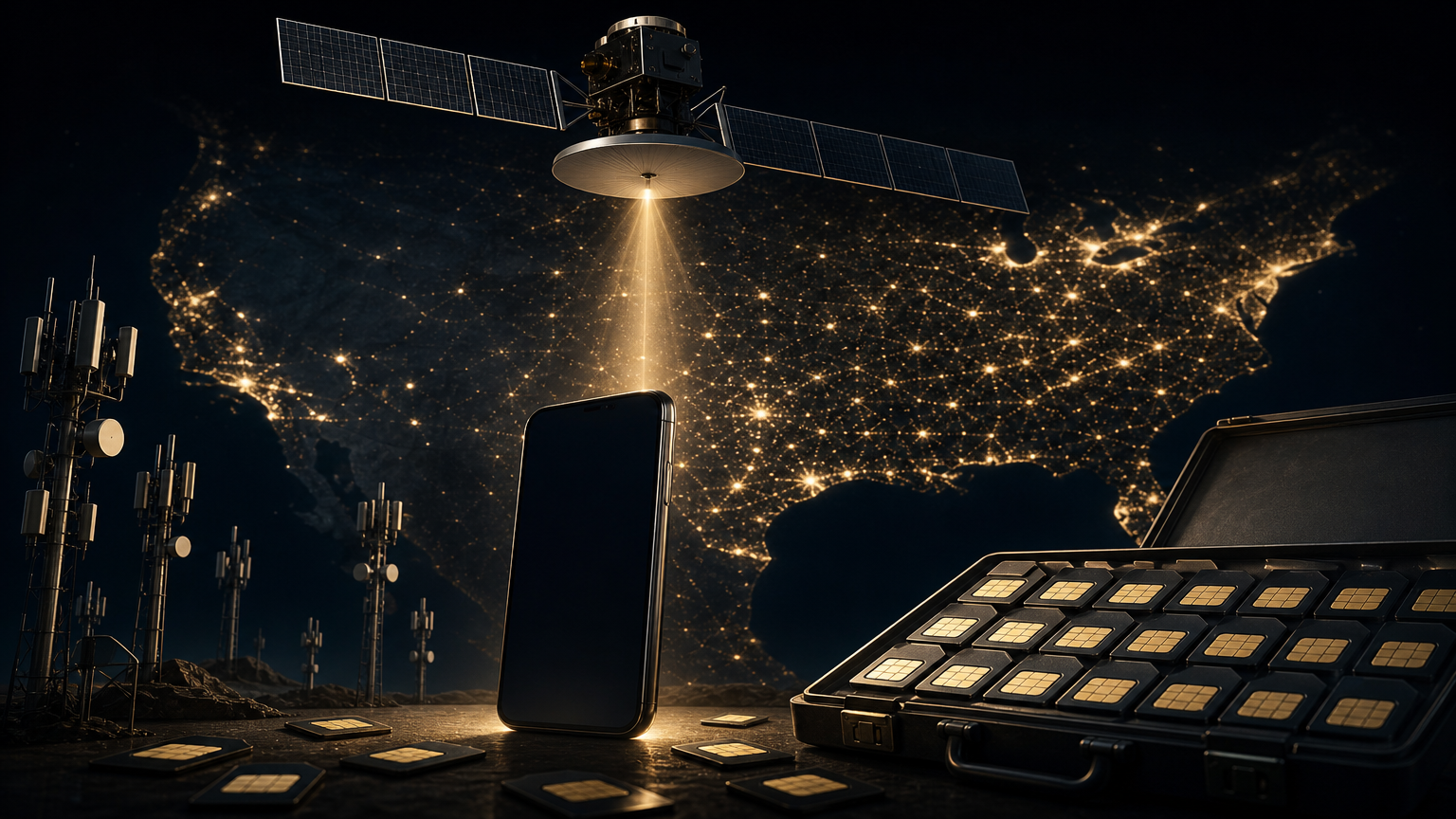
Starlink’s phone-market move comes into focus
The story is no longer just about emergency texting from the wilderness or filling rural coverage gaps. The current push around Starlink Mobile is about whether SpaceX can assemble enough spectrum, satellite capacity, terrestrial access and regulatory clearance to become a real US wireless operator . According to reporting published on November 2 and 3, SpaceX has explored buying Boost Mobile or gaining access to its network arrangements with EchoStar, in what would give Elon Musk a possible route into a wireless market dominated by Verizon, AT&T and T-Mobile .
The logic is clear: satellites can extend coverage where towers do not reach, but a mass-market mobile phone service also needs ordinary cellular infrastructure in cities, suburbs, buildings, stadiums and airports . That is why the reported Boost angle matters. Boost Mobile is not simply another discount carrier; it is a potential gateway to existing wholesale arrangements that rely on AT&T and T-Mobile networks .
Why Boost Mobile is the shortcut
The Washington Post reported that Musk personally discussed a potential Boost-related deal with EchoStar chairman Charlie Ergen, and that the outcome could be either a Boost acquisition or access to the network arrangements Boost already uses . TechCrunch framed the same possibility as a way for SpaceX to build a hybrid satellite-cellular network that could immediately put it in the fourth-place position among US wireless providers, even if far behind the big three .
That “hybrid” word is the key. Starlink’s satellite network can target dead zones, rural roads, disaster areas and remote work sites, but indoor and dense urban coverage are harder problems for direct-to-phone satellite systems . A Boost deal would not solve every engineering challenge, but it could help SpaceX offer service where satellite signals are weak by relying on terrestrial networks in the meantime .
There is a catch. Boost’s usefulness depends on whether its network leases can actually travel with a change in control or be used by SpaceX for a Starlink-branded service . The Post reported that such lease agreements are usually not transferable without the consent of the underlying carrier, which means AT&T and T-Mobile could still have leverage even if SpaceX reaches an agreement with EchoStar .
The big carriers are not rolling out the welcome mat
The established US operators understand the threat. Verizon, AT&T and T-Mobile reportedly rejected Musk’s earlier attempts to secure access to their networks, leaving SpaceX looking for another path into mobile service . Light Reading reported that the big three are opposed to letting Starlink use their networks through a mobile virtual network operator arrangement and are likely to resist any “back door” route through Boost .
That opposition is rational from their perspective. The US wireless industry has spent years operating as a three-player national market after T-Mobile’s acquisition of Sprint reduced the number of major nationwide carriers from four to three . Axios noted that regulators had tried to preserve a fourth competitor by requiring Boost’s sale to Dish Network, but that effort did not produce the competitive alternative originally imagined .
SpaceX is different from past challengers because it brings money, spectrum ambitions, a giant satellite system and Musk’s willingness to force a strategic confrontation . Axios quoted former FCC chief of staff Blair Levin as saying SpaceX is an entity capable of scaring investors in the big three for the first time . That fear does not mean Starlink will succeed, but it explains why every reported negotiation now matters.
Satellites are powerful, but not magic
The central technical tension is simple: a satellite-to-phone service can erase some coverage gaps, but it cannot instantly replicate decades of tower density, indoor systems, local optimization and customer-service operations . Axios reported that SpaceX could try to build its own network using towers and smaller rooftop antennas, but that would require major investment and time . Light Reading also pointed to recent speculation that SpaceX has discussed a large network buildout involving tens of thousands of sites, though that remains a costly and complex path .
The challenge is especially acute indoors. TechCrunch noted that SpaceX bought wireless spectrum from EchoStar that could help Starlink reach places where satellite service currently struggles, including inside buildings . But the fact that SpaceX is still reportedly looking for access to terrestrial networks suggests spectrum alone is not enough to launch a seamless national mobile product .
That is why the Starlink mobile plan should be read less as a single product announcement and more as a campaign to assemble missing pieces. Those pieces include spectrum, satellite upgrades, ground coverage, regulatory approvals, wholesale access and consumer distribution . The company may eventually sell direct mobile service under the Starlink brand, but the current reporting does not provide a launch date, pricing structure or subscriber target .
The strategic prize: dead zones and leverage
For consumers, the most compelling pitch is obvious: fewer dead zones. If Starlink can combine satellite coverage with terrestrial roaming or wholesale access, it could pressure traditional carriers on rural access, emergency resilience, travel coverage and national roaming . That would be a meaningful shift in a market where coverage claims often depend on maps that do not reflect real-world indoor service or remote travel routes .
For carriers, the threat is not only immediate customer loss. It is leverage. If SpaceX can credibly build or buy enough mobile capability, it can negotiate from a stronger position with operators that might otherwise refuse wholesale arrangements . Axios described SpaceX’s moves as either a way to bypass existing carriers or to bring them to the table for a deal .
That dynamic makes Boost especially sensitive. Light Reading reported that Boost ended the third quarter of 2026 with 7.38 million wireless customers, making it a meaningful retail base even if tiny compared with the more than 100 million subscribers held by each of the big three cited by TechCrunch . A Boost transaction would not make Starlink a full peer of Verizon, AT&T or T-Mobile overnight, but it could give SpaceX customers, a brand bridge and possible wholesale pathways .
Regulation becomes part of the product
Telecom is not just engineering. It is spectrum law, merger review, public-interest commitments, network reliability and consumer protection. Axios warned that Musk’s plans arrive at a politically sensitive moment in Washington, with regulatory risk tied to the broader political environment around Musk and SpaceX . Any transaction involving Boost, EchoStar, wholesale agreements or spectrum would likely draw scrutiny because it touches both competition and communications infrastructure .
The carriers would also have practical ways to slow or complicate the plan. If their consent is required for any transfer or use of Boost’s network arrangements, they could challenge the structure of a deal before it becomes a working Starlink service . Light Reading reported Verizon’s position particularly bluntly, with the carrier rejecting the idea that an existing MVNO arrangement would create an easy route for a satellite provider .
What to watch next
The next real signals will not be slogans. They will be deal terms, FCC filings, spectrum-transfer details, tower-site agreements, device compatibility lists and a real consumer price plan. A Starlink mobile service that works only outside with a clear sky would be disruptive in some contexts but not a replacement for national wireless service. A Starlink service paired with terrestrial coverage would be far more threatening.
For now, Musk has made the target visible: the US mobile market, not merely the broadband market. The dead zone is the opening wedge, but the ambition is bigger. Starlink wants to move from being a satellite add-on for existing carriers to a mobile brand that can pressure them directly . Whether that becomes a new fourth force in US wireless or another expensive telecom detour depends on whether SpaceX can convert satellites, spectrum and negotiation pressure into a working national service.
Comments
Be the first to comment.