
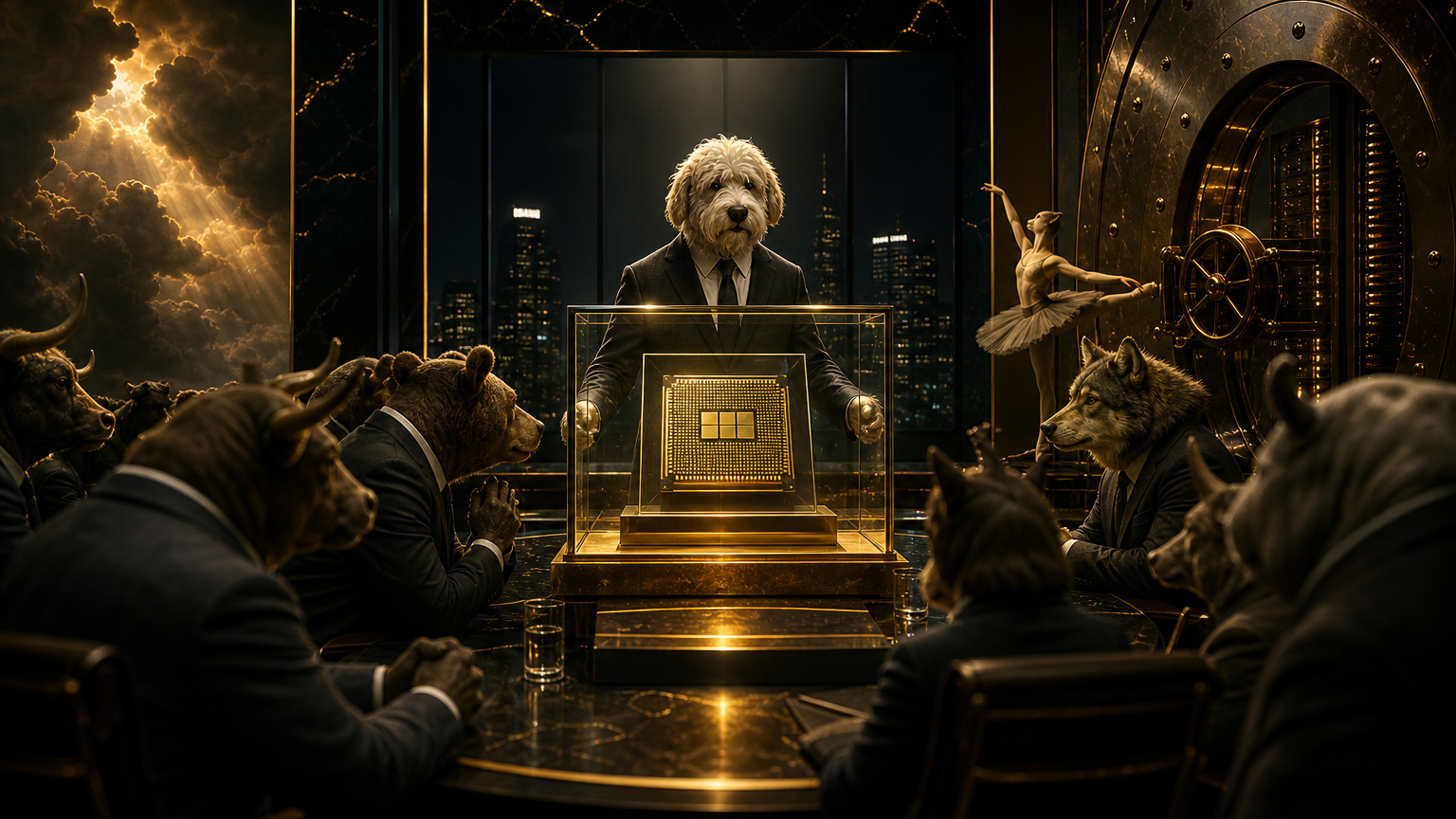
The trillion-dollar roadshow begins
Anthropic’s long-anticipated public-market debut has moved from speculation to roadshow. The Claude maker said on November 10, 2026, that it plans to offer 825 million Class A shares, with 801.35 million sold by the company and 23.65 million by existing stockholders . The expected price range is $70 to $78 per share, and Anthropic has applied to list on the Nasdaq Global Select Market under the ticker “ANT” .
At the top of the range, the sale would raise about $64.35 billion before fees across the company and selling holders, while TechCrunch calculated that the fully diluted valuation could reach roughly $1.404 trillion . That is the number now framing the deal: not merely a giant AI IPO, but a public-market referendum on whether frontier AI labs deserve valuations more commonly associated with the world’s most entrenched platform companies.
The amended filing also reveals the scale of Anthropic’s capital plan. The company estimates net proceeds of about $84.6 billion from the IPO plus a concurrent private placement at the $74 midpoint, or about $93.7 billion if underwriters exercise their full option to buy additional shares . That matters because the IPO is not just a liquidity event. It is a funding event for a business where the core inputs are scarce chips, power, data centers, engineering talent and time.
What investors are actually being asked to buy
Anthropic is selling growth, but it is also selling governance. Its prospectus says the company is a Delaware public benefit corporation and describes a corporate structure in which the Long-Term Benefit Trust is designed to help preserve the company’s mission around responsible AI development . In other words, public investors are not being offered a conventional software company with a conventional board-control story. They are being offered exposure to a frontier lab whose governance is part of the product.
That framing is unusually important because Anthropic’s own risk disclosures are more severe than most IPO language. In its amended S-1, the company warns that advanced AI systems may pose “catastrophic or existential risks to humanity,” particularly if such systems are misused, replicated, weaponized or allowed to operate with high autonomy . The company also says its models are already contributing to the pace of its own research, and that risks could rise if AI systems automate more of AI research and development .
For public investors, that turns AI safety from an abstract ethical position into a material disclosure. Anthropic is effectively saying: the same technology that could justify a trillion-dollar-plus valuation is powerful enough to require special governance, safety testing and potentially slower deployment. That tension is the core of this IPO.
Strategic money around the offering
The public sale is only one part of the transaction. Anthropic’s amended filing says Google, Nvidia, AMD, Broadcom, Micron, Microsoft and TSMC Partners will buy an aggregate $26 billion of Class N common stock in a concurrent private placement at the IPO price . TechCrunch reported that Google and Nvidia are investing $10 billion apiece as part of that private placement .
That strategic capital gives the IPO a different texture from a standard growth listing. The same ecosystem that sells chips, cloud capacity and infrastructure to AI labs is also helping finance one of the sector’s defining listings. It signals confidence, but it also underlines dependence: frontier AI is becoming a web of reciprocal commitments among model developers, chipmakers and hyperscale cloud platforms.
The cloud side is particularly revealing. The Information reported that Anthropic’s latest filing increased its commitments to Microsoft Azure and Google Cloud by more than $10 billion through 2033, bringing Microsoft commitments to as much as $49.2 billion and Google Cloud commitments to $121.6 billion . The same report said Anthropic disclosed that a $34.9 billion agreement to lease server space from Lambda could be canceled because Lambda missed a deadline to secure a data center .
These are not footnotes. They are the balance-sheet mechanics behind the AI boom. If Anthropic locks in enough compute, it can train and serve more capable models, deepen enterprise adoption and compete with OpenAI, Google and others. If demand, pricing or model efficiency fails to match the commitments, the same contracts can become a drag on margins and flexibility.
Claude gets a product push before the listing
Anthropic also timed the roadshow with a product message. On November 9, it introduced Claude Fable 5.2 and Claude Mythos 5.2, describing them as upgraded models for difficult technical work across coding, reasoning, vision, cybersecurity, science and engineering . Anthropic said both models generate outputs up to 30% faster than their 5.1 predecessors and are priced at $8 per million input tokens and $40 per million output tokens, below prior Fable and Mythos pricing .
The release is not only about benchmarks. Reuters reported that Fable 5.2 is aimed at coding, reasoning and AI agent tasks, while Mythos 5.2 is targeted at approved cybersecurity and life-sciences research applications . Anthropic said Mythos access is restricted through verification programs, while Fable is available more broadly with cyber and biology safeguards .
That split model strategy is central to Anthropic’s IPO story. Fable is the commercial model designed for broad deployment; Mythos is the more sensitive capability path, reserved for vetted cybersecurity and biomedical users. The company is trying to show that it can monetize frontier capability without turning every powerful feature into an unrestricted product.
Anthropic’s own launch post is strikingly ambitious. The company claims the models helped engineers complete otherwise infeasible software migrations, design working electronic devices, solve two open problems in black-hole physics and formalize Fermat’s Last Theorem in 30 hours with a large multi-agent setup . Those claims will now be read not only by developers, but by IPO investors looking for evidence that Claude can become a durable enterprise platform rather than an expensive research project.
Safety as promise, constraint and brand
The new models also arrive with the sort of caution label that has become part of Anthropic’s identity. The company said its predeployment safety work included alignment training and testing, evaluations of potentially unhelpful actions, stronger misuse safeguards and expanded behavioral monitoring . It also said external evaluators, including the UK AI Security Institute, Frontier Design and METR, tested the model before release .
Anthropic says it assessed the risk of the new models behaving unsafely in high-stakes situations as low, but it also acknowledges that evaluation remains incomplete: no single test can predict how a highly capable model will behave once deployed . That caveat aligns with the IPO filing’s broader message. Anthropic is not promising that frontier AI is safe because it says so; it is asking investors to believe it has the structure, incentives and methods to manage escalating risk better than rivals.
That is a harder sell than ordinary software margins. It requires investors to accept a paradox: Anthropic’s valuation depends on accelerating AI capability, while its brand depends on proving that acceleration can be governed.
The market test
The timing is delicate. Fortune reported that the IPO arrives after a broader AI stock sell-off and amid nervousness around data-center spending, regulation and the cost of the sector’s infrastructure buildout . The same report said Anthropic’s annualized revenue run rate reached about $81 billion by the end of October, up from about $71 billion in late September .
If investors focus on that growth, the IPO could reset public-market appetite for frontier AI. If they focus on compute obligations, safety risk, governance limits and dependence on strategic suppliers, the offering could become a more cautious benchmark. Either way, the deal will help price the next phase of AI: not chatbots as novelty, but model labs as capital-intensive infrastructure companies.
Anthropic is asking Wall Street to value Claude at the scale of a global platform while accepting that the company may sometimes slow, restrict or reshape deployments for safety reasons. That is the boss fight. The IPO is not just about how much public investors believe in AI; it is about whether they believe a safety-first frontier lab can become one of the most valuable companies on Earth.
Comments
Be the first to comment.