
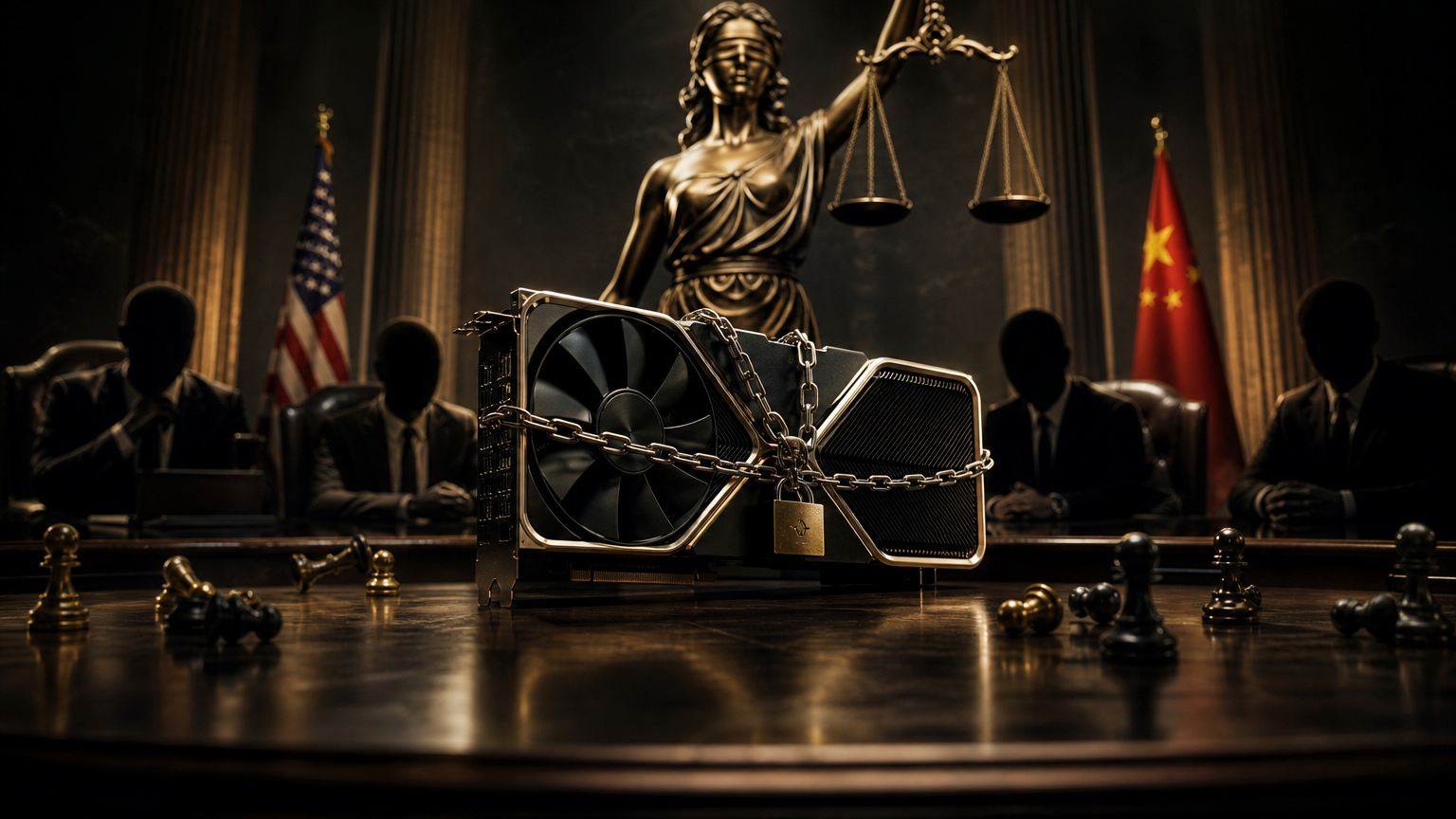
A shock at the center of the AI economy
Nvidia entered the week as the symbolic engine of the artificial intelligence boom; it is now being treated as a stress test for the entire U.S. tech rally. The company’s board opened an independent investigation after reports that founder and CEO Jensen Huang had been the target of a “foreign intelligence effort,” while Huang apologized internally for marital infidelity and pledged to cooperate with the review . Nvidia’s board said it had “no reason to believe” that either U.S. national security or company secrets had been compromised, but the very existence of the inquiry has pushed a private scandal into the public square of export controls, counterintelligence and investor risk .
The woman at the center of the controversy is Alice Huang, also known as Huang Le, a former executive connected to Singapore-based Megaspeed, an Nvidia customer that has drawn U.S. scrutiny over possible China-related chip diversion . U.S. officials and media reports have described her as suspected of working for Chinese intelligence, while the core public record remains incomplete: no criminal charge has established that Jensen Huang knowingly helped any foreign intelligence service, and Nvidia has not announced any finding that trade secrets or classified information were exposed .
Why the selloff matters
The market reaction has been sharp because Nvidia is not just another semiconductor company. It is the supplier whose graphics processors and AI accelerators sit at the center of data-center buildouts, frontier model training and the broader valuation story around artificial intelligence. Reuters reported that Nvidia shed about $430 billion in market value over two sessions as the reports deepened, with the stock down 9.5% since news of the affair broke . That loss matters beyond one ticker: Nvidia has been one of the biggest drivers of U.S. equity-market confidence in the AI cycle.
Investors are now repricing a risk that is difficult to model. A chipmaker can guide revenue, gross margin and supply-chain capacity; it is much harder to quantify the effect of a counterintelligence inquiry involving a founder-CEO who has become almost inseparable from the company’s public identity. That is why the scandal is hitting several layers at once: Nvidia’s governance, its export-control compliance, its China strategy and its political relationship with Washington.
The board’s impossible assignment
Nvidia’s board has tried to draw two lines at the same time: first, that the allegations are serious enough to warrant an independent investigation; second, that Huang remains trusted and in charge. The board said independent directors, assisted by outside legal counsel, would examine available information, while Huang would continue to lead the company and cooperate with the process .
That structure may calm some customers, but it also raises the central governance question: can a board credibly investigate the most valuable person in the company? Jensen Huang co-founded Nvidia more than three decades ago and has become the public face of the AI hardware era. If the review is perceived as too narrow, too slow or too deferential, shareholders may view it as reputation management rather than independent oversight.
The legal pressure is already arriving. Nvidia and Huang were sued in a proposed shareholder class action in San Jose, California, alleging that investors were misled about Huang’s ties to Alice Huang and the related national-security implications . According to the complaint described by Reuters, the case argues that the company failed to disclose risks that could affect Nvidia’s reputation and business prospects . That does not mean the claims will succeed, but it ensures that the board’s inquiry will be watched not only by investors and journalists, but also by plaintiffs’ lawyers and judges.
Washington is now part of the story
The political dimension is escalating because the scandal intersects with the U.S.-China chip war. Nvidia has long argued that the United States should not completely abandon the Chinese market for advanced AI chips, while U.S. policymakers have tightened restrictions designed to prevent cutting-edge compute from strengthening Chinese military or state-linked AI capabilities. Against that backdrop, any allegation involving a suspected Chinese intelligence approach to Nvidia’s CEO lands directly in a national-security debate.
President Donald Trump said he had spoken with Huang and that Huang told him he did not know the woman linked to him was a spy . Trump also said the FBI was investigating the relationship, according to AP’s reporting on the broader law-enforcement and congressional scrutiny surrounding the matter . That creates an unusual split screen: public support for Huang from the president, but continued scrutiny from law enforcement, Congress and Nvidia’s own board.
Axios reported that Commerce Secretary Howard Lutnick had been sent a highly classified memo warning about Huang’s relationship with suspected Chinese spy Alice Huang, raising questions about how potential security risks were weighed while advanced Nvidia chip sales to China-affiliated entities were being cleared . If lawmakers conclude that export approvals proceeded despite unaddressed counterintelligence concerns, the scandal could become less about personal misconduct and more about whether the U.S. government’s chip-control machinery failed to connect its own dots.
Megaspeed, Alice Huang and the chip-diversion question
The business side of the story centers on Megaspeed and related entities in Southeast Asia. AP reported that the Justice Department’s National Security Division is investigating whether Megaspeed violated export-control laws, in an inquiry that will also include scrutiny of Alice Huang . That is distinct from proving wrongdoing by Nvidia or Jensen Huang, but it keeps the company close to a live enforcement question: whether restricted AI hardware reached Chinese customers through intermediaries.
Reuters also reported that Alice Huang had been connected to Megaspeed’s Indonesian subsidiary and that shipping records reviewed by Reuters showed imports of Nvidia hardware, including H100 processors and related components, from suppliers including a Gigabyte subsidiary . These details matter because export controls are only as strong as the ability to track chips after sale. A GPU shipped to a regional cloud provider can be legally deployed, physically diverted, leased onward, or remotely used by customers in ways that create enforcement headaches.
For Nvidia, the core defense is that it sells through lawful channels and that the board has not found reason to believe national security or company secrets were compromised . For critics, the question is whether Nvidia’s commercial hunger for China-linked demand outpaced its ability to monitor downstream customers.
The “free fall” is about trust, not just price
The phrase “Nvidia in free fall” captures more than a stock chart. The company is falling through layers of trust: trust that its CEO’s relationships were properly disclosed, trust that the board can supervise a founder-CEO, trust that U.S. export controls can keep up with AI hardware demand, and trust that the AI boom’s most important supplier is not exposed to avoidable national-security risk.
At the same time, the public evidence does not support the most extreme versions of the story. Nvidia has not said its secrets were stolen. U.S. authorities have not announced charges against Jensen Huang. The board has not removed him. And the allegations around Alice Huang remain allegations, however serious the surrounding investigations may be .
That uncertainty is exactly why markets are reacting. Investors dislike scandals, but they dislike undefined scandals even more. Until Nvidia’s board explains the scope of its inquiry, until law enforcement clarifies whether Megaspeed’s activity crossed legal lines, and until Congress decides how hard to press Huang, the company will trade with a new discount: not on chips, but on confidence.
What to watch next
The next phase will be determined by three questions. First, whether Nvidia’s independent investigation produces a detailed, credible account or a short statement designed to preserve continuity. Second, whether shareholder suits uncover communications or disclosures that alter the market’s understanding of what Nvidia knew and when it knew it . Third, whether Washington treats the episode as a personal lapse, a counterintelligence failure, or evidence that China-linked demand has compromised the enforcement of U.S. chip controls.
Nvidia’s products remain essential to the AI economy. That is precisely why this scandal is so destabilizing. When the company at the heart of the boom faces questions about its CEO, its customers, its China exposure and its internal oversight at the same time, the result is not merely a Silicon Valley embarrassment. It is a warning that in the AI era, the most valuable hardware in the world is also one of the most politically sensitive assets on the planet.
Comments
Be the first to comment.