
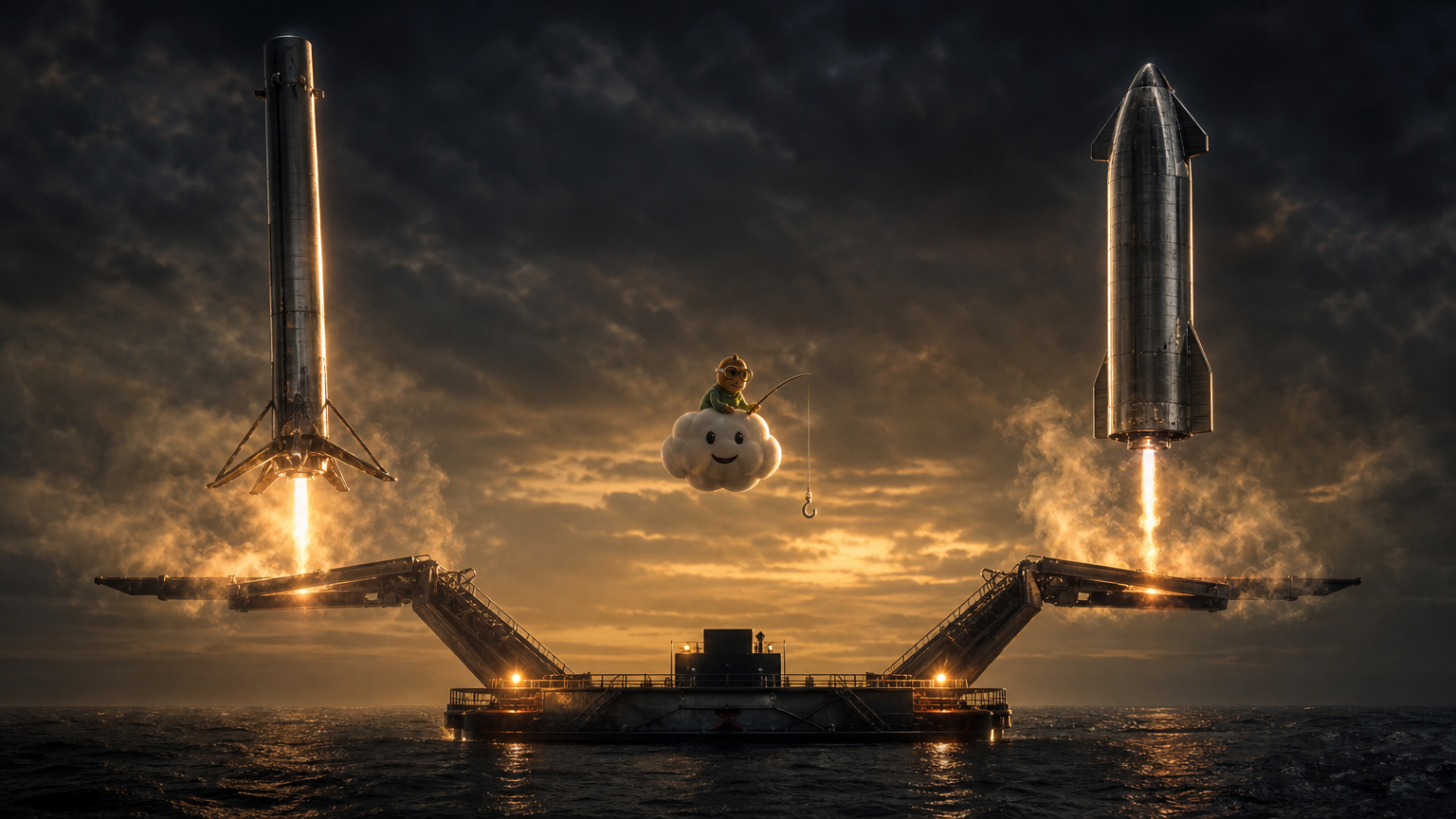
A launch built around recovery, not just ascent
SpaceX’s next Starship test is not simply another attempt to send the world’s largest rocket to space. Flight 15 is being framed as the program’s first full-system recovery trial: one launch, two returning stages, and one launch tower asked to do the job that ocean landings, parachutes and expendable hardware have traditionally avoided. SpaceX is targeting Friday, November 13, 2026, for liftoff from Starbase in South Texas, with a 75-minute launch window opening at 5:45 p.m. Eastern time, pending regulatory approval and acceptable conditions .
The headline objective is clear. SpaceX says the upcoming flight is planned to be the first to return both Starship and Super Heavy to the launch site for catch, and the company has described success as the first full recovery of an orbital launch system . That distinction matters: Super Heavy is the booster, but Starship itself is the upper stage and spacecraft. Recovering the booster is already hard; recovering the ship after orbital flight is a different class of engineering problem.
The mission plan calls for Super Heavy to return quickly, roughly six and a half minutes after liftoff, for a tower catch at Starbase . The ship, by contrast, is expected to remain aloft for more than 22 hours, fly at an altitude of about 275 kilometers, complete roughly 14 orbits, and then attempt its own return to the same launch site . Quartz, citing SpaceX’s timeline, places the planned booster catch at about T+6 minutes 35 seconds and the ship catch at about T+22 hours 32 minutes after liftoff .
Why the second catch is the real milestone
The double catch is dramatic, but its importance is economic. Starship’s architecture depends on recovering both stages rapidly enough to make very high flight rates plausible. A reusable booster alone does not deliver the full promise if the upper stage, with its engines, tanks, heat shield, avionics and payload interfaces, is still treated as semi-disposable hardware.
That is why Flight 15’s ship recovery attempt is the test to watch. Super Heavy has already been caught by the tower on three previous Starship flights, while SpaceX has never attempted to catch the ship stage . The upper stage travels higher, farther and faster than the booster, making its return more energetic and complex . It must survive orbital reentry heating, maintain control authority through the atmosphere, restart engines for landing, align precisely with the tower, and arrive healthy enough for the mechanical catch.
SpaceX’s recovery method is also unusually unforgiving. Instead of landing on legs, both stages are designed to be captured by the launch tower’s large “chopstick” arms . In theory, that removes mass from the vehicle, reduces refurbishment complexity and positions each stage almost exactly where it needs to be for inspection, servicing and eventual reuse. In practice, it demands extraordinary accuracy from guidance, navigation, propulsion, structures, ground systems and flight software at the same time.
Booster 22 moves into catch rehearsals
The current state of the campaign suggests SpaceX is deep into final recovery preparation rather than merely publicizing an ambition. On November 10, Space.com reported that Super Heavy Booster 22 had been moved to the launch mount at Starbase ahead of Flight 15 . SpaceX said the booster was used for final catch testing upon arrival at the pad, including a suspended squeeze test at catch height .
That test is more than a photo opportunity. A tower catch imposes loads through specific hard points while the booster is suspended by the arms. Ground rehearsals let engineers verify alignment, tower-arm behavior, structural interfaces and procedures before asking the system to catch a returning vehicle that has just flown through launch, stage separation, boostback, entry and landing burns.
Flight 15 is also expected to be the first return-and-catch attempt for a Super Heavy V3 booster, according to Quartz . That adds another layer to the test: SpaceX is not just repeating a previous booster catch profile, but applying the recovery sequence to an evolved vehicle while also preparing for the first ship catch.
The ship’s long day in orbit
The upper stage plan is deliberately cautious despite the bold headline. SpaceX’s flight description says Starship’s first return-to-launch-site mission is expected to fly about 14 orbits over more than 22 hours, while preserving options to enter a passively safe trajectory or deorbit over predetermined ocean areas if conditions are not right . Engadget likewise notes that SpaceX may or may not proceed with the ship catch, depending on whether the vehicle can safely deorbit and whether conditions are optimal .
That conditional language is important. The ship catch is not a stunt that must happen at any cost. The flight control team must be satisfied that systems needed for reentry maneuvers, the landing burn and the tower approach are healthy before committing to a return to Starbase . If the ship or ground system falls outside limits, SpaceX can still extract valuable data from ascent, orbit, deployment, heat-shield performance, deorbit capability and terminal guidance without forcing a catch attempt.
The ship is also scheduled to deploy 26 Starlink V3 satellites during the mission . Quartz reports that each satellite is intended to add 1 terabit of capacity to the constellation, and that three of the satellites carry cameras to inspect the ship’s heat shield and send imagery to operators . That makes Flight 15 a hybrid test: part launch service demonstration, part orbital operations exercise, part reentry experiment and part recovery trial.
Heat shield risk is central
For Starship, the heat shield is not a supporting detail. It is one of the main barriers between a test program and a reusable orbital vehicle. The booster returns from a high but comparatively shorter trajectory. The ship must come back from orbital speed, where heating, plasma effects, control authority and structural margins become far more demanding.
Quartz reports that Flight 15 carries forward heat-shield improvements used on Flight 14, including added tile-retention mechanisms in high-risk areas and curved tile designs intended to reduce heating in gaps between tiles . Those refinements point to the practical reality of reuse: a ship does not merely have to survive once. It must come back inspectable, repairable and eventually ready to fly again on a schedule short enough to matter.
That is why the double catch should be read less as spectacle and more as a systems test. The tower arms will get the photographs, but the decisive questions begin earlier: did the ship’s thermal protection stay intact, did the flight computers understand the vehicle’s condition, did the engines relight correctly, did the ground system know when to accept or reject the approach, and did the vehicle arrive with enough precision to make reuse believable?
A step toward airline-like reuse, with no guarantee
SpaceX’s long-term Starship case depends on cadence. Catching stages at the launch site is meant to shorten the path from landing to inspection, refurbishment, refueling and relaunch. Space.com reports that SpaceX intends to catch both Super Heavy and Ship on operational Starship missions because that recovery strategy is central to increasing launch rate .
But Flight 15 remains a test flight, not an operational proof. The schedule is still described as dynamic and subject to change . Regulatory approval was still pending in the latest reports, and the ship catch itself is conditional . A successful booster catch and a conservative ship deorbit would still represent progress, while a full double catch would mark a much larger leap.
If SpaceX does catch both stages, Flight 15 would become a reference point in launch history: not because two giant stainless-steel vehicles were caught by a tower, but because the whole orbital system would have shown a path back to the pad. That would move Starship’s reuse claim from aspiration toward demonstrated architecture.
For now, the story is suspended between preparation and proof. Booster 22 has reached the pad for catch testing, the launch window is set for November 13, the ship is slated for a 22-hour orbital campaign, and SpaceX is aiming for the first full recovery of an orbital launch system . Two catches, one launch, and no extra lives.
Comments
Be the first to comment.