
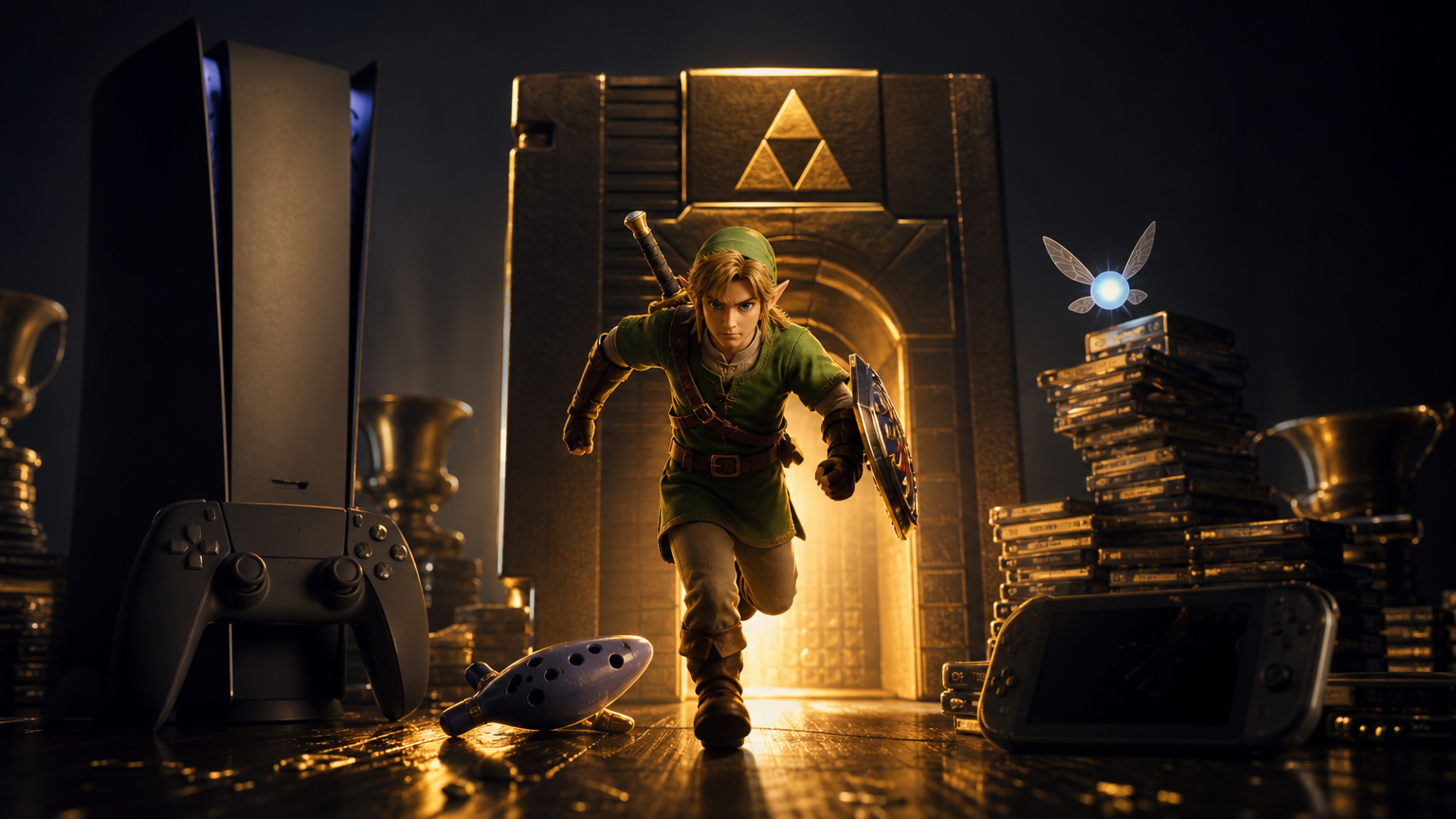
A four-day launch that changes the Switch 2 software race
Nintendo has put a striking number on the commercial power of premium nostalgia: The Legend of Zelda: Ocarina of Time for Nintendo Switch 2 sold more than 5.2 million units worldwide in its first four days after launching globally on November 5, 2026 . The company says 810,000 of those sales came from Japan, and that the total includes both packaged and digital versions . In Nintendo’s own framing, this is the highest global four-day sales total yet for any Nintendo-published game on Switch 2 .
That is the key distinction. This is not merely a strong start for a remake, or a strong start for Zelda. It is a platform statement. Nintendo of America also described the remake as the fastest-selling Nintendo-published Nintendo Switch 2 game globally and in the United States, Canada and Latin America, based on internal sales data that combines physical and digital sales . VGC added a useful caveat: Nintendo can make the first-party claim with confidence, while a claim over every Switch 2 game overall is harder because third-party publishers do not always share console-specific sell-through in comparable detail .
Even with that caution, the launch is already reshaping the Switch 2 leaderboard. Game Informer reports that the remake is now the second-best-selling Nintendo game on Switch 2 at 5.2 million units, behind Mario Kart World at 16.48 million . For a game that has been on shelves for less than a week, that is an unusually fast move from “major release” to “installed-base event.”
Why this remake landed so hard
The obvious answer is the name on the box. Ocarina of Time is one of Nintendo’s most loaded pieces of intellectual property: a 1998 Nintendo 64 landmark rebuilt for a new console generation . Nintendo’s release describes the Switch 2 version as a full remake that preserves the structure of Link’s journey across two time periods while adding reimagined visuals and improved playability . Nintendo of America’s version of the announcement goes further on the feature set, pointing to orchestral music, voice acting, expanded cutscenes, and reworked camera and movement controls .
That combination matters. A simple port would have traded mostly on memory. A full remake gives Nintendo a broader pitch: older players get a polished return to Hyrule, while younger Switch 2 owners get an entry point that does not require tolerance for late-1990s friction. Nintendo explicitly positions the remake as a way for a new generation to discover the adventure, while still preserving the experience of the original .
The commercial timing also helps. Nintendo says the release is part of The Legend of Zelda’s 40th anniversary celebration, which marks four decades since the first Zelda launched in Japan in 1986 . The anniversary plan also includes other products, a worldwide concert tour beginning in 2027, and the live-action Legend of Zelda film scheduled for theaters on April 30, 2027 . In other words, this launch is not standing alone. It is the software centerpiece of a wider brand cycle.
The installed-base accelerator
The 5.2 million figure is important because Switch 2 is still in the stage where defining software can shape hardware behavior. A console’s early years are about more than selling boxes; they are about giving undecided buyers a reason to enter the ecosystem, giving current owners a reason to stay active, and giving publishers confidence that the audience is engaged. A record-setting Zelda launch helps all three.
Nintendo has long used first-party software as hardware gravity. The Switch 2 version of Ocarina of Time is especially useful because it does not need to explain itself from scratch. The game arrives with multi-generational awareness, but its remake features make it legible as a current-generation product rather than a museum piece . That is the sweet spot for platform acceleration: familiar enough to be trusted, new enough to feel necessary.
The regional detail also matters. Japan contributed 810,000 units to the first four days, meaning the rest of the world accounted for roughly 4.39 million units . That split shows the title is not just a domestic nostalgia play. It is a global Switch 2 event, and Nintendo of America’s statement that it set Nintendo-published Switch 2 records across the Americas reinforces that point .
How big is 5.2 million?
VGC’s comparison illustrates the scale. The outlet notes that Ocarina of Time’s four-day total has already moved beyond several other Zelda games’ reported lifetime or long-tail totals, including Echoes of Wisdom at 4.09 million after seven months, A Link Between Worlds at 4.26 million, Phantom Hourglass at 4.13 million, and Spirit Tracks at 2.61 million . Those comparisons are not perfect, because they involve different platforms, eras and release conditions. But they make the same basic point: the remake has reached franchise-level milestones before its first full week is over.
The ceiling is still much higher. VGC reports that Breath of the Wild and Tears of the Kingdom remain far ahead, at 35.76 million and 22.71 million copies respectively . That is useful context because it keeps the launch from being mistaken for lifetime dominance. Ocarina of Time has not yet entered the top tier of total Zelda sales. What it has done is create an opening velocity that very few Nintendo releases can match.
The distinction between sell-through and charts will also matter over the next few weeks. Nintendo’s number includes digital and physical units . VGC notes that other tracking firms may report lower figures because they often lack Nintendo’s digital data and tend to focus on physical retail . If boxed charts appear to understate the launch, that will not necessarily mean demand is fading; it may simply reflect the limits of chart methodology.
What comes next
The immediate question is whether Ocarina of Time can sustain momentum beyond the first wave of fans, collectors and early Switch 2 adopters. Its $59.99 U.S. listing on Nintendo’s official site positions it as a premium release, not a budget remaster . That means continued sales will likely depend on word of mouth, holiday demand, hardware availability and whether the remake becomes the default recommendation for new Switch 2 buyers.
For Nintendo, the upside is broader than one software SKU. A blockbuster remake can raise engagement across the ecosystem: eShop activity, accessories, subscriptions, companion app usage and attention to adjacent Zelda projects. Nintendo says the game supports ZELDA NOTES through the Nintendo Switch App, offering gameplay-support features without requiring a paid Nintendo Switch Online membership . That kind of companion feature is not the reason the game sold 5.2 million copies, but it is part of how Nintendo keeps players inside its wider account and app environment.
The lesson is straightforward. Premium nostalgia still works when it is treated as a new product, not a shortcut. Ocarina of Time’s Switch 2 launch shows that a carefully modernized classic can do more than satisfy memory; it can become a record-setting platform driver. Link did not need to clip through a wall to speedrun this dungeon. Nintendo simply gave one of its most famous adventures the hardware moment it needed.
Comments
Be the first to comment.