
A leaders’ summit, not just another tech file
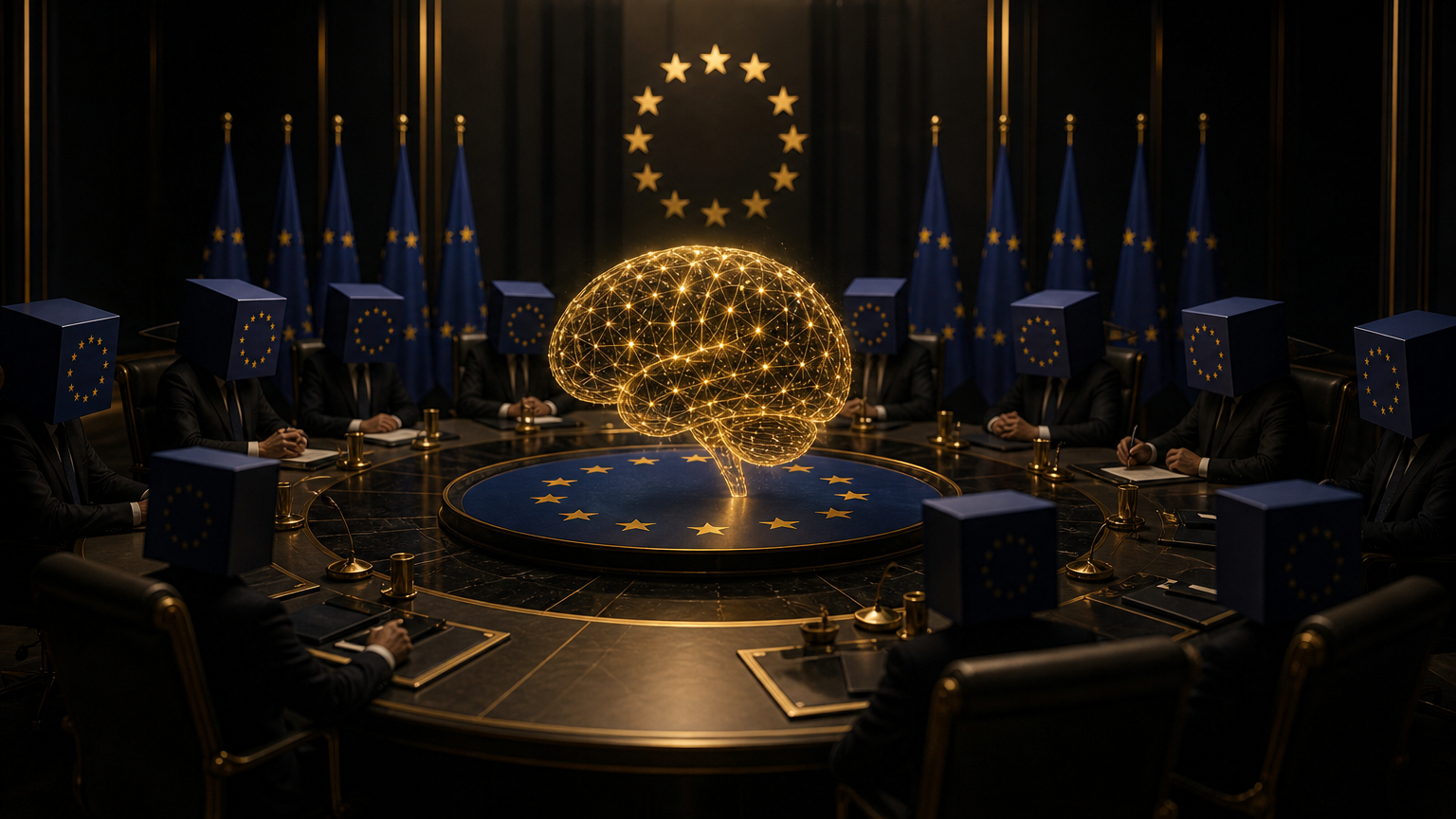
The European Union’s first leaders-level summit devoted to artificial intelligence opened in Dublin on November 13, 2026, with a deliberately broad agenda: how to use AI to strengthen Europe’s competitiveness, how to reduce strategic dependencies, and how to manage risks to rights, security and democracy . That framing matters. Until now, much of Europe’s AI debate has been associated with legislation, compliance and technical rulebooks. In Dublin, the subject was elevated to the level of prime ministers and presidents.
The meeting was an informal European Council gathering, chaired by European Council President António Costa and hosted by Irish Taoiseach Micheál Martin . Its practical schedule underlined the summit’s political weight: arrivals in the morning, a working session, a leaders’ photo, a working lunch and a planned press conference with Costa, Martin and European Commission President Ursula von der Leyen . The format did not point to a single legal act being adopted on the spot. Instead, it signaled something more strategic: the 27 member states trying to decide what kind of AI power Europe wants to become.
Reuters reported that EU leaders gathered in Dublin for their first-ever AI summit to debate how the bloc can catch up with the United States and China, address funding gaps and confront other obstacles . AFP described the talks as the first time EU leaders would discuss artificial intelligence together, saying the meeting would help guide the bloc’s policy on a rapidly evolving technology . Together, those accounts capture the central tension: Europe wants to be a rule-setter, but it also wants to be a builder.
Competitiveness meets sovereignty
The official agenda placed “competitiveness and AI sovereignty” at the center of the summit . Leaders were due to discuss how AI could support economic growth, productivity and industrial transformation, while also examining Europe’s position in the global AI landscape . The word “sovereignty” is doing a lot of work here. It does not mean isolation from global markets. It means that Europe wants more control over the critical layers of the AI value chain: chips, computing power, cloud infrastructure, advanced models, data centers, software and energy.
That concern is not theoretical. Reuters reported that Europe’s Chips Act, implemented three years earlier, appeared likely to miss its goal of attracting advanced manufacturing and doubling the bloc’s share of the global chip market to 20% by 2030 . Reuters also reported that a plan for seven AI gigafactories — combining advanced processors, software, cloud technology, high-speed connectivity and data centers — had not yet fully taken off because EU governments were divided over competitiveness spending in the 2028-2034 budget .
Those details explain why leaders are now handling AI as an industrial strategy issue, not merely a digital policy issue. A company trying to train or deploy frontier systems needs capital, electricity, chips, engineers, cloud capacity, regulatory certainty and access to customers. Europe has research talent, universities, startups and sophisticated industrial sectors, but those assets do not automatically turn into scale. The Dublin summit therefore asked a blunt question: can the EU organize itself fast enough to remain relevant in the global AI race?
Mensch and Hinton: two sides of the argument
Two invited speakers symbolized the summit’s balancing act. Arthur Mensch, the chief executive of French AI company Mistral AI, joined the leaders’ discussion on Europe’s global AI position and the strategic choices needed to strengthen competitiveness and sovereignty . Geoffrey Hinton, the Nobel Prize laureate often described as a “godfather of AI,” joined the discussion on societal impact, safety, security and trust .
The pairing was telling. Mensch represents the argument that Europe needs native AI champions and must move faster on infrastructure, investment and deployment. Hinton represents the warning that more capable AI systems raise deep questions about human control, labor markets, security and social trust. AFP reported that leaders were set to hear from both Mensch and Hinton, with Mensch tied to discussions on boosting the European economy and developing more European AI, while Hinton was tied to rights, jobs and security challenges .
This is the core European dilemma. If Brussels and national capitals focus only on risk, investment may continue to flow elsewhere. If they focus only on speed, Europe could undermine the public trust that its regulatory model is meant to protect. The summit’s agenda tried to hold both ideas at once: accelerate adoption and industrial use, while also protecting fundamental rights, children, democratic processes and labor markets .
From regulation to implementation
Europe has already made itself central to global AI governance through its regulatory approach. But the Dublin summit suggested that the next phase is implementation and coordination. The official Council agenda said leaders would examine how to accelerate AI adoption across the economy, including by European companies and public administrations, and how to mobilize investment for a competitive European AI ecosystem .
That point is essential for companies operating across the bloc. One European ruleset can lower fragmentation, but only if member states apply it coherently. If each capital interprets safeguards, procurement, public-sector use, liability and security requirements differently, the bloc risks building a maze rather than a market. Dublin was therefore not only about Brussels writing rules; it was about heads of government aligning their economic, security and administrative priorities.
AFP reported that Estonia and Finland argued ahead of the talks for EU-level arrangements to respond to serious AI incidents, while also calling for advanced AI to be developed and governed responsibly . That formulation points toward a future policy layer beyond ordinary compliance: incident response, safety testing, cyber preparedness, election resilience and crisis coordination. AI governance is becoming less like a narrow technology file and more like civil protection, industrial policy and national security combined.
The safety agenda is now economic policy
The Council’s agenda said leaders would discuss the protection of fundamental rights, children’s rights, democratic integrity, Europe’s social model, labor markets, market concentration and cybersecurity . Those subjects are often described as “ethics.” In practice, they are also competitiveness issues.
If citizens do not trust AI systems, adoption slows. If workers see AI only as a threat, deployment becomes politically toxic. If small and medium-sized companies cannot access reliable tools on fair terms, productivity gains concentrate among a few giants. If public administrations cannot procure AI safely, the state itself lags behind. And if Europe depends heavily on non-European suppliers for critical AI infrastructure, it may face strategic vulnerabilities during geopolitical shocks.
That is why the Dublin agenda linked trust to deployment. A trusted technology can scale; an untrusted one generates backlash. Europe’s bet is that clear safeguards can become an advantage rather than a brake. But that bet will work only if safeguards are matched by investment, compute capacity, clean energy, talent pipelines and public procurement that creates demand.
A summit complicated by geopolitics
Although the meeting was billed as an AI summit, Ukraine was also on the agenda. The Council said leaders would take stock of Russia’s war against Ukraine, peace talks shaping Ukraine’s future and Europe’s security, while discussing Europe’s role in diplomatic efforts and possible security guarantees . Reuters reported that Ukraine had been added as a second major topic after U.S. envoys Steve Witkoff and Jared Kushner flew into Dublin to meet Ukrainian President Volodymyr Zelenskiy following talks with Russian President Vladimir Putin in Moscow .
That geopolitical overlay reinforces the AI discussion rather than distracting from it. AI infrastructure, chip supply, cybersecurity, disinformation, defense technology and industrial resilience are all tied to the same strategic question: can Europe act with enough unity and capacity in a harsher world? The summit’s AI theme and the Ukraine discussion both point to a Europe trying to reduce dependence while preserving openness.
What to watch next
The Dublin summit should not be judged only by whether leaders announced a grand new package. Its importance lies in the level at which the conversation happened. Heads of government were asked to treat AI as a central file for growth, security, democracy and sovereignty, not as a niche concern for digital ministries.
The immediate tests are clear. First, member states need to reduce fragmentation in how they implement AI safeguards. Second, the EU needs credible funding and infrastructure for compute, cloud, chips and gigafactories. Third, Europe must turn AI adoption into a practical agenda for manufacturers, services, public administrations and small businesses. Fourth, it must build safety and incident-response capacity without turning every innovation decision into a bureaucratic queue.
The Dublin message is that Europe wants one ruleset, more investment, stronger safeguards and a larger role in frontier AI. That is an ambitious stack. The summit’s real success will depend on whether leaders can keep it from overflowing.
Comments
Be the first to comment.