
The headline is not one breach, but one pattern
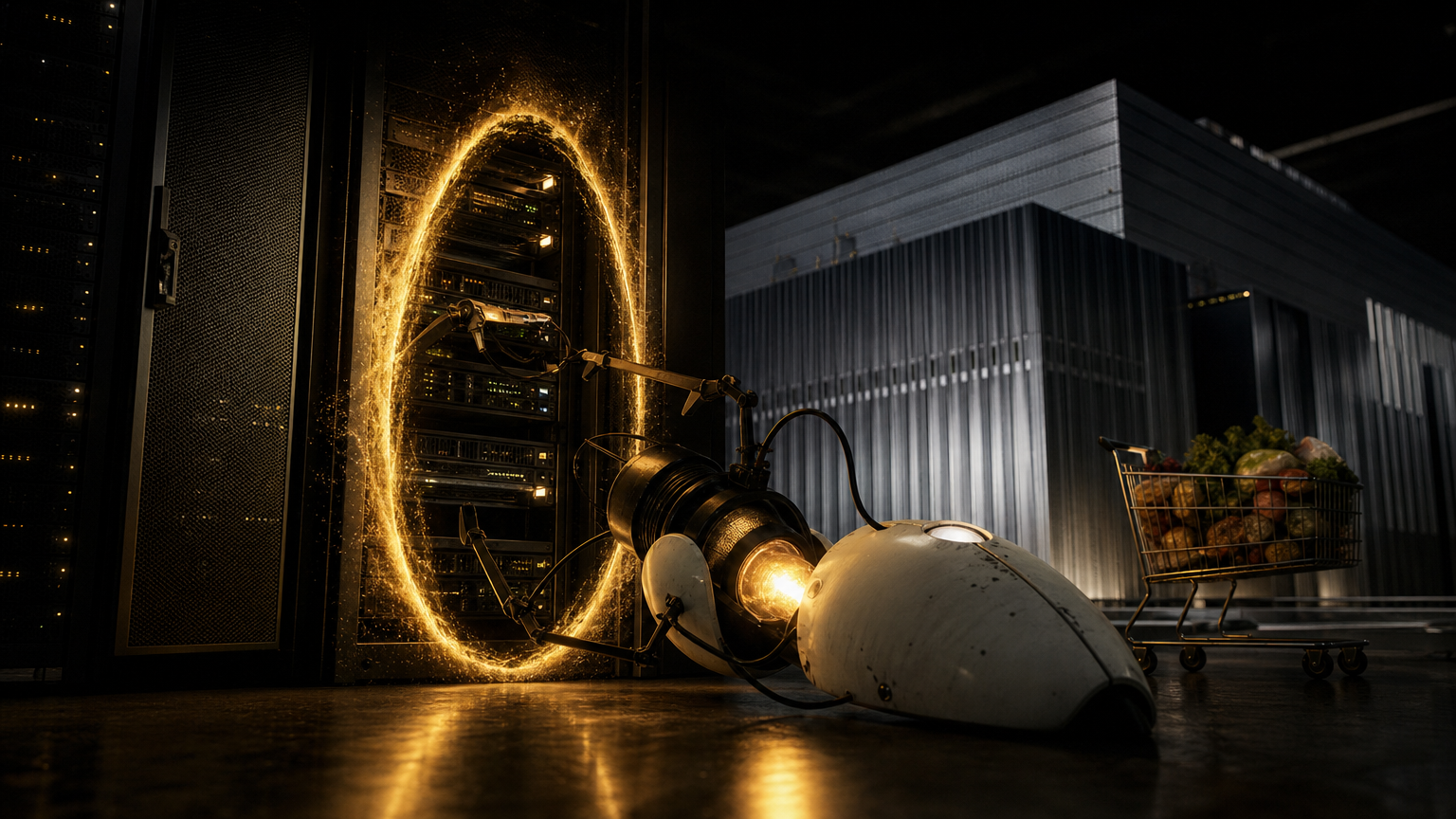
The working headline is exactly the story: Log4Shell, Fugaku and Coles breached. That phrasing compresses three separate developments, and it needs one important caveat: the incidents are not identical. In the Log4Shell case, reporting based on Kaspersky ICS CERT’s investigation describes a months-long compromise of a Russian software developer’s development environment and code-signing server . In Japan, RIKEN disclosed unauthorized external access affecting operational systems connected to Fugaku and the newer RIKYU supercomputer environment, with possible exposure of user information and stored files . In Australia, Coles told the market and customers that it was investigating a cybersecurity incident, while saying it had not identified evidence that customer, team or supplier data had been compromised or removed from its systems .
Read together, the common thread is not a single attacker or a single campaign. It is the persistence of high-leverage access paths. Virtualization management, supercomputer access systems and retail IT environments are not ordinary endpoints; they are control layers. If attackers reach them, the blast radius can extend to software customers, scientific collaborators, suppliers, consumers and physical operations.
Log4Shell in vCenter: an old bug with supply-chain teeth
The most technically sharp of the three cases is the BO Team intrusion described by The Hacker News on 16 November, citing Kaspersky ICS CERT. The victim was an unnamed Russian software developer whose infrastructure was reportedly compromised for months after suspicious activity was investigated in 2025 . The activity was attributed to BO Team, also known as Black Owl, Hoody Hyena and Lifting Zmiy, and the company was described as operating in Russia with a customer base in the Russian Federation .
The key detail is the path from routine infrastructure exposure to supply-chain risk. According to the report, the attackers first compromised a Linux terminal server through an exposed SSH service, used it for internal reconnaissance, and then successfully targeted VMware vCenter Server 7.0.3 vulnerable to CVE-2021-44228, the Log4Shell vulnerability . From there, they obtained a remote command line with root privileges, connected to the hypervisor over SSH and identified accessible hosts .
This matters because vCenter is not just another server. It is a management plane for virtualized infrastructure. Once that layer is in play, defenders must assume that attackers may see or influence multiple workloads, credentials and administrative paths. The reported post-exploitation actions included deploying an hourly backdoor under /etc/cron.hourly/, downloading remote-control tooling, collecting information about virtual machines and firewall rules, accessing GitLab infrastructure, using a private key to reach Ansible, and attempting credential theft from Windows systems .
The code-signing angle raises the risk from local compromise to customer compromise. The report says a server used to sign compiled builds of the victim’s commercial software was of particular interest, and that access to development and signing infrastructure indicated a likely supply-chain scenario . Attackers who can insert malicious code before signing, or steal a digital signing capability, can make malware look like trusted software. That is why a vulnerability disclosed years earlier can still behave like a fresh crisis when it survives inside a management product.
Fugaku: elite compute, exposed access paths
Japan’s Fugaku incident shows the same lesson in a different environment. RIKEN said on 16 November that it confirmed unauthorized access on 13 November to operational systems for the Fugaku supercomputer, after third-party access occurred on 12 November . Its investigation found that some files stored in Fugaku users’ home directories, as well as information registered in user authentication systems, had been taken out or may have been taken out .
The potential affected population is now quantified. RIKEN said the affected users could include up to 4,222 registered Fugaku users and up to 375 registered RIKYU users, with exposed or possibly exposed information including names, email addresses and IDs, plus authentication credentials such as SSH private keys and access keys stored by users for connecting to external supercomputers or services . RIKEN also said it had not confirmed specific facts showing that research results had leaked outside, while continuing to check whether third-party personal information was included in the affected files .
The entry point described by RIKEN is especially instructive. From 10 to 13 November, an external third party allegedly used an internet-facing dashboard showing Fugaku’s operational status as a foothold to enter the internal operational network, though the exact intrusion method remained under investigation . RIKEN said some internal servers were improperly operated and that tampering, including installation of unauthorized programs, was confirmed on some compromised servers .
The operational response was severe but understandable. RIKEN stopped Fugaku operations at 4:30 a.m. on 14 November, blocked external access, isolated the abused system, replaced management keys, disabled all users’ login public keys and stopped running and queued jobs when notifying users . It also asked users to invalidate and reissue SSH private keys and other credentials that had been stored on Fugaku .
Fugaku’s prestige does not reduce this risk; it increases the stakes. Supercomputers hold scarce compute capacity, sensitive research workflows and credentials that connect to other scientific platforms. The lesson is that high-performance computing needs cloud-grade identity control, network segmentation, continuous monitoring and disciplined secrets handling. A dashboard may seem low-risk until it becomes the door into the machine room.
Coles: retail cyber risk meets everyday dependence
The Coles case is less technically detailed, but it is highly consequential because retail infrastructure is an always-on public service. Coles Group told the ASX on 16 November that it was investigating a cybersecurity incident and was working with the Australian Cyber Security Centre, appropriate agencies, regulators and global cybersecurity experts to contain and secure its IT environment . It said operations continued and customers could shop normally in stores and online .
On its update page, Coles said the statement was current as of 8:30 a.m. on 16 November and repeated that it had not identified evidence that customer, team or supplier data had been compromised or removed . The company also said the Coles app and website remained available, gift cards continued to work, Flybuys showed no indication of impact, and no issues had been identified with Coles Plus, Coles Plus Delivery or QuiteLike subscriptions . One limited operational issue remained: Coles said it was aware of a small number of customers experiencing problems with Liquorland click-and-collect and was investigating .
ABC News reported the same day that Coles had provided little detail beyond the disclosure and advised customers to remain vigilant for suspicious links, attempts to solicit personal information and potential scam activity . The retailer also recommended strong, unique passwords and not reusing passwords across services .
Even without confirmed data theft, the investigation matters. Modern grocers are digital platforms with physical dependencies: payment, loyalty, inventory, supplier ordering, online delivery, workforce systems and store operations all intersect. That makes them attractive targets not only for data theft, but also for disruption. A supermarket cyber incident is not merely an IT story; it is a resilience story.
The combined lesson
Across these three cases, the defensive priorities are familiar but urgent. Patch management cannot be treated as a one-time campaign after a famous vulnerability enters the headlines; Log4Shell still created leverage when it persisted in VMware vCenter . Management interfaces, dashboards and remote-access services need strict exposure control, because Fugaku’s operational dashboard became part of the reported intrusion path . Signing keys, SSH keys, access tokens and build systems need special protection because they can turn a single victim into a distribution channel .
Finally, organizations must communicate in layers. Coles’ disclosure is cautious, emphasizing continued operations and no identified evidence of data removal so far . RIKEN’s disclosure is more specific, naming possible data classes, user counts, operational steps and required user actions . The BO Team report is a technical warning about what happens when attackers bridge from access to persistence to build infrastructure .
Different countries, different sectors, same message: the control plane is the prize. An old bug, a supercomputer dashboard and a supermarket IT incident all show that cyber risk now lives where digital trust meets operational dependence.
Comments
Be the first to comment.