
Washington names the roster — but the rules are still unclear
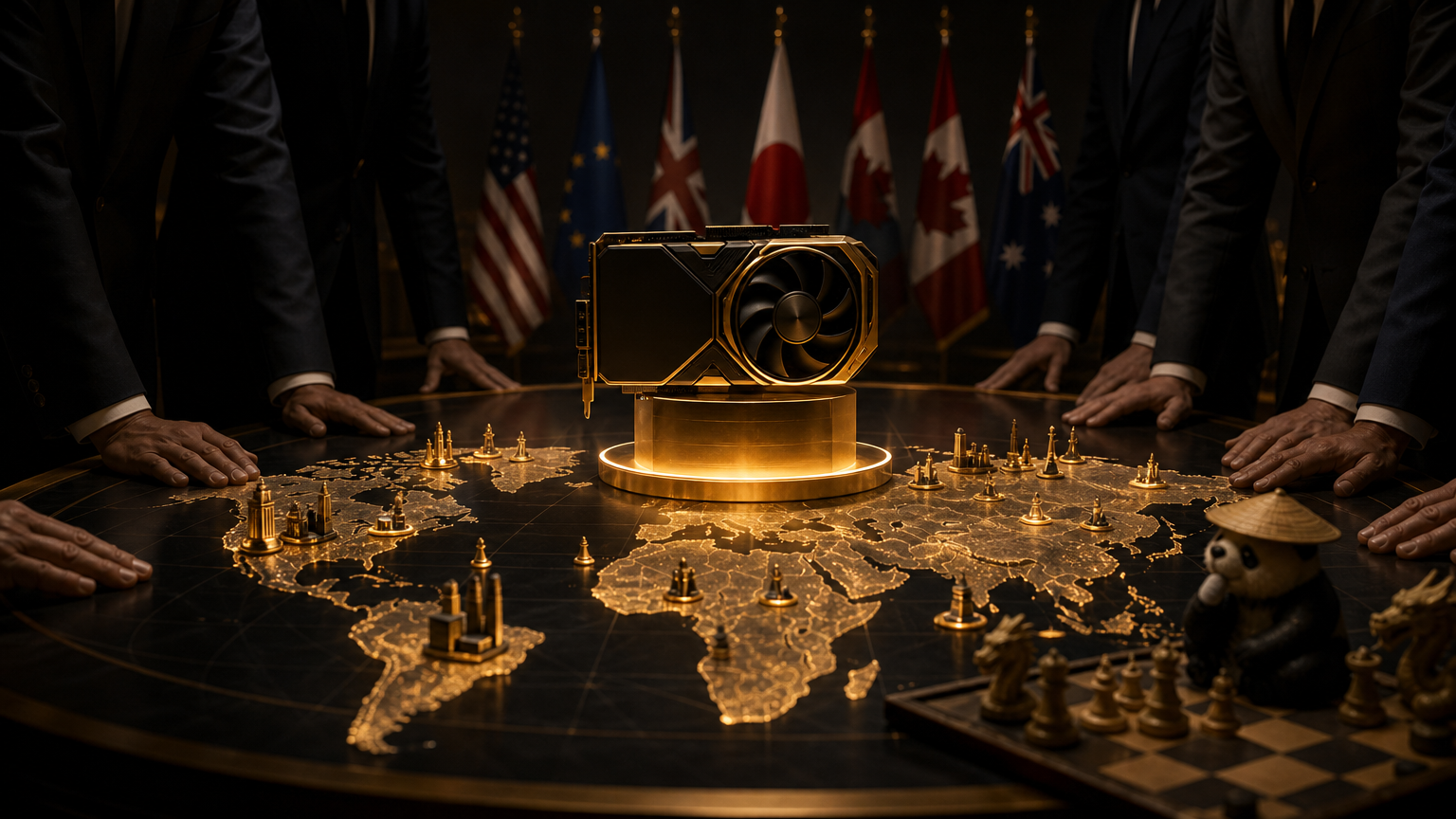
The Trump administration is preparing to designate more than two dozen artificial-intelligence companies as U.S. “national champions,” with Nvidia, Amazon, Microsoft, OpenAI and Anthropic among the names reported on the list . The immediate strategic message is simple: Washington wants its leading chip, cloud and model companies to expand abroad as a coordinated American stack, not as isolated private firms competing against Chinese-backed alternatives .
The important caveat is that the designation, as reported, had not yet been formally confirmed, and the precise benefits remained undefined . That ambiguity matters. “National champion” can mean many things: faster export-license decisions, official diplomatic support in overseas deals, preferential treatment in procurement, access to government-backed financing, or simply a political signal that these companies sit at the center of U.S. strategic competition. Without formal details, investors and rivals are left reading the label as a directional statement rather than a settled policy instrument.
Even so, labels can move markets and shape behavior. A company named as a national champion may find itself with stronger access to officials, more credibility in foreign infrastructure bids and more leverage in regulatory negotiations. It may also inherit heavier political obligations. If Washington treats Nvidia, Microsoft, OpenAI and other firms as strategic assets, then their customer choices, data-center buildouts, chip allocations and overseas partnerships become less purely commercial.
That is the central contradiction of the new AI industrial policy. The selected companies are celebrated because they are fast-moving private innovators, yet the designation draws them deeper into state strategy. It is industrial policy in startup clothing: the government is not nationalizing the AI sector, but it is signaling which players it expects to carry the flag.
The San Francisco Declaration makes resilience a shared project
The company roster emerged alongside a second move: the San Francisco Declaration on the Secure Foundations of Enduring Prosperity, signed on November 15 by the United States and nine Pax Silica participants at a founders retreat convened by Under Secretary of State for Economic Affairs Jacob Helberg . The State Department said the declaration was released by the governments of the United States, Australia, India, Israel, Japan, South Korea, Qatar, Singapore, the United Arab Emirates and the United Kingdom .
The declaration’s logic is that economic security and national security are now fused in the AI era. The participants described sensitive technologies, critical infrastructure and supply chains underpinning “Super Intelligence” as assets that must be protected collectively, not merely within national borders . In practice, that turns resilience into allied industrial policy.
The pact proposes working groups on pro-innovation policy frameworks, AI adoption in key sectors, supply-chain cooperation across the technology stack, safe harbors and supply-chain security hubs, and broader security and resilience . Anadolu’s report on the agreement said the declaration aims to protect sensitive technologies and critical infrastructure needed for advanced AI systems, including transportation networks, digital platforms, energy infrastructure and logistics . South Korea’s KBS described the initiative as a U.S.-led Pax Silica effort to stabilize critical AI technologies spread across multiple countries, including semiconductor design, manufacturing equipment and ports handling product shipments .
That wider architecture is what gives the “national champions” label more weight. If Washington wants allied governments to trust U.S.-centered AI infrastructure, it needs more than powerful companies. It needs predictable controls over chips, clean supply chains, secure ports, aligned investment rules and credible enforcement. The San Francisco Declaration supplies the diplomatic scaffolding for that system.
It also points directly at China, even when framed in the language of resilience. KBS reported that the declaration is seen as reaffirming Washington’s determination to curb China’s grip on advanced technology supply chains, including rare earths essential to AI . Anadolu noted that the pact comes ahead of a planned meeting involving U.S. President Donald Trump, Chinese President Xi Jinping and Russian President Vladimir Putin on the sidelines of the APEC summit in Shenzhen, amid continuing U.S.-China trade tensions .
Nvidia sits at the center — and under scrutiny
Nvidia is the clearest example of the new dual status: champion and suspect, indispensable supplier and enforcement headache. The company is reportedly among the AI national champions, but it is also facing a direct demand from Treasury Secretary Scott Bessent for answers about whether advanced AI chips reached China through shell companies .
CNA reported that Bessent called on Nvidia on Sunday, November 15, to explain whether it knowingly allowed its most advanced AI chips to reach China, saying he wanted to know if shell companies were used to dodge U.S. restrictions . Bessent said sales to China of chips above the H200 level were not allowed, and he asked whether Nvidia had a sufficient culture of compliance around export restrictions . He said he wanted answers from Nvidia’s board and outside counsel within 10 days .
The issue is not technical bookkeeping. U.S. chip controls depend on the ability to trace where restricted processors actually go after a formal sale. If a cloud company, distributor or data-center buyer outside China serves as a pass-through, the manufacturer may be able to claim paperwork compliance while the strategic effect of the control collapses. That is why the Nvidia question has moved from broad export policy to a company-specific supply-chain investigation.
Axios reported that Bessent questioned whether Nvidia’s earnings may have been inflated by inappropriate China sales and urged the company to look outside for its next chief executive . Axios also reported that he accused the company of a “culture of noncompliance” and said some companies doing business with Nvidia were obviously shell companies for Chinese interests . CNA separately reported that the Justice Department is carrying out a criminal probe into suspected routing of Nvidia chips to China through Megaspeed-linked channels, while Nvidia has said it previously investigated the allegations and refuted them .
This creates a delicate policy picture. Washington wants Nvidia strong enough to anchor the U.S. AI stack globally, but constrained enough that its chips do not strengthen Chinese AI capabilities. The same government that may put Nvidia on a national-champion list is also pressing for answers that could expose enforcement failures inside the company, among distributors, or within the government’s own export-control process.
Procurement, capital and regulation may shift next
The concrete benefits of the national-champion label have not been spelled out, but the plausible channels are visible. First, procurement: U.S. agencies and allied governments may prefer systems built by approved American firms or by vendors using trusted U.S.-aligned chips, clouds and models. Second, export permissions: national champions may receive faster or more predictable treatment when selling approved systems abroad, especially to partner countries in the Pax Silica network. Third, capital allocation: government-backed financing, development banks or allied infrastructure funds could steer money toward AI data centers, energy projects and cloud deployments using U.S.-approved technology.
The risks are just as visible. Companies named as champions may become more politically exposed. A model provider’s content policy, a cloud provider’s foreign data-center location or a chipmaker’s distributor network may now be interpreted through national-security politics. Rival firms not on the list may argue that Washington is distorting competition. Allies may welcome U.S. support while worrying about dependence on a handful of American platforms.
For Nvidia, the stakes are immediate. The company is simultaneously a strategic asset, a market bellwether and a test case for whether U.S. export controls can survive indirect routing. For Microsoft, OpenAI, Anthropic and Amazon, the champion label could help overseas expansion, but it may also attach their growth plans to diplomatic and security expectations.
The bigger shift: a U.S.-led AI tech tree
The combined story is not just that Washington is choosing favorite companies. It is building a technology order. The San Francisco Declaration defines the allied perimeter; the national-champion plan identifies the firms expected to compete inside it; and the Nvidia inquiry tests whether the perimeter can be enforced.
This is why the story matters beyond one announcement. AI policy is moving from “who has the best model?” to “who controls the full stack?” Chips, energy, cloud infrastructure, logistics, rare earths, export licenses and trusted jurisdictions are now part of the same strategic map. The U.S. is trying to assemble its own AI tech tree before rivals lock in theirs.
The unanswered question is whether Washington can balance speed and control. Too much bureaucracy could slow the companies it wants to promote. Too little enforcement could let restricted technology leak to China through intermediaries. The national-champion label may become a badge of privilege, but it is also becoming a badge of accountability.
For now, the message is clear: the United States is no longer treating AI leadership as a purely private-sector race. It is naming the players, organizing the alliance and asking whether the most important chips in the system have been traveling with the right papers.
Comments
Be the first to comment.